


 Ver en contexto
 Enviar
 Compartir
 Detalles
 Guía
Guía

 Descargar
 Similares
 Radiografía
 Presentación de diapositivas
 Q&A
Q&A Estadísticas
St John the Baptist


 Ver más
Giclée / Impresión de arte
Impresiones giclée o en lienzo de calidad de museo con producción rápida y opciones de acabado flexibles. ( Comprar pintura hecha a mano Cambiar a imagen digital)




P118B €10

P118H €10

P118W €10

P438Z €10

P508JH €12

P508YH €12

P805H €10

P805Z €10

P919BZ €10

P919G €10

P919XJ €10

P959ZH €10

P968JZ €12

W106C €8

W218G €10

W218JH €8

W218Y €10

W307PJ €10

W316G €10

W316PJ €8

W316Y €10

W398PJ €8

W4111J €10

W500HY €15

W500JH €15

W692G €12

W849H €8

W940BG €15

W953PJ €8




Elija entre nuestros tamaños predefinidos que respetan las proporciones originales de la obra.

Introduzca el ancho y el alto que necesite para adaptarse a su marco o pared. Una impresión solo puede recortarse, nunca hacerse más grande que la imagen original, por lo que un tamaño con una forma distinta perderá parte de la obra. Le enviaremos una maqueta digital para su aprobación antes de realizar cualquier impresión. La imagen que se muestra en esta página no refleja el recorte real; solo la maqueta lo hace.
Envío a todo el mundo () en 2 semanas en lugar de las 4/5 semanas estándar. (30 octubre)

Envío exprés gratuito a todo el mundo

Lienzo de lino de alta calidad

Seguro de envío total

Garantía de reembolso de aranceles aduaneros

Garantía de fidelidad cromática exacta

Política de devolución de 100 días (solo por defectos)

Garantía de devolución del 100% del dinero

Descuento por cantidad
 La opción de vidrio solo está disponible en tamaños inferiores a 110 cm.

St John the Baptist
Giclée / Impresión de arte
Dimensiones de la reproducción
-


Precio total final
€ 56
The Silent Majesty of St. John the Baptist
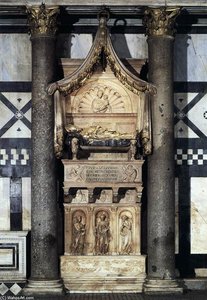
Donatello’s “St. John the Baptist,” sculpted around 1438 in Carrara marble and now residing within the serene Chapel of St. John the Baptist at Santa Maria Gloriosa dei Frari in Venice, is more than just a portrait; it's an embodiment of Florentine Renaissance ideals – a masterful synthesis of classical restraint and deeply human emotion. This isn’t the triumphant, idealized figure often depicted in later High Renaissance art; instead, Donatello presents us with a young man wrestling with profound spiritual awareness, a figure both vulnerable and powerfully resolute.
The sculpture immediately draws the eye with its stark simplicity. The pose is deliberately unassuming: John stands on a simple, unadorned pedestal, his body slightly turned away from the viewer, creating an intimate sense of connection. His garments are rough, almost shaggy, crafted from animal hide – a deliberate choice that speaks to his ascetic lifestyle and rejection of worldly comforts. This isn’t a king or a warrior; it's a prophet stripped bare, preparing for his calling. The muted palette of the marble further enhances this sense of austerity, emphasizing the figure’s inner intensity rather than external grandeur.
Donatello’s genius lies in his ability to imbue this seemingly straightforward form with an extraordinary depth of feeling. His face is a study in concentration and quiet contemplation. The furrowed brow, the intense gaze fixed on some distant point, and the slightly parted lips suggest a man wrestling with weighty truths – the impending judgment, the need for repentance, and the promise of salvation. The hand raised to his chest isn’t a gesture of piety; it's an expression of profound inner turmoil, as if he is grappling with the burden of his prophetic role.
A Renaissance Synthesis: Classical Influence & Florentine Innovation
To fully appreciate “St. John the Baptist,” one must understand the artistic currents swirling around Florence in the early 15th century. Donatello was deeply influenced by the rediscovery and reinterpretation of classical sculpture, particularly the works of Greek and Roman masters. However, he didn’t simply copy these ancient forms; instead, he adapted them to his own unique vision, imbuing them with a distinctly Florentine sensibility.
Notice the subtle contrapposto – the shift in weight that creates a dynamic sense of movement within the static form. This technique, borrowed from classical sculpture, gives John’s body a naturalism and vitality rarely seen in earlier Gothic art. Furthermore, Donatello's use of marble is remarkably expressive; he skillfully manipulates the texture and surface to create subtle gradations of light and shadow, highlighting the contours of the face and torso and adding depth and volume to the figure.
Crucially, Donatello was pushing beyond the conventions of his predecessors. While earlier Florentine sculptors often depicted religious figures in elaborate, richly ornamented robes, Donatello favored a more restrained approach, focusing on capturing the essence of the subject’s character rather than merely illustrating their status or piety. This emphasis on psychological realism – conveying inner thoughts and emotions through outward form – was a hallmark of the Early Renaissance.
Symbolism & Spiritual Significance
The sculpture is rich in symbolic meaning, reflecting John's role as a precursor to Christ. The rough animal hide garments represent his rejection of worldly possessions and his dedication to a life of simplicity and asceticism. His bare feet symbolize humility and connection with the earth.
The raised hand, as mentioned earlier, is particularly significant. It’s not an act of blessing or benediction; it's a gesture of warning – a call to repentance and preparation for the coming of the Messiah. The book held in his hand isn’t a scriptural text but a scroll containing John’s prophecies, further emphasizing his role as a messenger of God.
The overall effect is one of profound spiritual intensity. “St. John the Baptist” is not merely a depiction of a biblical figure; it's an invitation to contemplate our own relationship with faith, morality, and the mysteries of existence. It’s a testament to Donatello’s ability to capture the complexities of the human spirit within the confines of sculpted stone.
A Legacy Enduring: Reproduction & Artistic Inspiration
Reproductions of “St. John the Baptist” offer art enthusiasts and interior designers alike an opportunity to bring this iconic masterpiece into their homes or spaces. When selecting a reproduction, consider the level of detail and accuracy – a high-quality print on canvas or a meticulously crafted three-dimensional sculpture will best capture the essence of Donatello’s original work.
Beyond its aesthetic appeal, “St. John the Baptist” serves as a powerful reminder of the enduring legacy of the Early Renaissance. Donatello's innovative techniques and profound psychological insights continue to inspire artists and designers today, demonstrating the timeless relevance of his vision. This sculpture is not just a work of art; it’s a window into the soul of Florence – a city that forever changed the course of Western civilization.
Preguntas y respuestas
¿Quién es el autor y en qué fecha se creó "St John the Baptist"?
Donatello creó "St John the Baptist" en 1438.
¿Qué color predomina en la composición de "St John the Baptist" de Donatello?
El color que más destaca en "St John the Baptist" es el Putty (#d1cec9). El color dominante resulta muy útil a la hora de combinar una obra de arte con un espacio interior.
¿Quién creó "St John the Baptist" y de qué estilo es?
Donatello creó "St John the Baptist" dentro del movimiento Early Renaissance.
Obras relacionadas




Biografía del artista
Vida temprana y carrera
Donato di Niccolò di Betto Bardi, conocido como Donatello, nació en Florencia, Italia alrededor de 1386. Estudió escultura clásica, lo que influyó fuertemente en su desarrollo de un estilo del primer Renacimiento. Este nuevo enfoque hacia el arte y la cultura eventualmente se convertiría en la característica distintiva del florentino renacimiento.Obras clave e innovaciones
La obra más famosa de Donatello, David, fue la primera escultura masculina desnuda independiente desde la antigüedad. Comisionada por la familia Medici, mostró su estilo innovador y experiencia técnica. Otras obras notables incluyen:- San Luis de Tolosa (ahora en el museo de la Basílica di Santa Croce), que presentaba un marco clásico diseñado por Donatello.
- El sacrificio de Isaac, creado para el campanile de Santa Maria del Fiore en Florencia, se caracterizó por fuertes detalles de retrato.
- Crucifijo (1425) para Santa Croce, que retrataba a Cristo en un momento de agonía.
Estilo artístico y legado
El estilo de Donatello puede dividirse en amplias fases, comenzando con el desarrollo de expresividad y monumentalidad clásica. Su obra no fue inmediatamente aceptada por la comunidad, pero eventualmente se convirtió en la más popular, influyendo a otros tribunales italianos y artistas europeos. Movimientos artísticos clave:Vida personal y estilo de trabajo
Donatello era conocido por ser afable y querido, pero pobre en el lado comercial de su carrera. Tendía a aceptar más comisiones de las que podía manejar, a menudo completando obras tarde o entregándolas a otros escultores. Obras de arte notables y artistas:- Leonardo da Vinci: Anunciación (detalle)
- Amico Aspertini: Estátua de Pan/León que azota a un caballo
- Miguel Ángel Buonarroti: Tondo Pitt
Museos y colecciones de arte
- Museo della Collegiata (Empoli, Italia): una joya oculta del renacimiento, con obras de Francesco Botticini y Raffaello Botticini.
- El movimiento artístico del primer Renacimiento italiano

Donatello
1386 - 1466 , Italia
Datos clave
- Artistas Que Influyeron:
- Lorenzo Ghiberti
- Nanni di Banco
- Fecha De Nacimiento: c. 1386
- Influenciado A Artistas:
- Leonardo da Vinci
- Michelangelo Buonarroti
- Lugar De Nacimiento: Florencia, Italia
- Movimiento Artístico: Renacimiento temprano
- Nacionalidad: Italiana
- Nombre Completo: Donatello (Donato di Niccolò)
- Obras Notables:
- David
- St. Louis of Toulouse
- Sacrifice of Isaac
- Crucifix (1425)
Artículos relacionados

John Constable: Las 25 Obras Maestras del Paisaje Inglés | AllPaintingsStore
Descubre las 25 obras maestras de John Constable, el pintor romántico inglés que capturó la belleza del paisaje. Explora su técnica, historia y significado en AllPaintingsStore.com. Reproducciones de arte de alta calidad para tu hogar.

Las 10 Obras Maestras de Bronce que Revolucionaron la Historia del Arte | AllPaintingsStore
Descubre las 10 esculturas de bronce más influyentes de la historia del arte. Explora obras maestras de Rodin, Degas y otros genios. Encuentra reproducciones de arte de calidad museo en AllPaintingsStore.com.
John Singer Sargent: Las 25 Obras Maestras del Retrato y la Belle Époque | AllPaintingsStore
Descubre las 25 obras maestras de John Singer Sargent, el maestro del retrato y la Belle Époque. Explora su técnica impresionista, historias fascinantes y encuentra reproducciones de arte exclusivas para decorar tu hogar con elegancia en AllPaintingsStore.com.

Esculturas de Bronce Legendarias: 10 Obras Maestras que Transformaron el Arte | AllPaintingsStore
Descubre las 10 esculturas de bronce más legendarias que revolucionaron el arte. Explora la historia de Rodin, Degas y otros maestros del bronce. Encuentra reproducciones de alta calidad e inspiración para tu hogar en AllPaintingsStore.com.

The Enduring Form: Exploring Themes & Techniques in Sculpture Across Historical Periods
Explore the rich history of sculpture from ancient masterpieces to contemporary innovations. Discover key techniques, influential artists & investment potential for discerning art collectors.


