


 Vista previa
 Compartir
 Compartir
 Ver detalles

 Descargar
 Ver similares
 Radiografía
 Presentación de diapositivas
untitled (5265)

 Leer más
Giclée / Impresión de arte
Impresiones giclée o en lienzo de calidad de museo con producción rápida y opciones de acabado flexibles. ( Encargar reproducción pintada a mano Comprar descarga)




P118B $10

P118H $10

P118W $10

P438Z $10

P508JH $12

P508YH $12

P805H $10

P805Z $10

P919BZ $10

P919G $10

P919XJ $10

P959ZH $10

P968JZ $12

W106C $8

W218G $10

W218JH $8

W218Y $10

W307PJ $10

W316G $10

W316PJ $8

W316Y $10

W398PJ $8

W4111J $10

W500HY $15

W500JH $15

W692G $12

W849H $8

W940BG $15

W953PJ $8




Elija entre nuestros tamaños predefinidos que respetan las proporciones originales de la obra.

Puede introducir sus propias dimensiones para adaptarse a un marco o espacio específico. Si el tamaño seleccionado no coincide con las proporciones de la imagen original, recortaremos la obra de arte o extenderemos la imagen con un borde con efecto espejo o de color sólido. Se enviará una maqueta digital para su aprobación antes de que comience la producción.
Tenga en cuenta que la vista previa en pantalla no refleja el recorte o la extensión real. Solo la maqueta mostrará con precisión la composición final.
Aunque existen tamaños personalizados, recomendamos seleccionar una dimensión de la lista predefinida para preservar las proporciones originales.
Envío a todo el mundo () en 2 semanas en lugar de las 4/5 semanas estándar. (22 agosto)

Envío exprés gratuito a todo el mundo

Lienzo de lino de alta calidad

Seguro de envío completo

Garantía de reembolso de aranceles aduaneros

Garantía de fidelidad cromática exacta

Política de devolución de 60 días (solo por defectos)

Garantía de devolución del 100% del dinero

Oferta por volumen
 La opción de vidrio solo está disponible en tamaños inferiores a 110 cm.

untitled (5265)
Giclée / Impresión de arte
Tamaño de la reproducción
-


Precio total
$ 64
Descripción de la pieza
A Portrait of Anxiety: Unpacking Egon Schiele’s “Untitled (5265)”
Egon Schiele's "Untitled (5265)," a stark black and white depiction of a provincial town scene, isn’t merely a snapshot; it’s a meticulously crafted distillation of the artist’s deeply felt anxieties about mortality, isolation, and the precariousness of human existence. Painted during a turbulent period in his life – just before his untimely death in 1918 – this work embodies the core tenets of Expressionism, prioritizing emotional intensity over realistic representation. The photograph itself presents a somewhat faded, almost vintage quality, reminiscent of an early 20th-century illustration or perhaps a forgotten newsprint image, lending it an immediate sense of historical weight and quiet melancholy.
The composition is deceptively simple: a cluster of buildings – houses, shops, and possibly a small public space – populate the foreground. Scattered throughout this urban landscape are figures: individuals going about their daily routines, some standing in contemplation, others engaged in seemingly mundane activities like walking or perhaps waiting. Two automobiles, symbols of modernity and progress, punctuate the scene, adding an element of tension to the otherwise static tableau. A fire hydrant, a small detail that nonetheless grounds the image in a recognizable reality, subtly anchors the scene while simultaneously hinting at vulnerability – a potential source of disruption within this carefully constructed composition.
The Shadow of Schiele’s Biography
To fully appreciate “Untitled (5265),” it's crucial to understand the context of Egon Schiele’s life. Born in Tulln an der Donau, Austria, in 1890, his early years were marked by profound loss and instability. His father, a railway station master, succumbed to syphilis when Schiele was just fourteen – a tragedy that irrevocably shaped the artist's worldview and fueled a lifelong preoccupation with themes of death, decay, and the fragility of human life. Raised primarily by his mother and then under the watchful eye of his uncle, Schiele’s childhood lacked conventional stability, fostering within him an independent spirit tempered by a deep-seated sense of loneliness and vulnerability. The early loss of his sister Elvira further compounded these emotional wounds, contributing to the pervasive atmosphere of melancholy that permeates much of his work.
This biographical backdrop is powerfully reflected in “Untitled (5265).” The figures within the painting seem lost and disconnected, their faces largely obscured, suggesting a profound sense of isolation. The muted tones and lack of vibrant color contribute to this feeling of detachment, creating an atmosphere of quiet desperation. The artist’s own struggles with mental health and his self-destructive tendencies are subtly woven into the fabric of the image, making it a poignant reflection of his internal turmoil.
Expressionist Techniques & Symbolic Resonance
Schiele's masterful use of line is immediately apparent in “Untitled (5265).” The figures are rendered with bold, angular strokes that convey both movement and a sense of unease. His lines aren’t meant to depict reality faithfully; instead, they serve as conduits for emotional expression, capturing the artist’s subjective experience of the world. The flattened perspective and simplified forms further emphasize this expressive intent, pushing the image beyond mere representation and into the realm of psychological portraiture.
The inclusion of the cars is particularly significant. While representing modernity, they also subtly introduce a sense of alienation – individuals trapped within their own private worlds, disconnected from one another. The fire hydrant, a commonplace object, becomes a symbol of potential disruption, hinting at the fragility of order and the ever-present threat of chaos. The overall composition feels deliberately unbalanced, mirroring the emotional instability that characterized Schiele’s life and work.
A Window into the Soul: Reproduction & Interpretation
AllPaintingsStore offers meticulously crafted hand-painted reproductions of “Untitled (5265),” allowing art lovers to experience the raw emotion and psychological depth of this iconic image. Each reproduction is created by skilled artists who painstakingly recreate Schiele’s distinctive style, capturing the nuances of his line work and the evocative atmosphere of the original painting. Whether displayed in a contemporary interior or as part of a classic collection, this artwork offers a powerful glimpse into the mind of one of the 20th century's most tormented yet brilliant artists – a testament to Schiele’s enduring legacy and his profound exploration of the human condition.
Obras relacionadas


Biografía del artista
Egon Schiele: Vida y Legado
Primeros Años e Influencias
- Nacido el 12 de junio de 1890 en Tulln an der Donau, Baja Austria, Egon Schiele experimentó una infancia moldeada tanto por la inclinación artística como por las dificultades personales.
- Su padre, Adolf Schiele, era jefe de estación, instando en el joven Egon una fascinación por los trenes – un motivo que aparecería sutilmente más tarde en su obra.
- El temprana fallecimiento de su padre a causa de sífilis cuando Schiele tenía 14 años lo impactó profundamente, llevando a su crianza por parte de su tío materno, Leopold Czihaczek.
- Czihaczek brindó apoyo pero también ejerció una influencia controladora, que contribuyó al complejo paisaje emocional reflejado en el arte de Schiele.
Trayectoria Artística y Desarrollo
- La formación artística de Schiele comenzó en la Kunstgewerbeschule (Escuela de Artes y Oficios) en Viena, pero pronto se trasladó a la Akademie der bildenden Künste (Academia de Bellas Artes).
- Pronto se sintió decepcionado con el enfoque conservador de la Academia, encontrándola sofocante para su visión expresiva. Finalmente, abandonó la formación formal.
- Las influencias tempranas incluyeron a Gustav Klimt, una figura destacada en la Sezión Vienesa, cuyo estilo decorativo y exploración del simbolismo resonaron con Schiele. Sin embargo, Schiele pronto desarrolló un estilo distintivamente individual.
- Sus primeras obras a menudo presentaban retratos y autorretratos inquietantes, caracterizados por figuras distorsionadas y una intensa emotividad.
Características y Temas Clave
- El arte de Schiele es reconocido por su honestidad cruda y profundidad psicológica. Exploró sin miedo temas de sexualidad, muerte, ansiedad e aislamiento.
- Su estilo distintivo presenta figuras alargadas, poses contorsionadas y líneas expresivas que transmiten una sensación de vulnerabilidad y tormento emocional.
- Autorretratos constituyen una parte significativa de su obra, ofreciendo atisbos íntimos en su mundo interior.
- También creó numerosos retratos de otros, a menudo representando a las personas con un realismo sin tapujos e insight psicológico.
- La pintura de paisajes jugó un papel en su trabajo, demostrando su dominio de la forma y el color, aunque fue menos central que sus obras figurativas.
Logros Importantes y Reconocimiento
- A pesar de enfrentar censura y desafíos legales (incluyendo una breve prisión por supuestamente corromper a menores con su arte), Schiele ganó reconocimiento en los círculos vanguardistas de Viena.
- Co-fundó el Neues Wiener Kunstgruppe (Nuevo Grupo de Arte Vienés) en 1909, mostrando su obra junto con otros artistas progresistas.
- Obras significativas incluyen Autorretrato con Physalis, Pareja Abraza y Paisaje de Campo (Kreuzberg cerca de Krumau).
- Para el tiempo de su prematura muerte, Schiele se había establecido como una figura destacada en el Expresionismo Austríaco.
Significado Histórico y Legado
- Egon Schiele murió en 1918 durante la pandemia de gripe española a los 28 años, truncando una prometedora carrera.
- Su obra influyó profundamente en las generaciones posteriores de artistas, particularmente aquellos interesados en explorar temas psicológicos y desafiar las normas artísticas convencionales.
- El enfoque audaz de Schiele en la forma y el tema sigue resonando con el público actual, convirtiéndolo en una de las figuras más importantes e influyentes del arte del siglo XX temprano.
- Sus pinturas se conservan ahora en importantes colecciones de museos en todo el mundo, y las reproducciones de su obra están ampliamente disponibles, asegurando que su legado artístico perdure.
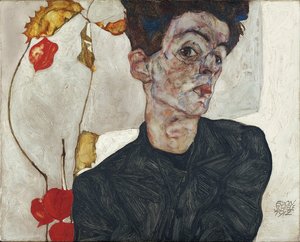
Egon Schiele
1890 - 1918 , Croacia
Datos clave
- Artistas Que Influyeron: ['Gustav Klimt']
- Fecha De Muerte: 1918
- Fecha De Nacimiento: 12 de junio de 1890
- Influenciado A Artistas: ['Generaciones posteriores']
- Lugar De Nacimiento: Viena, Croacia
- Movimiento Artístico: Expresionismo
- Nacionalidad: Austriaco
- Nombre Completo: Egon Schiele
- Obras Notables:
- Autorretrato con Physalis
- Pareja Abraza
- Paisaje de Campo (Kreuzberg)
Artículos relacionados
Egon Schiele: Las 25 Obras Maestras que Definen su Genio | AllPaintingsStore
Descubre las 25 obras maestras de Egon Schiele, el expresionismo austriaco en su máxima expresión. Explora la historia, técnica y emociones detrás de cada pintura. Reproducciones de arte exclusivas en AllPaintingsStore.com. ¡Explora la colección completa online!

Blanco Sublime: Los 10 Cuadros Más Famosos Dominados por la Luz y el Color
Descubre los 10 cuadros blancos más emblemáticos de la historia del arte. Explora Monet, Van Gogh y Klimt, y su magistral uso de la luz y el color. Encuentra reproducciones de alta calidad e inspírate para tu decoración en .

Egon Schiele: Expressionism, Anxiety & the Modern Condition – A Comprehensive Exploration
Explore the emotionally charged world of Egon Schiele (1890-1918). Discover his Expressionist masterpieces, psychological themes, and lasting impact on modern art. A comprehensive guide for collectors & enthusiasts.

Las 10 Pinturas Más Famosas Dominadas por el Negro | Arte y Decoración
Descubre las 10 pinturas más impactantes dominadas por el negro. Explora obras maestras de Rembrandt, Goya y Rothko, su historia y significado. Encuentra reproducciones de arte exclusivas para transformar tu hogar en .

Expresionismo: 10 Obras Maestras que Revolucionaron el Arte |
Descubre las 10 obras maestras del Expresionismo que marcaron un hito en la historia del arte. Explora a Munch, Kirchner y Kandinsky en . Reproducciones de arte de museo para transformar tu hogar.


