Vista previa
 Compartir
 Compartir
 Ver detalles

 Descargar
 Ver similares
 Radiografía
 Presentación de diapositivas
Composition


 Leer más
Giclée / Impresión de arte
Impresiones giclée o en lienzo de calidad de museo con producción rápida y opciones de acabado flexibles. ( Encargar reproducción pintada a mano Comprar descarga)




P118B $10

P118H $10

P118W $10

P438Z $10

P508JH $12

P508YH $12

P805H $10

P805Z $10

P919BZ $10

P919G $10

P919XJ $10

P959ZH $10

P968JZ $12

W106C $8

W218G $10

W218JH $8

W218Y $10

W307PJ $10

W316G $10

W316PJ $8

W316Y $10

W398PJ $8

W4111J $10

W500HY $15

W500JH $15

W692G $12

W849H $8

W940BG $15

W953PJ $8




Elija entre nuestros tamaños predefinidos que respetan las proporciones originales de la obra.

Puede introducir sus propias dimensiones para adaptarse a un marco o espacio específico. Si el tamaño seleccionado no coincide con las proporciones de la imagen original, recortaremos la obra de arte o extenderemos la imagen con un borde con efecto espejo o de color sólido. Se enviará una maqueta digital para su aprobación antes de que comience la producción.
Tenga en cuenta que la vista previa en pantalla no refleja el recorte o la extensión real. Solo la maqueta mostrará con precisión la composición final.
Aunque existen tamaños personalizados, recomendamos seleccionar una dimensión de la lista predefinida para preservar las proporciones originales.
Envío a todo el mundo () en 2 semanas en lugar de las 4/5 semanas estándar. (14 agosto)

Envío exprés gratuito a todo el mundo

Lienzo de lino de alta calidad

Seguro de envío completo

Garantía de reembolso de aranceles aduaneros

Garantía de fidelidad cromática exacta

Política de devolución de 60 días (solo por defectos)

Garantía de devolución del 100% del dinero

Oferta por volumen
 La opción de vidrio solo está disponible en tamaños inferiores a 110 cm.

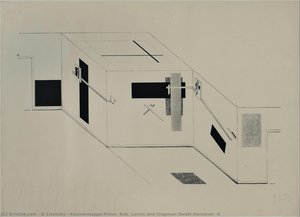
Composition
Giclée / Impresión de arte
Tamaño de la reproducción
-


Precio total
$ 64
Descripción de la pieza
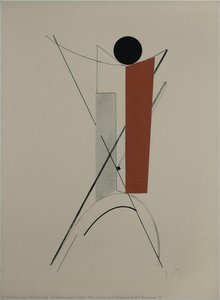
A Deconstructed Vision of Flight: El Lissitzky’s ‘Composition’ (1920)
This dynamic work by El Lissitzky, created in 1920, is a compelling example of early 20th-century abstraction and a pivotal piece within the artist's exploration of *Proun* – his unique brand of Suprematism. Rather than presenting a literal depiction, ‘Composition’ offers a fragmented, geometric interpretation of an airplane or flying machine, embodying the era’s fascination with technology and its potential for transformation.Style & Influences: Cubism, Constructivism, and Suprematism
The artwork is deeply rooted in the avant-garde movements that swept through Russia following the 1917 Revolution. It skillfully blends elements of Cubism, evident in its multiple perspectives and fractured forms, with the tenets of Constructivism, which prioritized geometric abstraction and industrial materials. However, it’s Lissitzky's connection to Suprematism – a movement founded by his mentor Kazimir Malevich – that truly defines this piece. Like other Suprematist works, ‘Composition’ seeks to reduce art to its most fundamental forms: lines, shapes, and colors, aiming for a purely non-objective aesthetic experience.Technique & Materials: Watercolor, Pencil, and Layered Depth
Lissitzky masterfully employs a mixed media technique, layering delicate watercolor washes over precise pencil sketches. This creates a sense of transparency and depth within the composition, despite its flattened perspective. The visible pencil lines aren’t concealed but rather celebrated as integral to the artwork's structure, lending it an almost architectural quality. The restrained color palette – primarily muted tones and washes – further emphasizes the formal exploration over narrative content. The texture achieved through layering gives a subtle grainy effect, adding visual interest.Historical Context: A Revolutionary Aesthetic
Created in the aftermath of the Russian Revolution, ‘Composition’ reflects the spirit of innovation and utopian ideals that characterized the period. Lissitzky believed art could be a powerful tool for social change, and his work often aimed to embody the dynamism and progressiveness of the new Soviet state. He wasn't merely depicting an airplane; he was visualizing the *idea* of flight – its speed, power, and potential to connect people and ideas. Lissitzky’s involvement with UNOVIS (The Union of New Art), a Suprematist group he co-founded with Malevich, further solidified his commitment to abstract art as a vehicle for revolutionary expression.Symbolism & Emotional Impact: Futurity and Technological Advancement
While largely non-representational, ‘Composition’ evokes a sense of technological advancement and the promise of a futuristic world. The deconstructed airplane can be interpreted as a symbol of progress, but also perhaps hints at the complexities and potential disruptions that come with rapid innovation. The dynamic arrangement of forms creates a feeling of energy and movement, while the overall effect is one of intellectual rigor and formal exploration. It’s not an artwork designed to evoke immediate emotional resonance in a traditional sense; rather, it invites viewers to engage with its abstract language and contemplate the possibilities of a new visual order.Collecting & Interior Design
A reproduction of ‘Composition’ would serve as a striking focal point in any modern or contemporary interior. Its geometric abstraction complements minimalist design schemes, while its historical significance adds depth and intellectual weight to a space. The muted color palette makes it versatile, working well with a variety of accent colors and furnishings. For collectors interested in the Russian avant-garde, Constructivism, or Suprematism, this piece represents a key moment in art history – a testament to Lissitzky’s visionary talent and his enduring influence on graphic design, architecture, and abstract art.Obras relacionadas


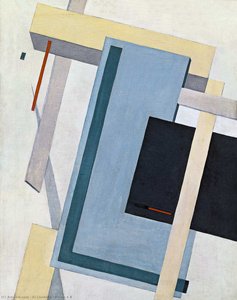

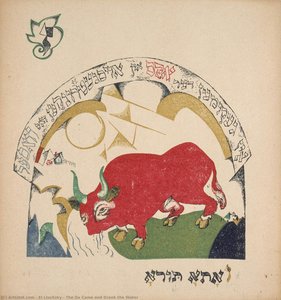


Biografía del artista
vida temprana y educación
El Lissitzky, un reconocido artista, diseñador, fotógrafo, tipógrafo, polémico y arquitecto ruso, nació el 23 de noviembre de 1890 en Pochinok, Rusia. Su vida temprana estuvo marcada por un interés innato en dibujar, lo que le llevó a recibir instrucción de Yehuda Pen, un artista judío local, a los 13 años.carrera e influencias
La carrera de Lissitzky se caracterizó por su colaboración con Kazimir Malevich en el desarrollo del suprematismo, influyendo significativamente en los movimientos Bauhaus y constructivista. Su obra, que abarcaba diversos medios, desempeñó un papel fundamental en la configuración del diseño gráfico del siglo XX.- Contribuciones clave:
- Desarrolló el grupo artístico suprematista Unovis con Kazimir Malevich
- Creó la serie Proun, una variante de la serie suprematista
- Sirvió como embajador cultural ruso a Weimar, Alemania, influyendo en las figuras clave del movimiento Bauhaus y De Stijl.
- Innovaciones:
- Tipografía
- Diseño de exposiciones
- Fotomontaje
- Diseño de libros
obras notables y legado
Algunas de las obras notables de Lissitzky incluyen:- El Constructor (1924), un fotomontaje autorretrato que presenta temas recurrentes como la mano de Dios, vinculando su herencia judía con los movimientos artísticos contemporáneos.
- Un cartel de propaganda soviético (1941), una de sus últimas obras, instando a la gente a construir más tanques para luchar contra la Alemania nazi.
museos y colecciones
La obra de Lissitzky se puede encontrar en varios museos, incluyendo:- Museo de Arte de Taganrog, Rusia /es/art/show/art-d3bb5m-es/
- Museo de Arte de Novokuznetsk, Rusia /es/art/show/art-d3akex-es/
fundación y catálogo razonado
En 2014, se estableció la Fundación Lissitzky en colaboración con el Museo Van Abbemuseum y académicos líderes de todo el mundo para preservar el legado del artista y preparar un catálogo razonado de su obra.- Para obtener más información sobre El Lissitzky, visite: https://AllPaintingsStore.com/@/el-lissitzky
- Explore las obras expuestas en el Museo de Arte de Taganrog: /es/art/show/to-explore-the-artworks-exhibited-in-taganrog-art-museum/
referencias:
- https://en.wikipedia.org/wiki/el_lissitzky
- https://AllPaintingsStore.com/@/el-lissitzky
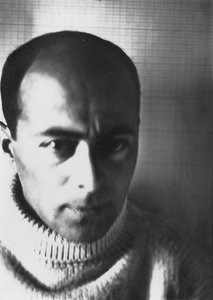
El Lissitzky
1890 - 1941 , Rusia
Datos clave
- Artistas Influenciados Por Este Artista:
- Bauhaus
- De Stijl
- Artistas Que Influyeron: ['Kazimir Malevich']
- Fecha De Muerte: 1941
- Fecha De Nacimiento: 23 de noviembre de 1890
- Lugar De Nacimiento: Pochinki, Rusia
- Movimiento Artístico: Suprematismo, Constructivismo
- Nacionalidad: Ruso
- Nombre Completo: El Lissitzky
- Obras Notables:
- El Constructor (1924)
- Serie Proun
- Cartel de propaganda soviético
Artículos relacionados

Cubist Expression: A Professional Guide to Integrating Geometric Abstraction into Modern Hospitality Design
Elevate hospitality interiors with Cubist art. Our expert guide explores integrating geometric abstraction into hotel design through high-quality, large-scale oil reproductions and custom multi-panel commissions tailored for professional designers and procurement managers.