


 Ver en contexto
 Enviar
 Compartir
 Detalles
 Guía
Guía

 Descargar
 Similares
 Radiografía
 Presentación de diapositivas
 Preguntas y respuestas
 Estadísticas
Composition


 Ver más
Giclée / Impresión de arte
Impresiones giclée o en lienzo de calidad de museo con producción rápida y opciones de acabado flexibles. ( Comprar pintura hecha a mano Cambiar a imagen digital)




P118B €10

P118H €10

P118W €10

P438Z €10

P508JH €12

P508YH €12

P805H €10

P805Z €10

P919BZ €10

P919G €10

P919XJ €10

P959ZH €10

P968JZ €12

W106C €8

W218G €10

W218JH €8

W218Y €10

W307PJ €10

W316G €10

W316PJ €8

W316Y €10

W398PJ €8

W4111J €10

W500HY €15

W500JH €15

W692G €12

W849H €8

W940BG €15

W953PJ €8




Elija entre nuestros tamaños predefinidos que respetan las proporciones originales de la obra.

Introduzca el ancho y el alto que necesite para adaptarse a su marco o pared. Una impresión solo puede recortarse, nunca hacerse más grande que la imagen original, por lo que un tamaño con una forma distinta perderá parte de la obra. Le enviaremos una maqueta digital para su aprobación antes de realizar cualquier impresión. La imagen que se muestra en esta página no refleja el recorte real; solo la maqueta lo hace.
Envío a todo el mundo () en 2 semanas en lugar de las 4/5 semanas estándar. (5 noviembre)

Envío exprés gratuito a todo el mundo

Lienzo de lino de alta calidad

Seguro de envío total

Garantía de reembolso de aranceles aduaneros

Garantía de fidelidad cromática exacta

Política de devolución de 100 días (solo por defectos)

Garantía de devolución del 100% del dinero

Descuento por cantidad
 La opción de vidrio solo está disponible en tamaños inferiores a 110 cm.

Composition
Giclée / Impresión de arte
Dimensiones de la reproducción
-


Precio total final
€ 58
A Pioneer of Geometric Abstraction: Exploring Fernand Léger’s “Composition”
Fernand Léger's "Composition," painted in 1919, represents a crucial juncture in the trajectory of modern art—a bold assertion that abstraction could simultaneously honor and interpret the burgeoning influence of industrialization. More than just a visually striking image, it embodies Léger’s profound engagement with the transformative forces reshaping European society at the dawn of the twentieth century. The painting immediately captivates with its harmonious blend of geometric forms: circles dominate the canvas, interspersed with squares that create a dynamic interplay of shapes and textures. These aren't merely decorative elements; they are deliberate choices reflecting Léger’s fascination with machine construction and his desire to distill visual experience into fundamental building blocks.- Subject Matter: The artwork presents a carefully arranged tableau featuring commonplace objects – a clock, a cup, and a bowl – positioned against a backdrop of abstract geometric shapes. This juxtaposition is key to Léger’s artistic strategy.
- Style & Technique: Léger's style aligns squarely with the burgeoning movement of Geometric Abstraction, spearheaded by artists like Piet Mondrian and Kazimir Malevich. He employed a technique characterized by bold color palettes—primarily reds, yellows, and blues—applied in flat planes of pigment to achieve maximum visual impact. The surface is treated with a matte finish, emphasizing texture and solidity despite the absence of representational detail.
Historical Context: Embracing the Machine Age
“Composition” emerged during a period marked by unprecedented technological advancements – the rapid expansion of factories, railways, and automobiles – fundamentally altering daily life and reshaping perceptions of space and time. Léger wasn’t simply reacting to these changes; he actively sought to translate their essence into artistic expression. The machine age symbolized efficiency, precision, and a rejection of organic forms in favor of geometric structures. Léger believed that art should mirror the rhythms and patterns of industrial society, capturing its energy and dynamism without resorting to illusionistic representation. This conviction stemmed from his own experiences working as a sculptor on railway carriages, where he witnessed firsthand the transformative power of mechanized production.Symbolism Beyond Form: Exploring Underlying Ideas
While seemingly devoid of narrative content, “Composition” is laden with symbolic significance. The repetition of geometric shapes—circles and squares—represents stability and order amidst the chaos of industrial progress. Léger deliberately avoided depicting recognizable subjects to focus on conveying a deeper emotional response – a feeling of optimism and dynamism rooted in the belief that humanity could harness technology for constructive purposes. The inclusion of everyday objects serves as a reminder that even the most mundane aspects of life can be imbued with artistic meaning, prompting viewers to contemplate the relationship between art and reality.Emotional Impact & Artistic Legacy
Ultimately, “Composition” transcends its formal elements to evoke a sense of purposeful energy and quiet contemplation. Léger’s masterful manipulation of color and form communicates not just visual beauty but also an underlying conviction in the transformative potential of modern civilization. It stands as a testament to his pioneering role in establishing Geometric Abstraction as a dominant aesthetic force, influencing generations of artists who followed him. Reproductions of this artwork offer collectors and interior designers alike a chance to experience the enduring power of Léger’s vision—a celebration of form and function united in pursuit of an aesthetically compelling representation of the world around us.Preguntas y respuestas
¿Con qué técnica se realizó "Composition"?
"Composition" está realizada en Acrílico.
¿"Composition" de Fernand Léger utiliza contrastes fuertes o armonías suaves?
En "Composition", un Contraste máximo contraste se combina con una Armonía equilibrada armonía.
¿Dónde puedo encontrar estadísticas sobre "Composition" de Fernand Léger?
Existe una página de Estadísticas para "Composition". En ella se detallan las visitas mensuales de la obra y de otras piezas del artista, con desgloses por país e idioma.
Obras relacionadas


Biografía del artista
vida temprana y formación
fernand léger, un pintor, escultor y cineasta francés, nació el 4 de febrero de 1881 en Argentán, Orne, Baja Normandía. Su padre criaba ganado, y Léger inicialmente se formó como arquitecto de 1897 a 1899. Luego se mudó a París en 1900, ganándose la vida como dibujante arquitectónico.desarrollo artístico
El trabajo temprano de Léger estuvo influenciado por el impresionismo, como se ve en le jardin de ma mère (mi madre's garden) (1905). Después de asistir a la escuela de artes decorativas y la academia Julian, comenzó a trabajar seriamente como pintor a los 25 años. Su estilo evolucionó hacia una forma personal del cubismo, que los críticos denominaron "tubismo" por su énfasis en las formas cilíndricas.cubismo y el grupo puteaux
En 1910, Léger expuso en el salón de otoño junto a jean metzinger y henri le fauconnier. Se unió al grupo puteaux, también conocido como la sección dorada (la sección de oro), junto con otros artistas como francis picabia y marcel duchamp.guerra y su influencia en el trabajo de léger
Las experiencias de Léger en la Primera Guerra Mundial impactaron significativamente su obra. Durante su tiempo en el frente, produjo dibujos de piezas de artillería, aviones y soldados compañeros. Su pintura soldier with a pipe (1916) refleja este período.obra posterior y legado
La obra posterior de Léger, caracterizada por formas mecánicas y elegantes, lo vinculó a la tradición de la pintura figurativa francesa. Sus paisajes animados de 1921 mostraron figuras y animales en formas armoniosas y aerodinámicas.- ver obras de fernand léger en AllPaintingsStore
- más sobre fernand léger en wikipedia
- descubra el musée national fernand léger (francia) con AllPaintingsStore
- la mujer sentada (100 x 81 cm, tubismo)
- elemento de máquina (cubismo)
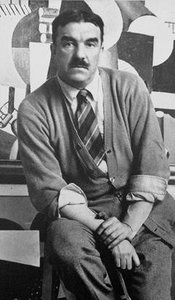
Fernand Léger
1881 - 1955 , Francia
Datos clave
- Artistas Influenciados Por: ['Pop Art']
- Artistas Que Influyeron:
- Cézanne
- Impresionismo
- Fecha De Nacimiento: 4 de febrero de 1881
- Lugar De Nacimiento: Argentan, Francia
- Movimiento Artístico:
- Cubismo
- Tubismo
- Nacionalidad: Francés
- Nombre Completo: Fernand Léger
- Obras Notables:
- La Mujer Sentada
- Elemento de Máquina
- El Gran Desfile
- Paisajes Animados
Artículos relacionados

Las 25 mejores obras de Kazimir Malevich: Guía definitiva del Suprematismo
Explora las 25 obras maestras de Kazimir Malevich y el Suprematismo. ¡Descubre toda la colección en AllPaintingsStore.com!

Beyond Form & Color: Geometric Abstraction's Evolution in 20th/21st Century Art
Explore the evolution of geometric abstraction from Cubism to contemporary art. Discover key artists like Malevich & Mondrian, investment insights, and expert collecting advice at AllPaintingsStore.

Dominando la Era de la Máquina: Las 25 Mejores Obras de Fernand Léger
Explora las 25 obras maestras de Fernand Léger y su estilo Tubista. ¡Descubre toda la colección en AllPaintingsStore.com!

Abstracción Geométrica: 10 Obras Maestras que Transformaron el Arte Moderno | AllPaintingsStore
Descubre las 10 obras maestras de la abstracción geométrica que revolucionaron el arte moderno. Explora a Mondrian, Malevich y Kandinsky en AllPaintingsStore.com. Reproducciones de alta calidad para tu hogar.

Dominando la Abstracción: Las 25 Obras Más Icónicas de Wassily Kandinsky
Explora las 25 obras maestras de Kandinsky y su arte abstracto. Descubre reproducciones de museo en AllPaintingsStore.com.


