Vista previa
 Compartir
 Compartir
 Ver detalles

 Descargar
 Ver similares
 Radiografía
 Presentación de diapositivas
Learning to read


 Leer más
Giclée / Impresión de arte
Impresiones giclée o en lienzo de calidad de museo con producción rápida y opciones de acabado flexibles. ( Comprar pintura hecha a mano Comprar imagen)




P118B $10

P118H $10

P118W $10

P438Z $10

P508JH $12

P508YH $12

P805H $10

P805Z $10

P919BZ $10

P919G $10

P919XJ $10

P959ZH $10

P968JZ $12

W106C $8

W218G $10

W218JH $8

W218Y $10

W307PJ $10

W316G $10

W316PJ $8

W316Y $10

W398PJ $8

W4111J $10

W500HY $15

W500JH $15

W692G $12

W849H $8

W940BG $15

W953PJ $8




Elija entre nuestros tamaños predefinidos que respetan las proporciones originales de la obra.

Puede introducir sus propias dimensiones para adaptarse a un marco o espacio específico. Si el tamaño seleccionado no coincide con las proporciones de la imagen original, recortaremos la obra de arte o extenderemos la imagen con un borde con efecto espejo o de color sólido. Se enviará una maqueta digital para su aprobación antes de que comience la producción.
Tenga en cuenta que la vista previa en pantalla no refleja el recorte o la extensión real. Solo la maqueta mostrará con precisión la composición final.
Aunque existen tamaños personalizados, recomendamos seleccionar una dimensión de la lista predefinida para preservar las proporciones originales.
Envío a todo el mundo () en 2 semanas en lugar de las 4/5 semanas estándar. (12 agosto)

Envío exprés gratuito a todo el mundo

Lienzo de lino de alta calidad

Seguro de envío completo

Garantía de reembolso de aranceles aduaneros

Garantía de fidelidad cromática exacta

Política de devolución de 60 días (solo por defectos)

Garantía de devolución del 100% del dinero

Oferta por volumen
 La opción de vidrio solo está disponible en tamaños inferiores a 110 cm.

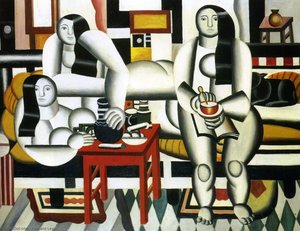
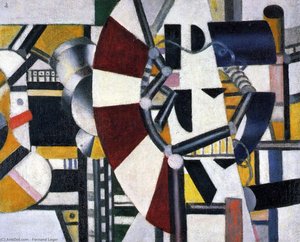
Learning to read
Giclée / Impresión de arte
Tamaño de la reproducción
-


Precio total
$ 64
Descripción de la pieza
The Geometry of Grace: Exploring Léger's Vision
To stand before a work by Fernand Léger is to encounter a dialogue between the organic and the mechanical, a conversation that defines much of early 20th-century modernism. This piece, dating from 1923, captures the artist at a fascinating crossroads in his career—a moment where the raw energy of industrialization met the enduring poetry of human form. Léger was never content to simply depict; he sought to analyze and reconstruct reality through the lens of pure form. Here, that intellectual rigor is softened by an almost pastoral tenderness, inviting the viewer into a space that feels both meticulously constructed and wonderfully spontaneous.
Subject Matter and Compositional Harmony
The central focus remains undeniably the woman, rendered with Léger’s characteristic fascination for the body as a series of interlocking, cylindrical, and geometric volumes. She is portrayed holding a delicate bouquet of flowers, an act that speaks to tradition and natural beauty. Yet, even these soft elements are framed by his signature graphic sensibility. Scattered throughout the composition are three distinct mushrooms—small, almost whimsical accents placed with deliberate care. These fungi, alongside the woman’s necklace, serve as visual anchors, breaking the flow of the main figure and adding an intriguing layer of symbolic depth. The interplay between the graceful curve of the woman's neck and the rigid placement of these natural objects creates a compelling tension that is utterly characteristic of Léger’s genius.
Technique and Historical Resonance
Executed in a stark, evocative black and white drawing style, the technique emphasizes line and silhouette over mere tonal gradation. This choice strips away the distraction of color, forcing the viewer to confront the underlying structure—the pure geometry beneath the surface appearance. In 1923, Léger was deeply immersed in the spirit of the machine age, yet this work suggests a counter-rhythm. It speaks to an era grappling with rapid societal change; the dynamism of the modern city juxtaposed against the timeless cycle represented by flowers and natural growth. The drawing itself feels like a blueprint for a new kind of vision, one that honors both the engine and the ephemeral bloom.
Symbolism and Emotional Echoes
What resonates most deeply with the collector or decorator is the piece's emotional ambiguity. Are these mushrooms symbols of hidden knowledge, as in folklore? Is the woman’s composure a reflection of inner strength amidst external chaos? Léger invites us to participate in the interpretation. The contrast between the soft femininity and the hard-edged composition suggests that true beauty—whether found in art, nature, or life itself—is always a synthesis: a perfect balance struck between the fluid and the fixed. Owning this reproduction is not merely acquiring an image; it is curating a conversation piece that speaks to the enduring tension between structure and spirit.
Obras relacionadas



Biografía del artista
vida temprana y formación
fernand léger, un pintor, escultor y cineasta francés, nació el 4 de febrero de 1881 en Argentán, Orne, Baja Normandía. Su padre criaba ganado, y Léger inicialmente se formó como arquitecto de 1897 a 1899. Luego se mudó a París en 1900, ganándose la vida como dibujante arquitectónico.desarrollo artístico
El trabajo temprano de Léger estuvo influenciado por el impresionismo, como se ve en le jardin de ma mère (mi madre's garden) (1905). Después de asistir a la escuela de artes decorativas y la academia Julian, comenzó a trabajar seriamente como pintor a los 25 años. Su estilo evolucionó hacia una forma personal del cubismo, que los críticos denominaron "tubismo" por su énfasis en las formas cilíndricas.cubismo y el grupo puteaux
En 1910, Léger expuso en el salón de otoño junto a jean metzinger y henri le fauconnier. Se unió al grupo puteaux, también conocido como la sección dorada (la sección de oro), junto con otros artistas como francis picabia y marcel duchamp.guerra y su influencia en el trabajo de léger
Las experiencias de Léger en la Primera Guerra Mundial impactaron significativamente su obra. Durante su tiempo en el frente, produjo dibujos de piezas de artillería, aviones y soldados compañeros. Su pintura soldier with a pipe (1916) refleja este período.obra posterior y legado
La obra posterior de Léger, caracterizada por formas mecánicas y elegantes, lo vinculó a la tradición de la pintura figurativa francesa. Sus paisajes animados de 1921 mostraron figuras y animales en formas armoniosas y aerodinámicas.- ver obras de fernand léger en AllPaintingsStore
- más sobre fernand léger en wikipedia
- descubra el musée national fernand léger (francia) con AllPaintingsStore
- la mujer sentada (100 x 81 cm, tubismo)
- elemento de máquina (cubismo)
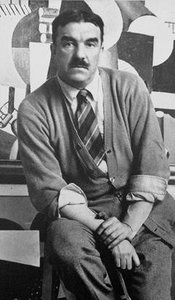
Fernand Léger
1881 - 1955 , Francia
Datos clave
- Artistas Influenciados Por: ['Pop Art']
- Artistas Que Influyeron:
- Cézanne
- Impresionismo
- Fecha De Nacimiento: 4 de febrero de 1881
- Lugar De Nacimiento: Argentan, Francia
- Movimiento Artístico:
- Cubismo
- Tubismo
- Nacionalidad: Francés
- Nombre Completo: Fernand Léger
- Obras Notables:
- La Mujer Sentada
- Elemento de Máquina
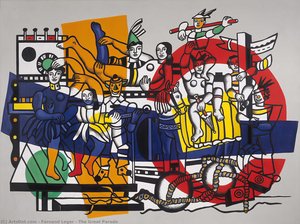
- El Gran Desfile
- Paisajes Animados
Artículos relacionados

Modern Geometry & Machine Age Beauty: A Collector's Guide to the Cubist Vision of Fernand Léger
Explore the profound geometric mastery of Fernand Léger. Discover how his 'Tubism' and Machine Age aesthetics redefined modern art, offering timeless inspiration for discerning collectors seeking to integrate Cubist dynamism into sophisticated contemporary interiors.

Theatrical Elegance: The Art Deco Genius of Erté and the Era of Fashion Illustration
Explore the theatrical elegance of Erté and the Art Deco era. Discover how his mastery of geometric line and fashion illustration can elevate luxury hospitality design through premium, hand-painted reproductions and bespoke architectural art solutions.