


 Ver en contexto
 Enviar
 Compartir
 Detalles
 Guía
Guía

 Descargar
 Similares
 Radiografía
 Presentación de diapositivas
 Q&A
Q&A Estadísticas
Rooftops
 Acrylic
- WallArt
- Geometric Abstraction
 1912
1912 42.0 x 32.0 cm
 Ver más
Giclée / Impresión de arte
Impresiones giclée o en lienzo de calidad de museo con producción rápida y opciones de acabado flexibles. ( Comprar pintura hecha a mano Cambiar a imagen digital)




P118B €10

P118H €10

P118W €10

P438Z €10

P508JH €12

P508YH €12

P805H €10

P805Z €10

P919BZ €10

P919G €10

P919XJ €10

P959ZH €10

P968JZ €12

W106C €8

W218G €10

W218JH €8

W218Y €10

W307PJ €10

W316G €10

W316PJ €8

W316Y €10

W398PJ €8

W4111J €10

W500HY €15

W500JH €15

W692G €12

W849H €8

W940BG €15

W953PJ €8




Elija entre nuestros tamaños predefinidos que respetan las proporciones originales de la obra.

Introduzca el ancho y el alto que necesite para adaptarse a su marco o pared. Una impresión solo puede recortarse, nunca hacerse más grande que la imagen original, por lo que un tamaño con una forma distinta perderá parte de la obra. Le enviaremos una maqueta digital para su aprobación antes de realizar cualquier impresión. La imagen que se muestra en esta página no refleja el recorte real; solo la maqueta lo hace.
Envío a todo el mundo () en 2 semanas en lugar de las 4/5 semanas estándar. (30 octubre)

Envío exprés gratuito a todo el mundo

Lienzo de lino de alta calidad

Seguro de envío total

Garantía de reembolso de aranceles aduaneros

Garantía de fidelidad cromática exacta

Política de devolución de 100 días (solo por defectos)

Garantía de devolución del 100% del dinero

Descuento por cantidad
 La opción de vidrio solo está disponible en tamaños inferiores a 110 cm.

Rooftops
Giclée / Impresión de arte
Dimensiones de la reproducción
-


Precio total final
€ 56
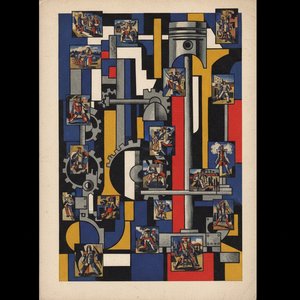
A Symphony of Steel and Stone: Exploring Fernand Léger’s Rooftops
Fernand Léger's "Rooftops," painted in 1912, isn’t merely a depiction of urban architecture; it’s an ambitious declaration of artistic intent—a bold experiment in translating the burgeoning anxieties and exhilarations of the early twentieth century onto canvas. Created during a period marked by rapid industrialization and technological advancement, Léger's watercolor captures a cityscape brimming with energy, reflecting the pervasive influence of machine aesthetics on artistic sensibilities. The painting’s subject matter – rooftops viewed from above – is deceptively simple, yet it serves as a springboard for profound explorations into form, color, and the artist’s relationship to his environment.- Subject Matter: Léger eschews traditional landscapes in favor of an urban panorama, prioritizing geometric abstraction over representational accuracy. The rooftops themselves are rendered with meticulous attention to detail—their varied textures and angles conveying a palpable sense of solidity and permanence against the backdrop of movement.
- Style & Technique: Léger’s distinctive style is characterized by “Constructivism,” an artistic movement that championed geometric abstraction as a means of expressing social ideals. He employs bold, angular brushstrokes—primarily in shades of gray and ochre—to build up layered planes of color, creating a visual rhythm reminiscent of industrial machinery. The watercolor medium lends itself beautifully to capturing the subtle nuances of light and shadow, enhancing the painting’s textural richness.
Preguntas y respuestas
¿Qué tono predominante recorre "Rooftops" de Fernand Léger?
"Rooftops" se inclina hacia un tono Ochre to Sepia.
¿Qué nivel de contraste presenta "Rooftops" de Fernand Léger?
El contraste entre luces y sombras de "Rooftops" se registra como Serene. El contraste describe la intensidad con la que difieren las zonas claras y oscuras.
¿Qué técnica se utilizó para "Rooftops" y cuándo fue creada?
"Rooftops" fue realizada en 1912, en Acrylic.
Obras relacionadas


Biografía del artista
vida temprana y formación
fernand léger, un pintor, escultor y cineasta francés, nació el 4 de febrero de 1881 en Argentán, Orne, Baja Normandía. Su padre criaba ganado, y Léger inicialmente se formó como arquitecto de 1897 a 1899. Luego se mudó a París en 1900, ganándose la vida como dibujante arquitectónico.desarrollo artístico
El trabajo temprano de Léger estuvo influenciado por el impresionismo, como se ve en le jardin de ma mère (mi madre's garden) (1905). Después de asistir a la escuela de artes decorativas y la academia Julian, comenzó a trabajar seriamente como pintor a los 25 años. Su estilo evolucionó hacia una forma personal del cubismo, que los críticos denominaron "tubismo" por su énfasis en las formas cilíndricas.cubismo y el grupo puteaux
En 1910, Léger expuso en el salón de otoño junto a jean metzinger y henri le fauconnier. Se unió al grupo puteaux, también conocido como la sección dorada (la sección de oro), junto con otros artistas como francis picabia y marcel duchamp.guerra y su influencia en el trabajo de léger
Las experiencias de Léger en la Primera Guerra Mundial impactaron significativamente su obra. Durante su tiempo en el frente, produjo dibujos de piezas de artillería, aviones y soldados compañeros. Su pintura soldier with a pipe (1916) refleja este período.obra posterior y legado
La obra posterior de Léger, caracterizada por formas mecánicas y elegantes, lo vinculó a la tradición de la pintura figurativa francesa. Sus paisajes animados de 1921 mostraron figuras y animales en formas armoniosas y aerodinámicas.- ver obras de fernand léger en AllPaintingsStore
- más sobre fernand léger en wikipedia
- descubra el musée national fernand léger (francia) con AllPaintingsStore
- la mujer sentada (100 x 81 cm, tubismo)
- elemento de máquina (cubismo)

Fernand Léger
1881 - 1955 , Francia
Datos clave
- Artistas Influenciados Por: ['Pop Art']
- Artistas Que Influyeron:
- Cézanne
- Impresionismo
- Fecha De Nacimiento: 4 de febrero de 1881
- Lugar De Nacimiento: Argentan, Francia
- Movimiento Artístico:
- Cubismo
- Tubismo
- Nacionalidad: Francés
- Nombre Completo: Fernand Léger
- Obras Notables:
- La Mujer Sentada
- Elemento de Máquina
- El Gran Desfile
- Paisajes Animados
Artículos relacionados

Abstracción Geométrica: 10 Obras Maestras que Transformaron el Arte Moderno | AllPaintingsStore
Descubre las 10 obras maestras de la abstracción geométrica que revolucionaron el arte moderno. Explora a Mondrian, Malevich y Kandinsky en AllPaintingsStore.com. Reproducciones de alta calidad para tu hogar.

Acuarelas Legendarias: 10 Obras Maestras que Transformaron el Arte | AllPaintingsStore
Descubre 10 acuarelas legendarias de Turner, Monet y Sargent que revolucionaron el arte. Explora la historia, técnica y belleza de estas obras maestras impresionistas y románticas. Reproducciones de museo en AllPaintingsStore.com.
Fernand Léger: Las 25 Obras Maestras del Tubismo y la Vanguardia Francesa | AllPaintingsStore
Descubre las 25 obras maestras de Fernand Léger, pionero del tubismo y la vanguardia francesa. Explora su estética industrial, composiciones geométricas y vibrantes colores. Reproducciones de arte exclusivas en AllPaintingsStore.com.

Visiones Efímeras: Historia y Resonancia Emocional de la Pintura Acuarela
Descubre la fascinante historia de la acuarela, desde sus orígenes hasta su expresión contemporánea. Explora técnicas, artistas clave como Paul Klee y encuentra reproducciones de alta calidad en AllPaintingsStore.

Ephemeral Visions: Exploring the Artistic Legacy & Contemporary Practice of Watercolor Painting
Explore the captivating world of watercolor painting! Discover its rich history, essential techniques, influential artists & collecting tips. A comprehensive guide for art enthusiasts from AllPaintingsStore.


