


 Vista previa
 Compartir
 Compartir
 Ver detalles
 Guía
Guía

 Descargar
 Ver artículos similares
 Radiografía
 Presentación de diapositivas
 Estadísticas
Still Life


 Leer más
Adquiera una imagen digital de alta resolución y optimizada, muy superior a la vista previa en línea.
Cada archivo es preparado meticulosamente por nuestros especialistas internos mediante el uso de herramientas avanzadas y un experto retoque manual. Nos aseguramos de que cada imagen posea una claridad excepcional, una precisión cromática impecable y un detalle minucioso.
El archivo final se entrega por correo electrónico en un plazo de 72 horas, optimizado para su uso inmediato en entornos profesionales, editoriales y de impresión. Esta es la misma calidad en la que confían los estudios de diseño, las editoriales y las galerías de primer nivel.
Imagen Digital
Descarga un archivo de alta resolución para exhibición personal, impresión y proyectos creativos. ( Cambiar a formato impreso Encargar reproducción pintada a mano)
Incluido en cada pedido de imágenes digitales
Entrega digital experta, garantizada.
Al elegir AllPaintingsStore.com, no solo está adquiriendo una imagen; está recibiendo una obra de arte digital mejorada profesionalmente, elaborada con precisión y respaldada por una garantía de satisfacción. Esto es todo lo que incluye su pedido, automáticamente:

Entrega inmediata por email
Recibirá su archivo de imagen digital en alta resolución por correo electrónico en un plazo de 72 horas tras realizar su pedido, listo para su uso inmediato.

Archivo digital optimizado por IA
Su obra de arte se optimiza profesionalmente mediante herramientas avanzadas de IA y edición manual, garantizando el máximo detalle, claridad y precisión cromática.

Reenvío gratuito de por vida
¿Has borrado o perdido tu archivo por error? No te preocupes: te lo volveremos a enviar en cualquier momento, sin coste adicional.

Sin gastos de importación, siempre
Disfrute de su obra de arte al instante sin aduanas, aranceles ni gastos de envío; las descargas digitales siempre están libres de impuestos.

Garantía de precisión de color
Garantizamos que su imagen digital refleje los colores originales con la mayor fidelidad posible, mediante el uso de herramientas profesionales y gestión del color.

Garantía de satisfacción de 100 días
Si no está satisfecho con su imagen digital, la revisaremos o le reembolsaremos el 100% en un plazo de 100 días, sin preguntas.

100% Garantía de devolución de dinero
¿No está satisfecho? Obtenga un reembolso completo dentro de los 100 días posteriores a la recepción de su archivo digital, sin preguntas.

Descuentos por volumen
Compra 3 imágenes, ahorra 10% - Compra 5, ahorra 15% - Compra 10+, ahorra 20%. Ideal para proyectos creativos, galerías y agencias.
A Symphony of Steel and Color: Decoding Fernand Léger’s Still Life
In the realm of modern art, few names resonate with as much mechanical energy and rhythmic vitality as Fernand Léger. His 1931 masterpiece, Still Life, serves as a profound window into an era where the boundaries between the organic world and the industrial age began to blur. This painting transcends mere representation; it embodies the very spirit of a burgeoning industrial age. More than just an assemblage of objects—a cup, bowl, spoon, fork, bottle, book, and coins—the work is a deliberate manifesto of Léger’s artistic philosophy: to reconcile abstraction with observation, mirroring the transformative influence of machinery on human experience. This isn't simply depicting what exists; it is conveying how we perceive it through the lens of a modern, accelerating world.
Léger firmly established himself within the Cubist movement, yet he famously rejected its traditional fragmentation in favor of a simplified, geometric vocabulary that some critics termed "tubism." In this particular work, the artist utilizes bold, flattened planes of color—primarily vibrant reds, yellows, and blues—to create an almost sculptural effect. These hues are not chosen arbitrarily; they reflect the vibrancy of industrial pigments and evoke a sense of energetic dynamism. The objects within the composition, appearing as if forged from polished metal, possess a shiny, reflective quality that catches the eye, lending the canvas a palpable sense of weight and presence. Through his meticulous attention to detail, Léger ensures that even these abstracted forms retain recognizable references to everyday life, making the avant-garde accessible to the soul.
The Pulse of the Machine Age
Painted during the height of Léger’s artistic output, Still Life speaks directly to the anxieties and aspirations surrounding technological advancement in Europe during the early 1930s. Léger was deeply fascinated by the burgeoning industrial landscape—the factories, the railways, and the urban sprawl—and sought to capture its essence through a visual language that prioritized form over illusion. While his contemporaries might have retreated into purely ethereal abstraction, Léger remained anchored to the tangible, finding beauty in the structured essence of everyday objects. This piece aligns perfectly with his broader project of reimagining art as a tool for communicating the realities of modern life, where the grace of the human experience meets the precision of the machine.
Beyond its surface brilliance, the painting carries a subtle symbolic weight that resonates with anyone seeking order in a changing world. The repetition of geometric shapes—the steadfast circles and sturdy squares—represents stability and structure amidst the perceived chaos of industrial progress. Léger deliberately avoids sentimental or romanticized depictions; instead, he presents a world that is clean, rhythmic, and unapologetically modern. For the collector or interior designer, this piece offers more than just aesthetic beauty; it provides a sophisticated focal point that brings a sense of intellectual depth and structural harmony to any space. It is an invitation to contemplate the beauty found in the intersection of the man-made and the monumental.
Preguntas y respuestas
¿Cuántas personas ven "Still Life"?
Las estadísticas sobre "Still Life" de Fernand Léger se encuentran en la página de Estadísticas de la obra: visitas mensuales de la obra, visitas a las obras del artista y desgloses por país e idioma de los visitantes recientes.
¿Se encuentra "Still Life" de Fernand Léger entre las obras más codiciadas del Cubist Modernism?
"Still Life" de Fernand Léger se clasifica como Iconic y pertenece al movimiento Cubist Modernism.
¿A qué edad creó Fernand Léger "Still Life"?
Fernand Léger tenía 50 años cuando creó "Still Life" en 1931. La edad se calcula a partir del año de nacimiento del artista, 1881.
¿A qué artista se le atribuye "Still Life"?
"Still Life" fue creada por Fernand Léger. La información en esta página describe la obra original de Fernand Léger.
¿A qué época pertenece "Still Life"?
"Still Life" de Fernand Léger pertenece al periodo Modern. Este periodo proporciona el contexto histórico de la obra.
¿Puedo ver una vista de rayos X de "Still Life" de Fernand Léger?
"Still Life" puede examinarse capa por capa en la página Rayos X de la obra, un visor inspirado en una mesa de luz de restauración que ofrece once lecturas ópticas de la imagen.
¿En qué año se creó "Still Life" de Fernand Léger?
"Still Life" de Fernand Léger fue creada en 1931.
Obras relacionadas


Biografía del artista
vida temprana y formación
fernand léger, un pintor, escultor y cineasta francés, nació el 4 de febrero de 1881 en Argentán, Orne, Baja Normandía. Su padre criaba ganado, y Léger inicialmente se formó como arquitecto de 1897 a 1899. Luego se mudó a París en 1900, ganándose la vida como dibujante arquitectónico.desarrollo artístico
El trabajo temprano de Léger estuvo influenciado por el impresionismo, como se ve en le jardin de ma mère (mi madre's garden) (1905). Después de asistir a la escuela de artes decorativas y la academia Julian, comenzó a trabajar seriamente como pintor a los 25 años. Su estilo evolucionó hacia una forma personal del cubismo, que los críticos denominaron "tubismo" por su énfasis en las formas cilíndricas.cubismo y el grupo puteaux
En 1910, Léger expuso en el salón de otoño junto a jean metzinger y henri le fauconnier. Se unió al grupo puteaux, también conocido como la sección dorada (la sección de oro), junto con otros artistas como francis picabia y marcel duchamp.guerra y su influencia en el trabajo de léger
Las experiencias de Léger en la Primera Guerra Mundial impactaron significativamente su obra. Durante su tiempo en el frente, produjo dibujos de piezas de artillería, aviones y soldados compañeros. Su pintura soldier with a pipe (1916) refleja este período.obra posterior y legado
La obra posterior de Léger, caracterizada por formas mecánicas y elegantes, lo vinculó a la tradición de la pintura figurativa francesa. Sus paisajes animados de 1921 mostraron figuras y animales en formas armoniosas y aerodinámicas.- ver obras de fernand léger en AllPaintingsStore
- más sobre fernand léger en wikipedia
- descubra el musée national fernand léger (francia) con AllPaintingsStore
- la mujer sentada (100 x 81 cm, tubismo)
- elemento de máquina (cubismo)
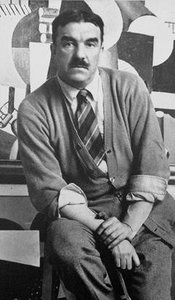
Fernand Léger
1881 - 1955 , Francia
Datos clave
- Artistas Influenciados Por: ['Pop Art']
- Artistas Que Influyeron:
- Cézanne
- Impresionismo
- Fecha De Nacimiento: 4 de febrero de 1881
- Lugar De Nacimiento: Argentan, Francia
- Movimiento Artístico:
- Cubismo
- Tubismo
- Nacionalidad: Francés
- Nombre Completo: Fernand Léger
- Obras Notables:
- La Mujer Sentada
- Elemento de Máquina
- El Gran Desfile
- Paisajes Animados

