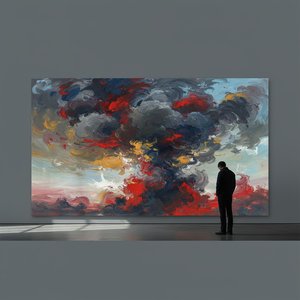
1992. Acrílico sobre lienzo. Galería IDB ArtLAC.

§ 1Catalogue data


Esta obra está protegida por derechos de autor
La obra de arte que se muestra en esta página está protegida por las leyes de propiedad intelectual, lo que significa que no podemos crear ni vender legalmente una reproducción idéntica. Esta protección se hace cumplir en virtud de acuerdos internacionales como el Convenio de Berna y por las leyes nacionales, incluidas aquellas establecidas por el Ley de derechos de autor de los EE. UU. - Título 17.
Como una alternativa respetuosa y legal, ofrecemos obras de arte personalizadas y pintadas a mano inspiradas en la original. Nuestros expertos y profesionales del arte estudian cuidadosamente el estilo, el sentimiento y la esencia artística de la obra original para crear una pieza nueva y única que evoque la misma sensación, siendo al mismo tiempo una creación original por derecho propio.
Este método cumple plenamente con las normativas de derechos de autor, ya que no implica la copia ni la duplicación de la obra protegida. En su lugar, se trata de una reinterpretación creativa: una nueva pintura influenciada por la original, pero que no es idéntica a ella.
 Leer más información
§ 2Abstract
Descripción del objeto
Fernando de Szyszlo fusionó el expresionismo abstracto con tradiciones ancestrales andinas en esta obra maestra que captura la esencia del paisaje peruano y la fuerza de la naturaleza. Una pieza única para coleccionistas amantes del arte moderno.
Biografía del artista
Fernando de Szyszlo (1925-2017) fue un artista abstracto peruano clave que fusionó el modernismo europeo con temas precolombinos y motivos incas. Explora sus pinturas, esculturas y su legado en el arte latinoamericano.
§ 3Commentary
Fernando de Szyszlo: Bridging Ancient Echoes and Modern Expression
Fernando de Szyszlo (1925-2017) stands as a monumental figure in Peruvian art history, recognized for his pioneering role in establishing abstract expressionism within Latin America while simultaneously honoring the profound legacy of Andean culture. Born in Lima to a Peruvian mother of Spanish-Indian descent and a Polish father, Szyszlo’s formative years instilled in him an appreciation for both European intellectual traditions and indigenous heritage—a duality that would profoundly shape his artistic vision. This confluence of influences is palpable throughout his oeuvre, resulting in canvases brimming with vibrant color palettes and dynamic compositions that defy conventional representation. Szyszlo's formal training at the National University of Engineering initially steered him toward architecture, yet he swiftly abandoned this path for the transformative allure of the School of Plastic Arts of Pontifical Catholic University of Peru. It was there that he encountered the burgeoning movement of abstract expressionism—a European trend spearheaded by artists like Jackson Pollock and Willem de Kooning—and embraced it wholeheartedly. This decision marked a decisive break from academic realism, propelling him toward an exploration of emotion and intuition as primary drivers of artistic creation. His extensive travels across Europe exposed him to the masterpieces of masters such as Rembrandt and Titian, whose masterful use of light and shadow instilled in Szyszlo a deep understanding of tonal harmony—a skill he skillfully incorporated into his paintings. Similarly, Tintoretto’s dramatic theatricality influenced his compositions, emphasizing dynamism and grandeur. These artistic encounters fueled his desire to synthesize European modernist principles with the symbolic richness of Andean iconography, resulting in artworks that resonate with both intellectual sophistication and spiritual depth. Szyszlo's signature style is characterized by bold brushstrokes and a masterful manipulation of color—often employing contrasting hues to generate visual tension and convey profound emotional states. He frequently utilized textured surfaces, achieved through layering paint and incorporating collage elements, mirroring the rugged landscapes of Peru and reflecting the spirit of Andean cosmology. Recurring motifs include stylized representations of mountains, llamas, and geometric patterns reminiscent of Inca textiles—symbols that evoke notions of resilience, harmony, and connection to ancestral traditions. “Duino-Nueve (Orrantia/92)” exemplifies Szyszlo’s artistic prowess. The painting depicts a solitary figure wielding a knife, positioned atop a wall or ledge, conveying an aura of formidable presence and hinting at underlying conflict. The dark background amplifies the dramatic impact of the image, focusing attention on the figure's face and hands—elements rendered with meticulous detail. Szyszlo’s deliberate use of color contributes to the artwork’s emotive power, creating a palpable sense of danger and conveying a complex psychological narrative. This piece stands as a testament to Szyszlo’s ability to distill profound philosophical ideas into visually arresting compositions—a feat that cements his place among Peru's most celebrated artists.- Title: Duino-Nueve (Orrantia/92)
- Artist: Fernando de Szyszlo
- Year: 1992
Preguntas y respuestas
¿En qué etapa de la trayectoria de Fernando De Szyszlo se sitúa "Duino-Nueve (Orrantia/92)", dada su fecha?
La fecha de 1992 sitúa a "Duino-Nueve (Orrantia/92)" en el Mature Period del desarrollo de Fernando De Szyszlo.
¿Qué lugar ocupa "Duino-Nueve (Orrantia/92)" entre los temas recurrentes de Fernando De Szyszlo?
"Duino-Nueve (Orrantia/92)" representa landscape, knife, figure, wall, darkness, power, symbolism, peru, mientras que los temas recurrentes de Fernando De Szyszlo son european modernism, andean heritage, symbolic imagery, legacy artist, bold expression. Al comparar ambos, se observa cómo la obra se relaciona con los temas habituales del artista.
¿Cuál es la técnica y la fecha de creación de "Duino-Nueve (Orrantia/92)" de Fernando De Szyszlo?
"Duino-Nueve (Orrantia/92)" fue creada en 1992 mediante la técnica de Acrílico sobre lienzo. El material y la fecha describen cómo y cuándo se realizó la obra original.


 Cambiar a impresiones


 Para obras de arte o reproducciones que midan más de 105 cm (aproximadamente 41 pulgadas) en cualquiera de sus lados, el marco se enviará como un kit desmontado. Este método garantiza una entrega segura y evita daños durante el transporte.