


 Vista previa
 Compartir
 Compartir
 Ver detalles

 Descargar
 Ver similares
 Radiografía
 Presentación de diapositivas
Laughing Boy


 Leer más
Giclée / Impresión de arte
Impresiones giclée o en lienzo de calidad de museo con producción rápida y opciones de acabado flexibles. ( Encargar reproducción pintada a mano Comprar descarga)




P118B $10

P118H $10

P118W $10

P438Z $10

P508JH $12

P508YH $12

P805H $10

P805Z $10

P919BZ $10

P919G $10

P919XJ $10

P959ZH $10

P968JZ $12

W106C $8

W218G $10

W218JH $8

W218Y $10

W307PJ $10

W316G $10

W316PJ $8

W316Y $10

W398PJ $8

W4111J $10

W500HY $15

W500JH $15

W692G $12

W849H $8

W940BG $15

W953PJ $8




Elija entre nuestros tamaños predefinidos que respetan las proporciones originales de la obra.

Puede introducir sus propias dimensiones para adaptarse a un marco o espacio específico. Si el tamaño seleccionado no coincide con las proporciones de la imagen original, recortaremos la obra de arte o extenderemos la imagen con un borde con efecto espejo o de color sólido. Se enviará una maqueta digital para su aprobación antes de que comience la producción.
Tenga en cuenta que la vista previa en pantalla no refleja el recorte o la extensión real. Solo la maqueta mostrará con precisión la composición final.
Aunque existen tamaños personalizados, recomendamos seleccionar una dimensión de la lista predefinida para preservar las proporciones originales.
Envío a todo el mundo () en 2 semanas en lugar de las 4/5 semanas estándar. (17 agosto)

Envío exprés gratuito a todo el mundo

Lienzo de lino de alta calidad

Seguro de envío completo

Garantía de reembolso de aranceles aduaneros

Garantía de fidelidad cromática exacta

Política de devolución de 60 días (solo por defectos)

Garantía de devolución del 100% del dinero

Oferta por volumen
 La opción de vidrio solo está disponible en tamaños inferiores a 110 cm.

Laughing Boy
Giclée / Impresión de arte
Tamaño de la reproducción
-


Precio total
$ 64
Descripción de la pieza
A Moment of Unburdened Joy: Frans Hals’ “Laughing Boy”
Frans Hals' "Laughing Boy," painted around 1625, isn’t merely a portrait; it’s a distillation of youthful exuberance captured with an unprecedented immediacy. This small, circular canvas—a ‘tondo,’ as these intimate portraits are known—immediately draws the viewer in with its subject’s open-mouthed grin and wide, innocent eyes. It's a scene brimming with life, a fleeting moment frozen in time that speaks volumes about the spirit of childhood and the artist’s remarkable ability to convey personality through subtle brushstrokes.
The painting exists within the context of Hals’ innovative approach to portraiture during the Dutch Golden Age. He deliberately moved away from the stiff formality prevalent at the time, favoring a looser, more spontaneous style that prioritized capturing the subject's essence rather than adhering to rigid conventions. Hals was fascinated by the ‘tronie,’ a genre of informal character studies—often depicting young boys or girls—that allowed him to explore expressive gestures and fleeting emotions. “Laughing Boy” exemplifies this approach perfectly; it’s not a meticulously posed likeness, but a vibrant portrayal of a boy lost in his own world, radiating an infectious joy.
The Dance of the Brush: Technique and Style
Hals' distinctive technique is immediately apparent upon closer inspection. His brushwork isn’t blended or smoothed; instead, it’s visible, dynamic, and full of energy. He employed a ‘wet-in-wet’ method—applying paint while the previous layer was still wet—which creates soft edges and luminous effects. This technique contributes significantly to the painting's sense of immediacy and spontaneity. Notice how the brushstrokes follow the contours of the boy’s face, capturing the play of light and shadow with remarkable sensitivity.
The color palette is restrained yet effective. The predominantly white shirt provides a bright backdrop for the boy’s youthful features, while subtle variations in tone suggest the texture of his skin and clothing. Hals masterfully uses highlights to draw attention to the boy's face, emphasizing his open mouth and sparkling eyes – the very source of the painting’s captivating charm. The lack of background detail further focuses our attention on the subject, intensifying the feeling of intimacy.
Symbolism and Interpretation
While seemingly simple, “Laughing Boy” is rich in symbolic potential. The boy's laughter isn’t just a display of happiness; it represents freedom, innocence, and a carefree spirit—qualities highly valued during the turbulent times of the Dutch Republic. Some art historians have suggested that the soap bubble floating above his head – a detail often overlooked – symbolizes fleeting beauty and the ephemeral nature of childhood joy. It's a visual reminder that these moments are precious and should be cherished.
The circular format itself is significant. Tondos were popular in Hals’ time, offering a sense of intimacy and immediacy. They also allowed him to experiment with composition and create a visually engaging portrait. The round shape mirrors the boy's face, further emphasizing his youthful appearance and creating a harmonious whole.
A Timeless Echo: Emotional Impact
"Laughing Boy" transcends its historical context and continues to resonate with viewers today because of its profound emotional impact. It’s a painting that evokes feelings of warmth, nostalgia, and pure joy. The boy's genuine smile is infectious, inviting us to share in his carefree spirit. It serves as a poignant reminder of the simple pleasures of life—a moment of unburdened happiness captured forever on canvas.
Whether viewed in person or reproduced, “Laughing Boy” remains a testament to Frans Hals’ genius and a timeless celebration of childhood innocence. It's more than just a portrait; it’s an invitation to rediscover the joy within ourselves.
Obras relacionadas


Biografía del artista
Frans Hals: Life and Legacy
Frans Hals the Elder, born in Antwerp around 1582, stands as a cornerstone of Dutch Golden Age painting—a period characterized by unprecedented artistic creativity and economic expansion. His family relocated to Haarlem when he was young, seeking refuge from the turbulent religious climate gripping Europe at the time. Precise details concerning his formative years remain elusive, yet scholarly consensus suggests he joined the Haarlem Guild of St. Luke – a bastion of artistic prestige – where foundational training undoubtedly instilled in him the principles of classical draughtsmanship and compositional technique.Artistic Development and Style
Hals distinguished himself from his contemporaries through an astonishingly original stylistic vision. Rejecting the idealized portraits prevalent during his era, he championed a more visceral and spontaneous approach to painting. His brushwork was deliberately loose and visible—a revolutionary departure from polished surfaces—creating an immediate impression of movement and capturing the essence of his subjects with remarkable realism. This pioneering technique foreshadowed the burgeoning Impressionist movement, signaling a dramatic shift towards prioritizing sensory experience over meticulous detail.- Loose Brushwork: Hals’ signature style involved applying paint in free, energetic strokes, eschewing blending techniques favored by many artists of the time.
- Capturing Personality: He possessed an unparalleled ability to convey emotion and character—a hallmark of his portraits that distinguishes them from mere likenesses.
- Genre Scenes: Beyond formal portraiture, Hals excelled in depicting scenes of everyday life—bustling marketplaces, lively tavern gatherings—injecting dynamism and humor into his canvases.
Major Works and Achievements
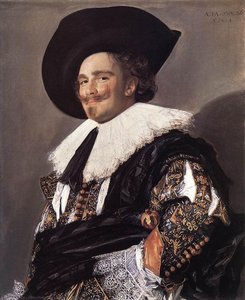
Throughout his prolific career spanning over four decades, Hals produced a substantial oeuvre encompassing individual portraits, monumental group portraits (a genre he fundamentally reshaped), and captivating genre paintings. Among his most celebrated masterpieces are:- The Laughing Cavalier (1624): Arguably his magnum opus, this portrait encapsulates Hals’ mastery of capturing fleeting expressions—a testament to his observational skill and artistic intuition.
- Portrait of a Man with a Black Hat (c. 1635): Demonstrating exceptional textural rendering and psychological insight, this piece exemplifies Hals' ability to convey subtle nuances of character through meticulous brushwork.
- Regents of the St. Elisabeth Hospital (1641): A complex group portrait showcasing Hals’ compositional prowess—he skillfully arranged multiple figures within a single frame while maintaining visual harmony and conveying a sense of collective presence.
- Malle Babbe (c. 1633-1635): An unconventional portrayal of an elderly woman—Hals eschewed idealized beauty, opting instead for unflinching realism that captured the dignity and vulnerability of his subject.
Influences and Legacy
While Hals’ artistic influences remain debated among scholars, evidence suggests he drew inspiration from earlier Flemish masters like Anthony van Dyck and Pieter Versteyn—artists who championed similar stylistic conventions. However, Hals's true innovation lay in his rejection of academic formalism and his embrace of spontaneity—a decision that profoundly impacted subsequent generations of painters. His legacy extends far beyond the canvases themselves; he established a new standard for portraiture—one characterized by psychological depth and artistic dynamism—solidifying his place as one of the most influential figures in Dutch art history. Hals’ work continues to inspire artists today, demonstrating the enduring power of observation and expressive brushwork.Historical Significance
Hals flourished during the apex of the Dutch Golden Age—a period marked by economic prosperity, intellectual ferment, and artistic experimentation. His paintings reflect the humanist values prevalent at the time—a belief in human dignity and potential—and celebrate the vibrancy of everyday life. Frans Hals died peacefully in Haarlem in 1666, leaving behind an unparalleled artistic legacy that continues to captivate audiences worldwide. Today, his portraits reside in prestigious museums across Europe and America, serving as enduring symbols of Dutch artistic excellence and a testament to Hals’ unwavering commitment to capturing the human spirit with breathtaking artistry.
Frans Hals
1582 - 1666 , Bélgica
Datos clave
- Artistic Movement Or Style: Dutch Golden Age painting, Baroque
- Artists Who Influenced This Artist:
- Nicolaes Pieterszoon Berchem
- Cornelis Hendrickszoon Vroom
- Date Of Birth: c. 1582
- Date Of Death: 1666
- Full Name: Frans Hals the Elder
- Nationality: Dutch
- Notable Artworks:
- The Laughing Cavalier
- Portrait of a Man with a black hat
- Regents of the St. Elisabeth Hospital
- Place Of Birth: Antwerp, Belgium
Artículos relacionados

Frans Hals I: Innovation, Intimacy & the Dutch Golden Age Portrait
Explore the revolutionary portraiture of Frans Hals I, a master of the Dutch Golden Age. Discover his innovative techniques, captivating character studies & lasting impact on art history. Learn more at AllPaintingsStore.
Los 10 Maestros del Barroco Holandés: Obras que Definen una Época | AllPaintingsStore
Descubre los 10 imprescindibles del Barroco holandés: Rembrandt, Vermeer y más. Explora la historia, técnica y belleza de estas obras maestras. Reproducciones de arte en AllPaintingsStore.com para decorar tu hogar con elegancia.
Los 10 Maestros del Siglo de Oro Holandés: Arte, Historia y Decoración Exclusiva
Descubre los 10 imprescindibles del Siglo de Oro Holandés: Rembrandt, Vermeer y más. Explora la historia, técnica y belleza de estos lienzos clásicos. Encuentra reproducciones de arte exclusivas para decorar tu hogar en .

Golden Light & Dutch Skies: The Timeless Magic of Dutch Golden Age Landscapes
Discover the breathtaking beauty of Dutch Golden Age landscapes. Explore the mastery of light, chiaroscuro, and 17th-century realism through an expert art history lens, celebrating the enduring legacy of the Dutch Masters for discerning collectors and art lovers.

La Luz y la República: Innovación Artística en el Siglo de Oro Neerlandés
Descubra la innovación artística del Siglo de Oro Neerlandés. Explore las obras maestras de Rembrandt y Vermeer, técnicas revolucionarias y el legado perdurable de este florecimiento cultural. ¡Sumérjase en la luz y la belleza!



