Óleo sobre lienzo.

§ 1Datos del catálogo


§ 2Abstracto
Descripción del objeto
Franz Marc, maestro del expresionismo alemán, captura la esencia de la naturaleza en 'Sueño caballo'. Esta obra maestra combina colores vibrantes y una composición dinámica para transmitir emociones profundas.
 Ver más
Biografía del artista
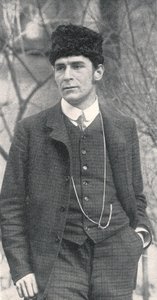
Pionero del expresionismo alemán y cofundador de Der Blaue Reiter. Explora hoy sus vibrantes y simbólicas pinturas de animales.
§ 3Comentario
Dreaming Horse
Franz Marc was a prominent figure in the German Expressionist movement, and his painting Dreaming Horse is a quintessential example of this style. Created in 1912, this oil on canvas artwork showcases Marc’s unique blend of vibrant colors and emotive subjects.Style and Media
The Dreaming Horse painting exemplifies the characteristics of Expressionism, with its bold brushstrokes and vivid colors. Marc's use of oil paint allowed him to achieve a thick, textured surface that adds depth and volume to the horse’s form. The artist’s simplified, almost abstracted style focuses on the essential elements of the subject matter, creating a dynamic energy that brings the horse to life.Meaning and Interpretation
The Dreaming Horse can be seen as a representation of Marc’s deep connection with nature and his belief in the spiritual power of animals. The horse's serene expression and dreamlike state suggest a sense of mysticism and otherworldliness, inviting viewers to contemplate the deeper meanings of the work. As an Expressionist artist, Marc sought to convey his emotional responses to the world around him, and this painting is no exception.Relevant Works by Franz Marc
Some of Marc's other notable works include The Red Deer, which can be found on AllPaintingsStore.com. This painting, created in 1912, is a testament to Marc’s unique style and his ability to blend vibrant colors with emotive subjects. Another notable work is Sleeping Deer, which showcases Marc’s use of cubist techniques and his fascination with the natural world.- Visit AllPaintingsStore.com to discover more masterpieces by Franz Marc
- Learn more about the Museum Collection Hugo Fischer on AllPaintingsStore.com
- Read about the life and work of Franz Marc on Wikipedia
Photo Description: The painting is a colorful and abstract piece of artwork featuring various animals and objects. The main focus is on two blue birds, one located in the top left corner and another towards the bottom right side of the painting. There are also several other birds scattered throughout the image, some closer to the center while others are positioned near the edges. In addition to the birds, there are three people visible within the painting. One person is situated on the left side, another in the middle, and a third one towards the right side of the artwork. The people appear to be interacting with or observing the animals in the scene. The painting also includes various objects such as a guitar located near the top center, a bowl positioned at the bottom left corner, and two apples placed on the right side of the image. These elements contribute to the overall vibrant and dynamic nature of the artwork. Size: Unknown Date: Unknown Artist Information:
A Life Immersed in Color and Spirit
Franz Moritz Wilhelm Marc, born in Munich in 1880, was a painter whose brief but intensely focused career irrevocably altered the course of German Expressionism. His story is one of profound spiritual seeking translated into a vibrant visual language, a quest to understand the essence of life through the purity he found in the natural world—particularly within the animal kingdom. Initially influenced by his father, Wilhelm Marc, a landscape painter; young Franz’s artistic path wasn't immediately certain. He briefly considered theology, grappling with questions of faith and existence before ultimately dedicating himself to art at the Academy of Fine Arts in Munich. These early explorations into religious thought would remain deeply embedded within his work, shaping his belief that art could be a conduit for spiritual experience. His academic training provided him with technical foundations, but it was encounters with the works of Vincent van Gogh that truly ignited his artistic imagination. Van Gogh’s expressive brushstrokes and emotional intensity resonated profoundly with Marc, inspiring him to embrace a similar approach in his own paintings. He quickly abandoned traditional academic conventions, favoring instead a style characterized by simplification and abstraction—a deliberate rejection of representational art in favor of conveying inner feelings and perceptions. This stylistic shift was driven by a conviction that art should transcend mere imitation of reality, aiming instead to capture the essence of experience itself. Marc’s artistic vision was profoundly shaped by his engagement with philosophical currents of the time, notably Nietzsche’s critique of morality and metaphysics. He sought to express the anxieties and uncertainties inherent in modern life, reflecting on themes of death, suffering, and transcendence—subjects that would become central to his oeuvre. His exploration of symbolism—particularly Jungian archetypes—further enriched his artistic vocabulary, allowing him to delve into the unconscious mind and explore universal myths and symbols. Marc’s artistic output spanned a remarkable range of mediums, including oil paintings, watercolors, etchings, and lithographs. However, it is his animal paintings that stand out as particularly iconic, embodying his unwavering devotion to nature and his belief in its spiritual significance. These works—such as *The Red Deer*, *Sleeping Deer*, and *Dreaming Horse*—are characterized by their luminous colors, stylized forms, and evocative compositions—a testament to Marc’s mastery of artistic technique and his ability to communicate profound emotional truths. His distinctive style—often described as “animal mysticism”—became synonymous with the Blaue Reiter circle, cementing his place among the foremost artists of German Expressionism. The Blaue Reiter group—which included Wassily Kandinsky, Gabriele Münter, Franz Ernst Krauss, and Alexej Rode—challenged prevailing artistic conventions and championed a radical aesthetic that prioritized intuition and emotion over rational representation. Marc’s participation in this influential collective fostered an environment of experimentation and collaboration, propelling him to the forefront of avant-garde art. Despite facing persecution during the Nazi era—when his work was deemed “degenerate”—Marc's legacy endured, securing his position as one of Germany’s most celebrated painters. His paintings continue to inspire artists and viewers alike, reminding us of the transformative power of art to convey spiritual insight and capture the beauty of the natural world. Marc died in 1916 during World War I—a tragic loss for the artistic community—but his enduring influence on modern art remains undeniable. He is remembered as a visionary artist who dared to confront existential questions and express profound emotions through a uniquely expressive visual language. His unwavering commitment to artistic integrity—coupled with his deep reverence for nature—continues to resonate powerfully today.Preguntas y respuestas
¿Cómo se construye la composición cromática de "Sueño caballo" de Franz Marc?
La composición cromática de "Sueño caballo" de Franz Marc combina un contraste Audaz con una armonía Paleta discordante.
¿Con qué otros nombres o alias se conoce a Franz Marc?
Franz Marc también es conocido como Franz Moritz Wilhelm Marc.
¿Qué nivel de luminancia tiene "Sueño caballo" de Franz Marc?
La luminancia registrada para "Sueño caballo" de Franz Marc es Luminosidad suave.


 Cambiar a impresiones


 Para obras de arte o reproducciones que midan más de 105 cm (aproximadamente 41 pulgadas) en cualquiera de sus lados, el marco se enviará como un kit desmontado. Este método garantiza una entrega segura y evita daños durante el transporte.