Vista previa
 Compartir
 Compartir
 Ver detalles

 Descargar
 Ver similares
 Radiografía
 Presentación de diapositivas
untitled (3690)


 Leer más
Reproducción al óleo hecha a mano
Óleo sobre lienzo pintado a mano en el tamaño y marco de su elección, realizado por encargo por nuestros artistas. ( Comprar impresión Comprar imagen)




P118B $10

P118H $10

P118W $10

P438Z $10

P508JH $12

P508YH $12

P805H $10

P805Z $10

P919BZ $10

P919G $10

P919XJ $10

P959ZH $10

P968JZ $12

W106C $8

W218G $10

W218JH $8

W218Y $10

W307PJ $10

W316G $10

W316PJ $8

W316Y $10

W398PJ $8

W4111J $10

W500HY $15

W500JH $15

W692G $12

W849H $8

W940BG $15

W953PJ $8




Elija entre nuestros tamaños predefinidos que respetan las proporciones originales de la obra.

Puede ingresar sus propias dimensiones para adaptarse a un marco o espacio específico. Si el tamaño seleccionado no coincide con las proporciones de la imagen original, recortaremos la obra o extenderemos la pintura con elementos adicionales pintados a mano. Se le enviará una maqueta digital para su aprobación antes de comenzar la producción.
Tenga en cuenta que la vista previa en pantalla no refleja el recorte o la extensión reales. Solo la maqueta mostrará con precisión la composición final.
Si bien existen tamaños personalizados, recomendamos seleccionar una dimensión de la lista predefinida para preservar las proporciones originales.
Tras realizar el pedido, el equipo de AllPaintingsStore.com enviará un correo electrónico al cliente para solicitar instrucciones y proporcionarle una vista previa del boceto.
Envío a todo el mundo () en 3-4 semanas en lugar de las 5 semanas estándar. (12 agosto). Sin comprometer la calidad.

Envío exprés gratuito a todo el mundo

Lienzo de lino de alta calidad

Seguro de envío completo

Garantía de reembolso de aranceles aduaneros

Garantía de fidelidad cromática exacta

Política de devolución de 60 días (solo por defectos)

Garantía de devolución del 100% del dinero

Oferta por volumen
 La opción de vidrio solo está disponible en tamaños inferiores a 110 cm.

untitled (3690)
Técnica de reproducción
Tamaño de la reproducción
-


Precio total
$ 258
Descripción de la obra
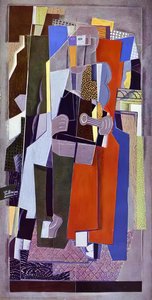
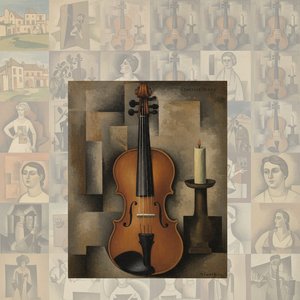
A Study in Disarray: Georges Braque’s ‘Untitled (3690)’
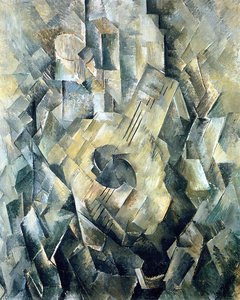
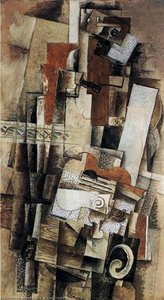
Georges Braque's “Untitled (3690),” a captivating work that seems to simultaneously invite and repel, offers a glimpse into the artist’s intensely productive period at the dawn of Cubism. Painted around 1910-1912, this piece isn’t merely a depiction of a room; it's an exploration of perception, fragmentation, and the very nature of representation. The image presents a seemingly chaotic scene: a weathered wooden door, its brown frame hinting at age and solidity, stands slightly ajar, revealing a shadowy interior. Scattered across the floor and surfaces are fragments of paper – sketches, notes, perhaps even preliminary studies – alongside a solitary book, anchoring the composition with an element of quiet contemplation amidst the surrounding disorder. The overall effect is one of controlled chaos, a deliberate disruption of traditional spatial relationships that speaks directly to the core tenets of Braque’s revolutionary approach to art. It's a visual embodiment of the intellectual and emotional turmoil characteristic of the era, reflecting the shifting realities of modern life as experienced through the lens of artistic innovation.The Roots of Fragmentation: Braque’s Early Influences
Georges Braque’s journey toward becoming a pivotal figure in 20th-century art began not within the rarefied atmosphere of Parisian studios but in his family's workshop, where he learned the craft of house painting and decoration. This practical grounding—a deep understanding of materials, structure, and the manipulation of space – proved invaluable as he later dismantled and reimagined traditional artistic conventions. Born in Argenteuil in 1882, Braque’s upbringing instilled a keen eye for form and an appreciation for the technical aspects of visual representation. Crucially, his early exposure to Cézanne's work, particularly through the 1907 retrospective at the Salon d'Automne, proved transformative. Cézanne’s exploration of multiple perspectives and geometric forms laid the groundwork for Braque’s later experiments with Cubism, prompting him to question the established rules of pictorial space and delve into a more fractured, multi-dimensional approach to depicting reality. This lineage—a blend of artisanal skill and academic study—is evident in “Untitled (3690),” where the seemingly random arrangement of objects is governed by an underlying geometric logic.Cubism’s Delicate Dance: Collaboration with Picasso
“Untitled (3690)” stands as a testament to the collaborative spirit that fueled the development of Cubism alongside Pablo Picasso. During this period, Braque and Picasso engaged in a dynamic exchange of ideas, each pushing the boundaries of artistic expression while simultaneously influencing the other. Initially, their work was almost indistinguishable, a phenomenon documented by art historian John Rewie who noted that “the effect of his encounter with Picasso was more to accelerate and intensify Braque’s exploration of Cézanne’s ideas, rather than to divert his thinking in any essential way.” This intense partnership resulted in a shared vocabulary of fragmented forms, overlapping planes, and multiple viewpoints – techniques vividly demonstrated in "Untitled (3690)." The painting's monochromatic palette—likely influenced by the desire to strip away superficial details and focus on underlying structure—further emphasizes this geometric exploration. The deliberate ambiguity of the interior space, glimpsed through the open door, mirrors the Cubist principle of presenting multiple perspectives simultaneously, challenging the viewer’s perception of depth and spatial relationships.Symbolism in the Everyday: The Language of Disarray
Beyond its formal innovations, “Untitled (3690)” is rich with symbolic potential. The open door suggests a transition, an invitation into an unknown space—perhaps representing the anxieties and uncertainties of modern life. The scattered papers, reminiscent of a scholar’s workspace or an artist's studio, hint at intellectual activity, creative process, and the accumulation of knowledge. The solitary book offers a counterpoint to the surrounding chaos, suggesting a yearning for order, reflection, and perhaps even escape. Braque wasn’t simply depicting a room; he was exploring the relationship between the tangible world and the realm of ideas, capturing the essence of a mind grappling with complex concepts. The deliberate lack of clear narrative or emotional content allows the viewer to project their own interpretations onto the scene, making “Untitled (3690)” a profoundly personal and evocative work.Bringing Braque’s Vision Home: A High-Quality Reproduction
AllPaintingsStore offers meticulously crafted hand-painted reproductions of Georges Braque's "Untitled (3690)," allowing you to experience the power and complexity of this seminal artwork in your own space. Our skilled artisans faithfully recreate Braque’s distinctive style, capturing the subtle nuances of color, texture, and composition with exceptional detail. Whether adorning a contemporary living room or a sophisticated study, this reproduction serves as a powerful reminder of Braque's revolutionary contribution to modern art—a testament to his ability to transform the ordinary into the extraordinary through the language of fragmentation and geometric abstraction. Explore our selection today and bring a piece of art history into your world.Obras relacionadas


Biografía del artista
**vida temprana y formación**
georges braque, un destacado pintor francés, collageador, dibujante, grabador y escultor, nació el 13 de mayo de 1882 en Argelo, Val-d'Oise. Creció en Le Havre y inicialmente se formó para ser pintor de casas y decorador, como su padre y abuelo. Sin embargo, las inclinaciones artísticas de Braque lo llevaron a estudiar pintura en la École des Beaux-Arts en Le Havre de 1897 a 1899.**evolución artística y fauvismo**
En 1902, después de completar su aprendizaje con un decorador en París, Braque asistió a la Academia Humbert hasta 1904. Este período marcó su introducción al fauvismo, un estilo caracterizado por colores vibrantes y respuestas emocionales. Influenciado por las obras de henri matisse y andré derain, Braque adoptó un enfoque fauvista, como se ve en su pintura the patience (fauvismo, óleo sobre lienzo).**contribución al cubismo**
La colaboración de Braque con pablo picasso desde 1908 hasta 1912 llevó al desarrollo del cubismo. Sus obras cubistas analíticas, como georges braque: the patience y pablo picasso: clarinet(cubismo analítico, óleo sobre lienzo), se consideran hitos en la historia del arte.**legado y obras notables**
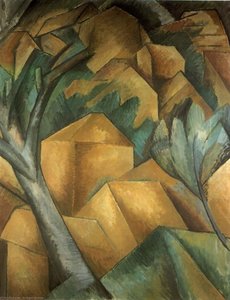
* Houses at l'Estaque: un testimonio del uso innovador de la geometría y la perspectiva simultánea de Braque. * The Patience(fauvismo, óleo sobre lienzo): demuestra el estilo fauvista de Braque. * Clarinet(cubismo analítico, óleo sobre lienzo): una obra cubista colaborativa con Picasso.**museos y colecciones**
* Musée d'Orsay: presenta una extensa colección de arte impresionista y postimpresionista, incluyendo obras de Braque. * Musée de l'Orangerie: exhibe una amplia gama de obras de arte, incluyendo las de Braque y otros artistas notables.- Descubra más sobre la vida y obra de Georges Braque en AllPaintingsStore.com
- Explore la colección del Musée d'Orsay, que presenta obras de Braque y otros artistas, en Musée d'Orsay - Wikipedia
- Aprenda más sobre el fauvismo y su influencia en el desarrollo del cubismo con el movimiento artístico fauvista en AllPaintingsStore.com
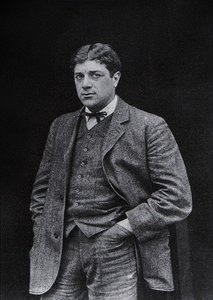
Georges Braque
1882 - 1963 , Francia
Datos clave
- Artistas Influenciados Por Este Artista: ['Pablo Picasso']
- Artistas Que Influyeron:
- Henri Matisse
- André Derain
- Paul Cézanne
- Fecha De Muerte: 31 de agosto de 1963
- Fecha De Nacimiento: 13 de mayo de 1882
- Lugar De Nacimiento: Argenteuil, Francia
- Movimiento Artístico: Cubismo, Fauvismo
- Nacionalidad: Francés
- Nombre Completo: Georges Braque
- Obras Notables:
- Casas en L'Estaque
- La paciencia (Fauvismo)
- Violin y Paleta
- Mandola
Artículos relacionados

Deconstruyendo la Realidad: El Impacto Revolucionario del Cubismo en el Arte del Siglo XX
Descubra el revolucionario impacto del Cubismo en el arte del siglo XX. Análisis profundo de Picasso, Braque y su legado. Guía para coleccionistas apasionados e inversores.

Los 10 Maestros del Cubismo: Obras que Revolucionaron el Arte | AllPaintingsStore
Descubre los 10 lienzos cubistas que revolucionaron el arte moderno. Explora las obras maestras de Picasso, Braque y Gris en AllPaintingsStore.com. Reproducciones de alta calidad para tu hogar.
Los 10 Maestros del Cubismo: Obras que Revolucionaron el Arte |
Descubre los 10 lienzos cubistas que revolucionaron el arte moderno. Explora la historia de Picasso, Braque y otros maestros del cubismo en . Reproducciones de alta calidad para tu hogar.

Georges Braque: Pioneering Cubism & the Evolution of Modern Form
Explore the revolutionary art of Georges Braque, a pioneer of Cubism alongside Picasso. Discover his artistic evolution, key works, and lasting impact on modern art. A guide for discerning collectors.
Georges Braque: Las 25 Obras Maestras del Cubismo y su Legado en el Arte Moderno
Descubre las 25 obras maestras de Georges Braque, pionero del cubismo. Explora su innovadora técnica, colores y el legado del arte moderno francés. Reproducciones de alta calidad en AllPaintingsStore.com. ¡Encuentra tu inspiración!