


 Ver en contexto
 Enviar
 Compartir
 Detalles
 Guía
Guía

 Descargar
 Similares
 Radiografía
 Presentación de diapositivas
 Preguntas y respuestas
 Estadísticas
Sometimes the road is Beautiful


 Ver más
La obra de arte que se muestra en esta página está protegida por las leyes de propiedad intelectual, lo que significa que no podemos crear ni vender legalmente una reproducción idéntica. Esta protección se hace cumplir en virtud de acuerdos internacionales como el Convenio de Berna y por las leyes nacionales, incluidas aquellas establecidas por el Ley de derechos de autor de los EE. UU. - Título 17.
Este método cumple plenamente con las normativas de derechos de autor, ya que no implica la copia ni la duplicación de la obra protegida. En su lugar, se trata de una reinterpretación creativa: una nueva pintura influenciada por la original, pero que no es idéntica a ella.
Giclée / Impresión de arte
Impresiones giclée o en lienzo de calidad de museo con producción rápida y opciones de acabado flexibles. ( Comprar pintura hecha a mano Cambiar a imagen digital)




P118B €10

P118H €10

P118W €10

P438Z €10

P508JH €12

P508YH €12

P805H €10

P805Z €10

P919BZ €10

P919G €10

P919XJ €10

P959ZH €10

P968JZ €12

W106C €8

W218G €10

W218JH €8

W218Y €10

W307PJ €10

W316G €10

W316PJ €8

W316Y €10

W398PJ €8

W4111J €10

W500HY €15

W500JH €15

W692G €12

W849H €8

W940BG €15

W953PJ €8




Elija entre nuestros tamaños predefinidos que respetan las proporciones originales de la obra.

Introduzca el ancho y el alto que necesite para adaptarse a su marco o pared. Una impresión solo puede recortarse, nunca hacerse más grande que la imagen original, por lo que un tamaño con una forma distinta perderá parte de la obra. Le enviaremos una maqueta digital para su aprobación antes de realizar cualquier impresión. La imagen que se muestra en esta página no refleja el recorte real; solo la maqueta lo hace.
Envío a todo el mundo () en 2 semanas en lugar de las 4/5 semanas estándar. (4 noviembre)

Envío exprés gratuito a todo el mundo

Lienzo de lino de alta calidad

Seguro de envío total

Garantía de reembolso de aranceles aduaneros

Garantía de fidelidad cromática exacta

Política de devolución de 100 días (solo por defectos)

Garantía de devolución del 100% del dinero

Descuento por cantidad
 La opción de vidrio solo está disponible en tamaños inferiores a 110 cm.

Sometimes the road is Beautiful
Giclée / Impresión de arte
Dimensiones de la reproducción
-


Precio total final
€ 58
A Haunting Meditation on Resilience
In the quiet, somber depths of Georges Rouault’s “Sometimes the road is Beautiful,” viewers are invited into a visceral exploration of the human condition. Rendered in a hauntingly evocative grayscale, this artwork transcends mere visual representation to become a profound meditation on suffering and the enduring strength of the spirit. The scene presents a stark, emotionally charged landscape where a group of figures huddle together against an indistinct backdrop under a heavy, cloudy sky. There is a palpable sense of melancholy within the composition, yet beneath the surface of despair lies a testament to the dignity found in shared experience and the resilience required to navigate life's most turbulent paths.
The emotional weight of the piece is carried by its masterful use of contrast and form. Rouault employs thick, assertive lines that pulsate with an almost rhythmic energy, delineating the figures and the landscape with uncompromising conviction. These are not delicate strokes; they are rough, expressive, and heavy, creating a sense of urgency that mirrors the anxieties of the era in which it was conceived. The composition utilizes a horizontal format where the background dominates, yet the clustering of bodies in the foreground creates a feeling of both unity and confinement. This tension between the vast, empty sky and the huddled, overlapping forms suggests a community bound together by their vulnerability.
The Artistry of Light and Shadow
Drawing deeply from his early training as a glass painter, Rouault utilizes a technique reminiscent of medieval stained glass artistry. Even within this monochromatic palette of blacks, whites, and varying shades of gray, there is a masterful manipulation of tonal contrast. The artist uses dark, heavy contours to frame lighter fields, creating a luminous effect that breathes life into the static forms. This method allows the figures to emerge from the shadows, emphasizing their presence and making their struggle feel immediate and tactile.
The technique itself—likely involving oil on canvas or similar layered media—reveals a loose, gestural approach. Visible brushstrokes add a layer of physical texture to the work, suggesting depth and movement even within a flattened perspective. The shapes are simplified, leaning into the principles of Expressionism, where the goal is not to replicate reality with photographic precision but to distort form for emotional truth. For the collector or interior designer, this piece offers a sophisticated focal point; its monochromatic elegance allows it to integrate seamlessly into modern, minimalist, or classical spaces, providing a soulful anchor that invites deep contemplation and conversation.
Symbolism and Historical Resonance
To look upon “Sometimes the road is Beautiful” is to witness a response to the spiritual uncertainties of its time. Created around 1917, amidst the devastating backdrop of World War I and the fervor of Parisian Expressionism, the work captures the disillusionment and profound empathy characteristic of Rouault’s vision. The central vertical element—perhaps a tree or a pole—stands as a silent sentinel within the landscape, potentially symbolizing faith, hope, or an insurmountable obstacle in the journey of life.
Every element of the piece serves a symbolic purpose: the heavy clouds represent the weight of existence, while the huddled postures of the figures speak to the necessity of human connection in times of hardship. The artwork does not shy away from the darkness; rather, it finds beauty within it, much like the title suggests. It is an invitation to find grace in the struggle and to recognize that even on the most difficult roads, there is a profound, quiet beauty to be found in the persistence of the human soul.
Preguntas y respuestas
¿Cómo se puede integrar "Sometimes the road is Beautiful" de Georges Rouault en la decoración del hogar?
Se recomienda el uso de (Mood) y su ubicación en (Living Room) para "Sometimes the road is Beautiful" de Georges Rouault.
¿Dónde puedo comprar reproducciones pintadas a mano de "Sometimes the road is Beautiful" de Georges Rouault?
Las reproducciones pintadas a mano de "Sometimes the road is Beautiful" de Georges Rouault están disponibles en este sitio web: una reproducción al óleo pintada a mano sobre lienzo de lino, y pueden solicitarse a través de su página de Reproducción al óleo pintada a mano.
¿Cómo puedo descubrir obras de arte similares a "Sometimes the road is Beautiful" de Georges Rouault?
Puedes encontrar obras similares a "Sometimes the road is Beautiful" de Georges Rouault en la página de Obras similares de esta obra.
Obras relacionadas


Biografía del artista
Primeros años y formación
Georges Henri Rouault, un pintor, dibujante e impresor francés, nació en París el 27 de mayo de 1871, en una familia humilde. Su madre fomentó su amor por las artes, y a los 14 años comenzó un aprendizaje como vidrieros y restaurador, que duró hasta 1890. Esta experiencia temprana probablemente influyó en su estilo pictórico maduro, caracterizado por el contorneado negro intenso y los colores brillantes, reminiscente del vidrio emplomado.Trayectoria artística
Durante su aprendizaje, Rouault asistió a clases nocturnas en la Escuela de Bellas Artes y posteriormente ingresó en la École des Beaux-Arts en 1891, donde estudió bajo Gustave Moreau. Los primeros trabajos de Rouault muestran un simbolismo en el uso del color, reflejando la influencia de Moreau. Tras la muerte de Moreau en 1898, Rouault fue nombrado curador del Museo Moreau en París.Fauvismo y Expresionismo
Rouault conoció a artistas notables como Henri Matisse, Albert Marquet, Henri Manguin y Charles Camoin, lo que le llevó al movimiento fauvista, con Matisse como su líder. Su uso de contrastes marcados y emotividad estuvo influenciado por Vincent van Gogh. Sus caracterizaciones de personalidades grotescas exageradas inspiraron a los pintores expresionistas.Obras destacadas y exposiciones
- En 1891, Rouault pintó *El camino del Calvario*.
- A partir de 1895, participó en importantes exhibiciones públicas, incluido el Salon d'Automne, que ayudó a fundar.
- En 1907, Rouault comenzó una serie de pinturas dedicadas a cortes, payasos y prostitutas, interpretadas como crítica moral y social.
Post-Impresionismo y Legado
Georges Rouault se dedicó a la pintura desde 1917, con la fe cristiana informando su obra. Creó diseños para el ballet *El hijo pródigo* de Diaghilev en 1929. En 1930, comenzó a exponer en países extranjeros, principalmente en Londres, Nueva York y Chicago. Rouault murió en París el 13 de febrero de 1958, dejando atrás un legado como uno de los artistas cristianos más apasionados del siglo XX. Importante: Al final de su vida, Rouault quemó 300 de sus cuadros, estimados en más de quinientos millones de francos hoy en día.
Georges Rouault
1871 - 1958 , Francia
Datos clave
- Artistas Que Influyeron:
- Gustave Moreau
- Vincent van Gogh
- Fecha De Fallecimiento: 13 de febrero de 1958
- Fecha De Nacimiento: 27 de mayo de 1871
- Influenciado Artistas: ['Expresionistas']
- Lugar De Nacimiento: París, Francia
- Movimiento Artístico: Expresionismo, Fauvismo
- Nacionalidad: Francesa
- Nombre Completo: Georges Rouault
- Obras Notables:
- El camino a Calvario
- Retratos de cortesanos
Artículos relacionados

Paisajes Románticos: 10 Obras Maestras que Definieron un Movimiento Artístico
Descubre los 10 paisajes románticos más influyentes de artistas como Caspar David Friedrich y Turner. Explora la belleza, el simbolismo y las técnicas del movimiento romántico. Reproducciones de arte exclusivas en AllPaintingsStore.com.

Evocations of Place: A Historical Journey Through Landscape Art
Explore the rich history of landscape art with AllPaintingsStore. Discover renowned artists, movements like Impressionism & Romanticism, and expert guidance for collecting timeless pieces. Find your perfect serene escape today!

Las 25 mejores obras de John Constable: Un viaje al corazón del paisaje inglés
Descubre las 25 obras maestras de John Constable y su alma romántica. Explora la colección completa en AllPaintingsStore.com.

Evocations of Place: A Historical Journey Through Landscape Art
Explore the rich history of landscape art with AllPaintingsStore. Discover renowned artists, movements like Impressionism & tonalism, and expert guidance for collecting timeless pieces. Find your perfect serene escape today!
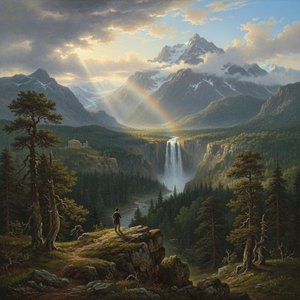
Evoking Nature's Sublime: A Comprehensive Exploration of 19th-Century Landscape Painting
Explore the captivating world of 19th-century landscape painting! Discover renowned artists like Friedrich & Monet, key movements, and find the perfect artwork to bring nature's serenity into your home. Expert insights at AllPaintingsStore.


