Vista previa
 Compartir
 Compartir
 Ver detalles

 Descargar
 Ver similares
 Radiografía
 Presentación de diapositivas
Ludorff

 Leer más
Giclée / Impresión de arte
Impresiones giclée o en lienzo de calidad de museo con producción rápida y opciones de acabado flexibles. ( Cambiar a pintura hecha a mano Cambiar a imagen)




P118B $10

P118H $10

P118W $10

P438Z $10

P508JH $12

P508YH $12

P805H $10

P805Z $10

P919BZ $10

P919G $10

P919XJ $10

P959ZH $10

P968JZ $12

W106C $8

W218G $10

W218JH $8

W218Y $10

W307PJ $10

W316G $10

W316PJ $8

W316Y $10

W398PJ $8

W4111J $10

W500HY $15

W500JH $15

W692G $12

W849H $8

W940BG $15

W953PJ $8




Elija entre nuestros tamaños predefinidos que respetan las proporciones originales de la obra.

Puede introducir sus propias dimensiones para adaptarse a un marco o espacio específico. Si el tamaño seleccionado no coincide con las proporciones de la imagen original, recortaremos la obra de arte o extenderemos la imagen con un borde con efecto espejo o de color sólido. Se enviará una maqueta digital para su aprobación antes de que comience la producción.
Tenga en cuenta que la vista previa en pantalla no refleja el recorte o la extensión real. Solo la maqueta mostrará con precisión la composición final.
Aunque existen tamaños personalizados, recomendamos seleccionar una dimensión de la lista predefinida para preservar las proporciones originales.
Envío a todo el mundo () en 2 semanas en lugar de las 4/5 semanas estándar. (5 agosto)

Envío exprés gratuito a todo el mundo

Lienzo de lino de alta calidad

Seguro de envío completo

Garantía de reembolso de aranceles aduaneros

Garantía de fidelidad cromática exacta

Política de devolución de 60 días (solo por defectos)

Garantía de devolución del 100% del dinero

Oferta por volumen
 La opción de vidrio solo está disponible en tamaños inferiores a 110 cm.

Ludorff
Giclée / Impresión de arte
Tamaño de la reproducción
-


Precio total
$ 64
Descripción de la pieza
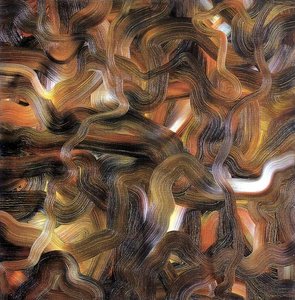
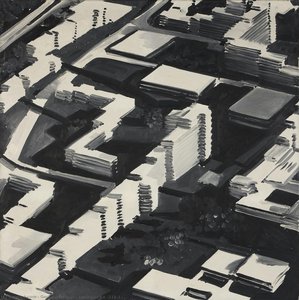
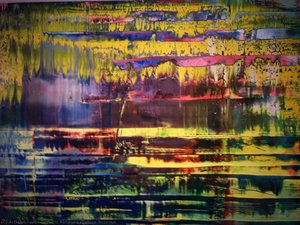
Ludorff – A Fragmented Landscape of Color
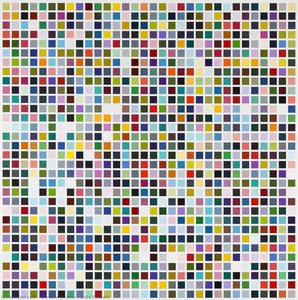
Gerhard Richter’s “Ludorff,” a striking abstract expressionist painting, presents an arresting visual experience—a seemingly simple arrangement of squares bursting with vibrant hues that belies a complex exploration of memory and perception. Created in 1968, this piece encapsulates the spirit of Richter's formative years amidst the turbulent backdrop of post-war Germany, mirroring his own internal struggle to reconcile idyllic recollections with the realities of division.
- Style: Abstract Expressionism – Richter’s signature style prioritizes spontaneity and emotional resonance over representational accuracy. He eschews meticulous detail, opting instead for a textured surface achieved through layering and blending techniques.
- Technique: Richter employs a method he termed “Photographic Painting,” where he begins with photographic prints as inspiration. These prints are then overlaid with layers of pigment—often applied in a semi-transparent manner—creating an illusionistic effect that simultaneously references and transcends the original image. The resulting surface is characterized by subtle variations in color and tone, capturing the ephemeral quality of visual experience.
- Color Palette: Dominated by shades of orange, punctuated by splashes of yellow, blue, green, pink, purple and red, “Ludorff” embodies Richter’s fascination with color theory. The artist meticulously charts color relationships—complementary hues juxtaposed against analogous tones—to generate a harmonious yet dynamic composition.
The painting's visual impact is undeniably captivating. However, its significance extends beyond mere aesthetic pleasure. Richter himself has described “Ludorff” as representing "a landscape of memory," reflecting his preoccupation with capturing fleeting impressions and reconstructing past experiences. The fragmented squares symbolize the fractured nature of recollection—the impossibility of perfectly recreating a moment in time—while simultaneously conveying a sense of openness and possibility.
Considered within the broader context of Richter’s oeuvre, “Ludorff” stands as a cornerstone of his exploration into photographic representation and its limitations. It exemplifies his commitment to confronting existential questions about identity and perception, mirroring the anxieties prevalent during the Cold War era. This artwork continues to inspire dialogue about art's role in conveying emotion and capturing the elusive essence of human experience.
- Historical Context: Richter’s work emerged during a period marked by profound social and political upheaval—the division of Germany following World War II, the rise of consumer culture, and the anxieties surrounding nuclear proliferation. His artistic practice reflects these concerns, questioning established conventions and challenging viewers to reconsider their understanding of reality.
- Symbolism: The squares themselves serve as potent symbols – representing individual fragments of experience, mirroring the fractured landscape of post-war Germany, and hinting at the elusive nature of memory itself. Richter’s deliberate use of color contributes to this symbolic dimension, conveying emotions and moods that transcend literal depiction.
Obras relacionadas




Biografía del artista
**vida temprana y educación**
Gerhard Richter, un reconocido artista visual alemán, nació el 9 de febrero de 1932, en el hospital de Dresdede-Neustadt, Dresdede, Sajonia. Creció en Reichenau, Baja Silesia (ahora Bogatynia, Polonia), y Waltersdorf (Zittauer Gebirge), en la campiña superior de Lusacia. El padre de Richter, Horst Richter, era estudiante de matemáticas y física en la Technische Hochschule de Dresdede.**Carrera artística**
Richter comenzó su viaje artístico como aprendiz de pintor de carteles y más tarde estudió en la Academia de Bellas Artes de Dresdede. Su obra temprana fue influenciada por los estilos de Picasso y Jean Arp, lo que se evidencia en sus pinturas abstractas y fotorealistas. En 1957, Richter trabajó como aprendiz maestro en la academia, realizando encargos para el entonces estado de Alemania Oriental.**Obras notables y logros**
* Abstraktes Bild (2012) fijó un récord de precio en subasta para una pintura de un artista vivo por $34 millones (£21 millones). * Domplatz, Mailand (Plaza del Catedral, Milán) (1968) se vendió por $37.1 millones (£24.4 millones) en Nueva York. * Abstraktes Bild (2015) se vendió por $44.52 millones (£30.4 millones) en la subasta de arte contemporáneo de Sotheby's.**Estilo artístico y movimiento**
La obra de Richter se caracteriza por su eclecticismo, combinando estilos abstractos y fotorealistas. Junto con Sigmar Polke, introdujo el término Kapitalistischer Realismus (Realismo Capitalista), un antiestilo de arte que se apropia del lenguaje pictórico publicitario.**Vida personal**
Richter se casó con Marianne Eufinger en 1957 y tuvo una hija. Más tarde se casó con Isa Genzken en 1982 y Sabine Moritz en 1995, con quien tuvo dos hijos y una hija. **Nota:** Este artículo se basa en la información proporcionada y puede no ser una biografía completa. Para obtener información más detallada, visite las fuentes vinculadas.
Gerhard Richter
1932 - , Alemania
Datos clave
- Artistas Que Influyeron:
- Pablo Picasso
- Jean Arp
- Fecha De Nacimiento: 9 de febrero de 1932
- Lugar De Nacimiento: Dresde, Alemania
- Movimiento Artístico:
- Expresionismo abstracto
- Fotorealismo
- Nacionalidad: Alemán
- Nombre Completo: Gerhard Richter
- Obras Notables:
- Abstraktes Bild (2012)
- Domplatz, Milán (1968)
- Nubes
- Firenze
- Imagen Abstracta
- S. con Niño
Artículos relacionados

Abstracción Geométrica: 10 Obras Maestras que Transformaron el Arte Moderno | AllPaintingsStore
Descubre las 10 obras maestras de la abstracción geométrica que revolucionaron el arte moderno. Explora a Mondrian, Malevich y Kandinsky en AllPaintingsStore.com. Reproducciones de alta calidad para tu hogar.

The Sublimity of Color: Exploring the Emotional Landscapes of Mark Rothko's Abstract Expressionism
Explore the profound emotional depth of Mark Rothko's abstract expressionism. Discover the history, techniques & lasting impact of this pivotal Color Field painter. Expert insights for collectors and art enthusiasts.

The Resonance of Boldness: Exploring Emotional Impact & Artistic Techniques in Color-Dominant Works
Explore the powerful impact of color in art history! Discover how master artists evoked emotion & built movements through bold palettes. Expert insights for collectors – AllPaintingsStore.

The Enduring Appeal of Geometric Patterns in Art: A Historical & Contemporary Exploration
Explore the captivating history of geometric abstraction in art, from ancient roots to contemporary masters. Expert insights for collectors & enthusiasts. Discover key artists, movements & investment potential.
Beatrice Parsons: A Study in Abstract Expressionism & the Poetics of Color Field Painting
Explore the captivating world of Beatrice Parsons, a pioneering British abstract expressionist. Discover her journey from garden watercolors to evocative color field paintings and learn about her place within art history.