


 Vista previa
 Compartir
 Compartir
 Ver detalles
 Guía
Guía

 Descargar
 Ver artículos similares
 Radiografía
 Presentación de diapositivas
 Estadísticas
No. 34 Escenas de la Vida de Cristo: 18. Camino de Calvario
 Acrílico sobre lienzo
- Arte de pared
- Proto-Renaissance
 1304
1304- Renacimiento
 200.0 x 185.0 cm
 Cappella Scrovegni
 Leer más
Reproducción al óleo hecha a mano
Óleo sobre lienzo pintado a mano en el tamaño y marco de su elección, realizado por encargo por nuestros artistas. ( Cambiar a formato impreso Ver versión en imagen digital)




P118B $10

P118H $10

P118W $10

P438Z $10

P508JH $12

P508YH $12

P805H $10

P805Z $10

P919BZ $10

P919G $10

P919XJ $10

P959ZH $10

P968JZ $12

W106C $8

W218G $10

W218JH $8

W218Y $10

W307PJ $10

W316G $10

W316PJ $8

W316Y $10

W398PJ $8

W4111J $10

W500HY $15

W500JH $15

W692G $12

W849H $8

W940BG $15

W953PJ $8




Elija entre nuestros tamaños predefinidos que respetan las proporciones originales de la obra.

Puede ingresar sus propias dimensiones para adaptarse a un marco o espacio específico. Si el tamaño seleccionado no coincide con las proporciones de la imagen original, recortaremos la obra o extenderemos la pintura con elementos adicionales pintados a mano. Se le enviará una maqueta digital para su aprobación antes de comenzar la producción.
Tenga en cuenta que la vista previa en pantalla no refleja el recorte o la extensión reales. Solo la maqueta mostrará con precisión la composición final.
Si bien existen tamaños personalizados, recomendamos seleccionar una dimensión de la lista predefinida para preservar las proporciones originales.
Tras realizar el pedido, el equipo de AllPaintingsStore.com enviará un correo electrónico al cliente para solicitar instrucciones y proporcionarle una vista previa del boceto.
Envío a todo el mundo () en 3-4 semanas en lugar de las 5 semanas estándar. (21 septiembre). Sin comprometer la calidad.

Envío exprés gratuito a todo el mundo

Lienzo de lino de alta calidad

Seguro de envío completo

Garantía de reembolso de impuestos aduaneros

Garantía de fidelidad cromática exacta

Política de devolución de 100 días (solo por defectos)

Garantía de devolución del 100% del dinero

Oferta por volumen
 La opción de vidrio solo está disponible en tamaños inferiores a 110 cm.

No. 34 Escenas de la Vida de Cristo: 18. Camino de Calvario
Técnica de reproducción
Tamaño de la reproducción
-


Precio total
$ 258
No. 34 Scenes from the Life of Christ: 18. Road to Calvary
Giotto di Bondone stands as an unparalleled figure in the history of art, a pioneer whose revolutionary approach irrevocably altered the course of painting and cemented his place among the titans of the Early Renaissance. Born around 1267 in Florence, Italy—a city brimming with artistic fervor—his early life remains shrouded in intriguing speculation, fueled by tales of a shepherd boy captivated by Cimabue’s artistry. This encounter proved pivotal, launching Giotto onto a path that would redefine visual representation and inspire generations of artists to come.- Cimabue's Influence: Giotto’s formative years were spent under the tutelage of Cimabue, Florence’s foremost painter at the time—a master who championed the Byzantine style characterized by flattened figures and shimmering gold backgrounds. However, Giotto swiftly rejected these conventions, recognizing their limitations in conveying human emotion and capturing the nuances of reality.
- A Breakthrough Moment: Legend recounts a remarkable episode where Cimabue, absent from his workshop, tasked Giotto with painting a fly on a face—a feat that demonstrated Giotto’s extraordinary skill and foreshadowed his groundbreaking technique. The resulting image captivated Cimabue's patrons and solidified Giotto’s reputation as an innovator.
The Scene: Road to Calvary
“No. 34 Scenes from the Life of Christ: 18. Road to Calvary” portrays Jesus’s agonizing journey to Golgotha, the hill where he would be crucified. The fresco captures the palpable tension and sorrow surrounding this momentous event with breathtaking precision. Giotto skillfully depicts the procession of figures—soldiers, guards, mourners, and onlookers—against a backdrop of a castle-like building adorned with a towering tower. This architectural element serves not merely as scenery but as a symbol of authority and grandeur, underscoring the gravity of Jesus’s sacrifice. The artist's expressive facial expressions and body language convey the profound emotional impact of witnessing Christ’s suffering—a testament to Giotto’s ability to infuse his art with human feeling.Artistic Significance: Proto-Renaissance Innovation
Giotto’s contribution transcends mere technical prowess; he fundamentally reshaped artistic conventions, ushering in a new era of naturalism and psychological depth. Unlike the stylized figures of Byzantine art—which prioritized spiritual symbolism over anatomical accuracy—Giotto meticulously rendered human forms with unprecedented realism. He achieved this feat through innovative techniques of shading—known as *sfumato*—that subtly blended colors to create soft, luminous effects—a technique that would become a hallmark of Renaissance painting. Giotto’s masterful use of perspective further enhanced the illusion of depth and space—transforming the chapel into a convincing representation of the physical world.Historical Context: Scrovegni Chapel and Venetian Patronage
The Cappella Scrovegni stands as a beacon of Venetian artistic patronage during the Early Renaissance. Enrico Scrovegni, a devout banker driven by piety, entrusted Giotto with the monumental task of decorating his chapel—a commission that exemplifies the fervor for religious art prevalent in Padua at the time. The chapel’s frescoes represent an extraordinary achievement of artistic ambition and technical innovation—a testament to Scrovegni's generosity and Giotto’s genius. Furthermore, the patronage of wealthy families like Scrovegni played a crucial role in fostering artistic creativity and preserving cultural heritage during this transformative period."Obras relacionadas


Biografía del artista
**una vida de innovación y revolución artística**
giotto di bondone, el renombrado pintor y arquitecto italiano, dejó una huella imborrable en el mundo del arte con sus contribuciones pioneras a los períodos proto-renacentista y gótico. Nacido en 1267 en Florencia, Italia, la vida de Giotto permanece algo envuelta en misterio, pero su legado artístico es innegable.**contribuciones e innovaciones artísticas**
La obra más celebrada de Giotto, la Capilla Scrovegni (o Capilla Arena) en Padua, terminada alrededor de 1305, es un testimonio de su espíritu innovador. Este ciclo de frescos, que representa la vida de la Virgen y la vida de Cristo, no solo demuestra su genio artístico sino que también muestra una capacidad narrativa que fue un cambio significativo con respecto al enfoque estilizado bizantino.- Revolucionando la pintura: La insistencia de Giotto en el naturalismo, la atención a las emociones humanas y la exploración de figuras espaciales y voluminosas en la pintura sentaron las bases para los desarrollos en el arte occidental que siguieron.
- Contribuciones arquitectónicas: Su encargo en 1334 por parte del gobierno comunal de Florencia para diseñar el nuevo campanile (campanario) de la catedral de Florencia afirma su doble talento como artista y arquitecto.
**obras notables y su significado**
- Anunciación: la Virgen recibiendo el mensaje (ver en AllPaintingsStore.com): un ejemplo primordial del estilo proto-renacentista de Giotto, caracterizado por su uso del naturalismo y la atención al detalle.
- Nacimiento. Nacer de Jesús (ver en AllPaintingsStore.com): demuestra la capacidad de Giotto para transmitir narrativas complejas a través de sus frescos, una característica del período proto-renacentista.
- Madona en Maest (Madonna de Ognissanti) (ver en AllPaintingsStore.com): esta pieza altar, encargada por la iglesia de Ognissanti en Florencia, es un ejemplo significativo de la pintura al óleo de Giotto y su uso del temple.
**legado e influencia**
La influencia de Giotto en el arte occidental es profunda, sentando las bases para el movimiento artístico renacentista. Su énfasis en el naturalismo, las emociones humanas y la conciencia espacial en la pintura ha perdurado, asegurando su posición como una figura fundamental en la historia del arte europeo. explorar más obras e influencias de Giotto di bondone en AllPaintingsStore.com.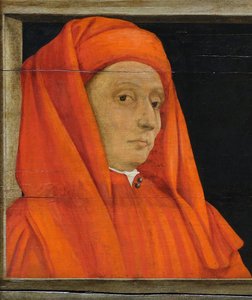
Giotto di Bondone
1267 - 1337 , Italia
Datos clave
- Artistas Influenciados:
- Masaccio
- Leonardo da Vinci
- Artistas Que Influyeron: ['Cimabue']
- Fecha De Muerte: 1337
- Fecha De Nacimiento: 1267
- Lugar De Nacimiento: Florencia, Italia
- Movimiento Artístico: Proto-Renacimiento
- Nacionalidad: Italiana
- Nombre Completo: Giotto di Bondone
- Obras Notables:
- Capilla Scrovegni
- Madonna de Ognissanti
- Frescos de Asís
Artículos relacionados

Fresco Art Guide: Mastering the Timeless Technique of Wall Painting for Luxury Interior Design
Master the art of fresco for luxury hospitality design. Explore technical insights into historical wall painting and discover how professional-grade, large-scale reproductions can elevate hotel interiors with timeless Renaissance elegance.


![Scrovegni - [05] - Sueño de Joaquín](/media/artworks/images-thumb/8f/67/8f67bb5da87296bd452b3f0b237b528d.jpg)


