


 Ver en contexto
 Enviar
 Compartir
 Detalles
 Guía
Guía

 Descargar
 Similares
 Radiografía
 Presentación de diapositivas
 Preguntas y respuestas
 Estadísticas
El peral


 Ver más
Giclée / Impresión de arte
Impresiones giclée o en lienzo de calidad de museo con producción rápida y opciones de acabado flexibles. ( Comprar pintura hecha a mano Cambiar a imagen digital)




P118B €10

P118H €10

P118W €10

P438Z €10

P508JH €12

P508YH €12

P805H €10

P805Z €10

P919BZ €10

P919G €10

P919XJ €10

P959ZH €10

P968JZ €12

W106C €8

W218G €10

W218JH €8

W218Y €10

W307PJ €10

W316G €10

W316PJ €8

W316Y €10

W398PJ €8

W4111J €10

W500HY €15

W500JH €15

W692G €12

W849H €8

W940BG €15

W953PJ €8




Elija entre nuestros tamaños predefinidos que respetan las proporciones originales de la obra.

Introduzca el ancho y el alto que necesite para adaptarse a su marco o pared. Una impresión solo puede recortarse, nunca hacerse más grande que la imagen original, por lo que un tamaño con una forma distinta perderá parte de la obra. Le enviaremos una maqueta digital para su aprobación antes de realizar cualquier impresión. La imagen que se muestra en esta página no refleja el recorte real; solo la maqueta lo hace.
Envío a todo el mundo () en 2 semanas en lugar de las 4/5 semanas estándar. (4 noviembre)

Envío exprés gratuito a todo el mundo

Lienzo de lino de alta calidad

Seguro de envío total

Garantía de reembolso de aranceles aduaneros

Garantía de fidelidad cromática exacta

Política de devolución de 100 días (solo por defectos)

Garantía de devolución del 100% del dinero

Descuento por cantidad
 La opción de vidrio solo está disponible en tamaños inferiores a 110 cm.

El peral
Giclée / Impresión de arte
Dimensiones de la reproducción
-


Precio total final
€ 58
Gustav Klimt: The Pear Tree – A Symphony of Color and Symbol
Gustav Klimt’s “The Pear Tree,” completed in 1903, stands as an emblem of the Vienna Secession movement's audacious embrace of Art Nouveau aesthetics. More than just a landscape painting—though undeniably beautiful—it embodies Klimt’s profound exploration of femininity and his masterful manipulation of color and texture to convey complex emotional resonance.
Historical Context: The Secession, spearheaded by artists like Klimt, Oskar Kokoschka, and Emil Nolde, rejected the academic conventions prevalent in Viennese art circles. They sought inspiration from Byzantine mosaics and Japanese prints, prioritizing decorative elements and sensual imagery over traditional realism. Viktor Zuckerkandl’s commission for a series of paintings intended to adorn his opulent home reflected this desire for artistic innovation.
Description: The painting depicts a solitary pear tree dominating the composition—a stark contrast to the lush greenery typical of landscapes at the time. Klimt eschewed conventional perspective, opting instead for a square canvas that echoed the Secession’s fascination with geometric forms. Each leaf and blossom is rendered with meticulous detail, utilizing a technique characterized by dense application of paint—particularly on the left side of the canvas—creating a palpable sense of vibrancy and texture.
Analysis: Klimt's masterful use of color contributes significantly to the painting’s emotional impact. Warm hues dominate the scene – yellows, oranges, and reds – mirroring the ripeness of the fruit and evoking feelings of warmth and vitality. These colors are juxtaposed against cooler greens and blues in the background, creating a dynamic interplay that draws the viewer's eye across the canvas.
Symbolism: The pear tree itself is laden with symbolic significance. Traditionally associated with fertility and rebirth, it represents the cyclical nature of life—a theme central to Klimt’s artistic vision. The meticulous rendering of each leaf and blossom underscores this idea, suggesting an unwavering focus on beauty and detail.
Legacy: “The Pear Tree” profoundly influenced subsequent artists who sought to express emotion through decorative art forms. Its sensual portrayal of the female form—represented by a reclining nude woman—continues to inspire debate and admiration. Klimt’s masterpiece remains a cornerstone of modern art, captivating audiences with its exquisite craftsmanship and evocative symbolism.
Availability: A stunning handmade oil painting reproduction of “The Pear Tree” is available from AllPaintingsStore.com. Our skilled artists utilize high-quality materials and techniques to faithfully capture the beauty and nuance of Klimt’s original vision.
Further Exploration: Discover other captivating works by Gustav Klimt, including “Adam and Eve” and “Portrait of a Lady,” on our website at The Royal Museums of Fine Arts of Belgium, Brussels.
- Artist: Gustav Klimt
- Title: The Pear Tree
- Year: 1903
- Medium: Oil on canvas
- Dimensions: Unknown
Preguntas y respuestas
¿Qué colores predominan en "El peral" de Gustav Klimt?
"El peral" de Gustav Klimt utiliza una paleta de Tonos tierra, con el Café intenso (#423535) como color dominante.
¿Qué técnica y estilo caracterizan a "El peral" de Gustav Klimt?
"El peral" está realizada en Óleo sobre lienzo, con el estilo Art Nouveau.
¿Qué tamaño de reproducción se sugiere para "El peral" de Gustav Klimt?
Se recomienda una reproducción de Gran formato para "El peral" de Gustav Klimt. El tamaño puede ajustarse manteniendo las proporciones.
Obras relacionadas


Biografía del artista
Gustav Klimt: Vida, Arte y Legado
Primeros Años y Educación (1862-1883)
- Nacido el 14 de julio de 1862 en Baumgarten, cerca de Viena, Austria.
- Hijo de Ernst Klimt, grabador de oro, y Anna Finster. Su familia enfrentó dificultades financieras, lo que provocó mudanzas frecuentes dentro de Viena.
- Talento Temprano: Demostró habilidades de dibujo precoces fomentadas por la profesión de su padre y las inclinaciones artísticas familiares.
- Se matriculó en la Escuela de Artes Aplicadas de Viena (Kunstgewerbeschule) en 1876, estudiando pintura arquitectónica bajo Ferdinand Laufberger. Esto proporcionó una sólida formación técnica pero también le expuso a estilos académicos tradicionales.
- En 1877, formó la “Compañía de Artistas” con su hermano Ernst y Franz von Matsch, obteniendo encargos para murales y techos decorativos.
La Compañía de Artistas y Éxito Temprano (1883-1900)
- Continuó trabajando con la “Compañía de Artistas” después de dejar la Kunstgewerbeschule, ganando reconocimiento por proyectos decorativos como murales en el teatro municipal de Karlsbad y escaleras del Burgtheater de Viena.
- Contribuyó a las decoraciones del Museo Histórico de Viena, demostrando competencia técnica pero insinuando un deseo de romper con las limitaciones artísticas.
El Techo de la Universidad de Viena y Controversia (1900)
- Recibió una prestigiosa comisión alrededor de 1900 para pintar murales en el techo del Gran Salón de la Universidad de Viena, representando Filosofía, Derecho y Teología.
- Obras Controversiales: Los murales, particularmente *Filosofía*, fueron considerados provocativos e incluso pornográficos por los críticos, lo que provocó indignación pública.
- Klimt rechazó futuros encargos públicos tras la controversia, marcando un punto de inflexión en su carrera.
La “Fase Dorada” y Madurez Artística (1901-1918)
- Entró en su “fase dorada”, caracterizada por un uso lujoso del dorado inspirado en los mosaicos bizantinos y los manuscritos iluminados medievales.
- Obras Clave: *El Beso* (1907-1908) ejemplifica el estilo opulento y la riqueza simbólica de esta época.
- *Retratos:* Los retratos como *Retrato de Adele Bloch-Bauer I* (1907) se volvieron muy solicitados, mostrando su capacidad para captar tanto la semejanza física como la profundidad psicológica.
- Integraba cada vez más elementos decorativos en las composiciones, difuminando los límites entre pintura y ornamentación.
Influencias y Estilo Artístico
- Hans Makart: Admiración temprana por el pintor de historia líder de Viena influyó en su formación académica inicial.
- Arte Japonés (Japonismo): Profundamente influenciado por las estampas japonesas, particularmente su perspectiva aplastada, patrones decorativos y énfasis en la línea.
- Arte Bizantino: El uso del dorado y la ornamentación rica en los mosaicos bizantinos impactó profundamente en su “fase dorada.”
- Características del Estilo: Una mezcla única de Simbolismo, Art Nouveau y elementos decorativos; colores audaces, patrones intrincados y representaciones sensuales de la forma femenina.
Años Posteriores y Legado (1918)
- Continuó pintando prolíficamente hasta su muerte el 6 de febrero de 1918, debido a un derrame cerebral.
- Sus obras posteriores exploraron formas más abstractas y paisajes, demostrando una evolución artística continua.
- Significado Histórico: Reconocido como uno de los personajes más importantes de la historia del arte austriaca y un exponente líder del Secesionismo Vienés. Sus pinturas alcanzan precios altos en subastas, y su influencia se ve en el arte y el diseño contemporáneos.
- El Museo Histórico de Viena alberga una colección significativa de sus obras, asegurando que su legado continúe inspirando.
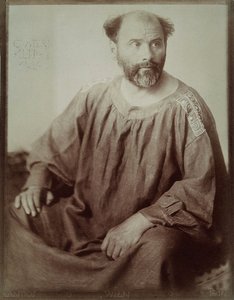
Gustav Klimt
1862 - 1918 , Austria
Datos clave
- Artistas Que Influyeron: ['Hans Makart']
- Fecha De Muerte: 6 de febrero de 1918
- Fecha De Nacimiento: 14 de julio de 1862
- Influenciado A: ['Egon Schiele']
- Lugar De Nacimiento: Baumgarten, Austria
- Movimiento Artístico: Simbolismo, Art Nouveau
- Nacionalidad: Austriaco
- Nombre Completo: Gustav Klimt
- Obras Notables:
- El Beso
- Adele Bloch-Bauer I
Artículos relacionados

Art Nouveau Guide: Integrating Elegant Curves and Organic Design into Luxury Hotel Interiors
Master Art Nouveau integration for luxury hotel interiors. Discover expert strategies for utilizing organic curves, whiplash lines, and botanical motifs to create sophisticated, high-end hospitality spaces with scalable, professional art procurement solutions.


