


 Ver en contexto
 Enviar
 Compartir
 Detalles
 Guía
Guía

 Descargar
 Similares
 Radiografía
 Presentación de diapositivas
 Estadísticas
GREETINGS

 Ver más
Reproducción al óleo hecha a mano
Óleo sobre lienzo pintado a mano en el tamaño y marco de su elección, realizado por encargo por nuestros artistas. ( Cambiar a impresiones Cambiar a imagen digital)




P118B €10

P118H €10

P118W €10

P438Z €10

P508JH €12

P508YH €12

P805H €10

P805Z €10

P919BZ €10

P919G €10

P919XJ €10

P959ZH €10

P968JZ €12

W106C €8

W218G €10

W218JH €8

W218Y €10

W307PJ €10

W316G €10

W316PJ €8

W316Y €10

W398PJ €8

W4111J €10

W500HY €15

W500JH €15

W692G €12

W849H €8

W940BG €15

W953PJ €8




Elija entre nuestros tamaños predefinidos que respetan las proporciones originales de la obra.

Indique el ancho y el alto que necesite para adaptarse a su marco o pared. Al tratarse de una obra pintada a mano, si requiere un tamaño con una proporción distinta, el artista puede pintar un poco más alrededor de la imagen o recortarla ligeramente; usted elige. Le enviaremos una maqueta digital para su aprobación antes de comenzar la pintura. La imagen que se muestra en esta página no refleja el resultado real; solo la maqueta lo hace.
Tras realizar el pedido, el equipo de AllPaintingsStore.com enviará un correo electrónico al cliente para solicitar instrucciones y proporcionarle una vista previa del boceto.
Envío a todo el mundo () en 3-4 semanas en lugar de las 5 semanas estándar. (25 octubre). Sin comprometer la calidad.

Envío exprés gratuito a todo el mundo

Lienzo de lino de alta calidad

Seguro de envío total

Garantía de reembolso de aranceles aduaneros

Garantía de fidelidad cromática exacta

Política de devolución de 100 días (solo por defectos)

Garantía de devolución del 100% del dinero

Descuento por cantidad
 La opción de vidrio solo está disponible en tamaños inferiores a 110 cm.

GREETINGS
Técnica de reproducción
Dimensiones de la reproducción
-


Precio total final
€ 248
GREETINGS: Un Análisis Profundo de Paul Jackson Pollock
La obra maestra de Paul Jackson Pollock, “Greetings”, representa un punto culminante del movimiento expresionista abstracto estadounidense y ofrece una ventana fascinante al espíritu artístico de la época. Esta pieza monumental, cuyo tamaño permanece desconocido, fue creada alrededor de 1950 en Nueva York, justo antes del fallecimiento del artista, consolidando así su legado como uno de los pioneros de esta revolucionaria corriente artística.- Descripción General: “Greetings” es una composición vertical dominada por figuras abstractas y formas geométricas que emplean una mezcla innovadora de materiales pictóricos. Desde el principio se percibe una atmósfera dinámica y perturbadora, resultado directo del estilo único de Pollock, caracterizado por la aplicación uniforme del color y la ausencia de profundidad realista. Las líneas son libres y gestuales, superpuestas entre sí creando una sensación palpable de energía y movimiento constante.
- Técnica Pictórica: La técnica utilizada fue el método del flujo continuo, conocido también como “dripping”, que Pollock desarrolló con maestría en los años 30 y 40. Esta innovadora metodología implicaba extender la pintura sobre una superficie plana colocada directamente sobre el suelo, permitiendo al artista controlar el flujo de pigmentos mediante movimientos rápidos y espontáneos. Este proceso meticuloso generó patrones complejos y texturas sorprendentes que reflejan la esencia misma del expresionismo abstracto.
- Estilo Artístico: “Greetings” encarna los principios fundamentales del expresionismo abstracto, movimiento nacido en Nueva York después de la Segunda Guerra Mundial como reacción contra las convenciones académicas tradicionales. Esta corriente artística buscaba expresar emociones internas y sentimientos profundos a través de formas geométricas simplificadas y colores intensos, dejando atrás cualquier intento de representación objetiva del mundo exterior.
- Paleta Cromática y Simbolismo: La paleta cromática utilizada en “Greetings” es rica y compleja, dominada por tonos cálidos como el marrón, el rojo y el amarillo, que evocan sentimientos de pasión y energía emocional. Estos colores contrastantes crean una atmósfera dramática y enfatizan la fuerza expresiva de la obra. Además, las figuras abstractas presentes en el lienzo pueden interpretarse como símbolos de transformación y movimiento espiritual, reflejando la visión filosófica del artista sobre la condición humana.
- Contexto Histórico: “Greetings” fue creada durante un período crucial para el arte estadounidense, marcado por la aparición de nuevas tendencias estéticas y una creciente preocupación por cuestiones sociales y políticas. Esta obra artística dialogó con otros artistas contemporáneos como Mark Rothko y Willem de Kooning, quienes compartían una sensibilidad común hacia la expresión emocional y la ruptura con las normas establecidas en el mundo del arte occidental.
Preguntas y respuestas
¿Dónde puedo comprar una imagen digital de "GREETINGS" de Jackson Pollock?
Puede adquirir una imagen digital de "GREETINGS" de Jackson Pollock en su página de Imagen digital de alta resolución: descarga de una imagen digital en alta resolución.
¿Qué tan armoniosa es la combinación de colores en "GREETINGS"?
"GREETINGS" de Jackson Pollock presenta una armonía de color Gran unidad cromática.
¿Qué origen nacional sustenta el Abstract Expressionism de "GREETINGS"?
La obra de Abstract Expressionism "GREETINGS" fue realizada por un artista nacido en Estados Unidos.


Biografía del artista
Early Life and the Seeds of Innovation
Paul Jackson Pollock, born in Cody, Wyoming, in 1912, was a restless spirit from the outset. His early life was marked by frequent relocation as his father pursued work as a land surveyor across the vast landscapes of the American West. This itinerant existence instilled in young Pollock a deep connection to the natural world and an exposure to diverse cultures, particularly through encounters with Native American art during those surveying trips – impressions that would subtly permeate his artistic vision later in life.
Pollock’s formal artistic training began at the Manual Arts High School in Los Angeles, followed by studies at the Art Students League of New York under the tutelage of Thomas Hart Benton. Benton, a prominent figure in the Regionalist movement, emphasized rhythmic composition and narrative themes rooted in American life. While Pollock initially absorbed these lessons, his inherent inclination leaned toward more abstract explorations. He was also profoundly impacted by Mexican muralists like José Clemente Orozco, whose powerful depictions of social struggle resonated deeply with him. These early influences laid a foundation, but it was the burgeoning world of Surrealism that truly unlocked Pollock’s artistic potential.
The Birth of Action Painting and a Revolutionary Technique
The 1930s saw Pollock experimenting with various techniques, seeking alternatives to traditional brushwork. He began pouring paint, exploring its fluidity and unpredictable nature. However, it was around 1947 that his artistic trajectory underwent a radical transformation. Abandoning the easel altogether, Pollock laid canvases directly on the floor, initiating what would become known as his “drip painting.” He then proceeded to drip, splash, and fling paint onto the canvas from above, orchestrating a dynamic dance between artist, medium, and surface.
This wasn’t merely about applying paint; it was about embodying the act of creation itself. Pollock's canvases became arenas for physical expression, capturing the immediacy of his gestures and emotions. The resulting paintings are characterized by their “all-over” composition – a lack of central focus that invites the viewer to explore the entire surface as a unified field of energy. Intricate networks of lines and colors intertwine, creating a visual complexity that is both captivating and challenging. He employed unconventional tools—sticks, knives, even syringes—to manipulate the paint in unpredictable ways, further emphasizing the spontaneous nature of his process.
This innovative approach positioned Pollock as a central figure in the burgeoning Abstract Expressionist movement, which emerged in post-World War II New York City. Abstract Expressionism prioritized spontaneous gesture, large scale, and non-representational imagery, reflecting a broader cultural shift away from traditional artistic conventions. His marriage to fellow artist Lee Krasner was also pivotal; she provided unwavering emotional support and actively encouraged his artistic development, recognizing the groundbreaking nature of his work.
Iconic Works and Lasting Legacy
Pollock’s most celebrated works—such as Number 1, 1950 (Lavender Mist), One: Number 31, 1950, Blue Poles: Number 11, 1952, and Convergence—are testaments to his revolutionary technique. These paintings are not simply images; they are records of a performance, imbued with the artist’s physical presence and emotional intensity. The dynamic energy that emanates from these canvases is palpable, drawing viewers into a world of pure abstraction.
His style transcends mere aesthetics; it's an exploration of process over product. Pollock sought to capture the immediacy of his actions and emotions on canvas, rejecting traditional notions of composition and representation. He delved into Jungian psychology, exploring archetypes and the subconscious in his art, seeking to tap into universal symbols and primal energies.
Pollock’s impact on the history of art is immeasurable. He fundamentally altered the way artists approached painting, breaking free from easel-based methods and embracing a more performative approach. His work helped solidify New York City's position as a global center for modern art, shifting the focus away from European dominance. His influence can be seen in the work of countless artists who followed, including those associated with Color Field painting and later forms of abstract expressionism.
Though initially met with mixed reviews—some critics dismissed his work as chaotic or lacking skill—Pollock’s reputation grew steadily after his untimely death in 1956 at the age of 44. Today, he is universally recognized as one of the most important and influential artists of the 20th century, a visionary who dared to challenge conventions and redefine the boundaries of artistic expression.

Jackson Pollock
1912 - 1956 , Estados Unidos
Datos clave
- Artistic Movement Or Style: Abstract Expressionismo
- Artists Or Movements Influenced By This Artist: ['Color Field painting']
- Artists Who Influenced This Artist:
- José Clemente Orozco
- Thomas Hart Benton
- Date Of Birth: 28 enero 1912
- Date Of Death: 11 agosto 1956
- Full Name: Paul Jackson Pollock
- Nationality: American
- Notable Artworks: ['Número 1, 1950 (Lavanda Vapor']
- Place Of Birth: Cody, Estados Unidos
Artículos relacionados
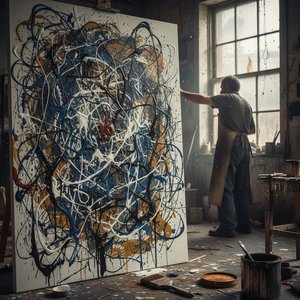
Paul Jackson Pollock: A Radical Departure – Exploring Abstract Expressionism's Pioneering Figure and His Enduring Legacy
Explore the revolutionary art of Jackson Pollock & Abstract Expressionism. Discover his iconic drip paintings, lasting impact, and considerations for collecting this pivotal American artist. Expert insights at AllPaintingsStore.
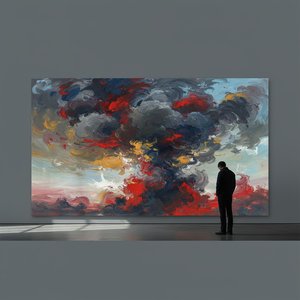
Más Allá de la Representación: Explorando el Paisaje Emocional del Expresionismo Abstracto
Descubra el Expresionismo Abstracto en profundidad. Análisis de artistas clave como Rothko y Richter, su contexto histórico e inversión en arte. Guía experta para coleccionistas.

Pure Chaos & Color: The High-Voltage World of Abstract Expressionism
Dive into the high-voltage world of Abstract Expressionism. Explore the raw energy of Action Painting and the legendary masters of the New York School through a visual journey of pure chaos and color. Discover how to bring bold, high-impact abstract art into your modern space.

Beyond Form: A Definitive Guide to the Emotional Power of Abstract Expressionism
Explore the profound history and emotional depth of Abstract Expressionism. From Jackson Pollock to Mark Rothko, master the nuances of the New York School through our expert art history guide. Discover museum-quality hand-painted reproductions for your collection.

Expresionismo Abstracto: 10 Obras Maestras que Transformaron el Arte |
Descubre las 10 obras maestras del Expresionismo Abstracto: Pollock, Rothko y más. Explora la historia, técnica y significado de estos lienzos icónicos. Reproducciones de arte exclusivas en .


