


 Vista previa
 Compartir
 Compartir
 Ver detalles
 Guía
Guía

 Descargar
 Ver artículos similares
 Radiografía
 Presentación de diapositivas
 Estadísticas
La Mangeuse d' huitres


 Leer más
Giclée / Impresión de arte
Impresiones giclée o en lienzo de calidad de museo con producción rápida y opciones de acabado flexibles. ( Encargar reproducción pintada a mano Ver versión en imagen digital)




P118B $10

P118H $10

P118W $10

P438Z $10

P508JH $12

P508YH $12

P805H $10

P805Z $10

P919BZ $10

P919G $10

P919XJ $10

P959ZH $10

P968JZ $12

W106C $8

W218G $10

W218JH $8

W218Y $10

W307PJ $10

W316G $10

W316PJ $8

W316Y $10

W398PJ $8

W4111J $10

W500HY $15

W500JH $15

W692G $12

W849H $8

W940BG $15

W953PJ $8




Elija entre nuestros tamaños predefinidos que respetan las proporciones originales de la obra.

Puede introducir sus propias dimensiones para adaptarse a un marco o espacio específico. Si el tamaño seleccionado no coincide con las proporciones de la imagen original, recortaremos la obra de arte o extenderemos la imagen con un borde con efecto espejo o de color sólido. Se enviará una maqueta digital para su aprobación antes de que comience la producción.
Tenga en cuenta que la vista previa en pantalla no refleja el recorte o la extensión real. Solo la maqueta mostrará con precisión la composición final.
Aunque existen tamaños personalizados, recomendamos seleccionar una dimensión de la lista predefinida para preservar las proporciones originales.
Envío a todo el mundo () en 2 semanas en lugar de las 4/5 semanas estándar. (25 septiembre)

Envío exprés gratuito a todo el mundo

Lienzo de lino de alta calidad

Seguro de envío completo

Garantía de reembolso de impuestos aduaneros

Garantía de fidelidad cromática exacta

Política de devolución de 100 días (solo por defectos)

Garantía de devolución del 100% del dinero

Oferta por volumen
 La opción de vidrio solo está disponible en tamaños inferiores a 110 cm.

La Mangeuse d' huitres
Giclée / Impresión de arte
Tamaño de la reproducción
-


Precio total
$ 64
La Mangeuse d' Huitres: A Glimpse into James Ensor’s Unsettling World
James Ensor’s *La Mangeuse d’Huitres* (The Oyster Eater), painted around 1888, is not merely a depiction of a woman enjoying her meal; it’s a carefully constructed tableau brimming with psychological tension and social commentary—a quintessential example of the artist's unique and profoundly unsettling vision. The painting immediately draws the viewer in with its vibrant, almost jarring palette: deep reds, blues, and yellows clash dramatically against the muted tones of the dining table and background. This deliberate discord reflects Ensor’s broader artistic philosophy – a rejection of academic realism in favor of expressing raw emotion and challenging conventional perceptions. The subject herself, seated at a richly appointed but slightly decaying table, is rendered with an unsettling ambiguity. Her expression is difficult to decipher; is she truly enjoying her meal, or does a subtle hint of unease flicker beneath the surface? This deliberate vagueness is key to understanding Ensor’s work – he rarely offers easy answers, preferring instead to provoke contemplation and discomfort. The presence of scattered books suggests an intellectual pursuit, yet their disarray hints at a mind struggling with conflicting ideas.A Masterclass in Symbolism and Masked Reality
Ensor's fascination with masks is central to interpreting *La Mangeuse d’Huitres*. The oyster shells scattered across the table are not simply decorative elements; they function as visual metaphors for concealment, deception, and the hidden aspects of human nature. His childhood spent amidst the exotic wares of his parents’ souvenir shop in Ostend, filled with carnival masks and peculiar objects, undoubtedly fueled this obsession. These masks weren't just theatrical props; they represented a way to escape identity, to embody different roles, and to explore the darker corners of the psyche. The woman herself could be seen as wearing a mask – a carefully constructed facade designed to conceal her true feelings or intentions. Furthermore, the background figure, partially obscured by the main scene, adds another layer of mystery and suggests an unseen presence, perhaps representing societal judgment or the weight of expectation.The Expressionist Roots of a Troubled Vision
*La Mangeuse d’Huitres* firmly places Ensor within the burgeoning movement of Expressionism, predating its formal recognition by decades. His use of distorted forms, exaggerated colors, and emotionally charged imagery anticipates the key tenets of this artistic approach. Unlike traditional portraiture which aimed to capture a likeness, Ensor prioritized conveying an internal state – a sense of anxiety, alienation, and perhaps even madness. The painting’s composition is deliberately claustrophobic, drawing the viewer into the confined space of the dining room and intensifying the feeling of unease. The brushwork itself is loose and expressive, contributing to the overall sense of dynamism and unrest. It's a deliberate departure from the smooth, polished surfaces favored by academic painters of the time.Historical Context and Lasting Influence
Painted during a period of significant social and political upheaval in Europe – the late 19th century – *La Mangeuse d’Huitres* can be interpreted as a commentary on Victorian society's rigid conventions and its hypocrisy. Ensor, a fiercely independent artist who often challenged societal norms with his provocative work, used his art to expose the darker side of human existence. His rejection of academic tradition and his embrace of unconventional subject matter made him a controversial figure during his lifetime, but today he is recognized as one of the most important and influential artists of the 20th century. Reproductions of *La Mangeuse d’Huitres* continue to resonate with viewers because they tap into universal themes of identity, deception, and the complexities of human relationships – a testament to Ensor's enduring artistic vision. AllPaintingsStore offers exceptional hand-painted reproductions that capture the full intensity and unsettling beauty of this remarkable masterpiece.Obras relacionadas


Biografía del artista
vida temprana y trayectoria artística
James Sidney Edouard, Baron Ensor, un destacado pintor y grabador belga, nació el 13 de abril de 1860 en Ostend, Bélgica. Su vida temprana estuvo marcada por un trasfondo cultural diverso, con un padre inglés, James Frederic Ensor, y una madre belga, María Caterina Haegheman. Falta de interés en los estudios académicos tradicionales, Ensor abandonó la escuela a los quince años para dedicarse al arte, recibiendo formación con pintores locales y posteriormente estudiando en la Academia Real de Bellas Artes en Bruselas.Estilo artístico y temas
El estilo artístico de Ensor se caracterizó por su exploración de la mente inconsciente e imágenes oníricas, lo que influyó significativamente en el expresionismo y el surrealismo. Sus pinturas a menudo presentaban asuntos extraños, incluyendo carnavales, máscaras, teatro de marionetas, esqueletos y alegorías fantásticas. Obras notables incluyen Las Máscaras Escandalizadas (1883) y Esqueletos luchando por un ahorcado (1891), que muestran su mezcla única de lo grotesco y lo fantástico.Reconocimiento y legado
A pesar de la resistencia inicial, la obra de Ensor ganó gradualmente aceptación y elogios. Para 1920, era el tema de importantes exposiciones; en 1929, fue nombrado barón por el rey Alberto, y en 1933, recibió la Legión de Honor. Su legado como figura pionera en el arte moderno es evidente en su influencia en movimientos artísticos posteriores, incluyendo el expresionismo y el surrealismo.Obras clave y exposiciones
* La Intriga (90 x 150 cm, Museo Real de Bellas Artes, Amberes, Bélgica) * Tribulaciones de San Antonio (1887, ahora en la colección del Museo de Arte Moderno, Nueva York)- Descubra más sobre la vida y obra de James Ensor en AllPaintingsStore: James Ensor
- Explore el Museo Mu.Zee en Ostend, Bélgica, que presenta una colección de arte belga desde 1830 en AllPaintingsStore: Descubra el Museo Mu.Zee en Ostend, Bélgica
- Aprenda más sobre la pintura simbolista y su influencia en el expresionismo y el surrealismo en Wikipedia: Pintura Simbolista
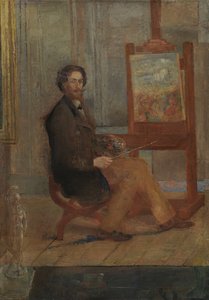
James Ensor
1860 - 1949 , Bélgica
Datos clave
- Artistas Influenciados Por Este Artista:
- Expresionismo
- Surrealismo
- Artistas Que Influyeron:
- Pieter Bruegel el Viejo
- Francisco Goya
- Fecha De Muerte: 19 de noviembre de 1949
- Fecha De Nacimiento: 13 de abril de 1860
- Lugar De Nacimiento: Ostend, Bélgica
- Movimiento Artístico: Expresionismo, Surrealismo
- Nacionalidad: Belga
- Nombre Completo: James Ensor
- Obras Notables:
- Las Máscaras Escandalizadas
- Esqueletos luchando
- Tribulaciones de San Antonio
- Cristo entrando en Bruselas
Artículos relacionados
Unveiling the Mystery: A Journey Through the World's Most Iconic Mask Artworks
Embark on a profound journey through the world's most iconic mask artworks. Explore the spiritual depth, intricate craftsmanship, and rich cultural heritage of global traditions, from Chhau to Gomira, in this expert-led exploration of ancestral artistry and symbolic beauty.
James Abbott McNeill Whistler: Las 25 Obras Maestras del Maestro del Arte y la Atmósfera | AllPaintingsStore
Descubre las 25 obras maestras de James Abbott McNeill Whistler, el maestro del impresionismo y la armonía en arte. Explora retratos icónicos, nocturnos evocadores y su innovadora paleta de colores. Reproducciones de arte exclusivas en AllPaintingsStore.com.

James Ensor's Grotesque Visions: Social Commentary & Artistic Innovation
Explore the unsettling yet captivating world of James Ensor, a pioneer of Expressionism. Discover his satirical masterpieces, symbolic imagery & lasting influence on modern art. High-quality reproductions available at AllPaintingsStore.

Surrealist Expressionism: A Definitive Guide to the Intersection of Dream Logic and Raw Emotion
Explore the profound history of Surrealist Expressionism. Discover how artists blended dream logic with raw emotion to navigate post-war trauma through masterful, evocative imagery and psychological depth.
Alfred Munnings: Las 25 Obras Maestras del Pintor de Caballos | AllPaintingsStore
Descubre las 25 obras maestras de Alfred Munnings, el pintor británico de caballos por excelencia. Explora su impresionismo inglés, escenas campestres y técnica única. Encuentra reproducciones de arte de alta calidad en AllPaintingsStore.com.


