


 Vista previa
 Compartir
 Compartir
 Ver detalles

 Descargar
 Ver similares
 Radiografía
 Presentación de diapositivas
Liebre


 Leer más
Giclée / Impresión de arte
Impresiones giclée o en lienzo de calidad de museo con producción rápida y opciones de acabado flexibles. ( Encargar reproducción pintada a mano Comprar descarga)




P118B $10

P118H $10

P118W $10

P438Z $10

P508JH $12

P508YH $12

P805H $10

P805Z $10

P919BZ $10

P919G $10

P919XJ $10

P959ZH $10

P968JZ $12

W106C $8

W218G $10

W218JH $8

W218Y $10

W307PJ $10

W316G $10

W316PJ $8

W316Y $10

W398PJ $8

W4111J $10

W500HY $15

W500JH $15

W692G $12

W849H $8

W940BG $15

W953PJ $8




Elija entre nuestros tamaños predefinidos que respetan las proporciones originales de la obra.

Puede introducir sus propias dimensiones para adaptarse a un marco o espacio específico. Si el tamaño seleccionado no coincide con las proporciones de la imagen original, recortaremos la obra de arte o extenderemos la imagen con un borde con efecto espejo o de color sólido. Se enviará una maqueta digital para su aprobación antes de que comience la producción.
Tenga en cuenta que la vista previa en pantalla no refleja el recorte o la extensión real. Solo la maqueta mostrará con precisión la composición final.
Aunque existen tamaños personalizados, recomendamos seleccionar una dimensión de la lista predefinida para preservar las proporciones originales.
Envío a todo el mundo () en 2 semanas en lugar de las 4/5 semanas estándar. (21 agosto)

Envío exprés gratuito a todo el mundo

Lienzo de lino de alta calidad

Seguro de envío completo

Garantía de reembolso de aranceles aduaneros

Garantía de fidelidad cromática exacta

Política de devolución de 60 días (solo por defectos)

Garantía de devolución del 100% del dinero

Oferta por volumen
 La opción de vidrio solo está disponible en tamaños inferiores a 110 cm.

Liebre
Giclée / Impresión de arte
Tamaño de la reproducción
-


Precio total
$ 64
Descripción de la pieza
A Surrealist Vision in the Catalan Desert
In the evocative depths of Joan Miró’s "Liebre" (Rabbit), viewers are transported into a dreamscape where the boundaries between reality and the subconscious dissolve. Painted during the tumultuous years between 1943 and 1945, this masterpiece serves as a window into the artist's profound ability to distill complex emotions into simplified, primal forms. The canvas presents a desolate, desert-like environment, an expanse that feels both vast and intimate. Within this arid landscape, a carefully choreographed dance of life unfolds: two birds drift through the composition, while three cows wander across the terrain. This arrangement of animals is not merely a depiction of fauna but a symbolic arrangement of life forces moving through a void, creating a visual paradox that captures the very essence of Surrealist imagination.
The atmosphere of the piece is defined by its hauntingly beautiful palette. Miró employs a sophisticated interplay of ochres, oranges, and deep blues to construct a world that feels both ancient and otherworldly. The vibrant orange sky acts as a dramatic backdrop, casting a warm yet melancholic light over the scene, which heightens the sense of solitude and metamorphosis. For the collector or interior designer, this painting offers a captivating focal point; its ability to command attention through color and space makes it an ideal centerpiece for spaces that require a touch of intellectual depth and emotional resonance.
Technique and the Language of Abstraction
Miró’s approach in "Liebre" exemplifies his departure from traditional realism toward a more liberated, gestural technique. Eschewing the rigid constraints of academic painting, he utilizes thick, expressive brushstrokes that imbue the canvas with a palpable, rhythmic energy. The style is a masterful blend of Abstract Expressionism and Surrealist symbolism, where geometric shapes—circles, lines, and squares—are used to communicate intuition rather than literal accuracy. This technique allows the viewer to experience the painting not as a static image, but as a living, breathing entity.
The fluidity of his hand is evident in how the forms of the birds and cows are rendered; they are stripped of unnecessary detail, leaving behind only the essential essence of their being. This reductionist approach invites the observer to participate in the creation of meaning, filling the gaps with their own subconscious projections. Such a technique ensures that the artwork remains eternally fresh, offering new layers of interpretation upon every viewing.
Historical Resonance and Emotional Depth
To truly appreciate "Liebre," one must consider the shadows cast by the era in which it was conceived. Created amidst the global upheaval of World War II and the oppressive atmosphere of Franco’s dictatorship in Spain, the painting carries a weight of resilience. The desolate landscape can be read as a metaphor for the isolation felt during times of conflict, yet the presence of the animals suggests a persistent, defiant vitality. Miró uses his Catalan identity to anchor these abstract forms, weaving a narrative of survival and cultural endurance through visual metaphors that bypassed the censors of his time.
For those seeking to adorn their homes or galleries with a piece of art history, "Liebre" offers more than just aesthetic beauty. It provides an emotional sanctuary—a space for contemplation and wonder. Whether it is used to add a sophisticated pop of color to a modern minimalist room or to serve as a conversation starter in a curated collection, this reproduction brings the profound, transformative power of Miró’s vision into the contemporary living space. It is an invitation to embrace the mystery of the unknown and to find beauty in the most unexpected of dreamscapes.
Obras relacionadas


Biografía del artista
**vida temprana y carrera**
joan miró, un renombrado pintor, escultor y ceramista español, nació el 20 de abril de 1893 en Barcelona, España. Su familia, de raíces judías (marrano o converso), tuvo una influencia significativa en su vida temprana. El padre de Miró, Miquel Miró Adzerias, era orfebre y relojero, lo que pudo haber inspirado el interés del artista por los detalles intrincados.**desarrollo artístico**
Miró comenzó clases de dibujo a los siete años en una escuela privada en Barcelona. Posteriormente, se matriculó en la Academia de Bellas Artes La Llotja, a pesar de la desaprobación de su padre. Esto marcó el comienzo del viaje artístico de Miró, que eventualmente lo llevaría a convertirse en pionero del surrealismo y el arte abstracto.**obras notables y colaboraciones**
* la granja (1922), una pintura que muestra la transición de Miró a un estilo más individual, con cualidades nacionalistas. * Colaboración con Max Ernst en diseños para el ballet de Sergei Diaghilev en 1926, pionero en la técnica del grattage. * los interiores holandeses (1928), una serie de pinturas inspiradas en Hendrik Martenszoon Sorsh y Jan Steen, que muestra el estilo único de Miró.**museos y legado**
* La Fundación Joan Miró en Barcelona, establecida en 1975, dedicada a mostrar las obras de Miró. * La Fundación Pilar i Joan Miró en Palma de Mallorca, establecida en 1981, que consolida aún más el legado de Miró.**obras clave y su significado**
- pintura (1933), una pintura al óleo abstracta, ejemplificando la visión surrealista de Miró.
- pintura 11, otra obra notable y abstracta, que muestra el estilo único de Miró.
- la mazorca (37 x 46 cm), una obra surrealista, que presenta detalles intrincados.
- el nacimiento del día, una obra de arte abstracta, que consolida aún más las contribuciones de Miró al arte abstracto.
**conclusión**
El legado de Joan Miró como pionero del surrealismo y el arte abstracto es innegable. Sus obras, exhibidas en varios museos, incluida la Fundación Joan Miró, continúan inspirando a artistas y entusiastas del arte por igual. Para obtener más información sobre las obras de Miró, visite [https://AllPaintingsStore.com/@/joan-miro](https://AllPaintingsStore.com/@/joan-miro) o explore sus notables obras en [https://AllPaintingsStore.com/@@/8ewky5-joan-miro-painting](https://AllPaintingsStore.com/@@/8ewky5-joan-miro-painting).- ver más obras de Joan Miró en AllPaintingsStore.com
- descubra el museo Fundación Joan Miró en Barcelona, España
- explore la biografía del artista y sus obras notables en [https://en.wikipedia.org/wiki/joan_mir%c3%b3](https://en.wikipedia.org/wiki/joan_mir%c3%b3)
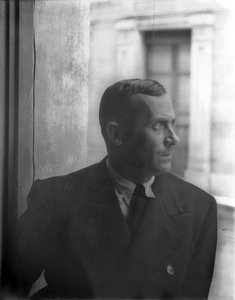
Joan Miró
1893 - 1983 , España
Datos clave
- Artistas Que Influyeron:
- Vincent van Gogh
- Paul Cézanne
- Estilo Artístico: Surrealismo, Arte Abstracto
- Fecha De Muerte: 1983
- Fecha De Nacimiento: 20 de abril de 1893
- Lugar De Nacimiento: Barcelona, España
- Nacionalidad: Española
- Nombre Completo: Joan Miró i Ferrà
- Obras Notables:
- La Granja
- Interiores Holandeses
- Pintura (1933)
- El Nacimiento del Mundo
Artículos relacionados
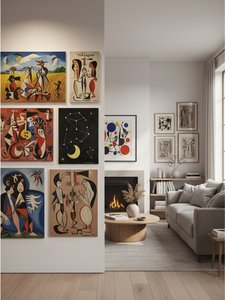
Joan Miró: Las 25 Obras Maestras del Genio Catalán | Arte y Decoración
Descubre las 25 obras maestras de Joan Miró, el genio del surrealismo catalán. Explora su arte abstracto, colores vibrantes y la historia detrás de cada cuadro. Reproducciones de alta calidad en AllPaintingsStore.com para transformar tu hogar con arte original.

Expresionismo Abstracto: 10 Obras Maestras que Transformaron el Arte |
Descubre las 10 obras maestras del Expresionismo Abstracto: Pollock, Rothko y más. Explora la historia, técnica y significado de estos lienzos icónicos. Reproducciones de arte exclusivas en .

Kandinsky: Las 25 Obras Maestras del Pionero de la Abstracción | AllPaintingsStore
Descubre las 25 obras maestras de Wassily Kandinsky, pionero del arte abstracto. Explora su expresionismo, composiciones únicas y la historia detrás de cada cuadro. Reproducciones de alta calidad para decorar tu hogar con arte moderno en AllPaintingsStore.com.

Abstracción Geométrica: 10 Obras Maestras que Transformaron el Arte Moderno | AllPaintingsStore
Descubre las 10 obras maestras de la abstracción geométrica que revolucionaron el arte moderno. Explora a Mondrian, Malevich y Kandinsky en AllPaintingsStore.com. Reproducciones de alta calidad para tu hogar.

Lyrical Abstraction: The Emotional Power of Color and Form in Modern Art History
Explore the profound emotional depth of Lyrical Abstraction. Discover how masters like Raymond Parker used color and form to bridge Impressionism and Abstract Expressionism. Learn about this pivotal movement through our expert-led art history guide.


