Vista previa
 Compartir
 Compartir
 Ver detalles

 Descargar
 Ver similares
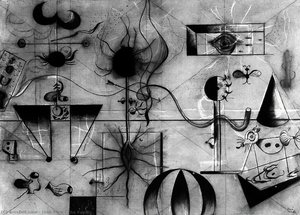
 Radiografía
 Presentación de diapositivas
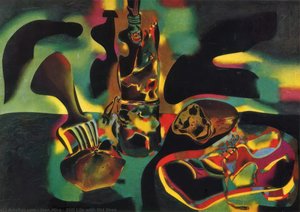
Man with pipe

 Leer más
Giclée / Impresión de arte
Impresiones giclée o en lienzo de calidad de museo con producción rápida y opciones de acabado flexibles. ( Cambiar a pintura hecha a mano Cambiar a imagen)




P118B $10

P118H $10

P118W $10

P438Z $10

P508JH $12

P508YH $12

P805H $10

P805Z $10

P919BZ $10

P919G $10

P919XJ $10

P959ZH $10

P968JZ $12

W106C $8

W218G $10

W218JH $8

W218Y $10

W307PJ $10

W316G $10

W316PJ $8

W316Y $10

W398PJ $8

W4111J $10

W500HY $15

W500JH $15

W692G $12

W849H $8

W940BG $15

W953PJ $8




Elija entre nuestros tamaños predefinidos que respetan las proporciones originales de la obra.

Puede introducir sus propias dimensiones para adaptarse a un marco o espacio específico. Si el tamaño seleccionado no coincide con las proporciones de la imagen original, recortaremos la obra de arte o extenderemos la imagen con un borde con efecto espejo o de color sólido. Se enviará una maqueta digital para su aprobación antes de que comience la producción.
Tenga en cuenta que la vista previa en pantalla no refleja el recorte o la extensión real. Solo la maqueta mostrará con precisión la composición final.
Aunque existen tamaños personalizados, recomendamos seleccionar una dimensión de la lista predefinida para preservar las proporciones originales.
Envío a todo el mundo () en 2 semanas en lugar de las 4/5 semanas estándar. (5 agosto)

Envío exprés gratuito a todo el mundo

Lienzo de lino de alta calidad

Seguro de envío completo

Garantía de reembolso de aranceles aduaneros

Garantía de fidelidad cromática exacta

Política de devolución de 60 días (solo por defectos)

Garantía de devolución del 100% del dinero

Oferta por volumen
 La opción de vidrio solo está disponible en tamaños inferiores a 110 cm.

Man with pipe
Giclée / Impresión de arte
Tamaño de la reproducción
-


Precio total
$ 64
Descripción de la pieza
A Catalan Dreamscape: Exploring Joan Miró’s “The Man with a Pipe”
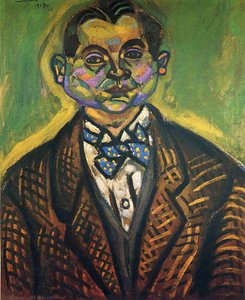
Joan Miró's "The Man with a Pipe," painted in 1935, transcends mere representation; it embodies the artist’s deeply personal vision of Catalonia and the subconscious realm. Created during a period marked by political upheaval—the Spanish Civil War raged on—the painting serves as both an emblem of resilience and a meditation on universal themes of solitude and contemplation. Miró himself described his artistic process as “drawing with my eyes,” prioritizing intuition over meticulous observation, a characteristic that defines his distinctive style.- Style: Surrealist Abstraction
- Miró’s approach to painting aligns squarely with the tenets of Surrealism championed by André Breton and Pablo Picasso. Rejecting rational thought as a guide to artistic creation, he sought inspiration from dreams, myths, and automatic drawing—techniques designed to bypass conscious control.
Technique: Organic Forms and Bold Color Palette
The painting’s surface is characterized by irregular organic forms—circles, squares, spirals—rendered in a vibrant palette dominated by blues, yellows, and reds. Miró employed a layering technique, applying paint in multiple thin washes to build up texture and luminosity. This meticulous process ensured that each brushstroke contributed to the overall expressive quality of the artwork. The artist utilized tempera on canvas, selecting this medium for its ability to achieve brilliant colors and durable finish—a testament to his mastery of artistic craft.Symbolism: Echoes of Catalan Identity and Existential Concerns
“The Man with a Pipe” is laden with symbolic significance. The central figure—a stylized man holding a pipe—represents humanity grappling with existential anxieties, mirroring Miró’s own preoccupation with themes of isolation and the search for meaning. The pipe itself serves as a conduit to inner contemplation, symbolizing both aspiration and acceptance of life's inherent uncertainties. Furthermore, the moon—positioned prominently in the composition—is often interpreted as representing femininity, intuition, and cyclical renewal—elements deeply rooted in Catalan folklore.Historical Context: Navigating Turbulent Times
Painted during the Spanish Civil War (1936-1939), “The Man with a Pipe” reflects the anxieties of its era. Miró’s artistic output during this period was profoundly influenced by the political climate, expressing both defiance and melancholy—a duality that characterizes much of his oeuvre. The painting's dreamlike atmosphere serves as a counterpoint to the grim realities of war, offering solace in the realm of imagination and reminding viewers of the enduring power of beauty amidst darkness.Emotional Impact: A Portrait of Inner Reflection
Ultimately, “The Man with a Pipe” resonates deeply with audiences due to its ability to evoke feelings of serenity and introspection. Its captivating imagery invites contemplation on fundamental questions about human existence—questions that Miró himself wrestled with throughout his life. The painting’s enduring appeal lies in its capacity to transport viewers beyond the confines of everyday experience, fostering a connection to the subconscious mind and celebrating the transformative potential of art.This artwork is currently off view at The Art Institute of Chicago.
Obras relacionadas
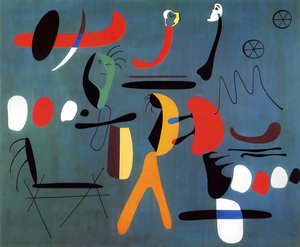

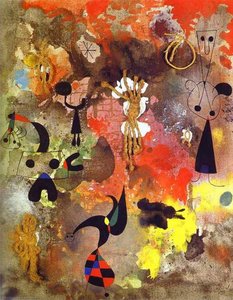


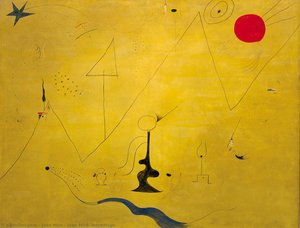


Biografía del artista
**vida temprana y carrera**
joan miró, un renombrado pintor, escultor y ceramista español, nació el 20 de abril de 1893 en Barcelona, España. Su familia, de raíces judías (marrano o converso), tuvo una influencia significativa en su vida temprana. El padre de Miró, Miquel Miró Adzerias, era orfebre y relojero, lo que pudo haber inspirado el interés del artista por los detalles intrincados.**desarrollo artístico**
Miró comenzó clases de dibujo a los siete años en una escuela privada en Barcelona. Posteriormente, se matriculó en la Academia de Bellas Artes La Llotja, a pesar de la desaprobación de su padre. Esto marcó el comienzo del viaje artístico de Miró, que eventualmente lo llevaría a convertirse en pionero del surrealismo y el arte abstracto.**obras notables y colaboraciones**
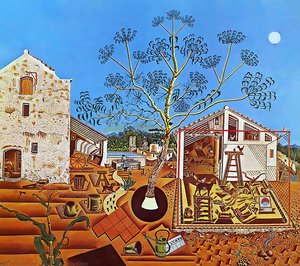
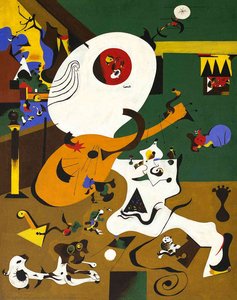
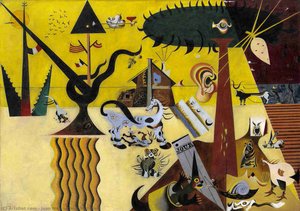
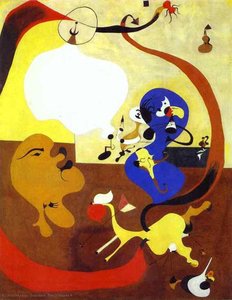
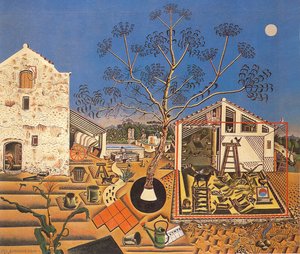
* la granja (1922), una pintura que muestra la transición de Miró a un estilo más individual, con cualidades nacionalistas. * Colaboración con Max Ernst en diseños para el ballet de Sergei Diaghilev en 1926, pionero en la técnica del grattage. * los interiores holandeses (1928), una serie de pinturas inspiradas en Hendrik Martenszoon Sorsh y Jan Steen, que muestra el estilo único de Miró.**museos y legado**
* La Fundación Joan Miró en Barcelona, establecida en 1975, dedicada a mostrar las obras de Miró. * La Fundación Pilar i Joan Miró en Palma de Mallorca, establecida en 1981, que consolida aún más el legado de Miró.**obras clave y su significado**
- pintura (1933), una pintura al óleo abstracta, ejemplificando la visión surrealista de Miró.
- pintura 11, otra obra notable y abstracta, que muestra el estilo único de Miró.
- la mazorca (37 x 46 cm), una obra surrealista, que presenta detalles intrincados.
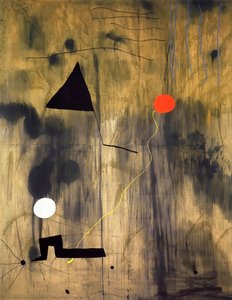
- el nacimiento del día, una obra de arte abstracta, que consolida aún más las contribuciones de Miró al arte abstracto.
**conclusión**
El legado de Joan Miró como pionero del surrealismo y el arte abstracto es innegable. Sus obras, exhibidas en varios museos, incluida la Fundación Joan Miró, continúan inspirando a artistas y entusiastas del arte por igual. Para obtener más información sobre las obras de Miró, visite [https://AllPaintingsStore.com/@/joan-miro](https://AllPaintingsStore.com/@/joan-miro) o explore sus notables obras en [https://AllPaintingsStore.com/@@/8ewky5-joan-miro-painting](https://AllPaintingsStore.com/@@/8ewky5-joan-miro-painting).- ver más obras de Joan Miró en AllPaintingsStore.com
- descubra el museo Fundación Joan Miró en Barcelona, España
- explore la biografía del artista y sus obras notables en [https://en.wikipedia.org/wiki/joan_mir%c3%b3](https://en.wikipedia.org/wiki/joan_mir%c3%b3)
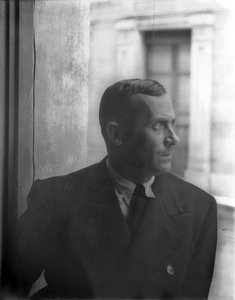
Joan Miró
1893 - 1983 , España
Datos clave
- Artistas Que Influyeron:
- Vincent van Gogh
- Paul Cézanne
- Estilo Artístico: Surrealismo, Arte Abstracto
- Fecha De Muerte: 1983
- Fecha De Nacimiento: 20 de abril de 1893
- Lugar De Nacimiento: Barcelona, España
- Nacionalidad: Española
- Nombre Completo: Joan Miró i Ferrà
- Obras Notables:
- La Granja
- Interiores Holandeses
- Pintura (1933)
- El Nacimiento del Mundo
Artículos relacionados

André Masson: Automatism, Surrealism & Primal Expression in 20th-Century Art
Explore the revolutionary art of André Masson – pioneer of automatism & Surrealist expression. Discover his powerful imagery, innovative techniques, and lasting influence on modern art. Learn more at AllPaintingsStore.
Joan Miró: Las 25 Obras Maestras del Genio Catalán | Arte y Decoración
Descubre las 25 obras maestras de Joan Miró, el genio del surrealismo catalán. Explora su arte abstracto, colores vibrantes y la historia detrás de cada cuadro. Reproducciones de alta calidad en AllPaintingsStore.com para transformar tu hogar con arte original.

Surrealismo: 10 Obras Maestras que Transformaron el Arte y la Decoración
Descubre las 10 obras maestras del Surrealismo con Dalí, Magritte y Miró. Explora la historia, el simbolismo y la técnica de estos íconos del arte moderno. Encuentra reproducciones de alta calidad para tu hogar en .

Los 10 Maestros del Surrealismo: Obras que Desafían la Realidad | AllPaintingsStore
Descubre los 10 cuadros surrealistas más influyentes de artistas como Dalí y Magritte. Explora la historia, el simbolismo y las técnicas del movimiento surrealista. Encuentra reproducciones de arte de museo en AllPaintingsStore.com.

Beyond Form & Color: Geometric Abstraction's Evolution in 20th/21st Century Art
Explore the evolution of geometric abstraction from Cubism to contemporary art. Discover key artists like Malevich & Mondrian, investment insights, and expert collecting advice at AllPaintingsStore.