


 Vista previa
 Compartir
 Compartir
 Ver detalles
 Guía
Guía

 Descargar
 Ver artículos similares
 Radiografía
 Presentación de diapositivas
 Estadísticas
Mujer ante un eclipse

 Leer más
Reproducción al óleo hecha a mano
Óleo sobre lienzo pintado a mano en el tamaño y marco de su elección, realizado por encargo por nuestros artistas. ( Cambiar a formato impreso Ver versión en imagen digital)




P118B €10

P118H €10

P118W €10

P438Z €10

P508JH €12

P508YH €12

P805H €10

P805Z €10

P919BZ €10

P919G €10

P919XJ €10

P959ZH €10

P968JZ €12

W106C €8

W218G €10

W218JH €8

W218Y €10

W307PJ €10

W316G €10

W316PJ €8

W316Y €10

W398PJ €8

W4111J €10

W500HY €15

W500JH €15

W692G €12

W849H €8

W940BG €15

W953PJ €8




Elija entre nuestros tamaños predefinidos que respetan las proporciones originales de la obra.

Puede ingresar sus propias dimensiones para adaptarse a un marco o espacio específico. Si el tamaño seleccionado no coincide con las proporciones de la imagen original, recortaremos la obra o extenderemos la pintura con elementos adicionales pintados a mano. Se le enviará una maqueta digital para su aprobación antes de comenzar la producción.
Tenga en cuenta que la vista previa en pantalla no refleja el recorte o la extensión reales. Solo la maqueta mostrará con precisión la composición final.
Si bien existen tamaños personalizados, recomendamos seleccionar una dimensión de la lista predefinida para preservar las proporciones originales.
Tras realizar el pedido, el equipo de AllPaintingsStore.com enviará un correo electrónico al cliente para solicitar instrucciones y proporcionarle una vista previa del boceto.
Envío a todo el mundo () en 3-4 semanas en lugar de las 5 semanas estándar. (28 septiembre). Sin comprometer la calidad.

Envío exprés gratuito a todo el mundo

Lienzo de lino de alta calidad

Seguro de envío completo

Garantía de reembolso de impuestos aduaneros

Garantía de fidelidad cromática exacta

Política de devolución de 100 días (solo por defectos)

Garantía de devolución del 100% del dinero

Oferta por volumen
 La opción de vidrio solo está disponible en tamaños inferiores a 110 cm.

Mujer ante un eclipse
Técnica de reproducción
Tamaño de la reproducción
-


Precio total
€ 222
A Catalan Visionary: The Life and Art of Joan Miró
Joan Miró i Ferrà, born in Barcelona in 1893, stands as one of the most significant figures in 20th-century art. His journey was not merely a progression through styles but an exploration of inner worlds, translating dreams, memories, and Catalan identity onto canvas with a uniquely poetic visual language. From humble beginnings marked by illness and initial parental reservations about his artistic pursuits, Miró persevered, driven by an innate need to express the intangible—the emotions, sensations, and subconscious currents that lie beneath the surface of reality. His early life was steeped in the traditions of Barcelona, a city brimming with architectural marvels thanks to Antoni Gaudí, whose organic forms would subtly influence Miró’s later abstractions. The goldsmithing profession of his father instilled an appreciation for meticulous craftsmanship, while the rugged Catalan landscape became a recurring motif and source of inspiraSubject Matter and Composition
“Woman Before an Eclipse with Her Hair Disheveled by the Wind,” created in 1968, presents a striking juxtaposition of organic and geometric forms. At its core lies a monumental black figure—a dominant presence embodying both strength and vulnerability—accompanied by a radiant yellow face, symbolizing hope amidst darkness. Scattered throughout the canvas are smaller figures – a bicycle, stylized animals – contributing to a dynamic interplay of elements that convey a sense of movement and disorientation. Miró deliberately eschewed representational accuracy, prioritizing instead the conveyance of psychological states and emotional resonance. The composition itself reflects the artist’s fascination with Catalan folklore and mythology, hinting at narratives rooted in ancient traditions.Style and Technique
Miró's artistic style is undeniably abstract expressionist, yet it transcends categorization through its distinctive blend of Surrealism and Cubism influences. He employed a technique characterized by bold brushstrokes and textured surfaces—a deliberate rejection of academic conventions—to achieve an effect akin to “automatic drawing,” where the artist relinquishes conscious control in favor of spontaneous gesture. The use of encaustic, a mixture of beeswax and resin pigment, lends the painting remarkable luminosity and depth, capturing subtle variations in tonal color that heighten its visual impact. This meticulous layering process underscores Miró’s commitment to crafting artworks that are both intellectually stimulating and emotionally captivating.Historical Context and Influences
Miró emerged during a period of profound artistic upheaval—the aftermath of World War I and the rise of Surrealism—a movement championed by André Breton, which sought to liberate creativity from rational constraints. Breton’s manifesto explicitly advocated for accessing the subconscious mind as a source of inspiration, mirroring Miró's own preoccupation with dream imagery and symbolic language. Gaudí’s architectural innovations served as an unspoken catalyst, prompting Miró to embrace organic forms and textures that defied Euclidean geometry—a stylistic decision reflecting his deep connection to Catalan identity and heritage.Symbolism and Emotional Impact
The painting's symbolism is multilayered and evocative. The black figure represents resilience and confronting adversity, while the yellow face embodies optimism and spiritual illumination. The bicycle symbolizes freedom and movement—a visual metaphor for overcoming obstacles and pursuing aspirations. Overall, “Woman Before an Eclipse” communicates a profound sense of melancholy mingled with determination—a reflection of Miró’s own personal struggles and artistic convictions. Its enduring appeal lies in its ability to tap into universal themes of vulnerability, courage, and the transformative power of imagination.Conclusion
Joan Miró's “Woman Before an Eclipse” remains a testament to his visionary genius—a masterpiece that embodies the spirit of Catalan art history and continues to inspire audiences worldwide. Its textured surface, luminous encaustic technique, and symbolic imagery solidify its place as one of the most enduring expressions of Surrealist abstraction, inviting viewers to embark on a journey into the depths of human consciousness and artistic creativity.Obras relacionadas


Biografía del artista
**vida temprana y carrera**
joan miró, un renombrado pintor, escultor y ceramista español, nació el 20 de abril de 1893 en Barcelona, España. Su familia, de raíces judías (marrano o converso), tuvo una influencia significativa en su vida temprana. El padre de Miró, Miquel Miró Adzerias, era orfebre y relojero, lo que pudo haber inspirado el interés del artista por los detalles intrincados.**desarrollo artístico**
Miró comenzó clases de dibujo a los siete años en una escuela privada en Barcelona. Posteriormente, se matriculó en la Academia de Bellas Artes La Llotja, a pesar de la desaprobación de su padre. Esto marcó el comienzo del viaje artístico de Miró, que eventualmente lo llevaría a convertirse en pionero del surrealismo y el arte abstracto.**obras notables y colaboraciones**
* la granja (1922), una pintura que muestra la transición de Miró a un estilo más individual, con cualidades nacionalistas. * Colaboración con Max Ernst en diseños para el ballet de Sergei Diaghilev en 1926, pionero en la técnica del grattage. * los interiores holandeses (1928), una serie de pinturas inspiradas en Hendrik Martenszoon Sorsh y Jan Steen, que muestra el estilo único de Miró.**museos y legado**
* La Fundación Joan Miró en Barcelona, establecida en 1975, dedicada a mostrar las obras de Miró. * La Fundación Pilar i Joan Miró en Palma de Mallorca, establecida en 1981, que consolida aún más el legado de Miró.**obras clave y su significado**
- pintura (1933), una pintura al óleo abstracta, ejemplificando la visión surrealista de Miró.
- pintura 11, otra obra notable y abstracta, que muestra el estilo único de Miró.
- la mazorca (37 x 46 cm), una obra surrealista, que presenta detalles intrincados.
- el nacimiento del día, una obra de arte abstracta, que consolida aún más las contribuciones de Miró al arte abstracto.
**conclusión**
El legado de Joan Miró como pionero del surrealismo y el arte abstracto es innegable. Sus obras, exhibidas en varios museos, incluida la Fundación Joan Miró, continúan inspirando a artistas y entusiastas del arte por igual. Para obtener más información sobre las obras de Miró, visite [https://AllPaintingsStore.com/@/joan-miro](https://AllPaintingsStore.com/@/joan-miro) o explore sus notables obras en [https://AllPaintingsStore.com/@@/8ewky5-joan-miro-painting](https://AllPaintingsStore.com/@@/8ewky5-joan-miro-painting).- ver más obras de Joan Miró en AllPaintingsStore.com
- descubra el museo Fundación Joan Miró en Barcelona, España
- explore la biografía del artista y sus obras notables en [https://en.wikipedia.org/wiki/joan_mir%c3%b3](https://en.wikipedia.org/wiki/joan_mir%c3%b3)
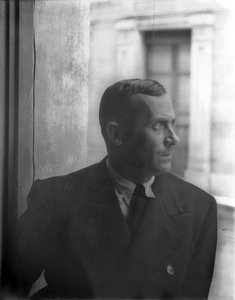
Joan Miró
1893 - 1983 , España
Datos clave
- Artistas Que Influyeron:
- Vincent van Gogh
- Paul Cézanne
- Estilo Artístico: Surrealismo, Arte Abstracto
- Fecha De Muerte: 1983
- Fecha De Nacimiento: 20 de abril de 1893
- Lugar De Nacimiento: Barcelona, España
- Nacionalidad: Española
- Nombre Completo: Joan Miró i Ferrà
- Obras Notables:
- La Granja
- Interiores Holandeses
- Pintura (1933)
- El Nacimiento del Mundo
Artículos relacionados

Kandinsky: Las 25 Obras Maestras del Pionero de la Abstracción | AllPaintingsStore
Descubre las 25 obras maestras de Wassily Kandinsky, pionero del arte abstracto. Explora su expresionismo, composiciones únicas y la historia detrás de cada cuadro. Reproducciones de alta calidad para decorar tu hogar con arte moderno en AllPaintingsStore.com.
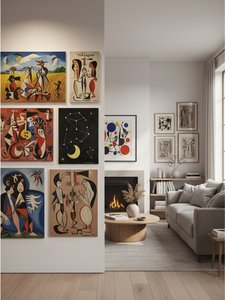
Joan Miró: Las 25 Obras Maestras del Genio Catalán | Arte y Decoración
Descubre las 25 obras maestras de Joan Miró, el genio del surrealismo catalán. Explora su arte abstracto, colores vibrantes y la historia detrás de cada cuadro. Reproducciones de alta calidad en AllPaintingsStore.com para transformar tu hogar con arte original.

Blanco Sublime: Los 10 Cuadros Más Famosos Dominados por la Luz y el Color
Descubre los 10 cuadros blancos más emblemáticos de la historia del arte. Explora Monet, Van Gogh y Klimt, y su magistral uso de la luz y el color. Encuentra reproducciones de alta calidad e inspírate para tu decoración en .

Expresionismo Abstracto: 10 Obras Maestras que Transformaron el Arte |
Descubre las 10 obras maestras del Expresionismo Abstracto: Pollock, Rothko y más. Explora la historia, técnica y significado de estos lienzos icónicos. Reproducciones de arte exclusivas en .

Las 10 Pinturas Más Famosas Dominadas por el Negro | Arte y Decoración
Descubre las 10 pinturas más impactantes dominadas por el negro. Explora obras maestras de Rembrandt, Goya y Rothko, su historia y significado. Encuentra reproducciones de arte exclusivas para transformar tu hogar en .


