


 Ver en contexto
 Enviar
 Compartir
 Detalles
 Guía
Guía

 Descargar
 Similares
 Radiografía
 Presentación de diapositivas
 Estadísticas
A Mountain Scene


 Ver más
Giclée / Impresión de arte
Impresiones giclée o en lienzo de calidad de museo con producción rápida y opciones de acabado flexibles. ( Comprar pintura hecha a mano Cambiar a imagen digital)




P118B €10

P118H €10

P118W €10

P438Z €10

P508JH €12

P508YH €12

P805H €10

P805Z €10

P919BZ €10

P919G €10

P919XJ €10

P959ZH €10

P968JZ €12

W106C €8

W218G €10

W218JH €8

W218Y €10

W307PJ €10

W316G €10

W316PJ €8

W316Y €10

W398PJ €8

W4111J €10

W500HY €15

W500JH €15

W692G €12

W849H €8

W940BG €15

W953PJ €8




Elija entre nuestros tamaños predefinidos que respetan las proporciones originales de la obra.

Introduzca el ancho y el alto que necesite para adaptarse a su marco o pared. Una impresión solo puede recortarse, nunca hacerse más grande que la imagen original, por lo que un tamaño con una forma distinta perderá parte de la obra. Le enviaremos una maqueta digital para su aprobación antes de realizar cualquier impresión. La imagen que se muestra en esta página no refleja el recorte real; solo la maqueta lo hace.
Envío a todo el mundo () en 2 semanas en lugar de las 4/5 semanas estándar. (27 octubre)

Envío exprés gratuito a todo el mundo

Lienzo de lino de alta calidad

Seguro de envío total

Garantía de reembolso de aranceles aduaneros

Garantía de fidelidad cromática exacta

Política de devolución de 100 días (solo por defectos)

Garantía de devolución del 100% del dinero

Descuento por cantidad
 La opción de vidrio solo está disponible en tamaños inferiores a 110 cm.

A Mountain Scene
Giclée / Impresión de arte
Dimensiones de la reproducción
-


Precio total final
€ 56
A Mountain Scene by John Crome
The Norfolk landscape holds a special place in British artistic memory, largely thanks to the unwavering dedication of artists like John Crome who tirelessly sought to capture its sublime beauty. Painted in 1806, “A Mountain Scene” exemplifies the Norwich School’s distinctive approach to landscape painting—a style characterized by understated tonal harmonies and an acute sensitivity to atmospheric conditions. This piece isn't merely a depiction of mountains; it’s an embodiment of Romantic ideals, reflecting a profound connection between humanity and the natural world.Subject Matter & Composition
The artwork presents a panoramic vista of East Anglian hills dominated by a substantial rock outcrop. The artist skillfully employs perspective to convey depth, drawing the viewer's eye upwards towards the cloudy sky—a crucial element in establishing mood and conveying the grandeur of the landscape. Two figures stand prominently positioned near the left side of the canvas, gazing out upon this breathtaking panorama. Their presence serves not only as compositional anchor but also subtly suggests contemplation and admiration for the majesty of nature.Style & Technique: Norwich School Characteristics
Crome’s technique is rooted in the Norwich School's core principles—a deliberate rejection of flamboyant brushwork favored by earlier Romantic painters. Instead, he achieves remarkable tonal gradation through meticulous layering of thin washes of oil paint, creating a velvety surface that captures the subtle nuances of light and shadow. This understated approach prioritizes observation and accuracy, mirroring the Norfolk landscape’s muted palette. The artist's masterful use of color—primarily browns, greys, and blues—creates an atmosphere of quiet contemplation and reinforces the painting’s emotional resonance.Historical Context & Romantic Ideals
“A Mountain Scene” emerged during a period marked by significant intellectual ferment – the burgeoning Romantic movement. Artists like Crome were deeply influenced by thinkers such as Edmund Burke and William Wordsworth, who championed emotion and imagination as pathways to understanding the sublime—that feeling of awe and wonder experienced when confronted with overwhelming natural beauty. The painting reflects this philosophical preoccupation, conveying not just visual information but also a spiritual appreciation for the power and majesty of the mountains.Symbolism & Emotional Impact
The rock formation itself symbolizes resilience and permanence against the forces of time and weather—a recurring motif in Romantic art reflecting anxieties about mortality alongside an affirmation of enduring natural order. The figures observing the landscape represent humanity's yearning for connection with something larger than oneself, inviting viewers to contemplate their place within the vastness of creation. Ultimately, “A Mountain Scene” succeeds in evoking a feeling of tranquility and reverence—a testament to Crome’s ability to translate visual observation into profound emotional experience. It remains an enduring symbol of Norfolk's artistic heritage and a captivating example of Romantic landscape painting at its finest.Preguntas y respuestas
¿Cuál es el color predominante en "A Mountain Scene" de John Crome?
El color que más destaca en "A Mountain Scene" es el Driftwood (#85734f). El color dominante resulta muy útil a la hora de combinar una obra de arte con un espacio interior.
¿Qué tamaño y orientación de impresión se recomiendan para "A Mountain Scene" de John Crome?
Se recomienda imprimir "A Mountain Scene" de John Crome en un tamaño de Large con una orientación Portrait.
¿Es "A Mountain Scene" de John Crome una composición en formato vertical, horizontal o cuadrado?
El formato de "A Mountain Scene" es Portrait, un dato útil para planificar la ubicación de una reproducción.
Obras relacionadas


Biografía del artista
Primeros Años y Formación
- Nacido: Norwich, Reino Unido (1768)
- Fallecido: 1821
- La primera etapa de la vida de Crome estuvo marcada por orígenes modestos. Nació en Norwich, Norfolk, hijo de un tejedor.
- A partir de los doce años, trabajó como recadero para un médico antes de ser aprendiz de Francis Whisler, pintor de casas, carros y letreros. Esto le proporcionó habilidades fundamentales en pintura y diseño.
- Durante este período se formó una amistad significativa con Robert Ladbrooke, un aprendiz de impresor que también se convirtió en un reconocido pintor paisajista. Compartían una habitación y dibujaban con frecuencia juntos en el campo de Norfolk.
- Las primeras influencias incluyeron copiar grabados que adquirieron, lo que demuestra un gran interés por aprender de artistas establecidos.
Desarrollo como Artista y la Escuela de Norwich
- El desarrollo artístico de Crome fue ayudado por Thomas Harvey de Old Catton, quien le proporcionó acceso a su colección de arte, permitiéndole estudiar obras de Gainsborough y Hobbema.
- Recibió una mayor orientación y aliento de Sir William Beechey R.A. y John Opie R.A., lo que demuestra una conexión con artistas destacados de la época.
- En 1803, junto con Robert Ladbrooke, Crome fundó la Sociedad de Artistas de Norwich. Esto marcó el comienzo formal de la Escuela de Norwich de pintores, un movimiento artístico significativo fuera de Londres.
- La Escuela de Norwich enfatizaba la observación directa de la naturaleza y buscaba capturar el carácter único del paisaje de Norfolk.
- Crome sirvió como presidente de la sociedad varias veces, lo que consolidó su papel de liderazgo dentro del movimiento.
Estilo Artístico e Influencias
- El estilo de Crome se caracteriza por una sensibilidad romántica, evidente en su expresivo trabajo con el pincel y sus representaciones atmosféricas de paisajes.
- Su tema principal eran los paisajes de Norfolk, lo que refleja una profunda conexión con su entorno local.
- Influencias Clave: La pintura holandesa del siglo XVII (particularmente Hobbema) y la obra de Richard Wilson fueron influencias significativas en el enfoque artístico de Crome.
- Estuvo entre los primeros artistas ingleses en representar especies identificables de árboles con precisión, superando las formas generalizadas en sus paisajes.
- Crome trabajó con competencia tanto en acuarela como en óleo, produciendo más de 300 óleos a lo largo de su carrera.
Logros Mayores y Legado
- La contribución de Crome a la Escuela de Norwich estableció una identidad artística regional distintiva, fomentando una comunidad de pintores dedicados a capturar la belleza de Norfolk.
- Exhibió trece obras en la Royal Academy entre 1806 y 1818, obteniendo reconocimiento a nivel nacional.
- Sus grabados, aunque no se publicaron en su vida, demostraron otra faceta de su talento artístico.
- Una exposición conmemorativa celebrada después de su muerte exhibió más de 100 de sus obras, lo que destacó el gran respeto que inspiraba entre sus colegas.
- El legado de Crome se extiende más allá de su obra de arte; lugares como Crome’s Broad y Crome ward llevan su nombre en su honor, lo que significa su impacto duradero en Norwich y Norfolk.
Últimos Años y Muerte
- En 1814, Crome visitó París tras la derrota de Napoleón, incorporando vistas de la ciudad a su obra.
- Sirvió como maestro de dibujo en Norwich School durante muchos años, fomentando los talentos de futuros artistas como James Stark y Edward Thomas Daniell.
- Crome falleció el 22 de abril de 1821, en Norwich. Sus últimas palabras se dijeron que fueron: "Oh Hobbema, mi querido Hobbema, ¡cómo te he amado!", reflejando su profunda admiración por el maestro holandés.

John Crome
1768 - 1821 , Reino Unido
Datos clave
- Artistas Influenciados: ['Escuela Norwich']
- Artistas Que Influyeron:
- Thomas Gainsborough
- Meindert Hobbema
- Richard Wilson
- Fecha De Muerte: 1821-04-22
- Fecha De Nacimiento: 1768-12-22
- Lugar De Nacimiento: Norwich, Reino Unido
- Movimiento Artístico: Romanticismo, Escuela Norwich
- Nacionalidad: Inglés
- Nombre Completo: John Crome
- Obras Notables:
- The Lime Kiln
- Grove Scene
- Mousehold Heath
- Marlingford Grove
- Moonlight on the Yare
Artículos relacionados
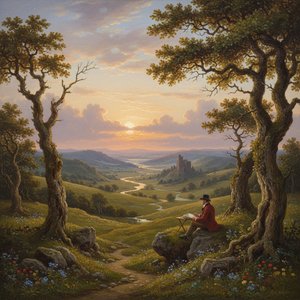
John Varley I: Intimate Observation & the British Romantic Landscape
Explore the serene landscapes of John Varley I, a key figure in British Romanticism. Discover his unique watercolour style, collaboration with William Blake & lasting artistic legacy. Learn about collecting Varley's work.

Paisajes Románticos: 10 Obras Maestras que Definieron un Movimiento Artístico
Descubre los 10 paisajes románticos más influyentes de artistas como Caspar David Friedrich y Turner. Explora la belleza, el simbolismo y las técnicas del movimiento romántico. Reproducciones de arte exclusivas en AllPaintingsStore.com.

El Sublime y lo Pintoresco: Explorando la Emoción y la Naturaleza en la Pintura Romántica de Paisaje
Explora la profunda conexión entre el arte romántico y la naturaleza. Descubre a Caspar David Friedrich, John Constable y otros maestros del sublime y lo pintoresco. Análisis experto e historia del movimiento.

John Constable: Las 25 Obras Maestras del Paisaje Inglés | AllPaintingsStore
Descubre las 25 obras maestras de John Constable, el pintor romántico inglés que capturó la belleza del paisaje. Explora su técnica, historia y significado en AllPaintingsStore.com. Reproducciones de arte de alta calidad para tu hogar.
John Singer Sargent: Las 25 Obras Maestras del Retrato y la Belle Époque | AllPaintingsStore
Descubre las 25 obras maestras de John Singer Sargent, el maestro del retrato y la Belle Époque. Explora su técnica impresionista, historias fascinantes y encuentra reproducciones de arte exclusivas para decorar tu hogar con elegancia en AllPaintingsStore.com.


