


 Vista previa
 Compartir
 Compartir
 Ver detalles
 Guía
Guía

 Descargar
 Ver artículos similares
 Radiografía
 Presentación de diapositivas
 Estadísticas
An Egyptian Peasant Woman and Her Child
 Oil On Canvas
- WallArt
- Impressionistic Realism
 1869
1869- 19th Century
 187.0 x 105.0 cm
 Museo Metropolitano de Arte
 Leer más
Reproducción al óleo hecha a mano
Óleo sobre lienzo pintado a mano en el tamaño y marco de su elección, realizado por encargo por nuestros artistas. ( Cambiar a formato impreso Ver versión en imagen digital)




P118B $10

P118H $10

P118W $10

P438Z $10

P508JH $12

P508YH $12

P805H $10

P805Z $10

P919BZ $10

P919G $10

P919XJ $10

P959ZH $10

P968JZ $12

W106C $8

W218G $10

W218JH $8

W218Y $10

W307PJ $10

W316G $10

W316PJ $8

W316Y $10

W398PJ $8

W4111J $10

W500HY $15

W500JH $15

W692G $12

W849H $8

W940BG $15

W953PJ $8




Elija entre nuestros tamaños predefinidos que respetan las proporciones originales de la obra.

Puede ingresar sus propias dimensiones para adaptarse a un marco o espacio específico. Si el tamaño seleccionado no coincide con las proporciones de la imagen original, recortaremos la obra o extenderemos la pintura con elementos adicionales pintados a mano. Se le enviará una maqueta digital para su aprobación antes de comenzar la producción.
Tenga en cuenta que la vista previa en pantalla no refleja el recorte o la extensión reales. Solo la maqueta mostrará con precisión la composición final.
Si bien existen tamaños personalizados, recomendamos seleccionar una dimensión de la lista predefinida para preservar las proporciones originales.
Tras realizar el pedido, el equipo de AllPaintingsStore.com enviará un correo electrónico al cliente para solicitar instrucciones y proporcionarle una vista previa del boceto.
Envío a todo el mundo () en 3-4 semanas en lugar de las 5 semanas estándar. (21 septiembre). Sin comprometer la calidad.

Envío exprés gratuito a todo el mundo

Lienzo de lino de alta calidad

Seguro de envío completo

Garantía de reembolso de impuestos aduaneros

Garantía de fidelidad cromática exacta

Política de devolución de 100 días (solo por defectos)

Garantía de devolución del 100% del dinero

Oferta por volumen
 La opción de vidrio solo está disponible en tamaños inferiores a 110 cm.

An Egyptian Peasant Woman and Her Child
Técnica de reproducción
Tamaño de la reproducción
-


Precio total
$ 258
A Glimpse into an Exotic Life: Bonnat's Study of Egyptian Dignity
To stand before An Egyptian Peasant Woman and Her Child is to be transported across continents and decades, drawn into the quiet intimacy of a moment captured under the bright sun of Egypt. Léon Joseph Florentin Bonnat’s masterful study, dating from 1869, transcends mere portraiture; it is an anthropological meditation rendered with profound artistic sensitivity. The subject matter itself—a peasant woman cradling her child against a simple, textured wall—speaks volumes about resilience, maternal bond, and the enduring dignity of human life far removed from Parisian salons. Bonnat did not merely paint what he saw; he seemed to absorb the very spirit of his subjects during his time in Egypt for the opening ceremony of the Suez Canal, imbuing the canvas with an authenticity that continues to resonate today.
Mastery of Form and Figure
Technically, Bonnat demonstrates a remarkable command over figure painting. The composition is beautifully balanced, drawing the viewer's eye immediately to the connection between mother and child. Observe the subtle interplay of light and shadow across the woman’s traditional Egyptian garments; these folds are rendered with an almost sculptural quality, giving weight and grace to the fabric. The artist pays meticulous attention to the physicality of both figures—the gentle curve of the baby resting upon her shoulder, the steady gaze that anchors the mother to her surroundings. This is not a fleeting sketch, but a deeply considered study, evidenced by the full-length oil study known to exist in the Musée Bonnat, suggesting an exhaustive dedication to perfecting every gesture and contour.
Historical Resonance and Enduring Appeal
The painting’s reception speaks volumes about its power. Praised at the Paris Salon the following year and again upon its exhibition in New York in 1876, it proved itself a work of lasting merit. When bequeathed to the Metropolitan Museum, critics noted its "wonderful dignity, sobriety, strength, and beauty." This recognition underscores how Bonnat managed to elevate ethnographic study into high art. For the modern collector or designer, this piece offers more than decoration; it offers a narrative anchor—a window into a specific moment of human connection that has withstood the test of time.
Symbolism of Connection and Strength
The emotional core of An Egyptian Peasant Woman and Her Child lies in its palpable sense of love. The physical closeness between the figures acts as a powerful symbol of continuity and mutual reliance. The background wall, while simple, serves to ground this tender moment, suggesting that even against an austere backdrop, life flourishes with inherent beauty. Owning a reproduction of this work allows one to bring home not just the image of two people, but the very feeling of quiet strength—a timeless testament to familial bonds that echo through history and culture.
Obras relacionadas




Biografía del artista
Léon Joseph Florentin Bonnat: Vida y Legado
Primeros Años y Orígenes Artísticos
Léon Joseph Florentin Bonnat nació en Bayonne, Francia, en 1833 y falleció en 1922. Sus primeros años tomaron un giro interesante cuando su familia se mudó a Madrid en 1846, donde su padre estableció una librería. Esta reubicación resultó crucial para el desarrollo artístico del joven Bonnat. Mientras ayudaba en la tienda, copió diligentemente grabados de obras de Maestros antiguos, fomentando una profunda pasión por el dibujo y sentando las bases para su futura carrera. Recibió formación formal bajo Madrazo en Madrid antes de regresar a París.Formación e Influencias
En París, Bonnat buscó refinar sus habilidades, estudiando bajo pintores históricos destacados Paul Delaroche y Léon Cogniet. A pesar de varios intentos, no fue admitido inmediatamente en la prestigiosa École des Beaux-Arts a través del Prix de Rome. Sin embargo, una beca de Bayonne le permitió pasar tres años en Roma (1858–60), una experiencia que moldeó profundamente su visión artística. Durante este período, forjó amistades con otros artistas como Edgar Degas, Gustave Moreau y escultor Henri Chapu. El estilo de Bonnat fue fuertemente influenciado por los maestros españoles – particularmente Velázquez y Jusepe de Ribera – así como por artistas como Tiziano y Flandrin, cuyos trabajos estudió meticulosamente en el Museo del Prado.Desarrollo Artístico y Estilo
Bonnat rápidamente se estableció como un destacado retratista en París, recibiendo constantemente encargos. Sus retratos reflejan la influencia de sus admirados predecesores españoles, caracterizados por el realismo, la iluminación dramática y la profundidad psicológica. También exploró temas religiosos y pinturas de género que representaban a campesinos italianos, y ocasionalmente se aventuró en escenas orientalistas. La obra de Bonnat está marcada por un naturalismo austero y una falta de acabado excesivo, cualidades que fueron elogiadas por críticos como Théophile Gautier, quien lo contrastó favorablemente con el estilo más pulido de Bouguereau.Logros y Reconocimientos Importantes
Bonnat logró un reconocimiento significativo a lo largo de su carrera. Recibió una Medalla de Honor en París en 1869 y fue nombrado Gran Oficial de la Legión de Honor. En 1882, se convirtió en profesor en la École des Beaux-Arts, donde orientó a numerosos artistas aspirantes, incluyendo John Singer Sargent, Toulouse-Lautrec y Gustave Caillebotte. Eventualmente sucedió a Paul Dubois como director de la École en 1905. La filosofía docente de Bonnat enfatizaba la simplicidad, el efecto general y las habilidades de dibujo rigurosas. Sus obras más importantes incluyen pinturas religiosas como *Cristo sobre la Cruz*, *Job* y *Santa Inés sustituyendo a dos esclavos*.Significado Histórico y Legado
Bonnat ocupó una posición única dentro del mundo del arte de su tiempo, conectando el abismo entre la pintura académica y el movimiento impresionista emergente. Era miembro del Instituto, ejerciendo poder administrativo sobre la Academia y la École des Beaux-Arts. A pesar de esta afiliación con instituciones tradicionales, apoyó a artistas independientes como Edgar Degas, Auguste Rodin e incluso defendió las presentaciones de Gustave Courbet al Salón. Como testimonio de su gratitud por el apoyo temprano, Bonnat fundó el Museo Bonnat en su ciudad natal de Bayonne, que alberga una colección excepcional de dibujos antiguos junto con sus propias obras. Su legado perdura a través de sus pinturas, su influyente carrera docente y el museo que estableció, preservando el patrimonio artístico para las generaciones futuras.Obras Notables
- Jacob Luchando al Ángel
- Job
- Cristo sobre la Cruz
- Retrato del Príncipe Viacheslav Tenishev
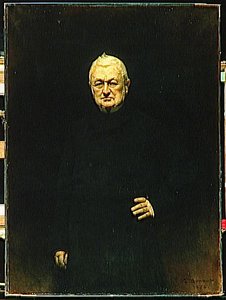
- Pasteur y su nieta Camille Vallery-Radot

léon joseph florentin bonnat
1833 - 1922 , Francia
Datos clave
- Artistic Movement Or Style: Realismo académico
- Artists Or Movements Influenced By This Artist:
- John Singer Sargent
- Gustave Caillebotte
- Artists Who Influenced This Artist:
- Velázquez
- Ribera
- Tiziano
- Van Dyck
- Date Of Birth: 1833
- Full Name: Léon Joseph Florentin Bonnat
- Nationality: Francés
- Notable Artworks:
- Jacob Wrestling with the Angel
- Job
- Cristo sobre la cruz
- Place Of Birth: Bayonne, Francia
Artículos relacionados

Léon Bonnat: Realism, Academic Mastery & the Depths of Portraiture
Explore the life & work of Léon Bonnat, a leading French Realist painter renowned for his masterful portraits and Spanish Baroque influence. Discover his academic legacy & pursuit of psychological depth in 19th-century art.

Golden Hour on the Nile: Symbolism & Artistic Legacy of Egyptian Sunsets
Explore the rich symbolism of Egyptian sunset paintings & their artistic legacy. Discover how color, ritual, and landscape shaped ancient beliefs – a guide for discerning collectors.

Frederick Childe Hassam: American Impressionism's Chronicler of Light & Modern Life
Explore the captivating world of Frederick Childe Hassam, a pioneer of American Impressionism. Discover his iconic paintings capturing light, urban life & coastal beauty. Learn about his legacy and influence on American art history.

Édouard Cortès: Capturing Parisian Life – A Comprehensive Study of the 'Painter of Paris'
Explore the captivating world of Édouard Cortès, 'The Painter of Paris'. Discover his iconic street scenes, unique style & lasting legacy. Expert insights for collectors and art enthusiasts.

Léon Augustin L'Hermitte: Capturing the Soul of French Rural Life
Discover the captivating realist paintings of Léon Augustin L'Hermitte, masterfully depicting French rural life. Explore his technique, influences & legacy – a cornerstone of 19th-century art.

