


 Vista previa
 Compartir
 Compartir
 Ver detalles
 Guía
Guía

 Descargar
 Ver artículos similares
 Radiografía
 Presentación de diapositivas
 Estadísticas
Neptun

 Leer más
Giclée / Impresión de arte
Impresiones giclée o en lienzo de calidad de museo con producción rápida y opciones de acabado flexibles. ( Encargar reproducción pintada a mano Ver versión en imagen digital)




P118B €10

P118H €10

P118W €10

P438Z €10

P508JH €12

P508YH €12

P805H €10

P805Z €10

P919BZ €10

P919G €10

P919XJ €10

P959ZH €10

P968JZ €12

W106C €8

W218G €10

W218JH €8

W218Y €10

W307PJ €10

W316G €10

W316PJ €8

W316Y €10

W398PJ €8

W4111J €10

W500HY €15

W500JH €15

W692G €12

W849H €8

W940BG €15

W953PJ €8




Elija entre nuestros tamaños predefinidos que respetan las proporciones originales de la obra.

Puede introducir sus propias dimensiones para adaptarse a un marco o espacio específico. Si el tamaño seleccionado no coincide con las proporciones de la imagen original, recortaremos la obra de arte o extenderemos la imagen con un borde con efecto espejo o de color sólido. Se enviará una maqueta digital para su aprobación antes de que comience la producción.
Tenga en cuenta que la vista previa en pantalla no refleja el recorte o la extensión real. Solo la maqueta mostrará con precisión la composición final.
Aunque existen tamaños personalizados, recomendamos seleccionar una dimensión de la lista predefinida para preservar las proporciones originales.
Envío a todo el mundo () en 2 semanas en lugar de las 4/5 semanas estándar. (11 octubre)

Envío exprés gratuito a todo el mundo

Lienzo de lino de alta calidad

Seguro de envío completo

Garantía de reembolso de impuestos aduaneros

Garantía de fidelidad cromática exacta

Política de devolución de 100 días (solo por defectos)

Garantía de devolución del 100% del dinero

Oferta por volumen
 La opción de vidrio solo está disponible en tamaños inferiores a 110 cm.

Neptun
Giclée / Impresión de arte
Tamaño de la reproducción
-


Precio total
€ 55
Leonardo da Vinci’s “Neptune”: A Dance of Power and Poseidon
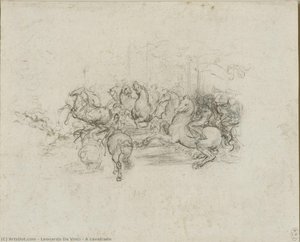
Leonardo da Vinci's "Neptun," often referred to simply as "Neptune," is not merely a painting; it’s a dramatic embodiment of Roman mythology, rendered with an arresting intensity that speaks volumes about the artist’s mastery of composition, light, and psychological depth. Completed around 1482, this charcoal drawing on black chalk offers a glimpse into da Vinci's early explorations of figure work and his fascination with classical themes – specifically, the turbulent power of the sea god Poseidon. Unlike many of his later, more polished works, “Neptun” retains a raw energy, a sense of immediacy that reflects its status as a preliminary study rather than a finished masterpiece.
The scene depicts Neptune, king of the gods and ruler of the oceans, seated upon a shell-shaped rock. He’s not presented in the idealized form often found in Renaissance sculpture; instead, da Vinci captures him with a palpable sense of authority and even a hint of brooding intensity. His posture is deliberately forceful, his gaze fixed ahead as if commanding the waves themselves. The figure is rendered with rapid, confident strokes – a characteristic of Leonardo’s working method – revealing the underlying structure beneath the surface. Notice how he uses hatching to create texture and volume, particularly in the folds of his drapery and the swirling patterns of the sea.
A Symphony of Movement: Technique and Composition
Da Vinci's technique is immediately striking. The charcoal is applied with a remarkable degree of spontaneity, creating a dynamic sense of movement that contrasts sharply with the static quality often associated with Renaissance art. He masterfully employs hatching – closely spaced parallel lines – to build up tones and create an illusion of depth and texture. The use of light and shadow is particularly effective in conveying the drama of the scene; the dark background emphasizes Neptune’s form, while strategically placed highlights draw attention to his face and hands.
Compositionally, “Neptun” is a tour de force. The figure dominates the frame, yet he's not isolated. The swirling waves, depicted with loose, expressive strokes, create a sense of chaos and power that mirrors Neptune’s dominion over the sea. The inclusion of Amphitrite, Neptune’s consort, riding on his back, adds another layer of visual interest and reinforces the theme of royal authority. The placement of the birds – one soaring above, another diving below – subtly connects the earthly realm with the divine, suggesting a broader cosmic order.
Symbolism and Mythological Resonance
“Neptun” is deeply rooted in Roman mythology, drawing upon centuries of tradition surrounding Poseidon. The shell-shaped rock serves as Neptune’s throne, symbolizing his connection to the sea – the very essence of his power. The turbulent waves are not merely decorative; they represent the unpredictable and potentially destructive forces that lie beneath the surface. The presence of birds, often associated with divine messengers or omens, adds a layer of symbolic complexity.
Interestingly, da Vinci’s depiction deviates slightly from traditional portrayals of Neptune. He doesn't present him as a benevolent protector; instead, he captures a more formidable and even somewhat menacing figure – a god who commands respect through sheer force of will. This nuanced portrayal reflects da Vinci’s broader interest in exploring the complexities of human nature and the darker aspects of the divine.
A Legacy of Artistic Innovation
Despite its status as an early study, “Neptun” reveals da Vinci's burgeoning genius and his willingness to experiment with new techniques. It demonstrates his ability to capture not just the physical appearance of a subject but also their psychological state – a skill that would become increasingly central to his later work. Reproductions of this captivating drawing offer a unique opportunity to appreciate da Vinci’s artistic process and to witness firsthand the genesis of one of the most iconic images in Western art history. Its raw energy and dramatic composition continue to resonate with viewers today, reminding us of the enduring power of classical mythology and the boundless creativity of Leonardo da Vinci.
Preguntas y respuestas
¿Qué tan intensos son los colores en "Neptun" de Leonardo da Vinci?
"Neptun" de Leonardo da Vinci muestra una intensidad de color Vivid.
¿Quién vende copias pintadas a mano de "Neptun" de Leonardo da Vinci?
Puede solicitar una reproducción pintada a mano de "Neptun" de Leonardo da Vinci directamente en esta página: una reproducción al óleo pintada a mano sobre lienzo de lino, realizada bajo pedido.
¿Cómo se relaciona el tema de "Neptun" con los temas habituales de Leonardo da Vinci?
"Neptun" representa mythology, sea, neptune, horse, renaissance, figure, composition, marine, mientras que los temas recurrentes de Leonardo da Vinci son classical mythology, renaissance ideals, religious symbolism, divine power, allegorical representation, humanism, da vinci’s exploration of form, masterpiece. Al comparar ambos, se observa cómo la obra se relaciona con los temas habituales del artista.
¿Quién es el autor de "Neptun" y a qué movimiento pertenece?
"Neptun" fue creada por Leonardo da Vinci con el estilo High Renaissance. El artista y el movimiento identifican la tradición de la obra.
¿Está "Neptun" disponible como una impresión de bellas artes?
"Neptun" está disponible como una impresión de bellas artes sobre lienzo de algodón o papel de lienzo de archivo. Los pedidos se realizan en esta página, en el tamaño de su elección.
¿Quién creó "Neptun"?
"Neptun" fue creada por Leonardo da Vinci. La información en esta página describe la obra original de Leonardo da Vinci.
¿Cuál es la atmósfera general de "Neptun" de Leonardo da Vinci?
"Neptun" tiene una atmósfera Elegant.
Obras relacionadas




Biografía del artista
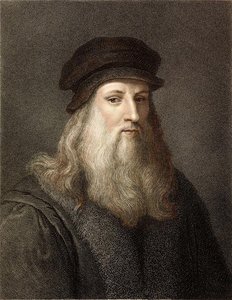
Leonardo da Vinci: Vida y Legado
Primeros Años y Aprendizaje (1452-1482)
Leonardo di ser Piero da Vinci (15 de abril de 1452 – 2 de mayo de 1519) nació fuera del matrimonio cerca de Vinci, en la República de Florencia. Su educación temprana incluyó lectura, escritura y aritmética, aunque las instrucciones formales en latín llegaron más tarde. A los catorce años, comenzó un aprendizaje con Andrea del Verrocchio, un destacado artista florentino. Esta formación inmersiva le expuso a la pintura, la escultura y las artes mecánicas, sentando las bases para su genio multifacético.
Primer Periodo Milanés (1482-1499)
En 1482, Leonardo entró al servicio de Ludovico Sforza, Duque de Milán. Él no era solo un artista; funcionó como ingeniero, arquitecto y escultor para la corte. Este período vio que diseñara fortificaciones militares, elaborados decorados escénicos y esculturas (muchas inconclusas). Una comisión monumental durante este tiempo fue La Última Cena, un fresco pintado en el refectorio del monasterio de Santa María delle Grazie – una obra que influiría profundamente en el arte occidental.
Regreso a Florencia y Maestros de la Alta Renacimiento (1500-1506)
Tras la invasión francesa de Milán en 1499, Leonardo regresó a Florencia durante un período álgido del desarrollo artístico. Si bien produjo menos obras que antes, su impacto fue inmenso. Esta época vio el comienzo del trabajo en Mona Lisa (La Gioconda), probablemente la pintura más famosa del mundo, y la refinación de sus técnicas.
Años Tardíos y Patronazgo Francés (1506-1519)
Los años tardíos de Leonardo estuvieron marcados por viajes entre Florencia, Milán y Roma, buscado por su experiencia pero a menudo dejando proyectos inconclusos. En 1516, aceptó la invitación del Rey Francisco I para vivir y trabajar en el Château du Clos Lucé cerca de Amboise en Francia. Murió allí en 1519, dejando atrás un vasto legado de exploración artística y científica.
Influencias y Desarrollo Artístico
- Las primeras influencias incluyeron a su maestro Verrocchio y la tradición artística florentina más amplia.
- Un profundo interés en la observación lo llevó a estudiar meticulosamente el mundo natural.
- Se alejó de la iconografía religiosa tradicional, favoreciendo representaciones realistas de las emociones humanas y la anatomía.
- Su desarrollo de sfumato – una técnica que utiliza sutiles gradaciones de luz y sombra para crear contornos borrosos y perspectiva atmosférica – revolucionó la pintura y contribuyó significativamente a su estilo distintivo.
Logros Principales
- Pintura: Mona Lisa, La Última Cena, Virgen de las Rocas, Anunciación
- Dibujo y Bocetos: Amplios estudios anatómicos, diseños de ingeniería (máquinas voladoras, armas), ilustraciones botánicas.
- Ciencia e Ingeniería: Trabajo pionero en anatomía, óptica, hidráulica, geología y cartografía. Conceptualizó invenciones siglos por delante de su tiempo.
Significado Histórico
El impacto de Leonardo da Vinci en la historia del arte es inmensurable. Sus pinturas son celebradas por su realismo, profundidad psicológica y técnicas innovadoras. Elevaron el estatus de los artistas de hábiles artesanos a figuras intelectuales. Más allá de sus logros artísticos, sus investigaciones científicas e invenciones prefiguraron muchos descubrimientos modernos. Sigue siendo un símbolo de la curiosidad humana, la creatividad y la búsqueda del conocimiento – una verdadera encarnación del espíritu renacentista. Su legado continúa inspirando asombro y fascinación siglos después de su muerte, consolidando su lugar como una de las figuras más notables de la historia.
Leonardo da Vinci
1452 - 1519 , Italia
Datos clave
- Artistas Que Influyeron: ['Andrea del Verrocchio']
- Fecha De Muerte: 2 de mayo de 1519
- Fecha De Nacimiento: 15 de abril de 1452
- Lugar De Nacimiento: Vicenza, Italia
- Movimiento Artístico: Alto Renacimiento
- Nacionalidad: Italiano
- Nombre Completo: Leonardo da Vinci
- Obras Notables:
- Mona Lisa (La Gioconda)
- La Última Cena
- Virgen de las Rocas
- Anunciación
Artículos relacionados

Mastering Charcoal: A Professional Guide to Texture and Depth for Large-Scale Interior Art Commissions
Discover professional techniques for mastering charcoal texture and depth. An expert guide for hotel designers and procurement managers looking to integrate high-impact monochrome art into large-scale hospitality projects with precision and scale.


