


 Vista previa
 Compartir
 Compartir
 Ver detalles
 Guía
Guía

 Descargar
 Ver artículos similares
 Radiografía
 Presentación de diapositivas
 Estadísticas
Peasant with a Clock


 Leer más
La obra de arte que se muestra en esta página está protegida por las leyes de propiedad intelectual, lo que significa que no podemos crear ni vender legalmente una reproducción idéntica. Esta protección se hace cumplir en virtud de acuerdos internacionales como el Convenio de Berna y por las leyes nacionales, incluidas aquellas establecidas por el Ley de derechos de autor de los EE. UU. - Título 17.
Este método cumple plenamente con las normativas de derechos de autor, ya que no implica la copia ni la duplicación de la obra protegida. En su lugar, se trata de una reinterpretación creativa: una nueva pintura influenciada por la original, pero que no es idéntica a ella.
Giclée / Impresión de arte
Impresiones giclée o en lienzo de calidad de museo con producción rápida y opciones de acabado flexibles. ( Encargar reproducción pintada a mano Ver versión en imagen digital)




P118B €10

P118H €10

P118W €10

P438Z €10

P508JH €12

P508YH €12

P805H €10

P805Z €10

P919BZ €10

P919G €10

P919XJ €10

P959ZH €10

P968JZ €12

W106C €8

W218G €10

W218JH €8

W218Y €10

W307PJ €10

W316G €10

W316PJ €8

W316Y €10

W398PJ €8

W4111J €10

W500HY €15

W500JH €15

W692G €12

W849H €8

W940BG €15

W953PJ €8




Elija entre nuestros tamaños predefinidos que respetan las proporciones originales de la obra.

Puede introducir sus propias dimensiones para adaptarse a un marco o espacio específico. Si el tamaño seleccionado no coincide con las proporciones de la imagen original, recortaremos la obra de arte o extenderemos la imagen con un borde con efecto espejo o de color sólido. Se enviará una maqueta digital para su aprobación antes de que comience la producción.
Tenga en cuenta que la vista previa en pantalla no refleja el recorte o la extensión real. Solo la maqueta mostrará con precisión la composición final.
Aunque existen tamaños personalizados, recomendamos seleccionar una dimensión de la lista predefinida para preservar las proporciones originales.
Envío a todo el mundo () en 2 semanas en lugar de las 4/5 semanas estándar. (10 octubre)

Envío exprés gratuito a todo el mundo

Lienzo de lino de alta calidad

Seguro de envío completo

Garantía de reembolso de impuestos aduaneros

Garantía de fidelidad cromática exacta

Política de devolución de 100 días (solo por defectos)

Garantía de devolución del 100% del dinero

Oferta por volumen
 La opción de vidrio solo está disponible en tamaños inferiores a 110 cm.

Peasant with a Clock
Giclée / Impresión de arte
Tamaño de la reproducción
-


Precio total
€ 55
A Portal to the Subconscious: The Dreamscape of Marc Chagall
To encounter Marc Chagall’s "Peasant with a Clock" is to step beyond the threshold of the tangible world and enter a realm where the laws of physics surrender to the whims of memory. Created in 1968, this evocative lithograph serves as more than a mere depiction of rural existence; it is a profound invitation into the artist’s extraordinarily imaginative universe—a place where reality bends to the dictates of emotion and the soft glow of nostalgia. Chagall, a master weaver of myths, utilizes a vibrant palette dominated by luminous yellows, deep blues, and spirited reds, colors that are deeply rooted in his recollections of Vitebsk. Through his brush—or in this case, the intricate precision of the lithographic stone—he recreates the spiritual fervor of his Jewish heritage, transforming a simple scene into a celestial dance of light and shadow.
The composition unfolds with a sense of theatrical mystery, pulling the viewer into a narrative that feels both ancient and immediate. At the heart of the work stands a peasant man, an arresting figure who holds aloft a clock, creating a striking juxtaposition between the humble nature of his station and the cosmic weight of time itself. In Chagall’s vision, time is rarely a linear progression; instead, it is a cyclical force, intertwined with human experience and the enduring rhythms of folklore. This sense of enchantment is heightened by the presence of other figures, partially obscured by masks or costumes, which lend the piece an air of dreamlike ritual, as if we are witnessing a private moment from a forgotten folk tale.
Symbolism and the Texture of Memory
Every element within this masterpiece is imbued with a symbolic resonance that rewards the contemplative eye. As one wanders through the golden, rolling hills reminiscent of the Belarusian landscape, subtle details emerge to deepen the artwork's narrative layers. Near the bottom right corner, the appearance of a bird and a dog provides a grounding touch of warmth; the bird often serves as a symbol of hope, while the dog represents steadfast loyalty. These small, poignant details act as anchors within the swirling abstraction, connecting the fantastical elements of the piece to the fundamental truths of the human condition.
The technique of lithography plays a crucial role in the emotional impact of this reproduction. It allows for an exceptional level of detail and tonal accuracy, capturing the soft, painterly transitions that define Chagall’s signature style. The flattened perspectives and simplified forms characteristic of naive art are preserved with such clarity that the viewer can almost feel the texture of the dream itself. For the collector or interior designer, this piece offers a unique opportunity to introduce a sense of poetic movement and intellectual depth into a space. It is not merely a decoration but a conversation starter—a window into a world where gravity is a suggestion and color speaks the very language of the soul.
Preguntas y respuestas
¿En qué año se creó "Peasant with a Clock"?
La creación de "Peasant with a Clock" de Marc Chagall data de 1968.
¿Qué edad tenía Marc Chagall cuando creó "Peasant with a Clock" en 1968?
Cuando se creó "Peasant with a Clock" en 1968, Marc Chagall —nacido/a en 1887— tenía 81 años.
¿Es "Peasant with a Clock" una de las obras más populares de Marc Chagall?
"Peasant with a Clock" está clasificada como Iconic.
¿Los colores de "Peasant with a Clock" de Marc Chagall son intensos o tenues?
"Peasant with a Clock" de Marc Chagall está registrado con una saturación de Subtle Color y una intensidad de Balanced.
¿Qué tipo de obra de arte es "Peasant with a Clock" de Marc Chagall?
"Peasant with a Clock" de Marc Chagall está clasificada como WallArt. La categoría describe el tipo de obra de arte que es el original.
¿Puedo pedir una reproducción al óleo de "Peasant with a Clock"?
"Peasant with a Clock" está disponible como una reproducción al óleo pintada a mano sobre lienzo de lino. El pedido puede realizarse en esta página, con una variedad de tamaños a elegir.
¿Quién creó "Peasant with a Clock"?
"Peasant with a Clock" fue creada por Marc Chagall. La información en esta página describe la obra original de Marc Chagall.
Obras relacionadas


Biografía del artista
Marc Chagall: Una Vida en Color e Imaginación
Primeros Años e Influencias
- Nacimiento y Origen: Marc Zakharovich Chagall nació el 6 de julio de 1887 (O.S. 24 de junio) en Liozna, cerca de Vitebsk, Bielorrusia, dentro de una familia judía hasidica.
- El Impacto de Vitebsk: Su infancia en Vitebsk, conocida como la “Toledo rusa”, moldeó profundamente su visión artística. La ciudad, con su mezcla única de culturas y su pintoresco paisaje – iglesias, sinagogas, bulliciosos mercados – se convirtió en motivos recurrentes en su obra.
- Tendencia Artística Temprana: A pesar de los modestos recursos de su familia, Chagall mostró un talento temprano para el arte, aprendiendo inicialmente de un pintor de letreros local antes de seguir una formación formal.
Desarrollo Artístico y Estilo
- Formación Temprana: Estudió en San Petersburgo con Léon Bakst y más tarde en París en la Academia de la Grande Chaumière, donde se encontró con movimientos vanguardistas.
- Fusión de Estilos: El estilo de Chagall es una síntesis única de diversas influencias. Absorbió elementos del Cubismo, el Simbolismo y el Fauvismo, pero nunca se adhirió por completo a un solo movimiento, forjando su propio camino distintivo.
- Características Clave: Su obra se caracteriza por colores vibrantes, imágenes oníricas, criaturas fantásticas y una sensación de nostalgia por su infancia en Vitebsk. A menudo presenta figuras flotantes, perspectivas distorsionadas y representaciones simbólicas.
Obras Maestras y Logros
- Maestros Tempranos: Pinturas como “Yo y el Pueblo” (1911) demuestran su exploración temprana de la memoria, la identidad y la relación entre el individuo y la comunidad.
- Revolución Rusa y Regreso a Vitebsk: Después de la Revolución Rusa, Chagall regresó a Vitebsk y se involucró en iniciativas culturales, estableciendo una escuela de arte. Sin embargo, pronto se desilusionó con las restricciones impuestas por el nuevo régimen.
- Reconocimiento Internacional: Eventualmente dejó Rusia y se estableció en Francia, donde su carrera floreció. Obras notables de este período incluyen “Sobre Vitebsk” (1920-1922) y numerosas pinturas inspiradas en las historias bíblicas como “El Sueño de Jacob.”
- Comisiones Tardías: Chagall recibió importantes comisiones más tarde en la vida, incluyendo el techo del Opera de París (1964), vidrieras para el sinagoga del Hospital Hebreo Hadassah en Jerusalén y la Catedral de Reims.
Influencias y Legado
- Influencias Artísticas: Fue influenciado por artistas como Vladimir Lukich Borovikovsky, cuyo retrato admiraba, así como por las corrientes más amplias del modernismo temprano.
- Impacto en Artistas Posteriores: El trabajo de Chagall ha inspirado a generaciones de artistas con su calidad lírica, profundidad emocional y poder imaginativo. Su influencia se puede ver en el Surrealismo y otros movimientos que adoptaron la fantasía y el simbolismo.
- Significado Histórico: Se considera uno de los personajes más importantes del arte del siglo XX, conectando el modernismo europeo con la identidad cultural judía. Su capacidad para sintetizar la experiencia personal, las leyendas y los temas universales continúa resonando entre audiencias en todo el mundo.
- El “Artista Judío Quintesencial”: Chagall es a menudo llamado el “artista judío quintesencial del siglo XX” debido a su exploración frecuente de temas, tradiciones y experiencias judías en su arte.
Muerte y Remembrance
- Últimos Años: Marc Chagall continuó pintando y creando hasta su muerte el 28 de marzo de 1985, a la edad de 97 años, en Saint-Paul-de-Vence, Francia.
- Legado Duradero: Su obra se exhibe en importantes museos alrededor del mundo, asegurando que su visión vibrante e imaginativa continúe inspirando y cautivando a los amantes del arte por generaciones venideras.
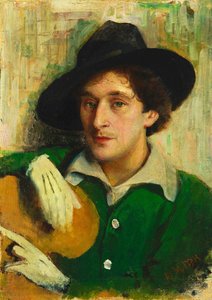
Marc Chagall
1887 - 1985 , belarus
Datos clave
- Artistas Influenciados: ['Surrealismo']
- Artistas Que Influyeron: ['Vladimir Lukich Borovikovsky']
- Fecha De Muerte: 28 de marzo de 1985
- Fecha De Nacimiento: 6 de julio de 1887
- Lugar De Nacimiento: Liozna, Bielorrusia
- Movimiento Artístico:
- Cubismo
- Simbolismo
- Fauvismo
- Nacionalidad: Ruso-Francés
- Nombre Completo: Marc Chagall (Moishe Shagal)
- Obras Notables:
- Yo y el Pueblo
- Sobre Vitebsk
- El Sueño de Jacob
- Liberación
- La Promenada
- Recién casados con París
- Pliushkin trata a Tchtchikov
- Bajo la nieve
- En el cielo sobre la Ópera
- La Mujer y las Rosas
- El pintor alado
- Pareja sobre un Fondo Rojo
- José ha sido reconocido
Artículos relacionados

Naïve Art Guide: Leveraging Bold Colors and Simple Aesthetics for High-Impact Modern Hotel Interiors
Elevate hospitality interiors with the bold colors of Naïve Art. A professional guide for hotel designers on integrating high-impact, custom oil reproductions and large-scale multi-panel works into modern commercial spaces with reliable bulk procurement and global delivery.

The Essence of Naïve Art: A Professional Guide to Unfiltered Creativity and Aesthetic Sincerity
Explore the profound beauty of Naïve Art. Discover its unique characteristics, historical significance, and how this unfiltered, sincere aesthetic can elevate professional interior design through high-quality, hand-painted reproductions.


