Vista previa
 Compartir
 Compartir
 Ver detalles

 Descargar
 Ver similares
 Radiografía
 Presentación de diapositivas
The Revolution
 Acrylic On Canvas
- WallArt
- Surrealist Expressionism
 1937
1937 50.0 x 100.0 cm
 Leer más
Giclée / Impresión de arte
Impresiones giclée o en lienzo de calidad de museo con producción rápida y opciones de acabado flexibles. ( Cambiar a pintura hecha a mano Cambiar a imagen)




P118B $10

P118H $10

P118W $10

P438Z $10

P508JH $12

P508YH $12

P805H $10

P805Z $10

P919BZ $10

P919G $10

P919XJ $10

P959ZH $10

P968JZ $12

W106C $8

W218G $10

W218JH $8

W218Y $10

W307PJ $10

W316G $10

W316PJ $8

W316Y $10

W398PJ $8

W4111J $10

W500HY $15

W500JH $15

W692G $12

W849H $8

W940BG $15

W953PJ $8




Elija entre nuestros tamaños predefinidos que respetan las proporciones originales de la obra.

Puede introducir sus propias dimensiones para adaptarse a un marco o espacio específico. Si el tamaño seleccionado no coincide con las proporciones de la imagen original, recortaremos la obra de arte o extenderemos la imagen con un borde con efecto espejo o de color sólido. Se enviará una maqueta digital para su aprobación antes de que comience la producción.
Tenga en cuenta que la vista previa en pantalla no refleja el recorte o la extensión real. Solo la maqueta mostrará con precisión la composición final.
Aunque existen tamaños personalizados, recomendamos seleccionar una dimensión de la lista predefinida para preservar las proporciones originales.
Envío a todo el mundo () en 2 semanas en lugar de las 4/5 semanas estándar. (5 agosto)

Envío exprés gratuito a todo el mundo

Lienzo de lino de alta calidad

Seguro de envío completo

Garantía de reembolso de aranceles aduaneros

Garantía de fidelidad cromática exacta

Política de devolución de 60 días (solo por defectos)

Garantía de devolución del 100% del dinero

Oferta por volumen
 La opción de vidrio solo está disponible en tamaños inferiores a 110 cm.

The Revolution
Giclée / Impresión de arte
Tamaño de la reproducción
-


Precio total
$ 64
Descripción de la pieza
A Symphony of Protest and Remembrance: Exploring Marc Chagall’s “The Revolution”
Marc Chagall's "The Revolution," painted in 1937, isn’t merely a depiction of an event; it’s a visceral embodiment of its spirit—a swirling panorama of emotion rendered with the distinctive brushstrokes of Surrealism and infused with the indelible memories of Chagall’s formative years. Created during a period marked by political upheaval and artistic experimentation, this monumental canvas transcends simple representation, inviting viewers into a dreamscape brimming with potent symbolism and capturing the palpable tension of its time.The Visual Landscape: Style and Technique
Chagall's signature style—characterized by flattened perspectives, elongated figures, and fantastical imagery—is powerfully evident in “The Revolution.” He employs a technique that blends elements of Fauvist color theory with Cubist fragmentation, resulting in an arresting visual experience. Bold hues dominate the composition – crimson reds representing fervor and defiance clash against serene blues and greens symbolizing hope amidst despair. The artist’s brushwork is loose and expressive, prioritizing feeling over meticulous detail, mirroring the chaotic energy of the depicted scene. Notice how Chagall utilizes overlapping planes and fractured forms to convey a sense of disorientation and dynamism—a deliberate stylistic choice that underscores the painting's thematic concerns.Historical Context: Echoes of Vitebsk and Political Turmoil
“The Revolution” arose from the turbulent backdrop of 1937, coinciding with the Spanish Civil War and Chagall’s involvement in a politically charged artistic endeavor—the Vitebsk Biennial. This event served as a catalyst for experimentation within the Belarusian avant-garde movement, pushing boundaries of artistic convention. The painting directly references the communist uprising in Russia, capturing the fervor of revolutionary sentiment through the prominent display of red flags carried by the crowd. Chagall’s personal experiences growing up in Vitebsk—a town grappling with religious and cultural divides—inform his depiction of figures engaged in dialogue and contemplation, hinting at a deeper exploration of faith and identity within the context of societal transformation.Symbolism: Figures, Dogs, and Floating Forms
The imagery within “The Revolution” is laden with symbolic significance. The central figure stands alone amidst the throng, representing perhaps an individual grappling with moral dilemmas or confronting the overwhelming force of collective action. Surrounding him are numerous figures—some actively participating in the protest, others observing with quiet contemplation—each contributing to the painting’s complex narrative tapestry. Notably, a dog appears prominently near the center-right, often interpreted as symbolizing loyalty and protection amidst uncertainty. Furthermore, Chagall's characteristic use of floating figures—a hallmark of Surrealist art—creates an ethereal atmosphere, elevating the scene beyond mere observation into a realm of dreamlike contemplation. These elements collectively convey themes of resilience, faith, and the enduring human spirit in times of crisis.Emotional Resonance: A Portrait of Collective Anxiety
Ultimately, “The Revolution” succeeds in conveying a profound emotional resonance—a palpable sense of anxiety and apprehension tempered by unwavering determination. Chagall’s masterful manipulation of color and form captures the psychological impact of political upheaval, inviting viewers to confront uncomfortable truths about human behavior under pressure. The painting's dreamlike quality encourages introspection, prompting contemplation on questions of morality, faith, and the role of individual agency within larger societal forces. It remains a powerful testament to Chagall’s ability to transform personal memory into universal expression—a timeless masterpiece that continues to inspire awe and provoke thought decades after its creation.Obras relacionadas


Biografía del artista
Marc Chagall: Una Vida en Color e Imaginación
Primeros Años e Influencias
- Nacimiento y Origen: Marc Zakharovich Chagall nació el 6 de julio de 1887 (O.S. 24 de junio) en Liozna, cerca de Vitebsk, Bielorrusia, dentro de una familia judía hasidica.
- El Impacto de Vitebsk: Su infancia en Vitebsk, conocida como la “Toledo rusa”, moldeó profundamente su visión artística. La ciudad, con su mezcla única de culturas y su pintoresco paisaje – iglesias, sinagogas, bulliciosos mercados – se convirtió en motivos recurrentes en su obra.
- Tendencia Artística Temprana: A pesar de los modestos recursos de su familia, Chagall mostró un talento temprano para el arte, aprendiendo inicialmente de un pintor de letreros local antes de seguir una formación formal.
Desarrollo Artístico y Estilo
- Formación Temprana: Estudió en San Petersburgo con Léon Bakst y más tarde en París en la Academia de la Grande Chaumière, donde se encontró con movimientos vanguardistas.
- Fusión de Estilos: El estilo de Chagall es una síntesis única de diversas influencias. Absorbió elementos del Cubismo, el Simbolismo y el Fauvismo, pero nunca se adhirió por completo a un solo movimiento, forjando su propio camino distintivo.
- Características Clave: Su obra se caracteriza por colores vibrantes, imágenes oníricas, criaturas fantásticas y una sensación de nostalgia por su infancia en Vitebsk. A menudo presenta figuras flotantes, perspectivas distorsionadas y representaciones simbólicas.
Obras Maestras y Logros
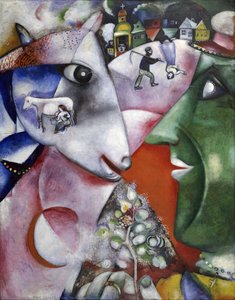
- Maestros Tempranos: Pinturas como “Yo y el Pueblo” (1911) demuestran su exploración temprana de la memoria, la identidad y la relación entre el individuo y la comunidad.
- Revolución Rusa y Regreso a Vitebsk: Después de la Revolución Rusa, Chagall regresó a Vitebsk y se involucró en iniciativas culturales, estableciendo una escuela de arte. Sin embargo, pronto se desilusionó con las restricciones impuestas por el nuevo régimen.
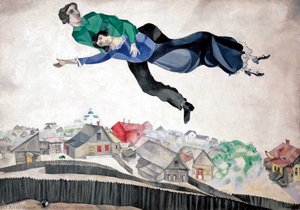
- Reconocimiento Internacional: Eventualmente dejó Rusia y se estableció en Francia, donde su carrera floreció. Obras notables de este período incluyen “Sobre Vitebsk” (1920-1922) y numerosas pinturas inspiradas en las historias bíblicas como “El Sueño de Jacob.”
- Comisiones Tardías: Chagall recibió importantes comisiones más tarde en la vida, incluyendo el techo del Opera de París (1964), vidrieras para el sinagoga del Hospital Hebreo Hadassah en Jerusalén y la Catedral de Reims.
Influencias y Legado
- Influencias Artísticas: Fue influenciado por artistas como Vladimir Lukich Borovikovsky, cuyo retrato admiraba, así como por las corrientes más amplias del modernismo temprano.
- Impacto en Artistas Posteriores: El trabajo de Chagall ha inspirado a generaciones de artistas con su calidad lírica, profundidad emocional y poder imaginativo. Su influencia se puede ver en el Surrealismo y otros movimientos que adoptaron la fantasía y el simbolismo.
- Significado Histórico: Se considera uno de los personajes más importantes del arte del siglo XX, conectando el modernismo europeo con la identidad cultural judía. Su capacidad para sintetizar la experiencia personal, las leyendas y los temas universales continúa resonando entre audiencias en todo el mundo.
- El “Artista Judío Quintesencial”: Chagall es a menudo llamado el “artista judío quintesencial del siglo XX” debido a su exploración frecuente de temas, tradiciones y experiencias judías en su arte.
Muerte y Remembrance
- Últimos Años: Marc Chagall continuó pintando y creando hasta su muerte el 28 de marzo de 1985, a la edad de 97 años, en Saint-Paul-de-Vence, Francia.
- Legado Duradero: Su obra se exhibe en importantes museos alrededor del mundo, asegurando que su visión vibrante e imaginativa continúe inspirando y cautivando a los amantes del arte por generaciones venideras.
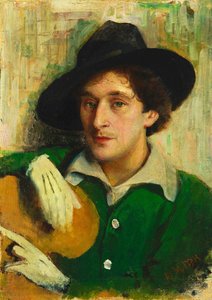
Marc Chagall
1887 - 1985 , belarus
Datos clave
- Artistas Influenciados: ['Surrealismo']
- Artistas Que Influyeron: ['Vladimir Lukich Borovikovsky']
- Fecha De Muerte: 28 de marzo de 1985
- Fecha De Nacimiento: 6 de julio de 1887
- Lugar De Nacimiento: Liozna, Bielorrusia
- Movimiento Artístico:
- Cubismo
- Simbolismo
- Fauvismo
- Nacionalidad: Ruso-Francés
- Nombre Completo: Marc Chagall (Moishe Shagal)
- Obras Notables:
- Yo y el Pueblo
- Sobre Vitebsk
- El Sueño de Jacob
- Liberación
- La Promenada
- Recién casados con París
- Pliushkin trata a Tchtchikov
- Bajo la nieve
- En el cielo sobre la Ópera
- La Mujer y las Rosas
- El pintor alado
- Pareja sobre un Fondo Rojo
- José ha sido reconocido
Artículos relacionados
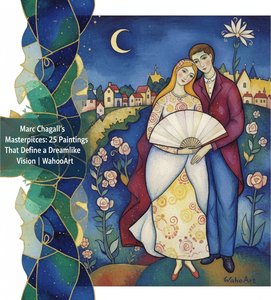
Marc Chagall: Las 25 Obras Maestras del Sueño y el Color | AllPaintingsStore
Descubre las 25 obras maestras de Marc Chagall, el pintor del sueño y la fantasía. Explora su arte moderno, surrealismo y vibrante paleta de colores en AllPaintingsStore.com. Reproducciones de alta calidad para decorar tu hogar con belleza.
René Magritte: Las 25 Obras Maestras del Surrealismo para Inspirar tu Hogar
Descubre las 25 obras maestras de René Magritte, el rey del surrealismo. Explora su arte moderno, significado oculto y técnica única. Encuentra reproducciones de alta calidad e inspira tu hogar con AllPaintingsStore.com.
Las 25 Obras Maestras del MET: Arte, Historia y Decoración para tu Hogar
Descubre las 25 obras maestras del MET de Nueva York: Van Gogh, Monet, Rembrandt y más. Explora la historia, el arte y los colores que inspiran tu hogar. Reproducciones de museo en AllPaintingsStore.com.
Henri Matisse: Las 25 Obras Maestras que Definieron un Genio del Color | AllPaintingsStore
Descubre las 25 obras maestras de Henri Matisse, el rey del color y padre del fauvismo. Explora su arte moderno, lienzos vibrantes y la historia detrás de cada pintura icónica. Encuentra reproducciones de alta calidad en AllPaintingsStore.com.
Las 25 Obras Maestras del National Gallery of Art: Arte, Historia y Decoración Exclusiva
Descubre las 25 obras maestras del National Gallery of Art, Washington. Explora la historia de Cézanne, Matisse, Picasso y más. Encuentra reproducciones de arte exclusivas e ideas para decorar tu hogar con lienzos inolvidables en AllPaintingsStore.com.