


 Ver en contexto
 Enviar
 Compartir
 Detalles
 Guía
Guía

 Descargar
 Similares
 Radiografía
 Presentación de diapositivas
 Estadísticas
Vitebsk


 Ver más
Get a print-ready file that goes far beyond the web preview. Every digital image we sell comes from a high-resolution master in our stock database — usually 5,000 to 15,000 pixels wide — so you can print large, crop tightly, or reproduce fine detail with confidence.
No file leaves our studio untouched. A digital expert checks the colors against the original painting and corrects them if needed, then improves clarity and detail with professional retouching tools — always staying faithful to the artist's brushwork and style. The result is an image that looks like the painting, not like a filtered scan.
You approve before you're done: our expert sends the image by e-mail within 72 hours for your review. Not satisfied? Ask for improvements or corrections, or request a refund if the quality falls short.
This is the quality relied on by publishers, design studios, galleries and print shops.
Imagen Digital
Descarga un archivo de alta resolución para exhibición personal, impresión y proyectos creativos. ( Cambiar a impresiones Comprar pintura hecha a mano)
Incluido en cada pedido de imágenes digitales
Entrega digital experta, garantizada.
Al elegir AllPaintingsStore.com, no solo está adquiriendo una imagen; está recibiendo una obra de arte digital mejorada profesionalmente, elaborada con precisión y respaldada por una garantía de satisfacción. Esto es todo lo que incluye su pedido, automáticamente:

Entrega rápida por email
Recibirá su archivo de imagen digital en alta resolución por correo electrónico en un plazo de 72 horas tras realizar su pedido, listo para su uso inmediato.

Archivo digital optimizado por IA
Su obra de arte se optimiza profesionalmente mediante herramientas avanzadas de IA y edición manual, garantizando el máximo detalle, claridad y precisión cromática.

Reenvío gratuito de por vida
¿Has borrado o perdido tu archivo por error? No te preocupes: te lo volveremos a enviar en cualquier momento, sin coste adicional.

Sin gastos de importación, siempre
Disfrute de su obra de arte al instante sin aduanas, aranceles ni gastos de envío; las descargas digitales siempre están libres de impuestos.

Garantía de fidelidad de color
Garantizamos que su imagen digital refleje los colores originales con la mayor fidelidad posible, mediante el uso de herramientas profesionales y gestión del color.

Garantía de satisfacción de 100 días
Si no está satisfecho con su imagen digital, la revisaremos o le reembolsaremos el 100% en un plazo de 100 días, sin preguntas.

100% Garantía de devolución de dinero
¿No está satisfecho? Obtenga un reembolso completo dentro de los 100 días posteriores a la recepción de su archivo digital, sin necesidad de explicaciones.

Descuentos por pedidos grandes
Compra 3 imágenes, ahorra 10% - Compra 5, ahorra 15% - Compra 10+, ahorra 20%. Ideal para proyectos creativos, galerías y agencias.
A Vision of Turmoil: The Soul of Vitebsk
In the hauntingly evocative 1915 masterpiece Vitebsk, Marc Chagall invites us into a realm where the boundaries between reality and nightmare dissolve. This work is far more than a mere landscape sketch; it is an emotionally charged tableau that captures the profound anxieties simmering beneath the surface of Europe at the dawn of the Great War. Through his lens, the town of Vitebsk becomes a repository of memory and myth, serving as a visual testament to both the physical devastation of conflict and the intangible wounds inflicted upon the human spirit. The piece transcends simple depiction, embodying a meditation on trauma and resilience that resonates with anyone who has felt the fragility of existence.
The composition is masterfully structured to evoke a sense of immediate, visceral urgency. A central figure lies prone upon the ground, a stark and heartbreaking representation of vulnerability and suffering. Above this fallen form, several figures appear to hover, seemingly detached from the earth, creating a disorienting sense of weightlessness that contrasts sharply with the heavy tragedy below. The movement within the frame is intensely dynamic, guided by strong diagonal lines that draw the viewer’s eye across a chaotic scene of violence and aftermath. It is a landscape of shadows and struggle, where the very air seems thick with the tension of an era on the brink of transformation.
Technique and the Language of Expression
Chagall’s distinctive style in Vitebsk showcases a brilliant blend of Cubism's fractured perspectives and the raw fervor of Expressionism. Abandoning the constraints of traditional realism, the artist utilizes flattened planes and sharp, angular lines to convey a sense of profound unease. The technique is characterized by thick hatching and cross-hatching, which lends a rugged texture to both the figures and the architecture. This meticulous linework creates an illusionistic depth that belies the otherwise flattened perspective, adding a layer of complexity to the visual narrative.
The palette employed is both bold and deeply symbolic. Chagall utilizes a striking arrangement of blues, yellows, and reds—colors traditionally associated with sorrow, hope, and passion—to heighten the emotional impact of the scene. This use of color, paired with the graphic, almost documentary feel of the ink or charcoal-like strokes, ensures that the artwork remains an arresting presence. For the collector or interior designer, this piece offers a sophisticated interplay of texture and tone, making it a profound focal point that commands attention through its sheer expressive power.
Historical Resonance and Symbolic Depth
To understand Vitebsk is to understand the historical weight of the early 20th century. Painted amidst the escalating tensions leading up to World War I, the artwork reflects the pervasive fear and uncertainty felt across the continent. The town itself, a microcosm of religious diversity and cultural clashes, serves as a backdrop for larger societal anxieties regarding loss, displacement, and the instability of human life. Every geometric shape—from the rectangular buildings to the simplified, sharp-angled weapons—contributes to an atmosphere of fragmentation.
The symbolism within the work is deeply rooted in the human condition. The fallen body serves as a universal symbol of loss, while the armed figures represent the relentless nature of aggression and conflict. Yet, amidst this depiction of horror and despair, there remains a sense of the artist's enduring connection to his roots. For those seeking to adorn a space with art that possesses both historical gravity and aesthetic brilliance, Vitebsk stands as an incomparable choice—a window into a moment of profound historical transition and a masterpiece of emotional storytelling.
Preguntas y respuestas
¿Cuál es la técnica y la fecha de creación de "Vitebsk" de Marc Chagall?
"Vitebsk" fue realizada en 1915, en Ink.
¿Dónde puedo encontrar una guía sobre "Vitebsk"?
La guía de "Vitebsk" es la página Ficha informativa de la obra: una ficha imprimible que presenta la pieza con su pie de foto, línea de crédito y tabla de datos (artista, fechas, técnica, tamaño original, colección).
¿Puedo pedir una reproducción al óleo de "Vitebsk"?
Puede solicitar una reproducción pintada a mano de "Vitebsk" de Marc Chagall directamente en su página de Reproducción al óleo pintada a mano: una reproducción al óleo pintada a mano sobre lienzo de lino, realizada bajo pedido.
Obras relacionadas


Biografía del artista
Marc Chagall: Una Vida en Color e Imaginación
Primeros Años e Influencias
- Nacimiento y Origen: Marc Zakharovich Chagall nació el 6 de julio de 1887 (O.S. 24 de junio) en Liozna, cerca de Vitebsk, Bielorrusia, dentro de una familia judía hasidica.
- El Impacto de Vitebsk: Su infancia en Vitebsk, conocida como la “Toledo rusa”, moldeó profundamente su visión artística. La ciudad, con su mezcla única de culturas y su pintoresco paisaje – iglesias, sinagogas, bulliciosos mercados – se convirtió en motivos recurrentes en su obra.
- Tendencia Artística Temprana: A pesar de los modestos recursos de su familia, Chagall mostró un talento temprano para el arte, aprendiendo inicialmente de un pintor de letreros local antes de seguir una formación formal.
Desarrollo Artístico y Estilo
- Formación Temprana: Estudió en San Petersburgo con Léon Bakst y más tarde en París en la Academia de la Grande Chaumière, donde se encontró con movimientos vanguardistas.
- Fusión de Estilos: El estilo de Chagall es una síntesis única de diversas influencias. Absorbió elementos del Cubismo, el Simbolismo y el Fauvismo, pero nunca se adhirió por completo a un solo movimiento, forjando su propio camino distintivo.
- Características Clave: Su obra se caracteriza por colores vibrantes, imágenes oníricas, criaturas fantásticas y una sensación de nostalgia por su infancia en Vitebsk. A menudo presenta figuras flotantes, perspectivas distorsionadas y representaciones simbólicas.
Obras Maestras y Logros
- Maestros Tempranos: Pinturas como “Yo y el Pueblo” (1911) demuestran su exploración temprana de la memoria, la identidad y la relación entre el individuo y la comunidad.
- Revolución Rusa y Regreso a Vitebsk: Después de la Revolución Rusa, Chagall regresó a Vitebsk y se involucró en iniciativas culturales, estableciendo una escuela de arte. Sin embargo, pronto se desilusionó con las restricciones impuestas por el nuevo régimen.
- Reconocimiento Internacional: Eventualmente dejó Rusia y se estableció en Francia, donde su carrera floreció. Obras notables de este período incluyen “Sobre Vitebsk” (1920-1922) y numerosas pinturas inspiradas en las historias bíblicas como “El Sueño de Jacob.”
- Comisiones Tardías: Chagall recibió importantes comisiones más tarde en la vida, incluyendo el techo del Opera de París (1964), vidrieras para el sinagoga del Hospital Hebreo Hadassah en Jerusalén y la Catedral de Reims.
Influencias y Legado
- Influencias Artísticas: Fue influenciado por artistas como Vladimir Lukich Borovikovsky, cuyo retrato admiraba, así como por las corrientes más amplias del modernismo temprano.
- Impacto en Artistas Posteriores: El trabajo de Chagall ha inspirado a generaciones de artistas con su calidad lírica, profundidad emocional y poder imaginativo. Su influencia se puede ver en el Surrealismo y otros movimientos que adoptaron la fantasía y el simbolismo.
- Significado Histórico: Se considera uno de los personajes más importantes del arte del siglo XX, conectando el modernismo europeo con la identidad cultural judía. Su capacidad para sintetizar la experiencia personal, las leyendas y los temas universales continúa resonando entre audiencias en todo el mundo.
- El “Artista Judío Quintesencial”: Chagall es a menudo llamado el “artista judío quintesencial del siglo XX” debido a su exploración frecuente de temas, tradiciones y experiencias judías en su arte.
Muerte y Remembrance
- Últimos Años: Marc Chagall continuó pintando y creando hasta su muerte el 28 de marzo de 1985, a la edad de 97 años, en Saint-Paul-de-Vence, Francia.
- Legado Duradero: Su obra se exhibe en importantes museos alrededor del mundo, asegurando que su visión vibrante e imaginativa continúe inspirando y cautivando a los amantes del arte por generaciones venideras.
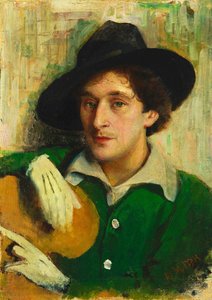
Marc Chagall
1887 - 1985 , belarus
Breves datos
- Artistas Influenciados: ['Surrealismo']
- Artistas Que Influyeron: ['Vladimir Lukich Borovikovsky']
- Fecha De Muerte: 28 de marzo de 1985
- Fecha De Nacimiento: 6 de julio de 1887
- Lugar De Nacimiento: Liozna, Bielorrusia
- Movimiento Artístico:
- Cubismo
- Simbolismo
- Fauvismo
- Nacionalidad: Ruso-Francés
- Nombre Completo: Marc Chagall (Moishe Shagal)
- Obras Notables:
- Yo y el Pueblo
- Sobre Vitebsk
- El Sueño de Jacob
- Liberación
- La Promenada
- Recién casados con París
- Pliushkin trata a Tchtchikov
- Bajo la nieve
- En el cielo sobre la Ópera
- La Mujer y las Rosas
- El pintor alado
- Pareja sobre un Fondo Rojo
- José ha sido reconocido

