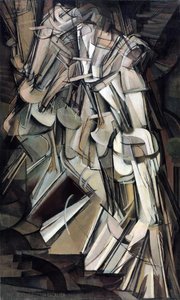
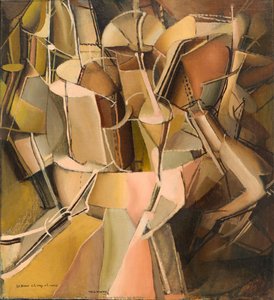
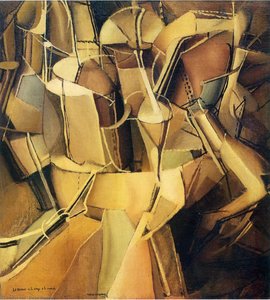
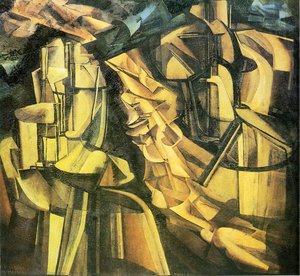
Vista previa
 Compartir
 Compartir
 Ver detalles

 Descargar
 Ver similares
 Radiografía
 Presentación de diapositivas
Apolinère Enameled


 Leer más
Giclée / Impresión de arte
Impresiones giclée o en lienzo de calidad de museo con producción rápida y opciones de acabado flexibles. ( Encargar reproducción pintada a mano Comprar descarga)




P118B $10

P118H $10

P118W $10

P438Z $10

P508JH $12

P508YH $12

P805H $10

P805Z $10

P919BZ $10

P919G $10

P919XJ $10

P959ZH $10

P968JZ $12

W106C $8

W218G $10

W218JH $8

W218Y $10

W307PJ $10

W316G $10

W316PJ $8

W316Y $10

W398PJ $8

W4111J $10

W500HY $15

W500JH $15

W692G $12

W849H $8

W940BG $15

W953PJ $8




Elija entre nuestros tamaños predefinidos que respetan las proporciones originales de la obra.

Puede introducir sus propias dimensiones para adaptarse a un marco o espacio específico. Si el tamaño seleccionado no coincide con las proporciones de la imagen original, recortaremos la obra de arte o extenderemos la imagen con un borde con efecto espejo o de color sólido. Se enviará una maqueta digital para su aprobación antes de que comience la producción.
Tenga en cuenta que la vista previa en pantalla no refleja el recorte o la extensión real. Solo la maqueta mostrará con precisión la composición final.
Aunque existen tamaños personalizados, recomendamos seleccionar una dimensión de la lista predefinida para preservar las proporciones originales.
Envío a todo el mundo () en 2 semanas en lugar de las 4/5 semanas estándar. (19 agosto)

Envío exprés gratuito a todo el mundo

Lienzo de lino de alta calidad

Seguro de envío completo

Garantía de reembolso de aranceles aduaneros

Garantía de fidelidad cromática exacta

Política de devolución de 60 días (solo por defectos)

Garantía de devolución del 100% del dinero

Oferta por volumen
 La opción de vidrio solo está disponible en tamaños inferiores a 110 cm.

Apolinère Enameled
Giclée / Impresión de arte
Tamaño de la reproducción
-


Precio total
$ 64
Descripción de la pieza
A Provocative Dialogue with Tradition
In the annals of modern art, few works possess the disruptive power of Marcel Duchamp’s "Apolinère Enameled." Created between 1916 and 1917, this masterpiece serves as a cornerstone of the Dadaist movement, acting less as a mere painting and more as a profound interrogation of what it means to create. At first glance, the viewer is met with a deceptively serene tableau: a young girl seated upon a bed, surrounded by the vibrant, almost playful hues of an industrial advertisement. Yet, beneath this tranquil surface lies a calculated rebellion against the very foundations of aesthetic beauty. Duchamp does not merely depict a scene; he deconstructs the act of seeing itself, inviting collectors and enthusiasts to look past the pigment and into the conceptual heart of the twentieth century's most radical era.
The artwork’s soul resides in its origin as an "assisted readymade." Duchamp took a mundane, commercial tin sign promoting Sapolin enamel—a product intended for industrial beautification—and intervened with pencil sketches and cardboard to subtly fracture the original's intent. This technique represents a seismic shift in art history, where the artist’s hand moves from the role of a craftsman to that of a philosopher. For the discerning interior designer or art lover, this piece offers a sophisticated tension; it brings the raw, intellectual energy of the Dadaist revolt into a space, challenging the viewer to find meaning within the intersection of mass production and individual expression.
The Architecture of Illusion and Language
Beyond its physical assemblage, "Apolinère Enameled" is a linguistic puzzle, a play on words that mirrors the fractured reality of a world at war. The title itself is a brilliant pun, referencing Duchamp’s close friend, the poet Guillaume Apollinaire. By manipulating language through this phonetic nod, Duchamp mirrors his manipulation of the physical object, suggesting that neither word nor image can be taken at face value. This layer of intellectual depth makes the piece an extraordinary conversational centerpiece, perfect for those who appreciate art that rewards deep contemplation and rewards the inquisitive mind.
Visually, the work is a masterclass in subtle expression and geometric intrigue. The color palette, though derived from commercial enamel, possesses a luminous quality that draws the eye toward the central figure. There is a haunting, almost surrealist quality to the composition, particularly in the way the bed frame presents conflicting perspective lines. This creates what many scholars call an "impossible object," a precursor to the optical illusions that would later define Surrealism. The interplay of the bright, primary-adjacent colors against the more muted, sketched elements creates a rhythmic visual experience that is both stimulating and intellectually grounding.
A Timeless Addition to the Modern Collection
For those seeking to curate a collection defined by innovation, "Apolinère Enameled" offers an unparalleled opportunity. As a high-quality reproduction, it brings the historical weight of the Philadelphia Museum of Art into the private home or gallery. It is a piece that transcends simple decoration; it is an invitation to participate in a century-old debate about the nature of creativity. Whether placed in a minimalist contemporary setting where its bold lines can stand alone, or within a more eclectic, curated space where its historical narrative can breathe, this artwork provides a sense of intellectual prestige and avant-garde elegance.
Owning a piece that embodies the spirit of Duchamp is to possess a fragment of the revolution that redefined modernity. It serves as a reminder that art need not be purely "retinal"—merely pleasing to the eye—but can instead be a profound, transformative experience that challenges our perceptions of reality, commerce, and the very essence of the human imagination.
Obras relacionadas




Biografía del artista
vida temprana y comienzos artísticos
marcel duchamp, un pintor, escultor, jugador de ajedrez y escritor francés-estadounidense, nació el 28 de julio de 1887 en Blainville-Crevon, Normandía, Francia. Su familia, conocida por sus inclinaciones culturales, fomentó su temprano interés por el arte. El viaje artístico de Duchamp comenzó con estilos postimpresionistas, experimentando con técnicas y temas clásicos.evolución artística y obras notables
- La obra de marcel duchamp está asociada con el cubismo, el arte conceptual y el dadaísmo, aunque fue cauteloso sobre su uso del término dada.
- Una de sus obras más famosas, Fountain (1917), una urinaria firmada 'r. mutt', es un ejemplo de sus readymades, desafiando la noción de lo que constituye el arte.
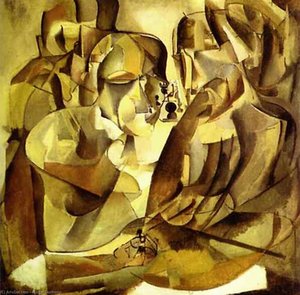
- Retrato de jugadores de ajedrez (1911), una obra cubista, muestra su interés por el juego y sus aspectos estratégicos.
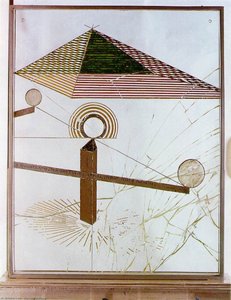
- A ser mirado (desde el otro lado del vidrio) con un ojo, cerca de, casi una hora (1945) es otra obra notable, que refleja sus inclinaciones dadaístas.
influencia y legado
El impacto de Duchamp en el arte del siglo XX es inmenso. Él, junto con Pablo Picasso y Henri Matisse, definió las artes plásticas a principios del siglo XX. Su enfoque conceptual del arte ha influido en generaciones de artistas.- Explore más obras de Duchamp en AllPaintingsStore: Marcel Duchamp | obras de arte
- Descubra el Museo Ohara de Arte, Japón, que presenta colecciones de arte occidental, incluidas algunas influenciadas por el estilo de Duchamp: Museo Ohara de Arte, Japón
- Aprenda más sobre Lettrism, un movimiento influenciado por el dadaísmo y el surrealismo, del que Duchamp formó parte: Movimiento artístico Lettrism
conclusión
El enigmático enfoque de arte de Marcel Duchamp, que combina elementos conceptuales y dadaístas, ha dejado una marca indeleble en el mundo del arte. Su legado continúa inspirando a los artistas e influyendo en el desarrollo del arte moderno y contemporáneo. Franck Scurti, un artista francés conocido por su arte conceptual, sigue los pasos de Duchamp, ampliando el legado de este pionero artista.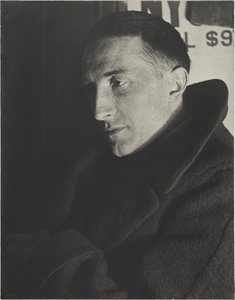
Marcel Duchamp
1887 - 1968 , Francia
Datos clave
- Artistas Influenciados Por: ['Franck Scurti']
- Fecha De Muerte: 1968
- Fecha De Nacimiento: 28 de julio de 1887
- Lugar De Nacimiento: Blainville-sur-Mer, Francia
- Movimiento Artístico:
- Cubismo
- Dadaísmo
- Arte conceptual
- Nacionalidad: Francesa-estadounidense
- Nombre Completo: Marcel Duchamp
- Obras Notables:
- Fuente
- Retrato de jugadores de ajedrez
- La novia desnudada
- L.H.O.O.Q.
- Boîte-en-valise
Artículos relacionados

Sculpture Essentials: A Professional Guide to Materials, Techniques, and 3D Art for Large-Scale Interior Projects
A professional procurement guide for hotel designers on selecting sculpture materials and techniques. Master the integration of 3D art into hospitality spaces with expert insights on durability, scale, and large-scale project sourcing.