


 Ver en contexto
 Enviar
 Compartir
 Detalles
 Guía
Guía

 Descargar
 Similares
 Radiografía
 Presentación de diapositivas
 Q&A
Q&A Estadísticas
Lynn Meadows


 Ver más
Giclée / Impresión de arte
Impresiones giclée o en lienzo de calidad de museo con producción rápida y opciones de acabado flexibles. ( Comprar pintura hecha a mano Cambiar a imagen digital)




P118B €10

P118H €10

P118W €10

P438Z €10

P508JH €12

P508YH €12

P805H €10

P805Z €10

P919BZ €10

P919G €10

P919XJ €10

P959ZH €10

P968JZ €12

W106C €8

W218G €10

W218JH €8

W218Y €10

W307PJ €10

W316G €10

W316PJ €8

W316Y €10

W398PJ €8

W4111J €10

W500HY €15

W500JH €15

W692G €12

W849H €8

W940BG €15

W953PJ €8




Elija entre nuestros tamaños predefinidos que respetan las proporciones originales de la obra.

Introduzca el ancho y el alto que necesite para adaptarse a su marco o pared. Una impresión solo puede recortarse, nunca hacerse más grande que la imagen original, por lo que un tamaño con una forma distinta perderá parte de la obra. Le enviaremos una maqueta digital para su aprobación antes de realizar cualquier impresión. La imagen que se muestra en esta página no refleja el recorte real; solo la maqueta lo hace.
Envío a todo el mundo () en 2 semanas en lugar de las 4/5 semanas estándar. (1 noviembre)

Envío exprés gratuito a todo el mundo

Lienzo de lino de alta calidad

Seguro de envío total

Garantía de reembolso de aranceles aduaneros

Garantía de fidelidad cromática exacta

Política de devolución de 100 días (solo por defectos)

Garantía de devolución del 100% del dinero

Descuento por cantidad
 La opción de vidrio solo está disponible en tamaños inferiores a 110 cm.

Lynn Meadows
Giclée / Impresión de arte
Dimensiones de la reproducción
-


Precio total final
€ 57
A Symphony of Light and Marsh – Exploring Martin Johnson Heade’s “Lynn Meadows”
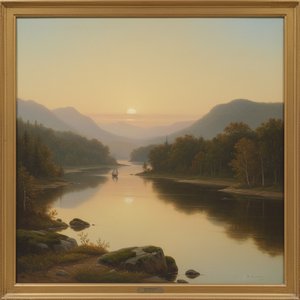
Martin Johnson Heade's "Lynn Meadows," painted in 1863, isn’t merely a depiction of a marsh landscape; it’s an immersion into a specific moment of time, a carefully orchestrated dialogue between light, color, and the quiet drama of nature. This painting, now meticulously reproduced for art lovers worldwide, offers a glimpse into the heart of Luminism – a movement that sought to capture the ephemeral qualities of light and atmosphere with remarkable subtlety and grace. Heade, a master of this style, wasn’t interested in grand vistas or heroic subjects; instead, he focused on the intimate details of the natural world, particularly the serene beauty of coastal marshes.
The scene unfolds before us as a horizontal expanse dominated by the muted browns and greens of the marsh itself. A prominent bridge, rendered with delicate precision, acts as a visual anchor, drawing the eye into the heart of the composition. The foreground is populated with figures – likely laborers engaged in their daily tasks – adding a subtle layer of human presence to this otherwise solitary landscape. However, these individuals are deliberately understated, almost dissolving into the surrounding environment, reinforcing the painting’s overall sense of tranquility and timelessness. The color palette is remarkably restrained, relying on soft washes of ochre, umber, and sage green, creating an atmosphere of hazy warmth and diffused light – a hallmark of Luminist technique.
Luminism: Capturing the Essence of Light
Heade’s work falls squarely within the Luminist movement, which flourished in America during the mid-19th century. Unlike their Hudson River School counterparts who often depicted dramatic mountain scenes and heroic narratives, Luminists were primarily concerned with capturing the fleeting effects of light on natural subjects. They eschewed heavy brushwork and detailed rendering in favor of loose, atmospheric strokes that suggested movement and transparency. This approach allowed them to convey the subtle shifts in color and tone as sunlight filtered through clouds or reflected off water surfaces. Heade’s “Lynn Meadows” exemplifies this philosophy perfectly – it's less about a literal representation of the marsh and more about evoking its feeling, its mood, its very essence.
The painting’s historical context is equally important to understanding its significance. Painted in 1863, during the American Civil War, “Lynn Meadows” offers a poignant contrast to the turmoil of the nation. It's a scene of quiet contemplation and resilience – a reminder of the enduring beauty of nature even amidst times of great upheaval. The bridge itself can be interpreted as a symbol of connection and progress, linking the human world with the natural one.
Technique and Materials: A Master’s Touch
Heade employed oil paints on canvas, utilizing a technique characterized by thin layers of color applied in rapid succession. This layering creates a remarkable sense of luminosity – as if the light itself is emanating from the surface of the painting. The brushstrokes are loose and expressive, yet carefully controlled to create a harmonious composition. The artist’s mastery of glazing techniques allows him to build up depth and dimension with subtle variations in color and tone. Close examination reveals the meticulous attention to detail – the texture of the reeds, the ripples on the water, the shadows cast by the bridge.
Symbolism and Emotional Resonance
Beyond its technical brilliance, “Lynn Meadows” is rich in symbolism. The setting sun evokes a sense of transition and closure, suggesting both the end of one day and perhaps even the end of an era. The figures working in the foreground represent the enduring connection between humanity and nature – a reminder that we are part of this intricate ecosystem. Ultimately, the painting’s emotional impact is profoundly serene and contemplative, inviting viewers to pause, reflect, and appreciate the simple beauty of the natural world. It's a piece that speaks to our deepest longing for peace and tranquility, offering a moment of respite from the complexities of modern life.
Preguntas y respuestas
¿Los colores de "Lynn Meadows" de Martin Johnson Heade son intensos o tenues?
Los colores de "Lynn Meadows" de Martin Johnson Heade presentan una saturación Balanced Soft. La saturación describe qué tan vivos o apagados son los colores.
¿A qué movimiento y a qué época pertenece "Lynn Meadows" de Martin Johnson Heade?
"Lynn Meadows" pertenece al movimiento Luminism, y su creador trabajó en la época Siglo XIX.
¿Qué relevancia tiene "Lynn Meadows" dentro de Luminism?
"Lynn Meadows" de Martin Johnson Heade se clasifica como Recognized y pertenece al movimiento Luminism.
Obras relacionadas


Biografía del artista
Primeros años y formación
Martin Johnson Heade, pintor estadounidense, nació el 11 de agosto de 1819 en Lumberville, Pensilvania. Su temprana vida estuvo marcada por una fuerte inclinación hacia el arte, lo que lo llevó a estudiar bajo la tutela de Edward Hicks y posiblemente Thomas Hicks. Esta formación fundamental sentó las bases para sus futuros esfuerzos artísticos.Carrera artística
La carrera artística de Heade se puede clasificar en varias fases, cada una marcada por un cambio distintivo en su tema y estilo. Inicialmente, se centró en el retrato, siendo su obra conocida más temprana un retrato de 1839. Tras esto, viajó a Europa, donde estuvo expuesto a diversas influencias artísticas.- Su trabajo comenzó a mostrar un interés marcado por la pintura de paisajes, particularmente después de conocer a artistas de la Escuela del Río Hudson, como John Frederick Kensett y Benjamin Champney.
- Sus viajes a Brasil (1863-1864) y posteriores viajes a Nicaragua, Colombia, Panamá y Jamaica (1866 y 1870) influyeron profundamente en su trabajo, lo que llevó a una serie de pequeñas pinturas que representaban colibríes.
- Sus años posteriores en St. Augustine, Florida, estuvieron marcados por un mayor enfoque en el bodegón, particularmente las flores de magnolia sobre tela de terciopelo.
Estilo y obras notables
El estilo de Martin Johnson Heade se caracteriza por un enfoque romántico de sus temas, a menudo centrándose en la interacción entre la luz y la sombra. Sus obras más renombradas incluyen representaciones de los marismas costeras de Nueva Inglaterra, lo que ha llevado a algunos historiadores a categorizarlo como pintor luminista.- Su trabajo ahora forma parte de importantes museos y colecciones, incluyendo la colección de Martin Johnson Heade en https://AllPaintingsStore.com/@/martin-johnson-heide.
- Algunas de sus notables pinturas, como *Forked Tailed Woodnymph*, se pueden encontrar en la colección de AllPaintingsStore.
- Para obtener más información sobre la vida y obra de Heade, visite la página de Wikipedia sobre Martin Johnson Heade: https://en.wikipedia.org/wiki/martin_johnson_heade.
Influencias y desarrollo artístico
La obra de Heade muestra una evolución significativa a lo largo de su carrera, influenciada por varios factores. Su formación inicial con Edward Hicks le proporcionó una base sólida en las técnicas tradicionales de pintura. Su viaje a Europa expuso a Heade a la estética del arte europeo, mientras que su asociación con artistas de la Escuela del Río Hudson, como Frederic Edwin Church, lo llevó a explorar el paisaje americano y desarrollar un estilo distintivo. La fascinación por los paisajes tropicales, alimentada por *Heart of the Andes* de Church, impulsó sus viajes a Sudamérica y el Caribe, donde capturó la belleza exótica de la flora y fauna locales. Su posterior residencia en St. Augustine, Florida, marcó una transición hacia un enfoque más introspectivo, centrado en las flores y los paisajes costeros del sureste americano.Legado e importancia histórica
A pesar de no ser ampliamente conocido durante su vida, el trabajo de Martin Johnson Heade ha atraído la atención de académicos y coleccionistas desde la década de 1940. Hoy en día, es reconocido como un importante artista estadounidense, con sus pinturas ocasionalmente descubiertas en lugares inesperados como ventas de garaje y mercadillos. Su contribución al arte americano radica en su capacidad para capturar la belleza serena de los paisajes costeros y la delicadeza de las flores, utilizando una técnica luminista que enfatiza la luz y la atmósfera. Su obra representa un importante capítulo en la historia del arte estadounidense, destacando la diversidad de temas y estilos dentro del movimiento artístico del siglo XIX.
Martin Johnson Heade
1819 - 1904 , Estados Unidos de América
Datos clave
- Artistas Que Influyeron:
- Edward Hicks
- Thomas Hicks
- John Frederick Kensett
- Benjamin Champney
- Frederic Edwin Church
- Fecha De Fallecimiento: 4 de septiembre de 1904
- Fecha De Nacimiento: 11 de agosto de 1819
- Lugar De Nacimiento: Lumberville, EE. UU.
- Movimiento Artístico: Luminismo, Hudson River School
- Nacionalidad: Estadounidense
- Nombre Completo: Martin Johnson Heade
- Obras Notables:
- Salt Marsh Landscapes
- Forked Tailed Woodnymph
- Giant Magnolias on Velvet
Artículos relacionados

Las 25 mejores obras de John Constable: Un viaje al corazón del paisaje inglés
Descubre las 25 obras maestras de John Constable y su alma romántica. Explora la colección completa en AllPaintingsStore.com.

Martin Johnson Heade: Luminism, American Identity & the Poetic Still Life
Explore the captivating world of Martin Johnson Heade, a master of Luminism. Discover his serene landscapes, vibrant still lifes & profound connection to American identity. Learn about his techniques and legacy.

Paisajes Románticos: 10 Obras Maestras que Definieron un Movimiento Artístico
Descubre los 10 paisajes románticos más influyentes de artistas como Caspar David Friedrich y Turner. Explora la belleza, el simbolismo y las técnicas del movimiento romántico. Reproducciones de arte exclusivas en AllPaintingsStore.com.

Evocations of Place: A Historical Journey Through Landscape Art
Explore the rich history of landscape art with AllPaintingsStore. Discover renowned artists, movements like Impressionism & Romanticism, and expert guidance for collecting timeless pieces. Find your perfect serene escape today!
David Johnson: A Luminist Master of the Hudson River School & Beyond
Explore the captivating landscapes of David Johnson, a key figure in the Hudson River School & Luminism movement. Discover his artistic evolution, legacy, and how to collect his works with AllPaintingsStore.


