


 Ver en contexto
 Enviar
 Compartir
 Detalles
 Guía
Guía

 Descargar
 Similares
 Radiografía
 Presentación de diapositivas
 Q&A
Q&A Estadísticas
Landscape 1

 Ver más
Obtenga un archivo listo para imprimir que supera con creces la vista previa web. Cada imagen digital que vendemos proviene de un maestro de alta resolución de nuestro archivo —generalmente de entre 5.000 y 15.000 píxeles de ancho— para que pueda realizar impresiones de gran formato, recortar con precisión o reproducir detalles minuciosos con total confianza.
Ningún archivo sale de nuestro estudio sin ser intervenido. Un experto digital coteja los colores con la pintura original y los corrige si es necesario, para luego mejorar la claridad y el detalle mediante herramientas de retoque profesional —siempre manteniendo la fidelidad a la pincelada y al estilo del artista. El resultado es una imagen que evoca la esencia de la pintura, no un escaneo con filtros.
Aprobación previa al finalizar: nuestro experto le enviará la imagen por correo electrónico en un plazo de 72 horas para su revisión. ¿No está satisfecho? Puede solicitar mejoras o correcciones, o pedir un reembolso si la calidad no cumple con sus expectativas.
Esta es la calidad en la que confían editoriales, estudios de diseño, galerías e imprentas.
Imagen Digital
Descarga un archivo de alta resolución para exhibición personal, impresión y proyectos creativos. ( Cambiar a impresiones Comprar pintura hecha a mano)
Incluido en cada pedido de imágenes digitales
Entrega digital experta, garantizada.
Al elegir AllPaintingsStore.com, no solo está adquiriendo una imagen; está recibiendo una obra de arte digital mejorada profesionalmente, elaborada con precisión y respaldada por una garantía de satisfacción. Esto es todo lo que incluye su pedido, automáticamente:

Entrega rápida por email
Recibirá su archivo de imagen digital en alta resolución por correo electrónico en un plazo de 72 horas tras realizar su pedido, listo para su uso inmediato.

Archivo digital optimizado por IA
Su obra de arte se optimiza profesionalmente mediante herramientas avanzadas de IA y edición manual, garantizando el máximo detalle, claridad y precisión cromática.

Reenvío gratuito de por vida
¿Has borrado o perdido tu archivo por error? No te preocupes: te lo volveremos a enviar en cualquier momento, sin coste adicional.

Sin gastos de importación, siempre
Disfrute de su obra de arte al instante sin aduanas, aranceles ni gastos de envío; las descargas digitales siempre están libres de impuestos.

Garantía de fidelidad de color
Garantizamos que su imagen digital refleje los colores originales con la mayor fidelidad posible, mediante el uso de herramientas profesionales y gestión del color.

Garantía de satisfacción de 100 días
Si no está satisfecho con su imagen digital, la revisaremos o le reembolsaremos el 100% en un plazo de 100 días, sin preguntas.

100% Garantía de devolución de dinero
¿No está satisfecho? Obtenga un reembolso completo dentro de los 100 días posteriores a la recepción de su archivo digital, sin necesidad de explicaciones.

Descuentos por pedidos grandes
Compra 3 imágenes, ahorra 10% - Compra 5, ahorra 15% - Compra 10+, ahorra 20%. Ideal para proyectos creativos, galerías y agencias.
A Moment of Observation Amidst the Grainy Embrace of Surrealism
Max Ernst’s “Landscape,” painted in 1957, isn't merely a depiction of a rural scene; it’s an embodiment of the core tenets of Surrealist art – a deliberate disruption of rational thought and a fascination with the subconscious mind. This striking piece showcases Ernst’s signature blend of Cubism and Dada influences, resulting in an image that feels both meticulously crafted and profoundly unsettling.
- Subject Matter: The painting captures a solitary man standing before a rugged landscape dominated by weathered rocks and sparse trees. He gazes intently off-camera, suggesting contemplation and perhaps a preoccupation with something unseen – a hidden narrative within the stillness of nature.
- Style & Technique: Ernst employs textured brushstrokes—characteristic of Dada’s rejection of academic conventions—to convey the palpable atmosphere of a cloudy day. The muted palette reinforces this mood, prioritizing tonal variation over vibrant color to heighten emotional resonance.
Decoding Symbolism Within Geometric Forms
Beyond its visual appeal lies a rich tapestry of symbolic references. Ernst’s use of geometric shapes—particularly angular rocks and abstracted tree trunks—reflects the Surrealists' preoccupation with dismantling traditional representations. These forms aren’t meant to mirror reality but rather to evoke psychological states, mirroring the fragmented perceptions inherent in dreams.
- Geometric Composition: The arrangement of rocks and trees isn’t accidental; it adheres to principles of Cubism, fracturing perspective and presenting multiple viewpoints simultaneously. This technique underscores the Surrealists' belief that reality is subjective and that art should explore inner landscapes as much as outer ones.
- Birds in Flight: Two birds—one perched high on a tree branch and another drifting across the sky—represent freedom and aspiration, albeit viewed through a lens of uncertainty. Their positioning reinforces the painting’s contemplative mood and invites viewers to ponder the significance of observation.
Historical Context & Ernst's Artistic Vision
Painted during the height of Surrealism’s influence—a movement born from disillusionment with postwar Europe— “Landscape” speaks to a broader philosophical concern: the exploration of irrationality and the confrontation with anxieties surrounding societal change. Ernst, deeply impacted by Freud’s psychoanalytic theories, sought to liberate art from the constraints of logic, prioritizing intuition and dreamlike imagery.
- Influence of Dada: The painting's rejection of conventional artistic standards aligns perfectly with Dada’s rebellious spirit—a reaction against bourgeois values and a celebration of chance and spontaneity.
- Philosophical Engagement: Ernst wasn’t simply interested in creating beautiful pictures; he aimed to provoke thought, challenging viewers to question their assumptions about the world and embracing the unsettling potential of subconscious revelation.
Emotional Resonance & Artistic Legacy
"Landscape" transcends its formal elements to convey a profound sense of solitude and wonder. It captures the quiet contemplation of someone encountering something extraordinary—a hidden beauty or an unspoken truth—within the seemingly mundane expanse of nature. Ernst’s enduring contribution to art history lies in his unwavering commitment to artistic experimentation and his courageous exploration of the human psyche, cementing “Landscape” as a cornerstone of Surrealist aesthetics.
Preguntas y respuestas
¿Es "Landscape 1" una obra famosa del Surrealist Landscape?
Dentro del movimiento Surrealist Landscape, "Landscape 1" posee un nivel de popularidad Recognized.
¿Los colores de "Landscape 1" son intensos o suaves?
Los colores en "Landscape 1" de Max Ernst tienen una intensidad Balanced.
¿Qué tamaño y orientación se recomiendan para la impresión de "Landscape 1"?
Se recomienda imprimir "Landscape 1" de Max Ernst en un tamaño de Large con una orientación Landscape.
Obras relacionadas


Biografía del artista
Max Ernst: Una Vida en el Surrealismo
Juventud y Educación
- Nacido: 1 de abril de 1891, en Brühl, Alemania.
- El padre de Ernst, Philipp Ernst, era maestro de sordos y pintor aficionado, fomentando el interés temprano de Max por el arte.
- Estudió filosofía, historia del arte, literatura, psicología y psiquiatría en la Universidad de Bonn desde 1909.
- Esta diversa formación académica influyó profundamente en sus posteriores exploraciones artísticas.
Desarrollo Artístico e Influencias
- Un momento decisivo fue la exposición Sonderbund en Colonia (1912), donde conoció obras de Pablo Picasso, Vincent van Gogh, y Paul Gauguin.
- En 1914, conoció a Hans Arp, comenzando una amistad que duró toda la vida e influyó significativamente en su trayectoria artística.
- La Primera Guerra Mundial impactó profundamente a Ernst; sus experiencias como soldado llevaron al desencanto y a una visión crítica de la sociedad.
- Se sintió influenciado por las obras de Sigmund Freud, explorando temas de la mente inconsciente en su arte.
Dada y Surrealismo
- Ernst se convirtió en una figura clave del grupo Dada de Colonia después de la Primera Guerra Mundial, rechazando las convenciones artísticas tradicionales.
- Pionero en técnicas innovadoras como frottage (frotar lápiz sobre superficies texturizadas) y grattage (raspar pintura para revelar capas subyacentes).
- En la década de 1920, se unió al movimiento Surrealista en París, colaborando con artistas como Paul Éluard.
- Su obra durante este período exploró imágenes oníricas y temas psicológicos.
Obras Principales y Técnicas
- Frottage: Una técnica utilizada para crear texturas e imágenes inesperadas, ejemplificada en muchas de sus obras.
- Collage: Ernst empleó con frecuencia el collage, combinando elementos dispares para crear composiciones surrealistas.
- Obras Notables:
- La Ciudad Entera
- Euclides
- De Esto Ninguno Debería Saber
- Bosque y Paloma
- Sus pinturas a menudo presentan imágenes simbólicas, incluyendo pájaros (particularmente su alter ego Loplop), paisajes y yuxtaposiciones inquietantes.
Vida Tardía y Legado
- Ernst se trasladó a Estados Unidos durante la Segunda Guerra Mundial, continuando pintando y experimentando con nuevas técnicas.
- Regresó a Francia después de la guerra y permaneció activo hasta su muerte el 1 de abril de 1976, en París.
- Significado Histórico: Las contribuciones de Max Ernst a Dada y Surrealismo fueron innovadoras. Desafió las normas artísticas, exploró la mente subconsciente e inventó técnicas innovadoras que continúan inspirando a los artistas de hoy en día.
- Sigue siendo una de las figuras más importantes e influyentes del arte del siglo XX.
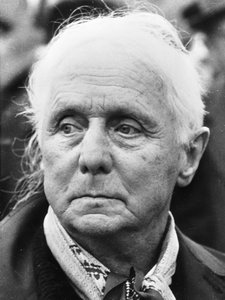
Max Ernst
1891 - 1976 , Alemania
Breves datos
- Artistas Influenciados: ['Muchos artistas posteriores']
- Artistas Que Influyeron:
- Pablo Picasso
- Vincent van Gogh
- Paul Gauguin
- Sigmund Freud
- Fecha De Muerte: 1 de abril de 1976
- Fecha De Nacimiento: 1 de abril de 1891
- Lugar De Nacimiento: Brühl, Alemania
- Movimiento Artístico: Dadaísmo y Surrealismo
- Nacionalidad: Alemán/Americano/Francés
- Nombre Completo: Max Ernst
- Obras Notables:
- La Ciudad Entera
- Euclides
- Bosque y Paloma
- El Elefante de Célebes

