Vista previa
 Compartir
 Compartir
 Ver detalles

 Descargar
 Ver similares
 Radiografía
 Presentación de diapositivas
Ohne Titel

 Leer más
Giclée / Impresión de arte
Impresiones giclée o en lienzo de calidad de museo con producción rápida y opciones de acabado flexibles. ( Encargar reproducción pintada a mano Comprar descarga)




P118B $10

P118H $10

P118W $10

P438Z $10

P508JH $12

P508YH $12

P805H $10

P805Z $10

P919BZ $10

P919G $10

P919XJ $10

P959ZH $10

P968JZ $12

W106C $8

W218G $10

W218JH $8

W218Y $10

W307PJ $10

W316G $10

W316PJ $8

W316Y $10

W398PJ $8

W4111J $10

W500HY $15

W500JH $15

W692G $12

W849H $8

W940BG $15

W953PJ $8




Elija entre nuestros tamaños predefinidos que respetan las proporciones originales de la obra.

Puede introducir sus propias dimensiones para adaptarse a un marco o espacio específico. Si el tamaño seleccionado no coincide con las proporciones de la imagen original, recortaremos la obra de arte o extenderemos la imagen con un borde con efecto espejo o de color sólido. Se enviará una maqueta digital para su aprobación antes de que comience la producción.
Tenga en cuenta que la vista previa en pantalla no refleja el recorte o la extensión real. Solo la maqueta mostrará con precisión la composición final.
Aunque existen tamaños personalizados, recomendamos seleccionar una dimensión de la lista predefinida para preservar las proporciones originales.
Envío a todo el mundo () en 2 semanas en lugar de las 4/5 semanas estándar. (19 agosto)

Envío exprés gratuito a todo el mundo

Lienzo de lino de alta calidad

Seguro de envío completo

Garantía de reembolso de aranceles aduaneros

Garantía de fidelidad cromática exacta

Política de devolución de 60 días (solo por defectos)

Garantía de devolución del 100% del dinero

Oferta por volumen
 La opción de vidrio solo está disponible en tamaños inferiores a 110 cm.

Ohne Titel
Giclée / Impresión de arte
Tamaño de la reproducción
-


Precio total
$ 64
Descripción de la pieza
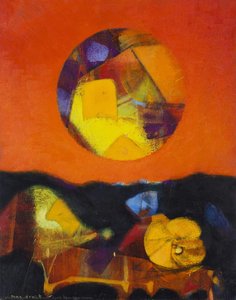
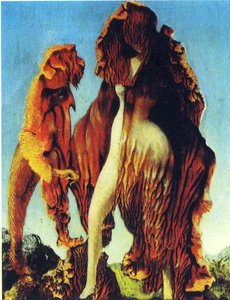
A Surrealist Echo: Unpacking Max Ernst’s “Ohne Titel”
Max Ernst's "Ohne Titel" – often referred to as "Personnages or Le Chapeau Rouge" – isn’t merely a painting; it’s an invitation into the labyrinthine depths of the subconscious. Created in 1949, this remarkable etching and aquatint, rendered in vibrant color on Japanese paper, embodies the core tenets of Surrealism while simultaneously hinting at the artist's lifelong fascination with chance, memory, and the evocative power of imagery. It’s a piece that rewards repeated viewing, revealing new layers of meaning with each encounter. Ernst, born in Brühl, Germany, in 1891, was a restless spirit who rejected conventional artistic paths, forging his own unique trajectory through experimentation and intellectual exploration – a path deeply intertwined with the burgeoning Surrealist movement. His early years were marked by a rejection of academic art, leading him to embrace Dadaism before ultimately finding resonance within the more psychologically-oriented Surrealism championed by André Breton.The Alchemy of Chance: Technique and Process
At first glance, “Ohne Titel” appears chaotic – a swirling vortex of greens, reds, yellows, and blacks colliding across the page. However, this apparent disorder is meticulously orchestrated. Ernst employed a technique he termed "collage," layering aquatint and etching plates to create a complex matrix of tonal variations. The process involved applying ink to the plate, then covering it with wax before exposing it to light through a photographic negative. This created areas of varying density, which would subsequently be etched – resulting in the final image. Crucially, Ernst embraced chance within this controlled system. He often left portions of the plate unworked, allowing the etching process itself to introduce unexpected textures and patterns. The result is a mesmerizing interplay between deliberate design and serendipitous discovery—a testament to Ernst’s belief that true creativity arises from the collision of intention and accident. The use of Japanese paper adds an element of subtle elegance and texture, further enhancing the artwork's visual richness.Symbolic Landscapes: Unveiling Hidden Meanings
While devoid of recognizable figures or objects, “Ohne Titel” is profoundly symbolic. The dominant greens evoke a sense of primal nature, hinting at both fertility and decay – a recurring motif in Ernst’s work. The vibrant reds and yellows suggest energy, passion, and perhaps even danger. The fragmented forms, resembling distorted human shapes or abstract landscapes, are deliberately ambiguous, inviting the viewer to project their own experiences and emotions onto the scene. Some art historians interpret these figures as echoes of childhood memories, while others see them as representations of the anxieties and uncertainties of a rapidly changing world. The title itself – “Ohne Titel” – underscores the artwork’s inherent openness, suggesting that its meaning is not fixed but rather emerges from the interaction between the viewer and the image. The inclusion of "Personnages or Le Chapeau Rouge" hints at both human figures and a flamboyant hat, adding another layer of visual intrigue.A Window into the Unconscious: Context and Legacy
“Ohne Titel” was created during a period of intense artistic experimentation and intellectual ferment – the aftermath of World War II and the rise of Cold War anxieties. Surrealism, with its emphasis on dreams, irrationality, and the exploration of the unconscious mind, provided a powerful framework for grappling with these turbulent times. Ernst’s work reflects this broader cultural context, offering a glimpse into the psychological landscape of a generation struggling to make sense of a world shattered by violence and uncertainty. His innovative techniques – including frottage (rubbing textures onto paper) and decalcomania (transferring ink from one surface to another) – became hallmarks of Surrealist art, influencing countless artists who followed in his footsteps. “Ohne Titel” stands as a prime example of Ernst’s enduring legacy—a testament to the power of imagination and the transformative potential of artistic experimentation.A Timeless Resonance: Emotional Impact and Aesthetic Appeal
Ultimately, "Ohne Titel" transcends its technical complexities to offer a deeply resonant emotional experience. The swirling colors, fragmented forms, and ambiguous imagery create a sense of unease, mystery, and profound beauty. It’s a piece that lingers in the mind long after it has been viewed, prompting reflection on themes of memory, identity, and the nature of reality. Its vibrant palette and intricate textures make it equally captivating as a standalone artwork or as part of a carefully curated interior design scheme. The work's inherent ambiguity ensures its continued relevance, inviting viewers to engage with it on a personal level and discover their own unique interpretations. It’s a powerful reminder that art can be both intellectually stimulating and emotionally evocative—a true testament to the genius of Max Ernst.Obras relacionadas



Biografía del artista
Max Ernst: Una Vida en el Surrealismo
Juventud y Educación
- Nacido: 1 de abril de 1891, en Brühl, Alemania.
- El padre de Ernst, Philipp Ernst, era maestro de sordos y pintor aficionado, fomentando el interés temprano de Max por el arte.
- Estudió filosofía, historia del arte, literatura, psicología y psiquiatría en la Universidad de Bonn desde 1909.
- Esta diversa formación académica influyó profundamente en sus posteriores exploraciones artísticas.
Desarrollo Artístico e Influencias
- Un momento decisivo fue la exposición Sonderbund en Colonia (1912), donde conoció obras de Pablo Picasso, Vincent van Gogh, y Paul Gauguin.
- En 1914, conoció a Hans Arp, comenzando una amistad que duró toda la vida e influyó significativamente en su trayectoria artística.
- La Primera Guerra Mundial impactó profundamente a Ernst; sus experiencias como soldado llevaron al desencanto y a una visión crítica de la sociedad.
- Se sintió influenciado por las obras de Sigmund Freud, explorando temas de la mente inconsciente en su arte.
Dada y Surrealismo
- Ernst se convirtió en una figura clave del grupo Dada de Colonia después de la Primera Guerra Mundial, rechazando las convenciones artísticas tradicionales.
- Pionero en técnicas innovadoras como frottage (frotar lápiz sobre superficies texturizadas) y grattage (raspar pintura para revelar capas subyacentes).
- En la década de 1920, se unió al movimiento Surrealista en París, colaborando con artistas como Paul Éluard.
- Su obra durante este período exploró imágenes oníricas y temas psicológicos.
Obras Principales y Técnicas
- Frottage: Una técnica utilizada para crear texturas e imágenes inesperadas, ejemplificada en muchas de sus obras.
- Collage: Ernst empleó con frecuencia el collage, combinando elementos dispares para crear composiciones surrealistas.
- Obras Notables:
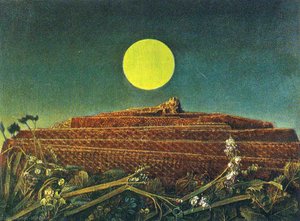
- La Ciudad Entera
- Euclides
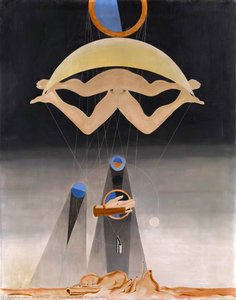
- De Esto Ninguno Debería Saber
- Bosque y Paloma
- Sus pinturas a menudo presentan imágenes simbólicas, incluyendo pájaros (particularmente su alter ego Loplop), paisajes y yuxtaposiciones inquietantes.
Vida Tardía y Legado
- Ernst se trasladó a Estados Unidos durante la Segunda Guerra Mundial, continuando pintando y experimentando con nuevas técnicas.
- Regresó a Francia después de la guerra y permaneció activo hasta su muerte el 1 de abril de 1976, en París.
- Significado Histórico: Las contribuciones de Max Ernst a Dada y Surrealismo fueron innovadoras. Desafió las normas artísticas, exploró la mente subconsciente e inventó técnicas innovadoras que continúan inspirando a los artistas de hoy en día.
- Sigue siendo una de las figuras más importantes e influyentes del arte del siglo XX.

Max Ernst
1891 - 1976 , Alemania
Datos clave
- Artistas Influenciados: ['Muchos artistas posteriores']
- Artistas Que Influyeron:
- Pablo Picasso
- Vincent van Gogh
- Paul Gauguin
- Sigmund Freud
- Fecha De Muerte: 1 de abril de 1976
- Fecha De Nacimiento: 1 de abril de 1891
- Lugar De Nacimiento: Brühl, Alemania
- Movimiento Artístico: Dadaísmo y Surrealismo
- Nacionalidad: Alemán/Americano/Francés
- Nombre Completo: Max Ernst
- Obras Notables:
- La Ciudad Entera
- Euclides
- Bosque y Paloma
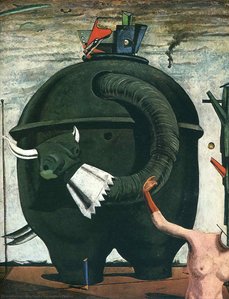
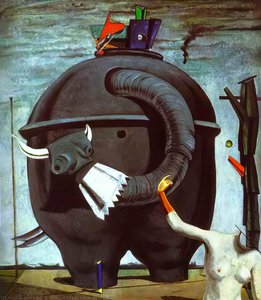
- El Elefante de Célebes
Artículos relacionados

Expressionist Abstraction: A Procurement Guide to Bold Colors and Emotional Impact for Modern Hotel Interiors
Elevate hospitality spaces with Expressionist Abstraction. A professional procurement guide for hotel designers on sourcing bold, large-scale abstract oil paintings to create impactful, high-end modern interiors through reliable bulk-order art solutions.

Strategic Sourcing of Premium Abstract Art for High-Impact Commercial Interiors and Large-Scale Hotel Projects
Streamline your commercial art procurement with our expert guide to sourcing premium abstract art for hotel and large-scale projects. Discover professional solutions for custom sizing, multi-panel layouts, and reliable bulk ordering designed for hospitality designers.