Ver en contexto
 Enviar
 Compartir
 Detalles
 Guía
Guía

 Descargar
 Similares
 Radiografía
 Presentación de diapositivas
 Preguntas y respuestas
 Estadísticas
The Risen Christ

- 30.0 x 14.0 cm

 Ver más
Giclée / Impresión de arte
Impresiones giclée o en lienzo de calidad de museo con producción rápida y opciones de acabado flexibles. ( Comprar pintura hecha a mano Cambiar a imagen digital)




































Elija entre nuestros tamaños predefinidos que respetan las proporciones originales de la obra.

Introduzca el ancho y el alto que necesite para adaptarse a su marco o pared. Una impresión solo puede recortarse, nunca hacerse más grande que la imagen original, por lo que un tamaño con una forma distinta perderá parte de la obra. Le enviaremos una maqueta digital para su aprobación antes de realizar cualquier impresión. La imagen que se muestra en esta página no refleja el recorte real; solo la maqueta lo hace.
Envío a todo el mundo () en 2 semanas en lugar de las 4/5 semanas estándar. (16 noviembre)

Envío exprés gratuito a todo el mundo

Lienzo de lino de alta calidad

Seguro de envío total

Garantía de reembolso de aranceles aduaneros

Garantía de fidelidad cromática exacta

Política de devolución de 100 días (solo por defectos)

Garantía de devolución del 100% del dinero

Descuento por cantidad
 La opción de vidrio solo está disponible en tamaños inferiores a 110 cm.

The Risen Christ
Giclée / Impresión de arte
Dimensiones de la reproducción
-


Precio total final
€ 58
Obras relacionadas


Biografía del artista
Las Sombras Luminosas de Orazio Samacchini
En la atmósfera vibrante e intelectualmente cargada de la Italia de finales del siglo XVI, pocos artistas capturaron la tensión entre la gracia clásica y el drama manierista con tanta eficacia como Orazio Samacchi. Nacido en Bolonia en 1532, Samacchini emergió de una ciudad impregnada de tradición humanista, un trasfondo que más tarde informaría la profunda profundidad alegórica de sus composiciones. Sus primeros años estuvieron definidos por un riguroso aprendizaje bajo el célebre Pellegrino Tibaldi, un maestro cuyo uso expresivo del color y su intensidad emocional proporcionaron el plano fundacional para el floreciente estilo de Samacchini. A través de Tibaldi, el joven artista aprendió a ir más allá de la mera representación, buscando en su lugar infundir a la forma humana una vitalidad palpable y, a menudo, inquieta.
La trayectoria de la carrera de Samacchini dio un giro transformador en 1563, cuando viajó a Roma. Este traslado lo situó en el epicentro mismo del mundo artístico durante el reinado transformador del Papa Pío IV. En las sagradas salas del Vaticano, Samacchini participó en colaboraciones monumentales que consolidarían su reputación entre la élite. Trabajando junto a los hermanos Zuccari —Taddeo y Giovanni Battista—, contribuyó a la impresionante decoración del Belvedere del Vaticano y de la Sala Regia. Fue durante este periodo romano cuando su obra comenzó a absorber los sofisticados matices del manierismo veneciano, integrando una paleta más luminosa y un sentido de dinamismo compositivo que evocaba la influencia de Tiziano.
Un Dominio del Mito y la Emoción
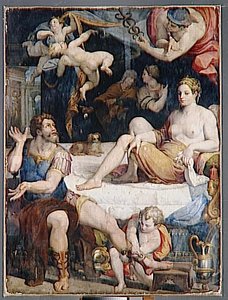
A medida que el estilo de Samacchini maduraba, se convirtió en un estudio cautivador de contrastes. Poseía una capacidad singular para manipular la luz y la sombra, creando efectos de claroscuro que otorgaban a sus figuras una presencia escultórica y un peso casi teatral. Su temática derivaba frecuentemente entre lo sagrado y lo profano, navegando las comple narrativas complejas de la mitología clásica y la profunda devoción religiosa con igual fervor. En obras como Hércules y Antaeo, se puede presenciar la fuerza bruta y la tensión muscular característica del Renacimiento tardío, mientras que sus dramas mitológicos, como el conmovedor Mercurio ordena a Eneas abandonar a Dido, muestran un dominio sofisticado de la tensión psicológica y el destino.
El repertorio técnico del artista era tan diverso como sus inspiraciones. Ya fuera ejecutando frescos de gran escala o pinturas de tabla más íntimas, Samacchini utilizó una ornamentación intrincada y figuras deliberadamente distorsionadas para evocar la "maniera": la elegancia estilizada que definió la época. Sus obras tardías en Bolonia y Parma reflejan una síntesis de sus diversas influencias:
- La pincelada expresiva y emotiva heredada de Tibaldi.
- La gran escala narrativa requerida por los encargos papales en Roma.
- Las ricas y atmosféricas paletas de colores inspiradas en la escuela veneciana.
Legado dentro de la Tradición Manierista
Aunque la historia suele recordar a los titanes de la era como Miguel Ángel o Rafael, Orazio Samacchini sigue siendo una figura vital para comprender la transición del arte italiano. Su vida, aunque trágicamente corta —terminando en 1577 a la edad de cuarenta y cinco años—, estuvo marcada por una búsqueda incesante de la innovación artística. Al combinar el rigor intelectual del humanismo boloñés con el esplendor visual de las tradiciones romana y veneciana, ayudó a cultivar un lenguaje estilístico que celebraba la complejidad, el movimiento y el drama. Sus contribuciones a las iglesias de Bolonia y a los grandes palacios de Italia sirven como testimonios perdurables de un maestro que podía convertir la pintura en poesía, capturando la belleza fugaz y las luchas eternas de la condición humana.

Orazio Samacchini
1532 - 1577 , Italia
Datos clave
- Artistic Movement Or Style: Mannerismo y Barroco
- Artists Or Movements Influenced By This Artist: ['Rafael']
- Artists Who Influenced This Artist: ['Pellegrino Tibaldi']
- Date Of Birth: 20 de diciembre de 1532
- Date Of Death: 12 de junio de 1577
- Full Name: Orazio Samacchini
- Nationality: Italiano
- Notable Artworks:
- Hercules & Antaeus
- Allegoría de la sabiduría
- Place Of Birth: Bolonia, Italia
Artículos relacionados

Las 25 mejores obras de Giotto di Bondone: El padre del Renacimiento
Explora las 25 obras maestras de Giotto di Bondone, el padre del Renacimiento. Descubre su revolucionario naturalismo y técnica única. Encuentra reproducciones de calidad museo para tu colección o decoración en AllPaintingsStore.com. ¡Explora la colección completa online!