


 Ver en contexto
 Enviar
 Compartir
 Detalles

 Descargar
 Similares
 Radiografía
 Presentación de diapositivas
Two angels and two devils
 Acrylic
- WallArt
- Early Renaissance
 1469
1469 43.0 x 351.0 cm
 Ver más
Giclée / Impresión de arte
Impresiones giclée o en lienzo de calidad de museo con producción rápida y opciones de acabado flexibles. ( Comprar pintura hecha a mano Comprar imagen)




P118B $10

P118H $10

P118W $10

P438Z $10

P508JH $12

P508YH $12

P805H $10

P805Z $10

P919BZ $10

P919G $10

P919XJ $10

P959ZH $10

P968JZ $12

W106C $8

W218G $10

W218JH $8

W218Y $10

W307PJ $10

W316G $10

W316PJ $8

W316Y $10

W398PJ $8

W4111J $10

W500HY $15

W500JH $15

W692G $12

W849H $8

W940BG $15

W953PJ $8




Elija entre nuestros tamaños predefinidos que respetan las proporciones originales de la obra.

Puede introducir sus propias dimensiones para adaptarse a un marco o espacio específico. Si el tamaño seleccionado no coincide con las proporciones de la imagen original, recortaremos la obra de arte o extenderemos la imagen con un borde con efecto espejo o de color sólido. Se enviará una maqueta digital para su aprobación antes de que comience la producción.
Tenga en cuenta que la vista previa en pantalla no refleja el recorte o la extensión real. Solo la maqueta mostrará con precisión la composición final.
Aunque existen tamaños personalizados, recomendamos seleccionar una dimensión de la lista predefinida para preservar las proporciones originales.
Envío a todo el mundo () en 2 semanas en lugar de las 4/5 semanas estándar. (25 agosto)

Envío exprés gratuito a todo el mundo

Lienzo de lino de alta calidad

Seguro de envío total

Garantía de reembolso de impuestos aduaneros

Garantía de fidelidad cromática exacta

Política de devolución de 60 días (solo por defectos)

Garantía de devolución del 100% del dinero

Descuento por cantidad
 La opción de vidrio solo está disponible en tamaños inferiores a 110 cm.

Two angels and two devils
Giclée / Impresión de arte
Dimensiones de la reproducción
-


Precio total final
$ 64
Descripción de la pieza
A Pioneering Vision of Spiritual Drama: Paolo Uccello’s “Two Angels and Two Devils”
Paolo Uccello's "Two Angels and Two Devils," completed in 1469, stands as a cornerstone of Early Renaissance art—a testament to his revolutionary approach to perspective and an embodiment of the period’s fascination with theological narratives. More than just a depiction of biblical figures, this painting represents a profound exploration of moral duality and the human struggle between good and evil, skillfully rendered through meticulous observation and innovative artistic techniques. Giorgio Vasari famously recounted Uccello's obsessive dedication to mastering linear perspective, spending countless hours studying mathematical principles to achieve an unprecedented illusion of depth within his canvases—a pursuit that cemented his legacy as a true innovator.The Anatomy of Perspective: Uccello’s Mathematical Breakthrough
Uccello wasn’t merely interested in portraying beauty; he sought to represent reality itself with astonishing accuracy. His meticulous calculations and diagrams, documented in his own treatise “Lives of the Most Excellent Painters,” Sculptors, and Architects, demonstrate a commitment to scientific rigor rarely seen at the time. He painstakingly constructed a stage-like setting—a dining room adorned with furniture, beds, couches, and a landscape backdrop—to illustrate the principles of aerial perspective. This technique cleverly simulates atmospheric haze, reducing color intensity and blurring distant objects, creating an immersive experience for the viewer that transcends mere visual representation. The artist’s deliberate framing contributes to this illusion, guiding the eye towards a central vanishing point – a pivotal element in conveying spatial realism.Symbolism Within Sacred Narrative
The composition itself is laden with symbolic significance. The two angels, positioned on the left side of the painting, represent divine grace and righteousness—their flowing robes and majestic wings convey an aura of serenity and spiritual authority. Their posture exudes calm contemplation, reflecting the virtues associated with God’s benevolent influence. Conversely, the devils dominate the right side, embodying temptation and darkness. Their grotesque features and twisted postures underscore their opposition to angelic ideals, symbolizing evil's insidious intrusion into human affairs. The central figure—a man lying on a bed—represents humanity caught between these opposing forces—a poignant reminder of the ongoing battle for moral fortitude.A Window Into Florentine Renaissance Thought
“Two Angels and Two Devils” reflects the broader intellectual climate of Florence during Uccello’s era – a period marked by burgeoning humanist scholarship alongside fervent religious devotion. The painting exemplifies the Renaissance preoccupation with reconciling faith and reason, mirroring the philosophical debates surrounding Augustine's theology and its influence on artistic interpretation. Uccello’s masterful use of color—particularly the vibrant reds and blues—further enhances the dramatic impact of the scene, capturing not only visual beauty but also conveying emotional intensity. It is a piece that invites contemplation on themes of morality, spirituality, and the human condition – enduring legacies of Uccello's artistic vision.A Legacy Enduring Through Reproduction
Today, reproductions of “Two Angels and Two Devils” continue to inspire admiration for their technical brilliance and profound symbolic depth. AllPaintingsStore offers exceptional quality prints that allow collectors and interior designers alike to experience the captivating artistry of Paolo Uccello firsthand—bringing a masterpiece of Early Renaissance art into homes around the world.Obras relacionadas


Biografía del artista
vida temprana y formación
Paolo Uccello, nacido Paolo di Dono, fue un distinguido pintor y matemático italiano de Florencia. Era notable por su trabajo pionero en la perspectiva visual en el arte. Nacido en 1397, la vida temprana de Uccello no está bien documentada, pero se sabe que estuvo aprendiz del famoso escultor Lorenzo Ghiberti de 1412 a 1416.carrera y obras notables
La carrera de Uccello abarcó más de cuatro décadas, durante las cuales produjo numerosas obras de arte, incluyendo pinturas, frescos y retablos. Algunas de sus obras más notables incluyen:- Nacimiento de la Virgen (renacimiento temprano, óleo), una pintura que muestra su uso de la perspectiva para crear una sensación de profundidad.
- Frescos San Miniato al Monte 03 (renacimiento temprano, óleo), un fresco que demuestra su innovador uso del color y la luz.
- Adoración del Niño (renacimiento temprano, óleo), una pintura que presenta una representación detallada y naturalista de la forma humana.
- Estudio de caballero (renacimiento temprano, óleo), un autorretrato que muestra su uso seguro y autónomo de los temas en el arte.
influencia y legado
La obra de Uccello tuvo un impacto significativo en el desarrollo del arte renacentista. Su uso de la perspectiva y su énfasis en crear una sensación de profundidad en sus pinturas influyeron en numerosos artistas, incluyendo a Albrecht Dürer, quien también era conocido por su trabajo pionero en el campo de la perspectiva. Movimientos artísticos clave:- El Renacimiento Temprano
- Renacimiento Italiano
- Gótico Tardío
- Paolo Uccello (1397-1475)
- Albrecht Dürer (1471-1528)
- Lorenzo Ghiberti (1379-1455)
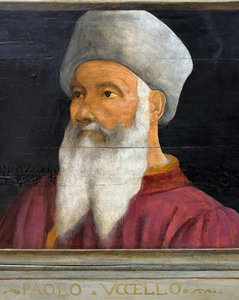
Paolo Uccello
1397 - 1475 , Italia
Datos clave
- Artistas Influenciados: ['Albrecht Dürer']
- Artistas Que Influyeron:
- Lorenzo Ghiberti
- Donatello
- Fecha De Muerte: 1475
- Fecha De Nacimiento: 1397
- Lugar De Nacimiento: Pratovecchio, Italia
- Movimiento Artístico: Renacimiento Temprano
- Nacionalidad: Italiana
- Nombre Completo: Paolo Uccello
- Obras Notables:
- Batalla de San Romano
- Nacimiento de la Virgen
- San Jorge y el Dragón
- La Inundación
Artículos relacionados

Italian Renaissance Art: A Procurement Guide to Timeless Masterpieces for High-End Hotel Interiors
A professional procurement guide for hotel designers seeking Italian Renaissance masterpieces. Discover how to utilize chiaroscuro, custom oil reproductions, and large-scale murals to elevate hospitality interiors with timeless, high-impact classical art.


