


 Vista previa
 Compartir
 Compartir
 Ver detalles
 Guía
Guía

 Descargar
 Ver artículos similares
 Radiografía
 Presentación de diapositivas
 Estadísticas
Four Bathers
 Oil On Canvas
- WallArt
- Post-Impressionism
 1878
1878- 19th Century
 38.0 x 46.0 cm
 Leer más
Giclée / Impresión de arte
Impresiones giclée o en lienzo de calidad de museo con producción rápida y opciones de acabado flexibles. ( Encargar reproducción pintada a mano Ver versión en imagen digital)




P118B €10

P118H €10

P118W €10

P438Z €10

P508JH €12

P508YH €12

P805H €10

P805Z €10

P919BZ €10

P919G €10

P919XJ €10

P959ZH €10

P968JZ €12

W106C €8

W218G €10

W218JH €8

W218Y €10

W307PJ €10

W316G €10

W316PJ €8

W316Y €10

W398PJ €8

W4111J €10

W500HY €15

W500JH €15

W692G €12

W849H €8

W940BG €15

W953PJ €8




Elija entre nuestros tamaños predefinidos que respetan las proporciones originales de la obra.

Introduzca el ancho y el alto que necesite para adaptarse a su marco o pared. Una impresión solo puede recortarse, nunca hacerse más grande que la imagen original, por lo que un tamaño con una forma distinta perderá parte de la obra. Le enviaremos una maqueta digital para su aprobación antes de realizar cualquier impresión. La imagen que se muestra en esta página no refleja el recorte real; solo la maqueta lo hace.
Envío a todo el mundo () en 2 semanas en lugar de las 4/5 semanas estándar. (24 octubre)

Envío exprés gratuito a todo el mundo

Lienzo de lino de alta calidad

Seguro de envío completo

Garantía de reembolso de impuestos aduaneros

Garantía de fidelidad cromática exacta

Política de devolución de 100 días (solo por defectos)

Garantía de devolución del 100% del dinero

Oferta por volumen
 La opción de vidrio solo está disponible en tamaños inferiores a 110 cm.

Four Bathers
Giclée / Impresión de arte
Tamaño de la reproducción
-


Precio total
€ 56
Paul Cézanne’s “Four Bathers”: A Bridge Between Impressionism and Modernity
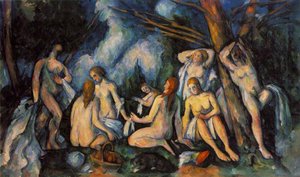
Paul Cézanne's "Four Bathers," painted in 1878, isn’t merely a depiction of nude figures enjoying the sun; it’s a pivotal moment in art history—a deliberate dismantling of established conventions and a bold assertion of a new visual language. This oil on canvas, measuring a modest 38 x 46 cm, embodies Cézanne's revolutionary approach to capturing the essence of nature and human connection, marking a crucial transition from the fleeting impressions of Impressionism towards the structured explorations of Cubism. The painting invites us into a world where form and color are not simply observed but actively constructed by the artist’s hand, revealing a profound shift in how we perceive and represent reality.
Cézanne's artistic journey began with an initial flirtation with Impressionist techniques – capturing the ephemeral effects of light and atmosphere. However, he quickly recognized the limitations of this approach, feeling that it lacked the underlying structure necessary to convey a sense of permanence and solidity. “Four Bathers” represents his decisive move away from mere representation towards a more conceptual understanding of form. The figures aren’t rendered with photographic accuracy; instead, they are fragmented into geometric planes of color, suggesting volume and mass through their arrangement within the composition. Notice how Cézanne uses overlapping forms to create depth—the bodies seem to emerge from and recede into the surrounding landscape, blurring the boundaries between subject and environment.
Composition and Technique: Building a New Language
The painting’s composition is remarkably deliberate. Cézanne employs a technique he termed “alla prima,” working directly on the canvas with loose, expressive brushstrokes—a stark contrast to the meticulous layering of Impressionist paint. These strokes aren't blended; they retain their individual character, creating a textured surface that vibrates with energy. The figures are positioned at varying angles, some partially obscured by foliage, others emerging from the shadows. This dynamic arrangement creates a sense of movement and spontaneity, as if capturing a fleeting moment in time. Crucially, Cézanne isn’t interested in depicting a specific scene; he's exploring the fundamental building blocks of form—lines, planes, and volumes—that constitute the world around us.
The color palette is equally significant. Cézanne utilizes muted earth tones – ochres, browns, greens – to create a harmonious yet subtly unsettling atmosphere. He avoids bright, saturated hues, favoring instead subtle gradations of color that suggest light and shadow. The use of complementary colors—such as the blues and oranges—creates visual tension and adds depth to the composition. It’s important to note that Cézanne was deeply interested in the scientific study of color, believing that it could be used to create a more accurate representation of reality than traditional methods allowed.
Historical Context: A Rejection of Tradition
“Four Bathers” emerged during a period of intense artistic ferment. The Impressionist movement, with its focus on capturing fleeting moments and atmospheric effects, was beginning to face criticism for its lack of structure and permanence. Cézanne’s work represented a direct response to this critique—a deliberate attempt to reintroduce order and form into the art world. Initially, his paintings were met with incomprehension and ridicule by contemporary critics who found them unsettling and unconventional. However, figures like Camille Pissarro and Ambroise Vollard recognized Cézanne's genius early on, championing his work and providing him with crucial support.
Vollard’s decision to organize the first solo exhibition of Cézanne’s work in 1895 proved transformative. This event brought Cézanne’s art to a wider audience and helped to establish his reputation as a major innovator. Remarkably, artists like Henri Matisse and Pablo Picasso later acknowledged Cézanne's profound influence on their own work, famously declaring him “the father of us all.” His emphasis on geometric form and the exploration of underlying structure paved the way for the development of Cubism—a revolutionary movement that shattered traditional notions of perspective and representation.
Legacy and Relevance Today
“Four Bathers” stands as a testament to Cézanne’s pioneering spirit and his enduring legacy. It's more than just a beautiful painting; it’s a foundational work in the history of modern art, bridging the gap between Impressionism and Cubism. Its influence can be seen in countless works by artists who followed in his footsteps—from Matisse to Picasso to Braque. Today, the painting is celebrated not only for its artistic merit but also for its historical significance as a pivotal moment in the evolution of Western art. It reminds us that art isn't simply about imitating reality; it’s about interpreting and transforming it according to the artist’s vision.
Experience the beauty of handmade oil painting reproductions at AllPaintingsStore.com.
Preguntas y respuestas
¿Es "Four Bathers" de Paul Cézanne una obra de tonos claros u oscuros?
La luminosidad percibida de "Four Bathers" de Paul Cézanne es shadow. Puede armonizarse con la luz del espacio destinado.
¿Qué dimensiones tiene la obra original "Four Bathers"?
La obra original "Four Bathers" de Paul Cézanne mide 38 x 46 cm.
¿Cuál es el formato de "Four Bathers"?
"Four Bathers" de Paul Cézanne tiene un formato Landscape. El formato describe las proporciones de la composición.
Obras relacionadas



Biografía del artista
vida temprana e influencias
paul cézanne, un pintor postimpresionista francés, nació el 19 de enero de 1839 en Aix-en-Provence, Francia. Su vida temprana estuvo marcada por una fuerte conexión con la empresa bancaria de su familia, lo que le proporcionó seguridad financiera. Esto le permitió concentrarse en sus aspiraciones artísticas sin la carga del estrés financiero. les nabis, neoimpresionismo y simbolismo influyeron en el trabajo temprano de Cézanne, que se caracterizó por su énfasis en las formas geométricas y una paleta de colores limitada. Su interés en las obras de paul gauguin y georges seurat fortaleció aún más su estilo postimpresionista.estilo artístico y técnicas
El uso innovador de Cézanne de los planos de color y pequeños trazos repetitivos creó campos complejos que transmitían su intenso estudio de los temas. Su enfoque a menudo exploratorio del arte condujo al desarrollo de un nuevo lenguaje pictórico, que enfatizaba la estructura subyacente de los objetos en una composición.- características clave:
- formas geométricas y facetado
- paleta de colores reducida
- énfasis en la esencia constructiva del mundo físico
- múltiples perspectivas y simultaneidad
- obras influyentes:
- el estanque de jas de bouffan (1880)
- retrato de emile zola (1866)
- bosque (1892)
- museos que exhiben el trabajo de Cézanne:
- museo marmottan monet en París, Francia
- el museo de bellas artes en Houston, Estados Unidos
legado e impacto
El trabajo pionero de Cézanne en el postimpresionismo allanó el camino para diversos movimientos vanguardistas, incluyendo cubismo, fauvismo y surrealismo. Su influencia se puede ver en las obras de pablo picasso, henri matisse y georges braque. El legado de Cézanne continúa inspirando a artistas y entusiastas del arte por igual, consolidando su lugar como una figura fundamental en la historia del arte moderno.- movimientos artísticos relacionados:
- vea las obras de Cézanne:
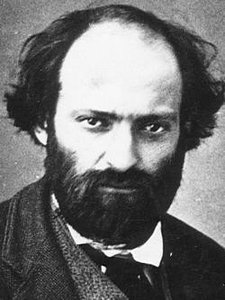
Paul Cézanne
1839 - 1906 , Francia
Datos clave
- Artistas Que Influyeron:
- Paul Gauguin
- Georges Seurat
- Estilo Artístico: Postimpresionismo
- Fecha De Muerte: Octubre 22, 1906
- Fecha De Nacimiento: 19 de enero de 1839
- Influenciado A Artistas:
- Pablo Picasso
- Henri Matisse
- Georges Braque
- Lugar De Nacimiento: Aix-en-Provence, Francia
- Nacionalidad: Francés
- Nombre Completo: Paul Cézanne
- Obras Notables:
- El estanque de Jas de Bouffan
- Retrato de Émile Zola
- Bosque
- Grandes Bañistas
Artículos relacionados

Beyond Impressionism: Exploring the Emotional Depth and Vibrant Mastery of Post-Impressionist Art
Discover the profound evolution of art beyond Impressionism. Explore the emotional depth, vibrant colors, and revolutionary techniques of Post-Impressionist masters like Van Gogh and Cézanne in this expert guide to art history's most expressive movement.


