


 Ver en contexto
 Enviar
 Compartir
 Detalles
 Guía
Guía

 Descargar
 Similares
 Radiografía
 Presentación de diapositivas
 Estadísticas
Composición 1916


 Ver más
Giclée / Impresión de arte
Impresiones giclée o en lienzo de calidad de museo con producción rápida y opciones de acabado flexibles. ( Comprar pintura hecha a mano Cambiar a imagen digital)




P118B €10

P118H €10

P118W €10

P438Z €10

P508JH €12

P508YH €12

P805H €10

P805Z €10

P919BZ €10

P919G €10

P919XJ €10

P959ZH €10

P968JZ €12

W106C €8

W218G €10

W218JH €8

W218Y €10

W307PJ €10

W316G €10

W316PJ €8

W316Y €10

W398PJ €8

W4111J €10

W500HY €15

W500JH €15

W692G €12

W849H €8

W940BG €15

W953PJ €8




Elija entre nuestros tamaños predefinidos que respetan las proporciones originales de la obra.

Introduzca el ancho y el alto que necesite para adaptarse a su marco o pared. Una impresión solo puede recortarse, nunca hacerse más grande que la imagen original, por lo que un tamaño con una forma distinta perderá parte de la obra. Le enviaremos una maqueta digital para su aprobación antes de realizar cualquier impresión. La imagen que se muestra en esta página no refleja el recorte real; solo la maqueta lo hace.
Envío a todo el mundo () en 2 semanas en lugar de las 4/5 semanas estándar. (27 octubre)

Envío exprés gratuito a todo el mundo

Lienzo de lino de alta calidad

Seguro de envío total

Garantía de reembolso de aranceles aduaneros

Garantía de fidelidad cromática exacta

Política de devolución de 100 días (solo por defectos)

Garantía de devolución del 100% del dinero

Descuento por cantidad
 La opción de vidrio solo está disponible en tamaños inferiores a 110 cm.

Composición 1916
Giclée / Impresión de arte
Dimensiones de la reproducción
-


Precio total final
€ 56
A Prelude to Neoplasticism: Exploring Mondrian’s ‘Composition 1916’
Piet Mondrian's ‘Composition 1916’ is a pivotal work marking a crucial transition in the artist’s oeuvre, and within the broader trajectory of abstract art. It stands as a compelling example of his move away from representational painting towards the radical simplification that would define his signature Neoplastic style. This isn’t merely an arrangement of lines and colors; it's a visual articulation of Mondrian’s evolving spiritual and philosophical beliefs.Deconstructing Reality: Style & Technique
The artwork is firmly rooted in geometric abstraction, displaying characteristics that align with both Constructivism and De Stijl – movements emphasizing pure abstraction and universal forms. However, ‘Composition 1916’ isn't yet the rigidly defined grid system Mondrian would later become famous for. Instead, it presents a more dynamic interplay of intersecting lines, rectangles, and squares. The technique is meticulous, suggesting careful planning and precise application of oil paint on canvas. The layering effect indicates a deliberate process, possibly utilizing masking techniques to achieve the sharp edges and overlapping planes. While appearing flat, this depth is cleverly created through the arrangement of forms rather than traditional perspective. It’s a testament to Mondrian's dedication to achieving visual harmony through controlled precision.A Journey Towards Universal Harmony
Born in 1872, Piet Mondrian was deeply influenced by Theosophy – a spiritual movement seeking universal truths beyond the material world. He believed that art should transcend the particular and represent the underlying order of reality. ‘Composition 1916’ embodies this quest. The absence of recognizable objects isn't an omission, but rather a deliberate attempt to strip away the superficial and reveal essential structures. The interplay of vertical and horizontal lines, along with the limited palette of red, blue, yellow, grey, and black, represents a striving for balance and harmony – core tenets of his artistic philosophy. This careful selection of colors—red, blue, yellow—is not arbitrary; it’s symbolic, reflecting fundamental energies believed to govern existence.Symbolism & Emotional Resonance
While abstract, ‘Composition 1916’ isn't devoid of meaning. The intersecting lines can be interpreted as representing interconnectedness, while the geometric shapes symbolize fundamental building blocks of reality. The dynamic tension between order and chaos, control and freedom, creates a visual energy that is both stimulating and calming. It evokes a sense of intellectual rigor combined with spiritual aspiration—a reflection of Mondrian’s profound engagement with philosophical ideas. Consider how this artwork might contribute to an interior space: Its stark simplicity lends itself beautifully to minimalist designs, creating a serene backdrop for contemplation or conversation.Historical Significance & Legacy
Created around 1916, this work predates the formal establishment of De Stijl in 1917, yet it foreshadows its core principles. Mondrian co-founded De Stijl with Theo van Doesburg, and together they sought to create a “universal style” applicable to all forms of art and design. ‘Composition 1916’ is therefore not just a painting; it's a stepping stone towards a revolutionary artistic vision that would profoundly influence modern art, architecture, and design throughout the 20th century and beyond. Its impact can be seen in everything from furniture to fashion, demonstrating the enduring power of Mondrian’s abstract language. It remains an iconic representation of early Neoplasticism—a cornerstone of modernist aesthetics and a continuing source of inspiration for artists today.Preguntas y respuestas
¿Qué lugar ocupa "Composición 1916" de Piet Mondrian en la historia del arte?
La clasificación histórico-artística de "Composición 1916" de Piet Mondrian es Neoplasticismo, perteneciente al periodo Edad Moderna.
¿Para qué ocasión se recomienda "Composición 1916" de Piet Mondrian como regalo?
"Composición 1916" de Piet Mondrian es una recomendación ideal como regalo para Regalo Corporativo. Se puede obsequiar una reproducción de la obra de arte.
¿Cuál es la luminancia de "Composición 1916" de Piet Mondrian?
Los colores de "Composición 1916" presentan una luminancia de Luminosidad tenue.
Obras relacionadas


Biografía del artista
**vida temprana y carrera en los Países Bajos (1872-1911)**
pieter cornelis mondriaan, conocido a partir de 1911 como piet mondrian, fue un pintor y teórico del arte holandés nacido el 7 de marzo de 1872, en Amersfoort, Países Bajos. Comenzó su carrera como maestro en educación primaria mientras practicaba la pintura, inicialmente en el estilo impresionista holandés de la Escuela de Ámsterdam.- Su obra temprana, caracterizada por paisajes naturalistas, se puede ver en pinturas como the red mill y trees in moonrise, que se exhibieron en el kunstmuseum den haag.
- La búsqueda de Mondrian por parte de un estilo personal lo llevó a explorar diversos movimientos artísticos, incluyendo el puntillismo y el fauvismo.
- Su primera exposición en 1893 marcó el comienzo de su prolífica carrera.
**la evolución del estilo de Mondrian**
de figurativo a abstracto La dirección artística de Mondrian se desplazó hacia un estilo cada vez más abstracto, culminando en una forma no representacional que llamó neoplasticismo. Esta 'arte plástico puro' tenía como objetivo crear 'belleza universal', limitando su vocabulario formal a los colores primarios (rojo, azul y amarillo), valores (negro, blanco y gris) y direcciones (horizontal y vertical).- Ejemplos de este estilo se pueden ver en pinturas como composition with yellow patch (46 x 46 cm, neoplasticismo, óleo sobre lienzo).
- La obra de Mondrian tuvo una enorme influencia en el arte del siglo XX, impactando no solo la pintura abstracta sino también el diseño, la arquitectura y la moda.
**legado e influencia**
El legado de Mondrian se extiende más allá de su propia obra, influyendo en estilos y movimientos importantes como la pintura de campo de color, el expresionismo abstracto y el minimalismo. El historiador del diseño stephen bayley señaló que Mondrian se ha convertido en un símbolo para todo lo que el modernismo pretendía ser.- Explore más de la obra de Mondrian en AllPaintingsStore.com.
- Aprenda sobre el movimiento De Stijl y su influencia en el arte moderno en wikipedia.
- Descubra otros artistas influyentes como vincent van gogh y su impacto en el mundo del arte.
**obras clave y exposiciones**
* piet mondrian: apple blossom (cubismo) (ver en AllPaintingsStore.com) * piet mondrian: still life with vase of spices ii (cubismo) (ver en AllPaintingsStore.com) * piet mondrian: passionflower (73 x 48 cm, kunstmuseum den haag, post impressionismo, acuarela) (ver en AllPaintingsStore.com)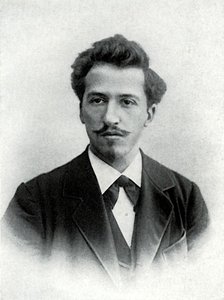
Piet Mondrian
1872 - 1944 , Países Bajos
Datos clave
- Artistas Que Influyeron:
- Hague School
- Puntillismo
- Fauvismo
- Cubismo
- Estilo Artístico: Neoplasticismo, De Stijl
- Fecha De Nacimiento: 7 de marzo de 1872
- Influenciado A Artistas:
- Expresionismo abstracto
- Minimalismo
- Color Field painting
- Lugar De Nacimiento: Amersfoort, Países Bajos
- Nacionalidad: Holandés
- Nombre Completo: Piet Mondrian
- Obras Notables:
- Nueva York I
- Composición con Rojo, Azul y Amarillo
- Broadway Boogie Woogie
- Tableau no. 2
Artículos relacionados

Neoplasticism Explained: A Professional Guide to Geometric Abstraction and Primary Color for Modern Interior Design
Master the use of Neoplasticism in hospitality design. Learn how Piet Mondrian’s geometric forms and primary colors create order and modern sophistication. Expert guidance on sourcing high-quality, large-scale abstract reproductions for professional hotel and corporate interiors.


