


 Vista previa
 Compartir
 Compartir
 Ver detalles
 Guía
Guía

 Descargar
 Ver artículos similares
 Radiografía
 Presentación de diapositivas
 Estadísticas
Composition, V

 Leer más
Giclée / Impresión de arte
Impresiones giclée o en lienzo de calidad de museo con producción rápida y opciones de acabado flexibles. ( Encargar reproducción pintada a mano Ver versión en imagen digital)




P118B €10

P118H €10

P118W €10

P438Z €10

P508JH €12

P508YH €12

P805H €10

P805Z €10

P919BZ €10

P919G €10

P919XJ €10

P959ZH €10

P968JZ €12

W106C €8

W218G €10

W218JH €8

W218Y €10

W307PJ €10

W316G €10

W316PJ €8

W316Y €10

W398PJ €8

W4111J €10

W500HY €15

W500JH €15

W692G €12

W849H €8

W940BG €15

W953PJ €8




Elija entre nuestros tamaños predefinidos que respetan las proporciones originales de la obra.

Introduzca el ancho y el alto que necesite para adaptarse a su marco o pared. Una impresión solo puede recortarse, nunca hacerse más grande que la imagen original, por lo que un tamaño con una forma distinta perderá parte de la obra. Le enviaremos una maqueta digital para su aprobación antes de realizar cualquier impresión. La imagen que se muestra en esta página no refleja el recorte real; solo la maqueta lo hace.
Envío a todo el mundo () en 2 semanas en lugar de las 4/5 semanas estándar. (23 octubre)

Envío exprés gratuito a todo el mundo

Lienzo de lino de alta calidad

Seguro de envío completo

Garantía de reembolso de impuestos aduaneros

Garantía de fidelidad cromática exacta

Política de devolución de 100 días (solo por defectos)

Garantía de devolución del 100% del dinero

Oferta por volumen
 La opción de vidrio solo está disponible en tamaños inferiores a 110 cm.

Composition, V
Giclée / Impresión de arte
Tamaño de la reproducción
-


Precio total
€ 56
A Symphony in Primary Colors: Deconstructing Piet Mondrian’s “Composition No. V”
Piet Mondrian's "Composition No. V," painted in 1914, isn’t merely a painting; it’s an architectural blueprint for pure abstraction, a distillation of the artist’s lifelong quest to reveal the underlying structure of reality through geometric forms and elemental colors. This seminal work, housed within the MoMA's collection, offers a profound glimpse into the genesis of Neoplasticism – Mondrian’s revolutionary approach to art that sought to transcend representational imagery and capture the essence of universal harmony.
The canvas itself is dominated by a carefully orchestrated grid of black lines bisecting fields of vibrant color: assertive reds, cool blues, and sunny yellows. These aren't arbitrary choices; they are meticulously selected hues representing fundamental forces – red for energy and passion, blue for tranquility and spirituality, and yellow for intellect and illumination. The composition isn’t chaotic, despite its seemingly simple arrangement. Instead, it possesses a dynamic equilibrium, a visual tension that draws the eye across the surface while simultaneously suggesting an underlying order.
The Roots of Abstraction: Influences and Evolution
Mondrian's journey to this iconic composition was paved with experimentation. Initially trained as a landscape painter in the Dutch Impressionist tradition – evidenced by works like “The Red Mill” – he gradually moved away from depicting the external world, recognizing its inherent limitations in conveying spiritual truth. His early explorations of Pointillism and Fauvism provided valuable lessons in color theory and expressive brushwork, but ultimately proved insufficient to his artistic goals. He sought a more rigorous, intellectual approach, one that would strip away all superfluous detail and reveal the essential elements of art.
Crucially, Mondrian’s thinking was deeply influenced by Theosophy, a spiritual philosophy emphasizing the interconnectedness of all things. This belief informed his desire to create an art form that reflected this underlying unity – a visual language capable of communicating universal values beyond the limitations of individual experience. The influence of Japanese art, particularly its emphasis on asymmetry and negative space, also played a significant role in shaping his evolving style.
Deconstructing Form: The Language of Neoplasticism
“Composition No. V” is a textbook example of Neoplasticism – Mondrian’s systematic reduction of form to its most basic elements. He abandoned traditional perspective and representation, opting instead for a strictly orthogonal grid composed of horizontal and vertical lines. These lines aren't merely decorative; they define the spatial relationships within the painting, creating a sense of depth and structure. The colors themselves are applied in flat planes, devoid of shading or modeling, further emphasizing their purity and essential nature.
The black lines act as both dividers and connectors, delineating distinct areas while simultaneously linking them together to form a cohesive whole. This deliberate simplification wasn’t an exercise in minimalism; it was a conscious effort to reveal the underlying structure of reality – a world composed of fundamental geometric forms and elemental colors.
A Legacy of Harmony: Emotional Impact and Enduring Relevance
“Composition No. V” is more than just a visually striking artwork; it’s an invitation to contemplate the nature of beauty, order, and spirituality. The painting's stark simplicity and harmonious balance evoke a sense of calm and serenity, while its bold colors and assertive lines convey a feeling of energy and dynamism. It’s a testament to Mondrian’s belief that art could be a powerful tool for achieving spiritual enlightenment.
Today, “Composition No. V” continues to resonate with audiences around the world, serving as an enduring symbol of modernism and abstract art. Its influence can be seen in countless works of art, design, and architecture – a testament to Mondrian’s pioneering vision and his profound impact on the course of artistic history. Reproductions of this iconic piece offer a beautiful way to bring a touch of Mondrian's harmonious aesthetic into any space.
Preguntas y respuestas
¿Qué estado de ánimo y emoción se entrelazan en "Composition, V"?
"Composition, V" de Piet Mondrian transmite una sensación Reflexivo dentro de un ambiente general Minimalista.
¿Es "Composition, V" más bien clara o más bien oscura en su conjunto?
"Composition, V" tiene un brillo general de brillante y su luminancia es Luminosidad suave.
¿Los colores de "Composition, V" de Piet Mondrian son saturados o tenues?
La paleta de "Composition, V" tiene una saturación Color sutil.
Obras relacionadas


Biografía del artista
**vida temprana y carrera en los Países Bajos (1872-1911)**
pieter cornelis mondriaan, conocido a partir de 1911 como piet mondrian, fue un pintor y teórico del arte holandés nacido el 7 de marzo de 1872, en Amersfoort, Países Bajos. Comenzó su carrera como maestro en educación primaria mientras practicaba la pintura, inicialmente en el estilo impresionista holandés de la Escuela de Ámsterdam.- Su obra temprana, caracterizada por paisajes naturalistas, se puede ver en pinturas como the red mill y trees in moonrise, que se exhibieron en el kunstmuseum den haag.
- La búsqueda de Mondrian por parte de un estilo personal lo llevó a explorar diversos movimientos artísticos, incluyendo el puntillismo y el fauvismo.
- Su primera exposición en 1893 marcó el comienzo de su prolífica carrera.
**la evolución del estilo de Mondrian**
de figurativo a abstracto La dirección artística de Mondrian se desplazó hacia un estilo cada vez más abstracto, culminando en una forma no representacional que llamó neoplasticismo. Esta 'arte plástico puro' tenía como objetivo crear 'belleza universal', limitando su vocabulario formal a los colores primarios (rojo, azul y amarillo), valores (negro, blanco y gris) y direcciones (horizontal y vertical).- Ejemplos de este estilo se pueden ver en pinturas como composition with yellow patch (46 x 46 cm, neoplasticismo, óleo sobre lienzo).
- La obra de Mondrian tuvo una enorme influencia en el arte del siglo XX, impactando no solo la pintura abstracta sino también el diseño, la arquitectura y la moda.
**legado e influencia**
El legado de Mondrian se extiende más allá de su propia obra, influyendo en estilos y movimientos importantes como la pintura de campo de color, el expresionismo abstracto y el minimalismo. El historiador del diseño stephen bayley señaló que Mondrian se ha convertido en un símbolo para todo lo que el modernismo pretendía ser.- Explore más de la obra de Mondrian en AllPaintingsStore.com.
- Aprenda sobre el movimiento De Stijl y su influencia en el arte moderno en wikipedia.
- Descubra otros artistas influyentes como vincent van gogh y su impacto en el mundo del arte.
**obras clave y exposiciones**
* piet mondrian: apple blossom (cubismo) (ver en AllPaintingsStore.com) * piet mondrian: still life with vase of spices ii (cubismo) (ver en AllPaintingsStore.com) * piet mondrian: passionflower (73 x 48 cm, kunstmuseum den haag, post impressionismo, acuarela) (ver en AllPaintingsStore.com)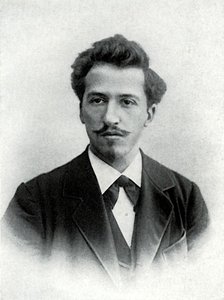
Piet Mondrian
1872 - 1944 , Países Bajos
Datos clave
- Artistas Que Influyeron:
- Hague School
- Puntillismo
- Fauvismo
- Cubismo
- Estilo Artístico: Neoplasticismo, De Stijl
- Fecha De Nacimiento: 7 de marzo de 1872
- Influenciado A Artistas:
- Expresionismo abstracto
- Minimalismo
- Color Field painting
- Lugar De Nacimiento: Amersfoort, Países Bajos
- Nacionalidad: Holandés
- Nombre Completo: Piet Mondrian
- Obras Notables:
- Nueva York I
- Composición con Rojo, Azul y Amarillo
- Broadway Boogie Woogie
- Tableau no. 2
Artículos relacionados

Neoplasticism Explained: A Professional Guide to Geometric Abstraction and Primary Color for Modern Interior Design
Master the use of Neoplasticism in hospitality design. Learn how Piet Mondrian’s geometric forms and primary colors create order and modern sophistication. Expert guidance on sourcing high-quality, large-scale abstract reproductions for professional hotel and corporate interiors.


