


 Vista previa
 Compartir
 Compartir
 Ver detalles
 Guía
Guía

 Descargar
 Ver artículos similares
 Radiografía
 Presentación de diapositivas
 Estadísticas
Evolution
 Acrílico sobre lienzo
- Arte de pared
- Fauvist
 1911
1911- Moderno
 178.0 x 85.0 cm
 Leer más
Reproducción al óleo hecha a mano
Óleo sobre lienzo pintado a mano en el tamaño y marco de su elección, realizado por encargo por nuestros artistas. ( Cambiar a formato impreso Ver versión en imagen digital)




P118B €10

P118H €10

P118W €10

P438Z €10

P508JH €12

P508YH €12

P805H €10

P805Z €10

P919BZ €10

P919G €10

P919XJ €10

P959ZH €10

P968JZ €12

W106C €8

W218G €10

W218JH €8

W218Y €10

W307PJ €10

W316G €10

W316PJ €8

W316Y €10

W398PJ €8

W4111J €10

W500HY €15

W500JH €15

W692G €12

W849H €8

W940BG €15

W953PJ €8




Elija entre nuestros tamaños predefinidos que respetan las proporciones originales de la obra.

Escriba el ancho y el alto que necesite para adaptarse a su marco o a su pared. Al ser una obra pintada a mano, para un tamaño con una forma distinta, el artista puede pintar un poco más alrededor de la imagen o recortar un poco; usted elige. Le enviaremos una maqueta digital para su aprobación antes de comenzar la pintura. La imagen que se muestra en esta página no refleja el resultado real; solo la maqueta lo hace.
Tras realizar el pedido, el equipo de AllPaintingsStore.com enviará un correo electrónico al cliente para solicitar instrucciones y proporcionarle una vista previa del boceto.
Envío a todo el mundo () en 3-4 semanas en lugar de las 5 semanas estándar. (22 octubre). Sin comprometer la calidad.

Envío exprés gratuito a todo el mundo

Lienzo de lino de alta calidad

Seguro de envío completo

Garantía de reembolso de impuestos aduaneros

Garantía de fidelidad cromática exacta

Política de devolución de 100 días (solo por defectos)

Garantía de devolución del 100% del dinero

Oferta por volumen
 La opción de vidrio solo está disponible en tamaños inferiores a 110 cm.

Evolution
Técnica de reproducción
Tamaño de la reproducción
-


Precio total
€ 226
Evolution by Piet Mondrian
Piet Mondrian’s Evolution, created in 1911, stands as a pivotal moment in the artist's artistic journey—a decisive break from his earlier landscapes and Impressionistic tendencies toward a radical embrace of abstraction. Measuring 178 x 85 cm, this monumental oil painting on canvas exemplifies the Fauvist movement, capturing its bold chromatic palette and simplified geometric forms with unparalleled precision. More than just pigment on linen; it’s an embodiment of Mondrian's philosophical quest for universal harmony and a cornerstone of De Stijl’s aesthetic principles.Contextualizing Mondrian’s Work: The Fauvist Impulse
Before delving into the painting itself, understanding its genesis requires acknowledging the seismic shift occurring in European art at the time. Mondrian was deeply influenced by Henri Matisse and André Derain—artists who championed vibrant hues and expressive brushstrokes as a reaction against academic conventions. This defiance of tradition fueled the Fauvist movement, which sought to liberate color from representational constraints. Evolution reflects this spirit perfectly; it abandons naturalistic depiction in favor of pure abstraction, prioritizing color and form over illusion. The artist’s intention wasn't merely to depict what he saw but to convey an underlying spiritual truth—a belief that art could transcend the mundane world and access a higher plane of existence.Compositional Harmony: Women Against Colored Backgrounds
The painting depicts three women positioned against distinct shades of blue, yellow, and white. Each woman is adorned with a necklace, subtly hinting at femininity without resorting to conventional iconography. However, their poses are deliberately asymmetrical—one gazing upwards, another downwards—creating a dynamic interplay that disrupts static equilibrium. This compositional strategy isn’t accidental; Mondrian meticulously considered how color and form could interact to generate visual tension and balance. The geometric shapes – rectangles and squares – dominate the canvas, reinforcing the artist's conviction that these forms represent fundamental building blocks of reality and therefore embody universal beauty.Artistic Influences: Beyond Fauvism
While undeniably rooted in Fauvist aesthetics, Evolution also anticipates developments in Cubism and De Stijl. Mondrian’s exploration of orthogonal lines—horizontal and vertical—echoes the geometric rigor championed by Piet Mondrian's fellow De Stijl artists. This movement sought to distill art down to its purest essentials, rejecting ornamentation and embracing a reductive visual language. The influence of Eastern philosophy – particularly Zen Buddhism – is palpable in Mondrian’s approach; he believed that true beauty resided in simplicity and contemplation—qualities mirrored in the painting's austere composition and harmonious color scheme.Significance in Art History: A Legacy of Abstraction
Evolution solidified Mondrian’s position as a pioneer of abstract art, establishing him as one of the most influential figures in 20th-century visual culture. It served as a catalyst for subsequent artistic movements—Cubism and De Stijl—demonstrating the transformative power of radical experimentation. Today, reproductions of Evolution continue to inspire artists and designers alike, reminding us that beauty can be found not in imitation but in confronting fundamental truths about form and color. Its enduring appeal lies in its ability to evoke a sense of serenity and contemplation—a testament to Mondrian’s unwavering commitment to his artistic vision.- Dimensions: 178 x 85 cm
- Medium: Oil on Canvas
- Date: 1911
- Movement: Fauvist
Preguntas y respuestas
¿Puedo ver "Evolution" de Piet Mondrian bajo diferentes luces?
"Evolution" puede examinarse capa por capa en la página Rayos X de la obra, un visor inspirado en una mesa de luz de restauración que ofrece once lecturas ópticas de la imagen.
¿Qué paleta de colores se utiliza en "Evolution" de Piet Mondrian?
Los colores de "Evolution" conforman una paleta Tonos oscuros. Esta clasificación describe las familias de colores dominantes.
¿Puedo ver una vista previa de "Evolution" de Piet Mondrian antes de realizar el pedido?
La página de Vista previa de "Evolution" le permite previsualizar la obra antes de realizar su pedido.
Obras relacionadas


Biografía del artista
**vida temprana y carrera en los Países Bajos (1872-1911)**
pieter cornelis mondriaan, conocido a partir de 1911 como piet mondrian, fue un pintor y teórico del arte holandés nacido el 7 de marzo de 1872, en Amersfoort, Países Bajos. Comenzó su carrera como maestro en educación primaria mientras practicaba la pintura, inicialmente en el estilo impresionista holandés de la Escuela de Ámsterdam.- Su obra temprana, caracterizada por paisajes naturalistas, se puede ver en pinturas como the red mill y trees in moonrise, que se exhibieron en el kunstmuseum den haag.
- La búsqueda de Mondrian por parte de un estilo personal lo llevó a explorar diversos movimientos artísticos, incluyendo el puntillismo y el fauvismo.
- Su primera exposición en 1893 marcó el comienzo de su prolífica carrera.
**la evolución del estilo de Mondrian**
de figurativo a abstracto La dirección artística de Mondrian se desplazó hacia un estilo cada vez más abstracto, culminando en una forma no representacional que llamó neoplasticismo. Esta 'arte plástico puro' tenía como objetivo crear 'belleza universal', limitando su vocabulario formal a los colores primarios (rojo, azul y amarillo), valores (negro, blanco y gris) y direcciones (horizontal y vertical).- Ejemplos de este estilo se pueden ver en pinturas como composition with yellow patch (46 x 46 cm, neoplasticismo, óleo sobre lienzo).
- La obra de Mondrian tuvo una enorme influencia en el arte del siglo XX, impactando no solo la pintura abstracta sino también el diseño, la arquitectura y la moda.
**legado e influencia**
El legado de Mondrian se extiende más allá de su propia obra, influyendo en estilos y movimientos importantes como la pintura de campo de color, el expresionismo abstracto y el minimalismo. El historiador del diseño stephen bayley señaló que Mondrian se ha convertido en un símbolo para todo lo que el modernismo pretendía ser.- Explore más de la obra de Mondrian en AllPaintingsStore.com.
- Aprenda sobre el movimiento De Stijl y su influencia en el arte moderno en wikipedia.
- Descubra otros artistas influyentes como vincent van gogh y su impacto en el mundo del arte.
**obras clave y exposiciones**
* piet mondrian: apple blossom (cubismo) (ver en AllPaintingsStore.com) * piet mondrian: still life with vase of spices ii (cubismo) (ver en AllPaintingsStore.com) * piet mondrian: passionflower (73 x 48 cm, kunstmuseum den haag, post impressionismo, acuarela) (ver en AllPaintingsStore.com)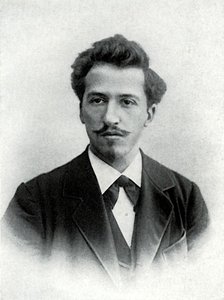
Piet Mondrian
1872 - 1944 , Países Bajos
Datos clave
- Artistas Que Influyeron:
- Hague School
- Puntillismo
- Fauvismo
- Cubismo
- Estilo Artístico: Neoplasticismo, De Stijl
- Fecha De Nacimiento: 7 de marzo de 1872
- Influenciado A Artistas:
- Expresionismo abstracto
- Minimalismo
- Color Field painting
- Lugar De Nacimiento: Amersfoort, Países Bajos
- Nacionalidad: Holandés
- Nombre Completo: Piet Mondrian
- Obras Notables:
- Nueva York I
- Composición con Rojo, Azul y Amarillo
- Broadway Boogie Woogie
- Tableau no. 2
Artículos relacionados

Piet Mondrian: Deconstructing Reality – A Study of Neo-Plasticism & Universal Harmony
Explore the revolutionary art of Piet Mondrian and the principles of Neo-Plasticism. Discover De Stijl's influence, iconic compositions like 'Composition with Red, Yellow and Blue,' and Mondrian’s lasting legacy on modern design.
Los 10 cuadros más famosos dominados por el 'amarillo cromo': Arte y decoración
Descubre los 10 cuadros más emblemáticos dominados por el 'amarillo cromo': Van Gogh, Monet y otros maestros. Historia del arte, técnicas y decoración con lienzos impresionistas. ¡Explora la colección completa en AllPaintingsStore.com!

Abstracción Geométrica: 10 Obras Maestras que Transformaron el Arte Moderno | AllPaintingsStore
Descubre las 10 obras maestras de la abstracción geométrica que revolucionaron el arte moderno. Explora a Mondrian, Malevich y Kandinsky en AllPaintingsStore.com. Reproducciones de alta calidad para tu hogar.

The Golden Hue: Exploring Symbolism & Emotion in Yellow Art
Explore the rich symbolism & emotional power of yellow in art history! From Van Gogh to Kandinsky, discover how artists used this vibrant hue. Expert analysis & high-quality reproductions at AllPaintingsStore.

Los 10 cuadros más famosos dominados por el ocre amarillo: Arte y decoración atemporal
Descubre los 10 cuadros más famosos con tonos ocres amarillos. Explora la historia de Van Gogh, Monet y otros artistas clave del impresionismo y postimpresionismo. Encuentra reproducciones de arte de museo en .


