


 Vista previa
 Compartir
 Compartir
 Ver detalles

 Descargar
 Ver similares
 Radiografía
 Presentación de diapositivas
Silver Tree


 Leer más
Giclée / Impresión de arte
Impresiones giclée o en lienzo de calidad de museo con producción rápida y opciones de acabado flexibles. ( Encargar reproducción pintada a mano Comprar descarga)




P118B $10

P118H $10

P118W $10

P438Z $10

P508JH $12

P508YH $12

P805H $10

P805Z $10

P919BZ $10

P919G $10

P919XJ $10

P959ZH $10

P968JZ $12

W106C $8

W218G $10

W218JH $8

W218Y $10

W307PJ $10

W316G $10

W316PJ $8

W316Y $10

W398PJ $8

W4111J $10

W500HY $15

W500JH $15

W692G $12

W849H $8

W940BG $15

W953PJ $8




Elija entre nuestros tamaños predefinidos que respetan las proporciones originales de la obra.

Puede introducir sus propias dimensiones para adaptarse a un marco o espacio específico. Si el tamaño seleccionado no coincide con las proporciones de la imagen original, recortaremos la obra de arte o extenderemos la imagen con un borde con efecto espejo o de color sólido. Se enviará una maqueta digital para su aprobación antes de que comience la producción.
Tenga en cuenta que la vista previa en pantalla no refleja el recorte o la extensión real. Solo la maqueta mostrará con precisión la composición final.
Aunque existen tamaños personalizados, recomendamos seleccionar una dimensión de la lista predefinida para preservar las proporciones originales.
Envío a todo el mundo () en 2 semanas en lugar de las 4/5 semanas estándar. (21 agosto)

Envío exprés gratuito a todo el mundo

Lienzo de lino de alta calidad

Seguro de envío completo

Garantía de reembolso de aranceles aduaneros

Garantía de fidelidad cromática exacta

Política de devolución de 60 días (solo por defectos)

Garantía de devolución del 100% del dinero

Oferta por volumen
 La opción de vidrio solo está disponible en tamaños inferiores a 110 cm.

Silver Tree
Giclée / Impresión de arte
Tamaño de la reproducción
-


Precio total
$ 64
Descripción de la pieza
Piet Mondrian’s ‘Silver Tree’: A Study in Reduction and Spiritual Seeking
Piet Mondrian's 1912 painting, “Silver Tree,” presents a deceptively simple yet profoundly complex meditation on form, space, and the very nature of reality. This stark black-and-white composition immediately draws the viewer into its core: a solitary tree rendered with an almost unsettling clarity. The image isn’t a depiction of a natural scene in the traditional sense; rather, it's a carefully constructed abstraction, a distillation of essential elements stripped down to their most fundamental geometric components. The absence of leaves amplifies this effect, transforming the tree into a skeletal structure – a visual representation of underlying order and perhaps even spiritual essence.
Early Experimentation and the Seeds of Neo-Plasticism
Understanding “Silver Tree” requires acknowledging Mondrian’s artistic trajectory leading up to this pivotal work. Born in 1872, his early paintings, such as *The Red Mill*, demonstrate a rigorous training in traditional landscape painting, influenced by the Hague School and Dutch Impressionism. However, even within these representational works, a subtle tension existed – a desire to move beyond mere imitation and capture something more profound. His experimentation with Pointillism and Fauvism, styles that prioritized color and expressive brushwork, reveals this ongoing search. These early explorations ultimately paved the way for his later embrace of Neo-Plasticism, a movement he would spearhead alongside Theo van Doesburg. “Silver Tree” can be seen as an embryonic stage of this revolutionary approach – a preliminary investigation into reducing visual experience to its most essential elements.
Technique and Composition: A Calculated Simplicity
Mondrian’s technique in "Silver Tree" is characterized by precise lines and controlled application of paint. The stark black and white palette intensifies the geometric qualities of the tree, emphasizing its linear structure. The composition itself is remarkably balanced, with the central trunk acting as a vertical anchor and the radiating branches creating a dynamic yet contained visual field. This deliberate arrangement isn’t accidental; it reflects Mondrian's belief in the underlying mathematical harmony of the universe – a principle he sought to translate into his art. The lack of shading or texture further contributes to the painting’s austerity, reinforcing its focus on pure form and structure.
Symbolism and Emotional Resonance
While seemingly objective, “Silver Tree” is laden with symbolic weight. The tree itself has long been a potent symbol in Western art, representing life, growth, and connection to the earth. However, Mondrian’s abstraction transforms this traditional symbolism, suggesting a more spiritual or metaphysical interpretation. The ‘silver’ hue – though rendered in monochrome – evokes connotations of purity, spirituality, and the divine. The painting's emotional impact is one of quiet contemplation and perhaps even a sense of melancholy. It invites viewers to consider the relationship between the visible world and the unseen realms of thought and feeling. This piece resonates with a deep yearning for order and harmony, reflecting Mondrian’s lifelong pursuit of universal principles through his art.
Obras relacionadas


Biografía del artista
**vida temprana y carrera en los Países Bajos (1872-1911)**
pieter cornelis mondriaan, conocido a partir de 1911 como piet mondrian, fue un pintor y teórico del arte holandés nacido el 7 de marzo de 1872, en Amersfoort, Países Bajos. Comenzó su carrera como maestro en educación primaria mientras practicaba la pintura, inicialmente en el estilo impresionista holandés de la Escuela de Ámsterdam.- Su obra temprana, caracterizada por paisajes naturalistas, se puede ver en pinturas como the red mill y trees in moonrise, que se exhibieron en el kunstmuseum den haag.
- La búsqueda de Mondrian por parte de un estilo personal lo llevó a explorar diversos movimientos artísticos, incluyendo el puntillismo y el fauvismo.
- Su primera exposición en 1893 marcó el comienzo de su prolífica carrera.
**la evolución del estilo de Mondrian**
de figurativo a abstracto La dirección artística de Mondrian se desplazó hacia un estilo cada vez más abstracto, culminando en una forma no representacional que llamó neoplasticismo. Esta 'arte plástico puro' tenía como objetivo crear 'belleza universal', limitando su vocabulario formal a los colores primarios (rojo, azul y amarillo), valores (negro, blanco y gris) y direcciones (horizontal y vertical).- Ejemplos de este estilo se pueden ver en pinturas como composition with yellow patch (46 x 46 cm, neoplasticismo, óleo sobre lienzo).
- La obra de Mondrian tuvo una enorme influencia en el arte del siglo XX, impactando no solo la pintura abstracta sino también el diseño, la arquitectura y la moda.
**legado e influencia**
El legado de Mondrian se extiende más allá de su propia obra, influyendo en estilos y movimientos importantes como la pintura de campo de color, el expresionismo abstracto y el minimalismo. El historiador del diseño stephen bayley señaló que Mondrian se ha convertido en un símbolo para todo lo que el modernismo pretendía ser.- Explore más de la obra de Mondrian en AllPaintingsStore.com.
- Aprenda sobre el movimiento De Stijl y su influencia en el arte moderno en wikipedia.
- Descubra otros artistas influyentes como vincent van gogh y su impacto en el mundo del arte.
**obras clave y exposiciones**
* piet mondrian: apple blossom (cubismo) (ver en AllPaintingsStore.com) * piet mondrian: still life with vase of spices ii (cubismo) (ver en AllPaintingsStore.com) * piet mondrian: passionflower (73 x 48 cm, kunstmuseum den haag, post impressionismo, acuarela) (ver en AllPaintingsStore.com)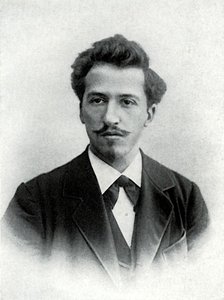
Piet Mondrian
1872 - 1944 , Países Bajos
Datos clave
- Artistas Que Influyeron:
- Hague School
- Puntillismo
- Fauvismo
- Cubismo
- Estilo Artístico: Neoplasticismo, De Stijl
- Fecha De Nacimiento: 7 de marzo de 1872
- Influenciado A Artistas:
- Expresionismo abstracto
- Minimalismo
- Color Field painting
- Lugar De Nacimiento: Amersfoort, Países Bajos
- Nacionalidad: Holandés
- Nombre Completo: Piet Mondrian
- Obras Notables:
- Nueva York I
- Composición con Rojo, Azul y Amarillo
- Broadway Boogie Woogie
- Tableau no. 2
Artículos relacionados

Blanco Sublime: Los 10 Cuadros Más Famosos Dominados por la Luz y el Color
Descubre los 10 cuadros blancos más emblemáticos de la historia del arte. Explora Monet, Van Gogh y Klimt, y su magistral uso de la luz y el color. Encuentra reproducciones de alta calidad e inspírate para tu decoración en .

Abstracción Geométrica: 10 Obras Maestras que Transformaron el Arte Moderno | AllPaintingsStore
Descubre las 10 obras maestras de la abstracción geométrica que revolucionaron el arte moderno. Explora a Mondrian, Malevich y Kandinsky en AllPaintingsStore.com. Reproducciones de alta calidad para tu hogar.
Kandinsky: Las 25 Obras Maestras del Pionero de la Abstracción | AllPaintingsStore
Descubre las 25 obras maestras de Wassily Kandinsky, pionero del arte abstracto. Explora su expresionismo, composiciones únicas y la historia detrás de cada cuadro. Reproducciones de alta calidad para decorar tu hogar con arte moderno en AllPaintingsStore.com.

Las 10 Pinturas Más Famosas Dominadas por el Negro | Arte y Decoración
Descubre las 10 pinturas más impactantes dominadas por el negro. Explora obras maestras de Rembrandt, Goya y Rothko, su historia y significado. Encuentra reproducciones de arte exclusivas para transformar tu hogar en .

Kazimir Malevich: Las 25 Obras Maestras del Suprematismo para Inspirar tu Hogar
Descubre las 25 obras maestras de Kazimir Malevich, pionero del Suprematismo. Explora la historia, el significado y la belleza del arte abstracto moderno. Reproducciones de alta calidad para inspirar tu hogar en AllPaintingsStore.com.


