Garantía de devolución · 100 días Envío gratuito a todo el mundo
449 564obras de arte 30 613artistas 4 660museos 32Idiomas
Entrada de catálogo

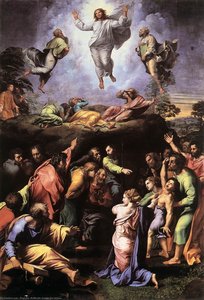
Crucifixión

1502. Óleo sobre tabla, 281.0 x 165.0 cm. Galería Nacional.

Fig. 1. Rafael, Crucifixión, 1502. Se muestra como la reproducción que está especificando: , .

§ 1Datos del catálogo

Dimensiones
281.0 x 165.0 cm

§ 2Abstracto

Descripción del objeto

Explora la icónica 'Crucifixión' de Rafael (1502) – una obra maestra del arte del Alto Renacimiento. Admira su equilibrio, simbolismo y rico detalle en la Galería Nacional.

Biografía del artista

Descubra a Rafael (1483-1520), el maestro del Alto Renacimiento italiano, reconocido por su gracia, claridad y composiciones armoniosas. Explore obras icónicas como 'La Escuela de Atenas', Madonas y frescos que definen la belleza clásica. #ArteRenacentista #Italia

§ 3Comentario

A Renaissance Masterpiece of Faith and Suffering

Raffaello Sanzio da Urbino, known to the world as Raphael, emerged from a remarkably fertile cultural landscape. Born in 1483 within the walls of Urbino, a small but intellectually vibrant city-state in central Italy, his earliest years were steeped in an atmosphere that prized both artistic skill and humanist learning. His father, Giovanni Santi, was not merely a painter employed by Duke Federico da Montefeltro—he was a man deeply engaged with the currents of Renaissance thought, a poet who chronicled the Duke’s life and actively sought out innovative artistic ideas from across Italy and beyond. This immersion in a courtly environment, one that valued refinement and intellectual discourse, profoundly shaped the young Raphael's sensibilities.

The loss of his father at age eleven thrust responsibility upon him, but also provided an opportunity to hone his skills within the family workshop, absorbin ## Compositional Harmony and Artistic Style

The composition is remarkably balanced, a hallmark of Raphael’s style. Christ occupies the central focus, yet the surrounding figures – angels, mourners, and witnesses – are arranged in a harmonious manner that draws the eye throughout the scene. Raphael’s mastery of perspective creates depth, while his use of *sfumato*—a subtle blending of colors—softens forms and lends an ethereal quality to the work. The painting exemplifies High Renaissance characteristics: realism achieved through anatomical accuracy, idealized beauty in the figures, and a focus on emotional expression. It's a clear departure from earlier, more stylized depictions of this biblical scene.

## Symbolism Woven into the Narrative

Beyond its immediate depiction of the crucifixion, *The Crucifixion* is rich with symbolic meaning. Three birds are prominently featured, often interpreted as representing the Holy Spirit and the souls of the righteous ascending to heaven. Perhaps most intriguing is the inclusion of a clock in the upper left corner. This detail has sparked debate among art historians; it could symbolize the passage of time leading up to Christ’s death, or represent the precise moment of sacrifice. The *INRI* inscription—Jesus Nazarene, King of the Jews—is clearly visible on the cross, reinforcing the narrative's religious core.

## Historical Context and Renaissance Ideals

Created during a period of immense artistic flourishing in Italy, Raphael’s *Cruifixion* reflects the humanist spirit of the Renaissance. Artists were increasingly interested in portraying human emotion and experience alongside traditional religious themes. Raphael, along with contemporaries like Leonardo da Vinci and Michelangelo, pushed the boundaries of artistic technique and subject matter. This painting demonstrates a shift towards more naturalistic representations and a greater emphasis on individual expression within a sacred context. While influenced by artists such as Taddeo Gaddi and Hieronymus Bosch in terms of broader Renaissance ideals, Raphael forged his own distinct style characterized by grace and clarity.

## Emotional Resonance and Enduring Appeal

*The Crucifixion* is not merely a historical or religious artwork; it’s an emotionally resonant experience. Raphael captures the profound sorrow and sacrifice inherent in the scene, inviting viewers to connect with the suffering of Christ and the grief of those who witnessed his death. The painting's enduring appeal lies in its ability to evoke empathy and inspire contemplation on universal themes of faith, mortality, and hope. It remains a powerful testament to Raphael’s artistic genius and his profound understanding of the human condition.

  • Explore high-quality reproductions of *The Crucifixion* and other masterpieces by Raphael at AllPaintingsStore.
  • Discover related works, such as Madonna of Loreto and The Canigiani Madonna, also available through AllPaintingsStore.
  • Learn more about Raphael’s life and artistic legacy on Wikipedia.
Photo Description: --Overall Impression-- The artwork is a Renaissance-era painting depicting the crucifixion of Jesus Christ. It’s a vertical composition dominated by the central cross and the figure of Christ suspended upon it. The scene unfolds within a landscape setting, with figures gathered below representing witnesses and mourners. The style leans towards realism, characteristic of the High Renaissance, emphasizing anatomical accuracy and emotional expression. The painting utilizes a muted color palette with subtle gradations and shading to create depth and volume. Lines are carefully rendered, defining forms and creating a sense of structure. Shapes are predominantly geometric – the cross, figures, and landscape elements – while textures suggest fabric, skin, and stone. Lighting is diffused, casting soft shadows that contribute to the solemn mood. Perspective is employed to establish spatial relationships between the figures and the background. The depth of field is moderate, with a slightly blurred background emphasizing the central scene. The subject matter is overtly religious, focusing on a pivotal event in Christian theology.

Size: 281 x 165 cm Date: 1502 ARTIST INFORMATION: ================== Artist: Raphael Birth Year: 1483 Death Year: 1520 Birth City: Urbino Birth Country: Italy Biography:

The Urbino Renaissance: Raphael’s Early Life and Formation

Raffaello Sanzio da Urbino, known to the world as Raphael, emerged from a remarkably fertile cultural landscape. Born in 1483 within the walls of Urbino, a small but intellectually vibrant city-state in central Italy, his earliest years were steeped in an atmosphere that prized both artistic skill and humanist learning. His father, Giovanni Santi, was not merely a painter employed by Duke Federico da Montefeltro—he was a man deeply engaged with the currents of Renaissance thought, a poet who chronicled the Duke’s life and actively sought out innovative artistic ideas from across Italy and beyond. This immersion in a courtly environment, one that valued refinement and intellectual discourse, profoundly shaped the young Raphael's sensibilities.

Preguntas y respuestas

¿Qué tan conocida es la obra "Crucifixión" de Rafael?

"Crucifixión" tiene un nivel de popularidad Icónico.

¿Puedo ver una radiografía de "Crucifixión" de Rafael?

La vista de rayos X de "Crucifixión" de Rafael se encuentra en la página Radiografía de la obra: un examen interactivo de la imagen a través de once capas ópticas.

¿Qué elementos de la obra de Rafael se encuentran en "Crucifixión"?

"Crucifixión" comparte con otras obras de Rafael su estilo Alto Renacimiento y sus temas recurrentes: ideales clásicos, estilo renacentista, fe cristiana, sacrificio y sufrimiento, humanismo, profundidad emocional explorada, comisiones papales de roma, influyente.
§ 4El artista

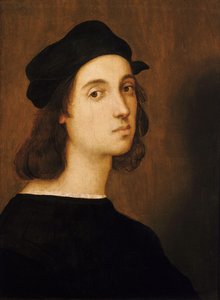
Rafael

Rafael

1483 - 1520, Italia

Datos rápidos sobre Rafael

  • Artistas Influyentes:
    • Giovanni Santi
    • Pietro Perugino
  • Estilo Artístico: Alto Renacimiento
  • Fecha De Muerte: 06/04/1520
  • Fecha De Nacimiento: 28/03/1483
  • Influencia En Artistas: Neoclasicismo
  • Lugar De Nacimiento: Urbino, Italia
  • Nacionalidad: Italiano
  • Nombre Completo: Rafael (Raffaello Sanzio)
  • Obras Notables:
    • El Juicio de Salomón
    • Madonna del Cardellino
    • La Escuela de Atenas
    • San Sebastián
    • La Dama Velada

Biografía del artista

**vida temprana y formación**

Rafael (rafaello sanzio da urbino), un renombrado pintor y arquitecto italiano, nació entre el 28 de marzo y el 6 de abril de 1483, en la pequeña pero culturalmente significativa ciudad de Urbino. Su padre, Giovanni Santi, era pintor de corte para el duque, proporcionando a Rafael una exposición temprana al mundo artístico. Después de fallecer su padre a los once años, Rafael probablemente administró el taller familiar, consolidando aún más su base artística.

**carrera artística e influencias**

El viaje artístico de Rafael puede categorizarse en tres fases distintas, cada una marcada por un estilo único:
  • primeros años en Umbría: caracterizado por la influencia de su padre y el ambiente cultural de Urbino.
  • período florentino (1504-1508): absorbiendo las tradiciones artísticas de Florencia, que influyeron significativamente en su estilo.
  • período romano (1508-1520): trabajando para dos papas y sus asociados, produciendo algunas de sus obras más celebradas, incluyendo la escuela de Atenas en la stanza della segnatura del Vaticano.

**obras notables y legado**

Algunas de las obras notables de Rafael incluyen:

**influencia y legado**

La influencia de Rafael en el arte es profunda, con su obra siendo un pilar del Renacimiento italiano. Su estilo sereno y armonioso ha sido un modelo para la pintura neoclásica, como señaló el historiador de arte Johann Joachim Winckelmann. A pesar de la influencia posterior del estilo de Miguel Ángel, Rafael sigue siendo uno de los artistas más reverenciados en la historia. ver el perfil de Rafael en AllPaintingsStore

§ 5Obras relacionadas

§ 6Preguntas

Datos clave

  • Medium: Oil on poplar panel
  • Notable elements or techniques: Sfumato, Perspectiva
  • Influences: Taddei Gaddi
  • Artistic style: Realismo idealizado
  • Title: Crucifixion
  • Movement: High Renaissance

Test de conocimientos artísticos

Cada pregunta tiene una única respuesta correcta.

Pregunta 1:
¿Quién pintó la obra "Crucifixión"?
Pregunta 2:
¿En qué año fue creada esta pintura?
Pregunta 3:
¿Dónde se encuentra actualmente la obra "Crucifixión"?
Pregunta 4:
¿Cuál es el estilo artístico predominante en esta pintura?
Pregunta 5:
¿Qué técnica artística utiliza Rafael para crear profundidad y volumen en la obra?

§ 7Citar esta entrada

AllPaintingsStore.com, “Rafael, Crucifixión (1502)”, https://allpaintingsstore.com/es/art/rafael-crucifixion-8XX8CP-es/ArtistReproduction/ (consultado el 7 octubre 2026).

§ 8La reproducción

Reproducción al óleo hecha a mano

Óleo sobre lienzo pintado a mano en el tamaño y marco de su elección, realizado por encargo por nuestros artistas. ( Cambiar a impresiones Cambiar a imagen digital)

Se especifica en el margen de la hoja de pedido; el estado actual de dicha hoja es el siguiente.

Crucifixión

Técnica de reproducción

Dimensiones de la reproducción

-

Selección de artistas premium

Mayor nivel de detalle, delicadeza y tiempo de producción adicional

-

Enmarcado de reproducción

-

-

Para obras de arte o reproducciones que midan más de 105 cm (aproximadamente 41 pulgadas) en cualquiera de sus lados, el marco se enviará como un kit desmontado. Este método garantiza una entrega segura y evita daños durante el transporte.

Se requiere montaje profesional: este no es un producto para hacer usted mismo (DIY).
El kit debe ser ensamblado y el lienzo tensado por un enmarcador profesional con experiencia, utilizando cola para madera (no incluida), una tenaza para tensar lienzos y sargentos para mantener los bastidores alineados mientras la cola se seca. Un montaje incorrecto o una tensión desigual del lienzo pueden dañar la obra de arte de forma permanente y no están cubiertos por nuestra garantía.

  • Se incluyen todos los listones de madera maciza, cortados con precisión según las medidas.

  • Se ensambla con los tornillos incluidos, además de cola para madera para las uniones de las esquinas, la cual no se incluye y debe ser proporcionada por su enmarcador.

  • Se requieren herramientas profesionales que no están incluidas: un alicate para tensar lienzos (tensor) y abrazaderas para mantener los bastidores alineados mientras se seca el pegamento.

Importante:
Las uniones de las esquinas requieren cola para madera, los listones deben sujetarse con prensas hasta que la cola esté completamente seca, y para tensar el lienzo en el bastidor ensamblado se requiere una pinza para tensar lienzos. Ninguno de estos elementos está incluido en el kit. Por favor, contacte con un profesional del enmarcado con experiencia antes de realizar un pedido de este tamaño.

Cartela

-

-

Barniz protector

Barniz brillante (realza los colores y protege contra la luz y la humedad)

-

Personalizar mi obra

Ejemplos de lo que se puede personalizar: sustituir el rostro por una foto del cliente; añadir una mascota (por ejemplo, cambiar un gato por un perro); incluir un mensaje oculto en el fondo; cambiar el paisaje o los elementos del fondo.

-

Envío urgente

Envío a todo el mundo () en 3 o 4 semanas, en lugar de las 5 semanas habituales. (4 noviembre). Sin comprometer la calidad.

-

Envío urgente

Envío internacional () en 5 semanas. (11 noviembre).

Incluido

Precio total final

€ 297

Incluido en cada pedido

  • Envío exprés gratuito a todo el mundo
  • Lienzo de lino de alta calidad
  • Seguro de envío total
  • Garantía de reembolso de aranceles aduaneros
  • Garantía de fidelidad cromática exacta
  • Política de devolución de 100 días (solo por defectos)
  • Garantía de devolución del 100% del dinero
  • Descuento por cantidad
Hoja de pedido