Ver en contexto
 Enviar
 Compartir
 Detalles
 Guía
Guía

 Descargar
 Similares
 Radiografía
 Presentación de diapositivas
 Estadísticas
Prime Mover (Astronomy)


 Ver más
Giclée / Impresión de arte
Impresiones giclée o en lienzo de calidad de museo con producción rápida y opciones de acabado flexibles. ( Comprar pintura hecha a mano Cambiar a imagen digital)




P118B €10

P118H €10

P118W €10

P438Z €10

P508JH €12

P508YH €12

P805H €10

P805Z €10

P919BZ €10

P919G €10

P919XJ €10

P959ZH €10

P968JZ €12

W106C €8

W218G €10

W218JH €8

W218Y €10

W307PJ €10

W316G €10

W316PJ €8

W316Y €10

W398PJ €8

W4111J €10

W500HY €15

W500JH €15

W692G €12

W849H €8

W940BG €15

W953PJ €8




Elija entre nuestros tamaños predefinidos que respetan las proporciones originales de la obra.

Introduzca el ancho y el alto que necesite para adaptarse a su marco o pared. Una impresión solo puede recortarse, nunca hacerse más grande que la imagen original, por lo que un tamaño con una forma distinta perderá parte de la obra. Le enviaremos una maqueta digital para su aprobación antes de realizar cualquier impresión. La imagen que se muestra en esta página no refleja el recorte real; solo la maqueta lo hace.
Envío a todo el mundo () en 2 semanas en lugar de las 4/5 semanas estándar. (27 octubre)

Envío exprés gratuito a todo el mundo

Lienzo de lino de alta calidad

Seguro de envío total

Garantía de reembolso de aranceles aduaneros

Garantía de fidelidad cromática exacta

Política de devolución de 100 días (solo por defectos)

Garantía de devolución del 100% del dinero

Descuento por cantidad
 La opción de vidrio solo está disponible en tamaños inferiores a 110 cm.

Prime Mover (Astronomy)
Giclée / Impresión de arte
Dimensiones de la reproducción
-


Precio total final
€ 56
Introduction
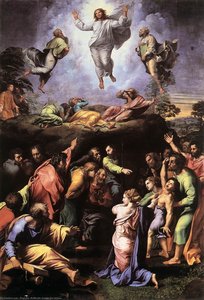
This article delves into Raphael’s masterpiece, Prime Mover (Astronomy), a cornerstone of Renaissance art and an exemplary demonstration of Raphael’s mastery over oil on canvas. More than just a depiction of celestial imagery, this fresco embodies profound philosophical concepts rooted in Neoplatonic thought—a testament to Raphael's intellectual curiosity alongside his unparalleled artistic skill. Its enduring appeal lies not only in its visual beauty but also in the layers of meaning it conveys about humanity’s place within the cosmos.Artist: Raphael (Raffaello Sanzio Da Urbino)
Born in 1483, Raphael was a luminary figure of the High Renaissance—a period characterized by an astonishing revival of classical ideals and artistic innovation. His formative years were spent in Urbino, under the patronage of Federico da Montefeltro, fostering an environment that nurtured his prodigious talent for both painting and sculpture. This upbringing instilled in him a meticulous attention to detail and a deep appreciation for harmonious composition—traits that would define his distinctive style throughout his career. Raphael’s influence extended far beyond his contemporaries, shaping artistic trends for decades to come and continuing to inspire artists today. He was recognized as a “master” by 1500, marking the beginning of his prolific output.Title: Prime Mover (Astronomy)
Prime Mover (Astronomy) resides within the Stanze di Raffaello—the Raphael Rooms—located in the Apostolic Palace of Vatican City. Commissioned by Pope Julius II during a time of artistic fervor and papal ambition, this monumental fresco is one of four panels adorning the ceiling of the Sala della Segnatura, representing the liberal arts. Its subject matter—Mount Parnassus, the mythical abode of Apollo and the nine Muses—is laden with symbolic significance, reflecting the Renaissance humanist preoccupation with understanding the universe through reason and observation. Raphael skillfully employed perspective and anatomical accuracy to portray this celestial scene, elevating it beyond mere visual representation into a profound meditation on creation and human intellect.Media: Oil on Canvas
Raphael’s choice of medium—oil paint on canvas—was deliberate and indicative of the artistic sensibilities of his era. Unlike tempera paints, which produce brittle, inflexible images, oil pigments retain their vibrancy and luminosity over time, allowing for nuanced tonal gradations and textural richness. This technique demanded considerable technical skill and patience from Raphael’s workshop assistants, who meticulously applied thin layers of paint to create a luminous surface that captures the ethereal beauty of the celestial realm. The resulting image possesses an unparalleled depth and subtlety—a testament to Raphael's dedication to achieving artistic perfection.Style: Renaissance
Renaissance art emerged in Italy during the late fourteenth and fifteenth centuries, marking a decisive break from medieval conventions. Driven by renewed interest in classical antiquity—particularly Greek sculpture and architecture—artists sought to emulate the idealized forms and harmonious proportions of ancient masterpieces. Raphael’s style embodies these ideals flawlessly—characterized by clarity of form, balanced composition, and an unwavering commitment to capturing human grandeur. He skillfully blended influences from Florentine Mannerism with Umbrian traditions, resulting in a distinctive aesthetic that prioritized elegance and grace while maintaining intellectual rigor. This approach profoundly impacted subsequent artistic movements, establishing Raphael as one of the most influential painters of his time—a figure whose legacy continues to inspire artists worldwide.Composition Analysis
The fresco’s composition is remarkably complex yet undeniably harmonious. At its center stands Apollo, depicted as a regal figure radiating authority and intellect—surrounded by the Muses, each representing a distinct field of human endeavor: poetry, music, dance, astronomy, geometry, arithmetic, philosophy, history, and calligraphy. Raphael meticulously arranged these figures in a pyramidal structure, creating a visual rhythm that guides the viewer’s eye across the canvas. The depiction of Mount Parnassus itself is rendered with meticulous detail—reflecting Raphael's mastery of perspective and anatomical accuracy. Furthermore, the subtle interplay of light and shadow enhances the dramatic effect of the scene, conveying a sense of awe and wonder at the magnificence of creation.Conclusion
Prime Mover (Astronomy) transcends mere visual representation—it is a profound philosophical statement about humanity’s relationship with the cosmos and its capacity for intellectual enlightenment. Raphael's masterful execution of oil on canvas—combined with his unwavering adherence to Renaissance artistic principles—solidifies its place as an enduring symbol of humanist ideals and artistic excellence. To explore more captivating artworks by Raphael, visit Prime Mover (Astronomy).Preguntas y respuestas
¿Es Rafael, autor de "Prime Mover (Astronomy)", conocido por otros nombres?
Rafael también es conocido como Raffaello Sanzio da Urbino.
¿Cómo se combinan la técnica y el movimiento en "Prime Mover (Astronomy)"?
"Prime Mover (Astronomy)" está realizada en Óleo sobre lienzo, con el estilo Renascimiento.
¿Qué tipo de pieza es "Prime Mover (Astronomy)"?
En el catálogo, "Prime Mover (Astronomy)" de Rafael está clasificado como Arte de pared. Esta categoría permite localizar obras similares.
Obras relacionadas
![Stanze Vaticane - El Fuego En El Borgo (detalle) [01] — Rafael, High Renaissance](/media/artworks/images-thumb/76/f6/76f6220ba33c4e1d9790e47ace4c7148.jpg)
![Stanze Vaticane - La Liberación De San Pedro (detalle) [02] — Rafael, High Renaissance](/media/artworks/images-thumb/37/67/376727508005fdf6aba941d2691713fd.jpg)

![Stanze Vaticane - La Liberación De San Pedro (detalle) [01] — Rafael, Alto Renacimiento](/media/artworks/images-thumb/56/b1/56b164228e527303d62222f1b9e9aa13.jpg)
![Estancias Vaticanas – La Misa De Bolsena (detalle) [01] — Rafael, La Obra De Rafael Está Profundamente Arraigada En](/media/artworks/images-thumb/8d/99/8d998e18ce3c0281eaf2360a52026685.jpg)
![Stanze Vaticane - La Disputa (detalle) [04] — Rafael, Alto Renacimiento](/media/artworks/images-thumb/61/3a/613a0d8856c9e3f8abc146897892a0d2.jpg)


![Stanze Vaticane - La Disputa (detalle) [02] — Rafael, Alto Renacimiento](/media/artworks/images-thumb/55/c5/55c5db1a88764a9697fe9eb0ea9d43c9.jpg)
![Estudio De Parnaso [07] — Rafael, High Renaissance](/media/artworks/images-thumb/3c/a1/3ca1620e84d3f2fe4e94d9bb954e0eca.jpg)

Biografía del artista
**vida temprana y formación**
Rafael (rafaello sanzio da urbino), un renombrado pintor y arquitecto italiano, nació entre el 28 de marzo y el 6 de abril de 1483, en la pequeña pero culturalmente significativa ciudad de Urbino. Su padre, Giovanni Santi, era pintor de corte para el duque, proporcionando a Rafael una exposición temprana al mundo artístico. Después de fallecer su padre a los once años, Rafael probablemente administró el taller familiar, consolidando aún más su base artística.**carrera artística e influencias**
El viaje artístico de Rafael puede categorizarse en tres fases distintas, cada una marcada por un estilo único:- primeros años en Umbría: caracterizado por la influencia de su padre y el ambiente cultural de Urbino.
- período florentino (1504-1508): absorbiendo las tradiciones artísticas de Florencia, que influyeron significativamente en su estilo.
- período romano (1508-1520): trabajando para dos papas y sus asociados, produciendo algunas de sus obras más celebradas, incluyendo la escuela de Atenas en la stanza della segnatura del Vaticano.
**obras notables y legado**
Algunas de las obras notables de Rafael incluyen:- el juicio de Salomón (ver en AllPaintingsStore)
- la madona de Esterházy (ver en AllPaintingsStore)
- Stanze Vaticane - vista de la stanza della segnatura (ver en AllPaintingsStore)
- San Sebastián (ver en AllPaintingsStore)
- La dama velada (ver en AllPaintingsStore)
**influencia y legado**
La influencia de Rafael en el arte es profunda, con su obra siendo un pilar del Renacimiento italiano. Su estilo sereno y armonioso ha sido un modelo para la pintura neoclásica, como señaló el historiador de arte Johann Joachim Winckelmann. A pesar de la influencia posterior del estilo de Miguel Ángel, Rafael sigue siendo uno de los artistas más reverenciados en la historia. ver el perfil de Rafael en AllPaintingsStore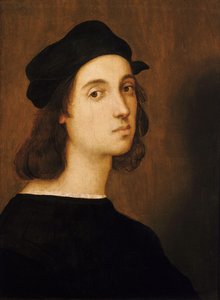
Rafael
1483 - 1520 , Italia
Datos clave
- Artistas Influyentes:
- Giovanni Santi
- Pietro Perugino
- Estilo Artístico: Alto Renacimiento
- Fecha De Muerte: 06/04/1520
- Fecha De Nacimiento: 28/03/1483
- Influencia En Artistas: Neoclasicismo
- Lugar De Nacimiento: Urbino, Italia
- Nacionalidad: Italiano
- Nombre Completo: Rafael (Raffaello Sanzio)
- Obras Notables:
- El Juicio de Salomón
- Madonna del Cardellino
- La Escuela de Atenas
- San Sebastián
- La Dama Velada
Artículos relacionados
Rafael: Las 25 Obras Maestras que Definen al Genio del Renacimiento | AllPaintingsStore
Descubre las 25 obras maestras de Rafael Sanzio, el genio del Renacimiento. Explora su historia, técnica y significado en pinturas icónicas como 'La Escuela de Atenas'. Reproducciones de arte de alta calidad para decorar tu hogar con elegancia. ¡Explora la colección completa en AllPaintingsStore.com!

The Enduring Power of Painting: A Historical & Contemporary Exploration of Form and Emotion
Explore the rich history & enduring techniques of oil painting with AllPaintingsStore. Discover masterpieces, learn about art collecting, and find authentic handmade reproductions crafted by skilled artists.

The Timeless Charm of Oil on Board: Reimagining Texture and Light through the Impressionist Lens
Discover the profound intimacy of oil on panel. Explore how Impressionist masters used rigid supports to capture light, texture, and impasto depth through exquisite, handmade oil reproductions for discerning collectors.

The Enduring Legacy of Oil on Canvas: Technique, History & Aesthetic Impact
Explore the rich history & techniques of oil painting – from Renaissance masters to Impressionism. Discover pigments, layering methods, and why this timeless medium endures. Expert insights for artists & art enthusiasts.

El Óleo sobre Lienzo: Historia, Técnica y la Persistencia de un Medio Artístico Atemporal
Descubre la historia y técnica del óleo sobre lienzo. Explora reproducciones fieles hechas a mano, personalización artística y consejos de expertos con AllPaintingsStore. ¡Colecciona arte con confianza!