


 Ver en contexto
 Enviar
 Compartir
 Detalles

 Descargar
 Similares
 Radiografía
 Presentación de diapositivas
Forest scene


 Ver más
Giclée / Impresión de arte
Impresiones giclée o en lienzo de calidad de museo con producción rápida y opciones de acabado flexibles. ( Comprar pintura hecha a mano Comprar imagen)




P118B $10

P118H $10

P118W $10

P438Z $10

P508JH $12

P508YH $12

P805H $10

P805Z $10

P919BZ $10

P919G $10

P919XJ $10

P959ZH $10

P968JZ $12

W106C $8

W218G $10

W218JH $8

W218Y $10

W307PJ $10

W316G $10

W316PJ $8

W316Y $10

W398PJ $8

W4111J $10

W500HY $15

W500JH $15

W692G $12

W849H $8

W940BG $15

W953PJ $8




Elija entre nuestros tamaños predefinidos que respetan las proporciones originales de la obra.

Puede introducir sus propias dimensiones para adaptarse a un marco o espacio específico. Si el tamaño seleccionado no coincide con las proporciones de la imagen original, recortaremos la obra de arte o extenderemos la imagen con un borde con efecto espejo o de color sólido. Se enviará una maqueta digital para su aprobación antes de que comience la producción.
Tenga en cuenta que la vista previa en pantalla no refleja el recorte o la extensión real. Solo la maqueta mostrará con precisión la composición final.
Aunque existen tamaños personalizados, recomendamos seleccionar una dimensión de la lista predefinida para preservar las proporciones originales.
Envío a todo el mundo () en 2 semanas en lugar de las 4/5 semanas estándar. (23 agosto)

Envío exprés gratuito a todo el mundo

Lienzo de lino de alta calidad

Seguro de envío total

Garantía de reembolso de impuestos aduaneros

Garantía de fidelidad cromática exacta

Política de devolución de 60 días (solo por defectos)

Garantía de devolución del 100% del dinero

Descuento por cantidad
 La opción de vidrio solo está disponible en tamaños inferiores a 110 cm.

Forest scene
Giclée / Impresión de arte
Dimensiones de la reproducción
-


Precio total final
$ 64
Descripción de la pieza
A Bold Encounter with Nature: The Pop Art Vision of Roy Lichtenstein
In the vast landscape of twentieth-century art, few works capture the tension between commercial aesthetics and natural majesty quite like Roy Lichtenstein’s “Forest Scene.” Created in 1980, this masterpiece serves as a striking testament to the transformative power of Pop Art—a movement that deliberately rejected academic conventions to embrace the vibrant, often overlooked imagery of popular culture. Rather than offering a traditional, romanticized view of the woods, Lichtenstein presents an audacious reimagining of the natural world through his signature visual language. It is not merely a depiction of trees and wildlife; it is a profound intellectual engagement with the way we consume images in a modern, media-saturated age.
The painting invites the viewer into a meticulously constructed reality where the organic meets the industrial. Within this stylized woodland, horses roam through a landscape defined by bold outlines and flat planes of color. The composition is masterfully balanced, featuring figures—a man near the center and others positioned toward the periphery—that interact with the environment in a way that feels both staged and cinematic. This deliberate arrangement creates a sense of stability and rhythm, guiding the eye across the canvas through a symphony of blue, red, and white. For the collector or interior designer, this piece offers a sophisticated focal point, bringing a structured yet energetic presence to any contemporary space.
The Mechanics of Modernity: Technique and Aesthetic
To understand the emotional resonance of “Forest Scene,” one must look closely at Lichtenstein’s revolutionary technique. Heavily influenced by the Ben-Day printing processes found in comic strips and commercial advertising, the artist utilized bold black outlines and a palette of primary hues to flatten perspective. This method deliberately eschews traditional shading and blending, opting instead for a graphic clarity that prioritizes visual impact over photographic accuracy. The use of halftone dots and solid blocks of color creates an illusion of depth without sacrificing the essential flatness characteristic of the Pop Art movement.
This technique serves a deeper symbolic purpose. By reducing the complexity of a forest to its most basic geometric and chromatic components, Lichtenstein strips away the sentimentality often associated with landscape painting. The result is a work that feels incredibly modern and crisp. The juxtaposition of vibrant reds against cool blues creates a visual vibration that captures the viewer's attention instantly. For those seeking to decorate a high-end interior, this artwork provides a perfect blend of nostalgic pop culture references and avant-garde sophistication, making it an ideal choice for spaces that celebrate bold, decisive design.
A Legacy of Innovation
Lichtenstein’s journey from his formal training at the Art Students League to becoming a global icon of the Pop movement is etched into every stroke of this 1980 work. His ability to transform commonplace motifs—the simple shapes of bushes, grass, and animals—into compelling artistic statements allows “Forest Scene” to transcend its subject matter. It stands as a bridge between the high art of the gallery and the low art of the printing press, challenging us to find beauty in the simplified, the mass-produced, and the graphic.
Owning a reproduction of such a significant work is an opportunity to invite a piece of art history into one's home. It is more than a decoration; it is a conversation starter that explores themes of perception, media, and the enduring allure of the natural world reimagined through a human-made lens. Whether placed in a minimalist gallery setting or a vibrant living space, “Forest Scene” continues to pulse with the energy of its era, offering an eternal sense of discovery for the discerning art lover.
Obras relacionadas


Biografía del artista
vida temprana y educación
Roy Fox Lichtenstein, un destacado artista pop estadounidense, nació el 27 de octubre de 1923 en la ciudad de Nueva York. Creció en una familia judía de clase media alta, con su padre como corredor de bienes raíces y su madre como ama de casa. El interés de Lichtenstein por el arte y el diseño comenzó como un pasatiempo durante sus años escolares.Carrera artística
Después de completar su educación secundaria en la Dwight School en 1940, Lichtenstein asistió a la Art Students League of New York bajo la tutela de Reginald Marsh. Luego continuó con una licenciatura en artes visuales de la Universidad de Ohio, que fue interrumpida por un servicio militar de tres años durante la Segunda Guerra Mundial.- Look Mickey (1961, Galería Nacional de Arte, Washington D.C.), una de las primeras obras pop art de Lichtenstein, marcó el comienzo de su influyente carrera.
- Su trabajo estuvo fuertemente influenciado por los estilos de publicidad y cómics populares, con obras notables como Wham!, Drowning Girl y Oh, Jeff... I love you too... but...
- La obra más cara de Lichtenstein, Masterpiece, se vendió por 165 millones de dólares en enero de 2017.
Enseñanza e influencias
Lichtenstein enseñó en varias instituciones, incluyendo la Universidad Estatal de Nueva York en Oswego y la Universidad Rutgers. Su trabajo fue influenciado por Allan Kaprow, un colega profesor en Rutgers, lo que reavivó su interés en las imágenes proto-pop. Exposiciones notables:- The Museum Chambre de Commerce (Tolosa, Francia), que presentaba varias obras de arte, incluyendo aquellas del movimiento pop art.
- El trabajo de Lichtenstein fue exhibido en la Leo Castelli Gallery en la ciudad de Nueva York, con su primera exposición individual en 1962 siendo comprada por completo por coleccionistas influyentes antes de que abriera.
Legado e impacto
Roy Lichtenstein falleció el 29 de septiembre de 1997, dejando atrás un legado como figura destacada del movimiento pop art. Su obra continúa siendo celebrada por su innovadora mezcla de arte alto y bajo, haciendo que sea accesible a una audiencia más amplia.- Explore más obras de Lichtenstein en AllPaintingsStore.com
- Descubra el mundo del pop art y sus influyentes artistas en Pop Art y más allá: navegando los estilos contemporáneos con AllPaintingsStore.com
- Wikipedia: Roy Lichtenstein
- The Museum Chambre de Commerce (Tolosa, Francia) en AllPaintingsStore.com
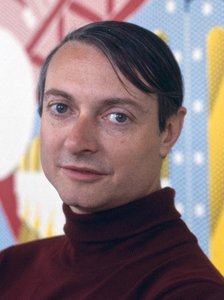
Roy Lichtenstein
1923 - 1997 , Estados Unidos de América
Datos clave
- Artistas Que Influyeron:
- Reginald Marsh
- Allan Kaprow
- Fecha De Muerte: 29 de septiembre de 1997
- Fecha De Nacimiento: 27 de octubre de 1923
- Lugar De Nacimiento: Manhattan, EE. UU.
- Movimiento Artístico: Pop Art
- Nacionalidad: Estadounidense
- Nombre Completo: Roy Lichtenstein
- Obras Notables:
- Look Mickey
- Whaam!
- Drowning Girl
- Masterpiece
Artículos relacionados

Roy Lichtenstein: Las 25 Obras Maestras del Pop Art que Transformaron el Arte y la Decoración
Descubre las 25 obras maestras de Roy Lichtenstein, ícono del Pop Art. Explora su innovadora técnica, colores vibrantes y el impacto cultural de sus cuadros más famosos. Reproducciones de arte exclusivas en AllPaintingsStore.com.

Dots & Screens: The Industrial Secrets Behind 1960s Pop Art Masterpieces
Explore the industrial secrets of 1960s Pop Art. Discover how Ben-Day dots and silk screening transformed mass media into masterpieces by Roy Lichtenstein. An in-depth look at the intersection of mechanical printing and fine art history for students and collectors.

The Psychology of the Palette: Decoding Roy Lichtenstein's Bold Color Theory
Explore the psychological depth of Roy Lichtenstein's color theory. An expert analysis for art students and collectors on Ben-Day dots, primary palettes, and the intersection of Pop Art with mass media history.

John Constable: Las 25 Obras Maestras del Paisaje Inglés | AllPaintingsStore
Descubre las 25 obras maestras de John Constable, el pintor romántico inglés que capturó la belleza del paisaje. Explora su técnica, historia y significado en AllPaintingsStore.com. Reproducciones de arte de alta calidad para tu hogar.

Beyond the Ben-Day Dots: Roy Lichtenstein's Pop Art Revolution & Enduring Legacy
Explore Roy Lichtenstein's revolutionary Pop Art! Discover the story behind Ben-Day dots, iconic works like 'Whaam!', and investment insights for collectors. Expert analysis & high-quality reproductions at AllPaintingsStore.


