


 Ver en contexto
 Enviar
 Compartir
 Detalles
 Guía
Guía

 Descargar
 Similares
 Radiografía
 Presentación de diapositivas
 Q&A
Q&A Estadísticas
Galatée


 Ver más
La obra de arte que se muestra en esta página está protegida por las leyes de propiedad intelectual, lo que significa que no podemos crear ni vender legalmente una reproducción idéntica. Esta protección se hace cumplir en virtud de acuerdos internacionales como el Convenio de Berna y por las leyes nacionales, incluidas aquellas establecidas por el Ley de derechos de autor de los EE. UU. - Título 17.
Este método cumple plenamente con las normativas de derechos de autor, ya que no implica la copia ni la duplicación de la obra protegida. En su lugar, se trata de una reinterpretación creativa: una nueva pintura influenciada por la original, pero que no es idéntica a ella.
Giclée / Impresión de arte
Impresiones giclée o en lienzo de calidad de museo con producción rápida y opciones de acabado flexibles. ( Comprar pintura hecha a mano Cambiar a imagen digital)




P118B €10

P118H €10

P118W €10

P438Z €10

P508JH €12

P508YH €12

P805H €10

P805Z €10

P919BZ €10

P919G €10

P919XJ €10

P959ZH €10

P968JZ €12

W106C €8

W218G €10

W218JH €8

W218Y €10

W307PJ €10

W316G €10

W316PJ €8

W316Y €10

W398PJ €8

W4111J €10

W500HY €15

W500JH €15

W692G €12

W849H €8

W940BG €15

W953PJ €8




Elija entre nuestros tamaños predefinidos que respetan las proporciones originales de la obra.

Introduzca el ancho y el alto que necesite para adaptarse a su marco o pared. Una impresión solo puede recortarse, nunca hacerse más grande que la imagen original, por lo que un tamaño con una forma distinta perderá parte de la obra. Le enviaremos una maqueta digital para su aprobación antes de realizar cualquier impresión. La imagen que se muestra en esta página no refleja el recorte real; solo la maqueta lo hace.
Envío a todo el mundo () en 2 semanas en lugar de las 4/5 semanas estándar. (31 octubre)

Envío exprés gratuito a todo el mundo

Lienzo de lino de alta calidad

Seguro de envío total

Garantía de reembolso de aranceles aduaneros

Garantía de fidelidad cromática exacta

Política de devolución de 100 días (solo por defectos)

Garantía de devolución del 100% del dinero

Descuento por cantidad
 La opción de vidrio solo está disponible en tamaños inferiores a 110 cm.

Galatée
Giclée / Impresión de arte
Dimensiones de la reproducción
-


Precio total final
€ 57
A Dreamscape Unveiled: Exploring Dalí’s ‘GalatNe, 1954’
Salvador Dalí's ‘GalatNe,’ created in 1954, is not merely an image; it’s a descent into the labyrinth of the subconscious. Rendered with meticulous detail in stark black and white, this work exemplifies the artist’s mastery of Surrealism, inviting viewers to confront a world where logic dissolves and dreamlike imagery reigns supreme. The painting presents a fragmented face, crowned or adorned with an elaborate headdress, as its central focus—a visage that feels both regal and unsettlingly fractured. This isn't a portrait in the traditional sense; it’s a deconstruction of identity itself, scattered amongst floating geometric shapes – cubes and triangles suspended in an ambiguous space. The distant horizon hints at a landscape, perhaps mountains or hills, but even this grounding element is veiled in a hazy ambiguity, reinforcing the painting’s ethereal quality.
The Language of Symbols: Time, Identity, and Transformation
Dalí was a master symbolist, and ‘GalatNe’ is rich with motifs that resonate deeply within his artistic lexicon. A clock appears amidst the scattered objects—a vase, bowl, cup, bottle—each rendered in distorted form. This isn't simply an inclusion of everyday items; it’s a deliberate invocation of time’s relentless passage and its power to warp perception. The fragmented face itself speaks volumes about the instability of self, suggesting a personality broken down into constituent parts or perhaps perpetually in flux. These objects aren’t merely *present* in the scene; they are emotionally charged signifiers, each contributing to the painting’s overall sense of disorientation and mystery.
Technique and Texture: A Graphite Reverie
The technical execution of ‘GalatNe’ is as captivating as its conceptual depth. Likely created using graphite or charcoal on paper, the artwork showcases Dalí’s extraordinary draftsmanship. The artist employs a range of techniques—hatching, cross-hatching—to build up layers of tone and texture, creating a remarkable sense of depth despite the absence of color. Sharp, angular lines define the geometric shapes, while softer shading brings a haunting realism to the face and objects. This meticulous attention to detail isn’t simply about technical skill; it’s about imbuing the dreamscape with a tangible quality, making the illogical feel strangely real. The diffused lighting further enhances this effect, casting soft shadows and highlights that contribute to the painting’s overall atmospheric quality.
Dalí and His Legacy: A Continuing Influence
Salvador Dalí, born in Figueres, Spain, in 1904, remains one of the most recognizable and influential artists of the 20th century. His journey began with early influences from Cubism and Renaissance masters, but he quickly forged his own path, becoming a leading figure in the Surrealist movement. Dalí’s art wasn’t merely about depicting dreams; it was about exploring the depths of the human psyche, challenging conventional notions of reality, and pushing the boundaries of artistic expression. His impact extends far beyond the realm of painting, influencing film, fashion, advertising, and popular culture. ‘GalatNe,’ with its haunting imagery and technical brilliance, stands as a testament to Dalí’s enduring legacy—a reminder that art has the power to unlock the hidden landscapes within us all.
- Artist: Salvador Dalí
- Birth Year: 1904
- Death Year: 1989
- Birth City: Figueres
- Birth Country: Spain
Dalí’s artistic repertoire included painting, sculpture, film, graphic arts, animation, fashion, and photography, at times in collaboration with other artists. He also wrote fiction, poetry, autobiography, essays, and criticism.
To the dismay of those who held his work in high regard, and to the irritation of his critics, his eccentric and ostentatious public behavior often drew more attention than his artwork.
Preguntas y respuestas
¿Qué técnica se utilizó para "Galatée" de Salvador Dalí?
La técnica de "Galatée" de Salvador Dalí es Óleo sobre lienzo. Las reproducciones pretenden recrear la apariencia de esta técnica.
¿Existe una ficha informativa sobre "Galatée" de Salvador Dalí para estudiantes?
La guía de "Galatée" es la página Ficha informativa de la obra: una ficha imprimible que presenta la pieza con su pie de foto, línea de crédito y tabla de datos (artista, fechas, técnica, tamaño original, colección).
¿Dónde y para qué uso se recomienda "Galatée"?
Se sugiere "Galatée" para Acento cromático, y el espacio recomendado es un Salón principal.
Obras relacionadas


Biografía del artista
Salvador Dalí: Una Vida en el Surrealismo
Salvador Domingo Felipe Jacinto Dalí i Domènech, Marqués de Dalí de Púbol, conocido globalmente como Salvador Dalí, fue un pintor surrealista español nacido el 11 de mayo de 1904 en Figueres, España. Falleció el 23 de enero de 1989, dejando un legado que continúa cautivando y desafiando a audiencias de todo el mundo.
Vida Temprana y Educación
La vida temprana de Dalí estuvo marcada por una compleja relación con su padre, lo que influyó profundamente en sus temas artísticos y su personalidad. Demostró talento artístico desde joven, recibiendo formación formal en la Academia de Bellas Artes de San Fernando en Madrid. Un momento crucial ocurrió a los 16 años cuando descubrió la pintura moderna, provocando un intenso interés que condujo a su primera exposición pública en 1919.
Desarrollo Artístico e Influencias
El viaje artístico de Dalí fue una evolución dinámica moldeada por varias influencias clave:
- Cubismo: Proporcionó una base para la desconstrucción de formas y perspectivas.
- Dadaísmo: Le introdujo a los principios del arte anti-arte y el desafío a la estética convencional.
- Pablo Picasso: Una figura reverenciada a quien Dalí conoció en París, impactando profundamente su dirección artística.
Su visita de 1926 a París resultó crucial, sumergiéndolo en el floreciente movimiento Surrealista y conectándolo con artistas destacados de la época. Rápidamente se convirtió en una figura central dentro del grupo.
El Auge del Surrealismo y el Estilo Único de Dalí
La contribución de Dalí al Surrealismo no fue solo participación, sino una redefinición radical de sus posibilidades. Desarrolló su método “paranoico-crítico”, que involucraba estados paranoicos autoinducidos para desbloquear imágenes subconscientes y traducirlas en arte. Este enfoque le permitió crear paisajes bizarros e oníricos poblados por relojes derritiéndose, figuras distorsionadas y objetos simbólicos – señuelos de su estilo instantáneamente reconocible.
La Persistencia de la Memoria (1931) es probablemente la obra más famosa de Dalí, encapsulando la exploración surrealista del tiempo, la memoria y el deterioro a través de su icónica imagen.
Obras Maestras y Temas Artísticos
La prolífica carrera de Dalí produjo un vasto cuerpo de trabajo que abarca pintura, escultura, cine (colaboraciones con Alfred Hitchcock y Walt Disney) y diseño. Algunas obras notables incluyen:
- Tumba de Julia – Una exploración profunda de la pérdida y la memoria.
- Mannequin (Maniquí de Barcelona) - Reflejando su fascinación por la artificialidad y la identidad.
- Paisaje con Hormigas – Una representación perturbadora del deterioro y la mortalidad.
- Estudio para 'La Anunciación' – Explorando temas de sexualidad y percepción.
- El Ángelo de Gala - Demostrando una técnica meticulosa y un lenguaje simbólico.
Temas recurrentes en el arte de Dalí incluyen: tiempo, memoria, deterioro, sexualidad, religión, ciencia y la mente subconsciente. Sus obras a menudo presentan hormigas, huevos, andamios, cajones y objetos fundidos – todos imbuidos de significado personal y simbólico.
Años Posteriores y Legado
Dalí continuó creando y exhibiendo su obra durante toda su vida, aunque sus años posteriores estuvieron marcados por una creciente eccentricidad y negocios comerciales. Se casó con Gala Éluard en 1934, una relación que influyó profundamente en su arte y proporcionó un apoyo inquebrantable. Gala sirvió como su musa y gerente de negocios.
Dalí falleció en 1989 a la edad de 84 años. Su legado es inmenso. Sigue siendo uno de los artistas más reconocibles e influyentes del siglo XX, influenciando la moda, el cine, la publicidad y la cultura popular. El Museo Salvador Dalí en St. Petersburg, Florida, alberga una extensa colección, testimonio de su atractivo perdurable.
Significado Histórico
Salvador Dalí trascendió los límites del arte, convirtiéndose en un icono cultural. Su exploración del subconsciente, combinada con su dominio técnico y su personalidad extravagante, aseguró su lugar como un verdadero visionario y maestro del Surrealismo. Continúa inspirando a artistas y cautivando a audiencias de todo el mundo.
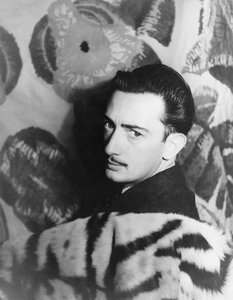
Salvador Dalí
1904 - 1989 , España
Datos clave
- Estilo Artístico: Surrealismo
- Fecha De Muerte: 1989
- Fecha De Nacimiento: 1904-05-11
- Influencias Artísticas:
- Cubismo
- Dadaísmo
- Pablo Picasso
- Lugar De Nacimiento: Figueres, España
- Nacionalidad: Española
- Nombre Completo: Salvador Domingo Felipe Jacinto Dalí i Domènech
- Obras Notables:
- La persistencia de la memoria
- Juliet's Tomb
- Mannequin (Barcelona Mannequin)
- Paisaje con hormigas
- El Ángelus de Gala
Artículos relacionados

Descifrando a Dalí: El Método Paranoico-Crítico y sus Símbolos Surrealistas
Domina el método paranoico-crítico y los símbolos de Dalí con este análisis experto. ¡Descubre la mente del maestro surrealista ahora!


