Vista previa
 Compartir
 Compartir
 Ver detalles

 Descargar
 Ver similares
 Radiografía
 Presentación de diapositivas
John Ruskin
 Oil
Oil- WallArt
- Pre-Raphaelite
 1854
1854- 19th Century
 79.0 x 68.0 cm
 Leer más
Giclée / Impresión de arte
Impresiones giclée o en lienzo de calidad de museo con producción rápida y opciones de acabado flexibles. ( Encargar reproducción pintada a mano Comprar descarga)




P118B $10

P118H $10

P118W $10

P438Z $10

P508JH $12

P508YH $12

P805H $10

P805Z $10

P919BZ $10

P919G $10

P919XJ $10

P959ZH $10

P968JZ $12

W106C $8

W218G $10

W218JH $8

W218Y $10

W307PJ $10

W316G $10

W316PJ $8

W316Y $10

W398PJ $8

W4111J $10

W500HY $15

W500JH $15

W692G $12

W849H $8

W940BG $15

W953PJ $8




Elija entre nuestros tamaños predefinidos que respetan las proporciones originales de la obra.

Puede introducir sus propias dimensiones para adaptarse a un marco o espacio específico. Si el tamaño seleccionado no coincide con las proporciones de la imagen original, recortaremos la obra de arte o extenderemos la imagen con un borde con efecto espejo o de color sólido. Se enviará una maqueta digital para su aprobación antes de que comience la producción.
Tenga en cuenta que la vista previa en pantalla no refleja el recorte o la extensión real. Solo la maqueta mostrará con precisión la composición final.
Aunque existen tamaños personalizados, recomendamos seleccionar una dimensión de la lista predefinida para preservar las proporciones originales.
Envío a todo el mundo () en 2 semanas en lugar de las 4/5 semanas estándar. (19 agosto)

Envío exprés gratuito a todo el mundo

Lienzo de lino de alta calidad

Seguro de envío completo

Garantía de reembolso de aranceles aduaneros

Garantía de fidelidad cromática exacta

Política de devolución de 60 días (solo por defectos)

Garantía de devolución del 100% del dinero

Oferta por volumen
 La opción de vidrio solo está disponible en tamaños inferiores a 110 cm.

John Ruskin
Giclée / Impresión de arte
Tamaño de la reproducción
-


Precio total
$ 64
Descripción de la pieza
A Meeting of Minds: The Soul of Pre-Raphaelite Realism
In the mid-19th century, a profound connection was forged between the lens of critical thought and the brush of artistic genius. Sir John Everett Millais’s 1854 portrait of John Ruskin stands as a breathtaking testament to this era of intellectual and aesthetic revolution. The painting captures more than just a man; it captures a moment in history where the boundaries of truth, nature, and human emotion were being redrawn. As the viewer encounters the subject, they are met with a gaze that is both piercing and contemplative, reflecting the weight of a man who was not only a titan of art criticism but a visionary social thinker. Millais, a prodigy of the Pre-Raphaelite Brotherhood, utilizes his unparalleled ability to render texture and light to bring Ruskin to life, placing him within a rugged, elemental landscape that mirrors the depth of his own intellect.
The composition is masterfully orchestrated to evoke a sense of dramatic permanence. Standing amidst weathered rocks near the cascading energy of a waterfall, Ruskin appears as an extension of the natural world he so passionately defended in his writings. The interplay between the man’s formal attire—the structured suit and tie that signify Victorian gravity—and the untamed, flowing water in the background creates a compelling tension. This juxtaposition serves as a visual metaphor for the struggle between civilization and the sublime power of nature. For the collector or interior designer, this piece offers a profound focal point, bringing an atmosphere of scholarly prestige and organic vitality to any curated space.
Technique, Texture, and the Majesty of Nature
Millais’s technical execution in this portrait is nothing short of extraordinary, embodying the very principles of verisimilitude that defined his early career. Every element, from the damp sheen on the stones to the delicate spray of the distant waterfall, is rendered with a meticulous, almost photographic fidelity. The artist employs a rich palette that allows the cool tones of the water and the earthy textures of the landscape to harmonize with the somber, dignified tones of Ruskin’s clothing. This dedication to detail ensures that the painting does not merely represent a scene but invites the viewer to inhabit it, feeling the mist of the falls and the solidity of the earth.
Beyond the mere imitation of reality, there is a profound emotional resonance embedded in the brushwork. The way light catches the contours of Ruskin’s face suggests an inner life of intense scrutiny and passion. This is not a static portrait; it is a living narrative of a man deeply entwined with the landscapes he analyzed. For those seeking to adorn a home or gallery with art that inspires deep thought, this reproduction offers a window into the Victorian soul. It provides a sophisticated aesthetic anchor that complements both classical and contemporary interiors, bridging the gap between historical reverence and modern elegance through its timeless depiction of character and the sublime.
Obras relacionadas


Biografía del artista
Primeros años y educación
Sir John Everett Millais, un renombrado pintor e ilustrador inglés, nació el 8 de junio de 1829 en Southampton, Inglaterra. Como niño prodigio, se convirtió en el estudiante más joven en ingresar a las escuelas de la Royal Academy a los once años.Fundación de la Hermandad Prerrafaelita
En septiembre de 1848, Sir John Everett Millais, junto con William Holman Hunt y Dante Gabriel Rossetti, fundó la Hermandad Prerrafaelita en su casa familiar en Gower Street, Londres. Este movimiento buscaba revivir el estilo del primer Renacimiento italiano.Obras destacadas
Algunas de las obras más notables de Sir John Everett Millais incluyen:- Cristo en la casa de sus padres (1849-1850), una obra altamente controvertida que mostraba su retrato realista de una familia santa de clase trabajadora.
- Un hugonote (1851-1852), que representaba a una joven pareja a punto de ser separada debido a conflictos religiosos.
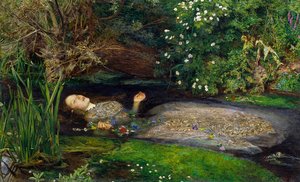
- Ofelia (1851-1852), una pintura que mostraba sus densas y elaboradas superficies pictóricas, a menudo concentrándose en la belleza y complejidad del mundo natural.
- Mariana (1850-1851), basada en la obra de teatro "Medida por medida" de William Shakespeare y el poema del mismo nombre de Alfred, Lord Tennyson.
Evolución artística e influencias
Las obras posteriores de Sir John Everett Millais fueron influenciadas por su esposa, Effie, que anteriormente había estado casada con el crítico John Ruskin. Su estilo evolucionó hacia una forma más amplia de realismo, que inicialmente fue condenado por Ruskin pero posteriormente reconocido como una contribución significativa al mundo del arte. Millais se destacó por su meticuloso estudio de la naturaleza y su habilidad para representar detalles con gran precisión. Su enfoque en los detalles botánicos en obras como "Ofelia" es un testimonio de su dedicación a la observación directa.Legado e importancia histórica
Sir John Everett Millais' legado se extiende más allá de su arte. Fue un pionero en el movimiento prerrafaelita y una figura significativa en el desarrollo del arte británico. Su influencia se puede ver en generaciones posteriores de artistas que buscaron combinar realismo con simbolismo y una profunda conexión con la naturaleza. Sus obras son apreciadas por su belleza, detalle y exploración de temas morales y sociales.- Aprenda más sobre Sir John Everett Millais en AllPaintingsStore.com.
- Explore la Hermandad Prerrafaelita y su influencia en el arte británico en Wikipedia.

Sir John Everett Millais
1829 - 1896 , Reino Unido
Datos clave
- Artistas Que Influyeron:
- William Holman Hunt
- Dante Gabriel Rossetti
- Fecha De Nacimiento: 8 de junio de 1829
- Influencia En Artistas: Movimiento Estético, Simbolista
- Lugar De Nacimiento: Southampton, Reino Unido
- Movimiento Artístico: Pre-Rafaelita
- Nacionalidad: Británico
- Nombre Completo: Sir John Everett Millais
- Obras Notables:
- Cristo en casa de sus padres
- Un hugonote
- Ofelia
- Mariana
Artículos relacionados

Pre-Raphaelite Romanticism: A Guide to Vivid Detail and Medieval Beauty in Victorian Art
Explore the vivid detail and medieval beauty of Pre-Raphaelite Romanticism. Discover the history of masters like Rossetti and Millais through our expert guide to Victorian art, perfect for collectors and professionals seeking authentic, museum-quality reproductions.