


 Ver en contexto
 Enviar
 Compartir
 Detalles
 Guía
Guía

 Descargar
 Similares
 Radiografía
 Presentación de diapositivas
 Estadísticas
General Confusion
 Oil On Canvas
- WallArt
 1920
1920- Modern
 99.0 x 90.0 cm
 Muzeum Narodowe w Poznaniu
 Ver más
Giclée / Impresión de arte
Impresiones giclée o en lienzo de calidad de museo con producción rápida y opciones de acabado flexibles. ( Comprar pintura hecha a mano Cambiar a imagen digital)




P118B €10

P118H €10

P118W €10

P438Z €10

P508JH €12

P508YH €12

P805H €10

P805Z €10

P919BZ €10

P919G €10

P919XJ €10

P959ZH €10

P968JZ €12

W106C €8

W218G €10

W218JH €8

W218Y €10

W307PJ €10

W316G €10

W316PJ €8

W316Y €10

W398PJ €8

W4111J €10

W500HY €15

W500JH €15

W692G €12

W849H €8

W940BG €15

W953PJ €8




Elija entre nuestros tamaños predefinidos que respetan las proporciones originales de la obra.

Introduzca el ancho y el alto que necesite para adaptarse a su marco o pared. Una impresión solo puede recortarse, nunca hacerse más grande que la imagen original, por lo que un tamaño con una forma distinta perderá parte de la obra. Le enviaremos una maqueta digital para su aprobación antes de realizar cualquier impresión. La imagen que se muestra en esta página no refleja el recorte real; solo la maqueta lo hace.
Envío a todo el mundo () en 2 semanas en lugar de las 4/5 semanas estándar. (27 octubre)

Envío exprés gratuito a todo el mundo

Lienzo de lino de alta calidad

Seguro de envío total

Garantía de reembolso de aranceles aduaneros

Garantía de fidelidad cromática exacta

Política de devolución de 100 días (solo por defectos)

Garantía de devolución del 100% del dinero

Descuento por cantidad
 La opción de vidrio solo está disponible en tamaños inferiores a 110 cm.

General Confusion
Giclée / Impresión de arte
Dimensiones de la reproducción
-


Precio total final
€ 56
Obras relacionadas


Biografía del artista
A Visionary of Polish Modernism: The Life and Art of Stanisław Ignacy Witkiewicz
Stanisław Ignacy Witkiewicz, universally known as Witkacy, remains a profoundly enigmatic yet pivotal figure within the trajectory of 20th-century art. Born in Warsaw in 1885 into an artistic lineage—his father, Stanisław Witkiewicz, was a celebrated painter, architect, and theorist—the younger Witkiewicz inherited not only a creative heritage but also a fertile intellectual environment that profoundly shaped his multifaceted career. He wasn’t simply a painter; he was a philosopher, playwright, novelist, photographer, and art theorist – a true polymath whose work reflected the turbulent currents of interwar Poland and anticipated many of the artistic concerns that would dominate the latter half of the century. His life, tragically curtailed in 1939 with the outbreak of World War II, was dedicated to exploring the boundaries of form, perception, and the very nature of reality itself.Early Influences and Artistic Formation
Witkiewicz’s formative artistic training commenced within the familial sphere, absorbing his father's aesthetic principles and a deep engagement with Polish Romantic traditions. However, he swiftly diverged from conventional paths. A particularly significant experience was an anthropological expedition to Australia in 1914 alongside Bronisław Malinowski. Though abruptly interrupted by the commencement of World War I, this journey exposed him to radically different cultures and visual languages, sparking a fervent fascination with primitive art and non-Western aesthetics. The subsequent upheaval of war—his experiences as a reserve officer in the Russian Army during the Revolution—left an indelible mark, fostering a sense of disillusionment and premonition regarding the fragility of civilization. This feeling permeated much of his later work, manifesting as a profound catastrophism that viewed modern society hurtling towards inevitable collapse. Returning to Poland after the war, he settled in Zakopane, a mountain resort town already imbued with artistic vitality thanks to his father’s pioneering “Zakopane Style” architecture – a unique synthesis of local traditions and Art Nouveau influences.A Synthesis of Styles: Painting, Theory, and the Theatre
Witkiewicz's artistic output is remarkably diverse, defying easy categorization. Initially influenced by Symbolism and Expressionism, his paintings evolved into a distinctive blend of abstraction and figuration. His portraits, in particular, are striking for their distorted forms, vibrant colors, and psychological intensity. He sought to capture not merely the likeness of his subjects but also their inner states, often portraying them as fragmented or alienated figures – a reflection of his own existential anxieties. He developed what he termed “Pure Form” in painting, a theoretical approach that emphasized the autonomy of artistic elements—line, color, composition—over representational accuracy. This pursuit of pure form extended to his theatrical theories, meticulously outlined in *Introduction to the Theory of Pure Form in the Theatre* (1921). He envisioned a theatre that rejected psychological realism and embraced artificiality, grotesque exaggeration, and deliberate disruption of conventional dramatic structures – ideas that presaged the later development of the Theatre of the Absurd. His plays, frequently characterized by their bizarre plots, illogical dialogues, and unsettling atmosphere, were intended to shock audiences out of complacency and confront them with the absurdity of existence.Major Works and Lasting Legacy
Among Witkiewicz’s most celebrated works are paintings like *Fight* (1922), a dynamic depiction of a man battling animals that embodies his sense of existential struggle, and *Creating the World* (c. 1930), a vibrant and chaotic composition reflecting his philosophical explorations. His numerous portraits, including *Portrait of Helena Białynicka-Birula*, showcase his mastery of pastel and oil techniques while revealing his unique psychological insight. He also created the “Portrait Company,” a series of photographs where he would photograph people in various poses and expressions, creating composite portraits that captured multiple facets of their personality. Witkiewicz’s influence on Polish art and theatre is undeniable. His theoretical writings continue to be studied by artists and scholars, and his plays are still performed internationally. He anticipated many of the key concerns of modernism—the alienation of the individual, the breakdown of traditional values, the search for new forms of expression—making him a remarkably prescient figure whose work resonates powerfully with contemporary audiences. His tragic death in 1939, upon learning of the Soviet invasion of Poland, cemented his status as a symbol of artistic integrity and resistance against oppressive forces.Exploring Witkacy Further
- Museum Collections: His works can be found in prominent Polish museums, notably the Muzeum Narodowe w Warszawie (National Museum in Warsaw), which holds an extensive collection of European paintings.
- Online Resources: AllPaintingsStore.com and AllPaintingsStore.com offer reproductions and detailed information about his artworks.
- Further Reading: Explore resources like Britannica and Culture.pl for in-depth biographical details and critical analyses of his work.

Witkacy
1885 - 1939 , Polonia
Datos clave
- Artistic Movement Or Style: Simbolismo, Surrealismo
- Artists Or Movements Influenced By This Artist: ['Teatro del Absurdo']
- Artists Who Influenced This Artist: ['Padre Stanisław Witkiewicz']
- Date Of Birth: 1885
- Date Of Death: 1939
- Full Name: Stanisław Ignacy Witkiewicz
- Nationality: Polaco
- Notable Artworks:
- Lucha
- Creando el mundo
- Place Of Birth: Varsovia, Polonia
Artículos relacionados
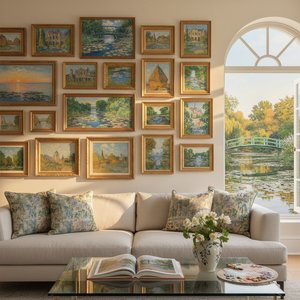
Claude Monet: Las 25 Obras Maestras del Impresionismo para Decorar tu Hogar con Arte
Descubre las 25 obras maestras de Claude Monet, el padre del impresionismo. Explora la historia, técnica y belleza de sus paisajes, nenúfares y 'Impresión, sole levant'. Encuentra reproducciones de arte exclusivas en AllPaintingsStore.com.

Los 10 Cuadros Más Famosos para un Salón de Ensueño |
Descubre los 10 cuadros más famosos para transformar tu salón. Explora la historia de Van Gogh, Monet y otros maestros del arte clásico e impresionismo. Encuentra lienzos decorativos y reproducciones de museos en

Stanisław Wyspiański: Symbolism, National Identity & the Polish Secession
Explore the life & work of Stanisław Wyspiański, a pivotal figure in Polish Symbolism and the Young Poland movement. Discover his iconic paintings, dramas, and stained glass designs reflecting national identity & artistic innovation.
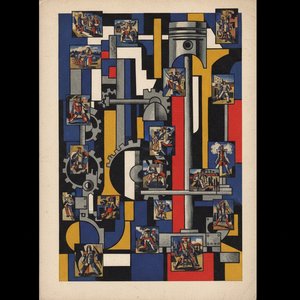
Fernand Léger: Las 25 Obras Maestras del Tubismo y la Vanguardia Francesa | AllPaintingsStore
Descubre las 25 obras maestras de Fernand Léger, pionero del tubismo y la vanguardia francesa. Explora su estética industrial, composiciones geométricas y vibrantes colores. Reproducciones de arte exclusivas en AllPaintingsStore.com.
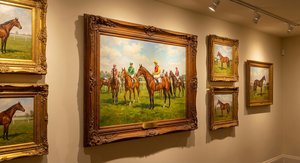
Alfred Munnings: Las 25 Obras Maestras del Pintor de Caballos | AllPaintingsStore
Descubre las 25 obras maestras de Alfred Munnings, el pintor británico de caballos por excelencia. Explora su impresionismo inglés, escenas campestres y técnica única. Encuentra reproducciones de arte de alta calidad en AllPaintingsStore.com.


