


 Ver en contexto
 Enviar
 Compartir
 Detalles
 Guía
Guía

 Descargar
 Similares
 Radiografía
 Presentación de diapositivas
 Estadísticas
Landscape with Dead Trees


 Ver más
Giclée / Impresión de arte
Impresiones giclée o en lienzo de calidad de museo con producción rápida y opciones de acabado flexibles. ( Comprar pintura hecha a mano Cambiar a imagen digital)




P118B €10

P118H €10

P118W €10

P438Z €10

P508JH €12

P508YH €12

P805H €10

P805Z €10

P919BZ €10

P919G €10

P919XJ €10

P959ZH €10

P968JZ €12

W106C €8

W218G €10

W218JH €8

W218Y €10

W307PJ €10

W316G €10

W316PJ €8

W316Y €10

W398PJ €8

W4111J €10

W500HY €15

W500JH €15

W692G €12

W849H €8

W940BG €15

W953PJ €8




Elija entre nuestros tamaños predefinidos que respetan las proporciones originales de la obra.

Introduzca el ancho y el alto que necesite para adaptarse a su marco o pared. Una impresión solo puede recortarse, nunca hacerse más grande que la imagen original, por lo que un tamaño con una forma distinta perderá parte de la obra. Le enviaremos una maqueta digital para su aprobación antes de realizar cualquier impresión. La imagen que se muestra en esta página no refleja el recorte real; solo la maqueta lo hace.
Envío a todo el mundo () en 2 semanas en lugar de las 4/5 semanas estándar. (26 octubre)

Envío exprés gratuito a todo el mundo

Lienzo de lino de alta calidad

Seguro de envío total

Garantía de reembolso de aranceles aduaneros

Garantía de fidelidad cromática exacta

Política de devolución de 100 días (solo por defectos)

Garantía de devolución del 100% del dinero

Descuento por cantidad
 La opción de vidrio solo está disponible en tamaños inferiores a 110 cm.

Landscape with Dead Trees
Giclée / Impresión de arte
Dimensiones de la reproducción
-


Precio total final
€ 56
A Meditation on Mortality: Thomas Cole's Landscape with Dead Trees
Thomas Cole’s “Landscape with Dead Trees,” painted in 1827, is more than just a depiction of a rugged American vista; it’s a profound meditation on the relationship between humanity and nature, a poignant exploration of life’s fleeting beauty, and a cornerstone of the Hudson River School movement. This oil-on-canvas masterpiece, currently residing within the Rhode Island School of Design Museum of Art, immediately draws the viewer into its dramatic scene – a cloudy sky pressing down upon a vast mountain range, a serene river winding through a shadowed valley, and most powerfully, the stark presence of decaying trees dominating the foreground.
- The Hudson River School’s Vision: Cole was a pivotal figure in this influential artistic movement, which sought to capture the sublime beauty of America's untamed landscapes. Unlike European artists who often favored historical or mythological subjects, the Hudson River School focused on portraying the grandeur and spiritual significance of the American wilderness.
- Chiaroscuro and Atmospheric Perspective: The artist masterfully employs chiaroscuro – the dramatic use of light and shadow – to create a palpable sense of depth and volume within the scene. This technique not only enhances the realism but also contributes significantly to the painting’s emotional impact, intensifying the feeling of isolation and contemplation.
- Symbolic Decay: The dead or dying trees are undeniably the most arresting element of the composition. They aren't merely a visual detail; they function as potent symbols representing the cycle of life and death, the inevitability of decay, and perhaps even a subtle critique of humanity’s impact on the natural world.
An Artist in Dialogue with Nature
Born in Bolton, England, in 1801, Thomas Cole's journey to becoming an American icon began with a move to Ohio in 1818. His early work as a portrait painter provided a foundation for his later explorations of landscape, but it was his immersion in the American wilderness that truly ignited his artistic spirit. Cole’s landscapes were deeply spiritual and allegorical, reflecting a burgeoning national identity grappling with questions of faith, progress, and its place within the natural world. He wasn't simply painting what he saw; he was translating his profound connection to nature into a powerful visual language.
His meticulous attention to detail – from the textures of the rocks to the subtle gradations of color in the sky – speaks to a deep appreciation for the natural world, a characteristic that defines the Hudson River School. Cole’s work resonates with a sense of melancholy and nostalgia, inviting viewers to contemplate the transient nature of beauty and the enduring power of the landscape.
Technique and Materials
“Landscape with Dead Trees” is executed in oil on canvas, utilizing traditional techniques that allowed Cole to achieve remarkable realism and luminosity. The vibrant colors he employs – deep greens, blues, and browns – are carefully layered to create a sense of depth and atmosphere. The artist’s skillful brushwork contributes to the painting's textural richness, further enhancing its visual impact. The use of impasto—thickly applied paint—is particularly evident in the depiction of the trees, adding to their three-dimensionality and emphasizing their vulnerability.
Owning a Piece of American Art History
Handmade oil painting reproductions of Thomas Cole’s “Landscape with Dead Trees” are now available for purchase, offering art enthusiasts and collectors the opportunity to own a stunning representation of this iconic work. These meticulously crafted reproductions capture the essence of Cole's artistic vision, allowing you to bring the beauty and contemplation of this masterpiece into your home or office. Contact AllPaintingsStore.com today to secure your own piece of art history.
Preguntas y respuestas
¿Puedo ver una vista previa de "Landscape with Dead Trees" de Thomas Cole antes de realizar el pedido?
Puedes ver una vista previa de "Landscape with Dead Trees" de Thomas Cole en la página de Vista previa de la obra de la obra.
¿Dónde puedo encontrar obras de arte similares a "Landscape with Dead Trees" de Thomas Cole?
Puedes encontrar obras similares a "Landscape with Dead Trees" de Thomas Cole en la página de Obras similares de esta obra.
¿Qué sensación transmite "Landscape with Dead Trees" de Thomas Cole?
"Landscape with Dead Trees" de Thomas Cole transmite una sensación Melancholic dentro de un ambiente general Nostalgic.
Obras relacionadas


Biografía del artista
Primeros años y carrera
Thomas Cole, un artista de origen británico-estadounidense, nació el 1 de febrero de 1801 en Bolton le Moors, Lancashire. En 1818, emigró con su familia a los Estados Unidos, estableciéndose en Steubenville, Ohio. A la edad de 22 años, Cole se mudó a Filadelfia y posteriormente, en 1825, a Catskill, Nueva York, donde vivió con su esposa e hijos hasta 1847.Estilo artístico e influencias
El trabajo de Cole se caracteriza por su representación romántica del paisaje salvaje americano. Fue en gran medida autodidacta como pintor, basándose en libros y estudiando la obra de otros artistas. En 1822, comenzó a trabajar como retratista y luego cambió su enfoque hacia el paisaje. Sus pinturas a menudo presentaban la Catskill Mountain House, las famosas Kaaterskill Falls y dos vistas de Cold Spring.Obras destacadas
- El curso del imperio, una serie de cinco pinturas creadas por Cole entre 1833 y 1836, es notable por reflejar los sentimientos populares americanos de la época.
- Una vista desde el monte Etna desde Taormina (78x120 pulgadas de óleo sobre lienzo) muestra la fascinación de Cole por el volcán activo más alto de Europa.
- El Oxbow (1836), que presenta un paisaje sereno, es otro ejemplo de la maestría de Cole en la pintura de paisajes.
Legado e influencia
La influencia de Cole en el arte americano es profunda. Es considerado como el fundador de la Escuela del Río Hudson, un movimiento artístico estadounidense a mediados del siglo XIX que surgió en el valle del río Hudson de Nueva York. Su trabajo ha inspirado a generaciones de artistas, incluyendo a Asher B. Durand y Frederic Edwin Church. Lecturas recomendadas: * La Escuela del Río Hudson * Thomas Cole en Wikipedia Vea más obras de Thomas Cole: Frederic Edwin Church’s Schoodic Peninsula from Mount Desert at Sunrise (para comparar con el estilo de Cole) Winslow Homer's Canoes in Rapids, Saguenay River (ejemplo de otro pintor paisajista americano)
Thomas Cole
1801 - 1848 , Reino Unido
Datos clave
- Artistas Que Influyeron: ['Otros artistas (auto-didacta)']
- Estilo Artístico: Romanticismo, Hudson River School
- Fecha De Fallecimiento: 1848
- Fecha De Nacimiento: 1 de febrero de 1801
- Influenciado A:
- Asher B. Durand
- Frederic Edwin Church
- Lugar De Nacimiento: Bolton, Reino Unido
- Nacionalidad: Británico-estadounidense
- Nombre Completo: Thomas Cole
- Obras Notables:
- El Curso del Imperio
- Una Vista desde el Etna
- El Oxbow
- Expulsión. Luna y Fogata
Artículos relacionados

Capturing the American Spirit: A Journey Through Iconic Landscapes and the Legacy of the Hudson River School
Explore the profound beauty of American art history. From the Hudson River School to iconic landscapes, discover a curated journey through the masterpieces that defined a nation's spirit and the enduring legacy of American Romanticism.

Los 10 Maestros del Río Hudson: Obras que Definieron un Movimiento Artístico
Descubre los 10 lienzos más emblemáticos de la Escuela del Río Hudson. Explora las obras maestras de Thomas Cole, Church y Bierstadt que capturan la belleza del paisaje americano. Encuentra reproducciones de arte exclusivas en AllPaintingsStore.com.

El Sublime Paisaje Americano: Explorando el Movimiento de la Escuela del Río Hudson
Descubre la Escuela del Río Hudson: un movimiento artístico clave en la historia de la pintura estadounidense. Explora su estética romántica, sus artistas más destacados y el concepto del sublime paisaje americano.

Robert Spencer: Luminism, Narrative & the American Landscape Tradition
Explore the captivating world of Luminism & the Hudson River School with our expert analysis. Discover the history, artists, and enduring beauty of 19th-century American landscape painting. Find museum-quality reproductions at AllPaintingsStore.
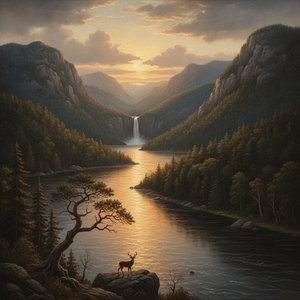
Epic Landscapes & Wild Nature: The Power of the Hudson River School's Sublime Artistry
Explore the breathtaking power of the Hudson River School. Journey through epic American landscapes, from Thomas Cole's sublime vistas to Luminist light, and discover how these timeless masterpieces continue to inspire modern collectors and art lovers worldwide.


