


 Vista previa
 Compartir
 Compartir
 Ver detalles
 Guía
Guía

 Descargar
 Ver artículos similares
 Radiografía
 Presentación de diapositivas
 Estadísticas
A Lady
 Dutch Golden Age
 1632
1632 79.0 x 52.0 cm
 Staatliche Museen zu Berlin
 Leer más
Reproducción al óleo hecha a mano
Óleo sobre lienzo pintado a mano en el tamaño y marco de su elección, realizado por encargo por nuestros artistas. ( Cambiar a formato impreso Ver versión en imagen digital)




P118B €10

P118H €10

P118W €10

P438Z €10

P508JH €12

P508YH €12

P805H €10

P805Z €10

P919BZ €10

P919G €10

P919XJ €10

P959ZH €10

P968JZ €12

W106C €8

W218G €10

W218JH €8

W218Y €10

W307PJ €10

W316G €10

W316PJ €8

W316Y €10

W398PJ €8

W4111J €10

W500HY €15

W500JH €15

W692G €12

W849H €8

W940BG €15

W953PJ €8




Elija entre nuestros tamaños predefinidos que respetan las proporciones originales de la obra.

Puede ingresar sus propias dimensiones para adaptarse a un marco o espacio específico. Si el tamaño seleccionado no coincide con las proporciones de la imagen original, recortaremos la obra o extenderemos la pintura con elementos adicionales pintados a mano. Se le enviará una maqueta digital para su aprobación antes de comenzar la producción.
Tenga en cuenta que la vista previa en pantalla no refleja el recorte o la extensión reales. Solo la maqueta mostrará con precisión la composición final.
Si bien existen tamaños personalizados, recomendamos seleccionar una dimensión de la lista predefinida para preservar las proporciones originales.
Tras realizar el pedido, el equipo de AllPaintingsStore.com enviará un correo electrónico al cliente para solicitar instrucciones y proporcionarle una vista previa del boceto.
Envío a todo el mundo () en 3-4 semanas en lugar de las 5 semanas estándar. (10 octubre). Sin comprometer la calidad.

Envío exprés gratuito a todo el mundo

Lienzo de lino de alta calidad

Seguro de envío completo

Garantía de reembolso de impuestos aduaneros

Garantía de fidelidad cromática exacta

Política de devolución de 100 días (solo por defectos)

Garantía de devolución del 100% del dinero

Oferta por volumen
 La opción de vidrio solo está disponible en tamaños inferiores a 110 cm.

A Lady
Técnica de reproducción
Tamaño de la reproducción
-


Precio total
€ 222
A Portrait of Grace: Unveiling Thomas de Keyser’s “A Lady”
The year is 1632. Amsterdam thrives as the epicenter of the Dutch Golden Age, a period brimming with artistic innovation and opulent patronage. Within this vibrant scene emerges Thomas de Keyser, a painter whose skill lay not merely in capturing likeness but in distilling the very essence of his subjects – a talent brilliantly showcased in his captivating portrait, “A Lady.” This oil-on-oak panel painting, currently residing within the esteemed Staatliche Museen in Berlin, is more than just a depiction; it’s an invitation into a world of refined elegance and subtle psychological depth.
De Keyser's style, heavily influenced by both the meticulous detail of Flemish masters like Anthony van Dyck and the dramatic lighting favored by Rembrandt, results in a remarkably lifelike portrayal. The lady before us is presented with a poise that speaks volumes – her posture relaxed yet undeniably regal, her gaze direct and engaging. Notice how De Keyser masterfully employs chiaroscuro, the masterful use of light and shadow, to sculpt the figure, drawing attention to her face and hands while subtly enveloping the background in a veil of mystery. The dark interior, punctuated by the warm glow emanating from an unseen window, creates a sense of intimacy and draws the viewer into the scene.
Deconstructing the Details: Fashion, Symbolism, and Technique
A closer examination reveals a wealth of detail that speaks volumes about the era. The lady’s attire is a testament to the fashion of 17th-century Holland – a black bodice adorned with intricate gold trim and delicate lace, suggesting both wealth and status. The elaborate headwear, a white ruff collar framing a dark hat embellished with what appear to be feathers or decorative elements, further emphasizes her position within society. These aren’t merely decorative choices; they are carefully selected symbols of power, refinement, and social standing.
The background, far from being mere decoration, plays an integral role in the painting's narrative. The dark room, with its wooden floor featuring a subtle checkered pattern, evokes a sense of luxury and opulence – a space designed for contemplation and quiet enjoyment. The glimpse of a red velvet drape hints at hidden treasures and adds a touch of dramatic flair. De Keyser’s brushwork is remarkably precise, particularly evident in the rendering of the lace and the folds of the fabric. He utilizes layering techniques to create texture and depth, ensuring that every element contributes to the overall sense of realism.
A Window into the Dutch Golden Age
Understanding “A Lady” requires a glimpse into the context of its creation. Thomas de Keyser was a prominent figure in the Dutch art world during this period, renowned for his portraits and genre scenes commissioned by wealthy merchants and nobility. His work reflects the prosperity and cultural flourishing of the Netherlands – a nation at the forefront of artistic innovation and trade. The painting offers a fascinating window into the lives of the elite, revealing their values, aspirations, and aesthetic sensibilities.
Furthermore, De Keyser’s connection to Hendrick de Keyser, his father—a celebrated architect and sculptor who shaped Amsterdam's skyline—provides an intriguing layer of familial legacy. This lineage undoubtedly influenced Thomas’s artistic development, imbuing his work with a sense of technical mastery and architectural awareness. The painting stands as a testament not only to De Keyser’s individual talent but also to the enduring influence of his family’s artistic heritage.
Collecting the Essence: Reproduction and Legacy
Today, “A Lady” continues to captivate viewers with its timeless beauty and psychological depth. AllPaintingsStore offers meticulously crafted hand-painted reproductions that faithfully capture the essence of De Keyser's masterpiece. These reproductions are not mere copies; they are artistic interpretations imbued with the same attention to detail, technique, and emotional resonance as the original. Whether adorning a grand salon or a more intimate space, a reproduction of “A Lady” brings a touch of Dutch Golden Age elegance and sophistication to any setting.
For those seeking further information on Thomas de Keyser and his remarkable oeuvre, we encourage you to explore resources such as AllPaintingsStore.com and the Staatliche Museen in Berlin’s website. And for a deeper dive into the life and works of this pivotal artist, Wikipedia offers a comprehensive overview of his biography and artistic contributions.
Preguntas y respuestas
¿Puedo usar la realidad aumentada para ver "A Lady" de Thomas De Keyser en mi habitación?
"A Lady" tiene una vista previa en realidad aumentada: la página de Vista previa AR de la obra permite visualizarla en su propio espacio mediante un dispositivo compatible.
¿Dónde puedo comprar una imagen digital de "A Lady" de Thomas De Keyser?
"A Lady" está disponible como descarga de una imagen digital en alta resolución, que puede adquirirse directamente en esta página.
¿A qué edad creó Thomas De Keyser "A Lady"?
Cuando se creó "A Lady" en 1632, Thomas De Keyser —nacido/a en 1596— tenía 36 años.
¿Qué espacio se sugiere para "A Lady" de Thomas De Keyser?
Una reproducción de "A Lady" encaja perfectamente en un Living Room.
¿Cuál es la fecha de creación de "A Lady" de Thomas De Keyser?
"A Lady" de Thomas De Keyser fue creada en 1632.
¿Qué aporta "A Lady" de Thomas De Keyser a un espacio interior?
La atmósfera Elegant de "A Lady" de Thomas De Keyser combina perfectamente con su espacio recomendado: un Living Room.
¿A qué artista se le atribuye "A Lady"?
"A Lady" se atribuye a Thomas De Keyser.
Obras relacionadas


Biografía del artista
El legado de Thomas de Keyser: Un maestro de la Edad de Oro holandesa
En el corazón vibrante y bullicioso de la Ámsterdam del siglo XVII, un período definido por una prosperidad sin precedentes y un florecimiento cultural, Thomas de Keyser emergió como una fuerza formidable en el reino del retrato. Nacido en 1596 en un entorno impregnado de grandeza arquitectónica, De Keyser era hijo del legendario Hendrick de Keyser, el arquitecto cuya mano moldeó el propio horizonte de Ámsterdam. Este linaje de maestría proporcionó más que un simple nombre; ofreció una comprensión fundamental de la estructura, el espacio y la presencia física de los objetos que más tarde definirían su enfoque de la forma humana. Al crecer entre los talleres de piedra junto al río Amstel, De Keyser se sumergiya en un mundo donde el arte y la arquitectura estaban inextricablemente ligados, fomentando una precisión técnica que se convertiría en su sello distintivo.
Su viaje artístico se refinó aún más a través de una formación formal bajo la tutela de Cornelis van der Voort, una educación que lo introdujo en los ideales humanistas y las sofisticadas técnicas compositivas de la época. A medida que maduraba, el estilo de De Keyser comenzó a cohesionarse en algo verdaderamente distintivo: un puente entre el detalle meticuloso del Renacimiento tardío y la intensidad dramática y psicológica del floreciente movimiento barroco. Si bien sus primeras obras mostraban un profundo interés en la elegancia formal de sus predecesores, pronto desarrolló la capacidad de capturar la realidad vivida de sus sujetos, yendo más allá del mero parecido para tocar la esencia misma de su carácter.
La sombra rembrandtiana y el arte del realismo
Para comprender la brillantez de De Keyser, es necesario navegar por la compleja relación entre su obra y la de Rembrandt van Rijn. A menudo descrito como un contemporáneo que compartía el espíritu revolucionario de la era, el enfoque de De Keyser hacia la luz y la sombra —el célebre chiaroscuro— hacía eco de las innovaciones dramáticas defendidas por Rembrandt. Sin embargo, De Keyser poseía una claridad única; donde Rembrandt podía disolver una forma en sombras profundas y misteriosas, De Keyser solía mantener una nitidez de línea y una cualidad luminosa en sus texturas. Fue un maestro de lo táctil, representando el brillo pesado de la seda, los intrincados patrones del encaje y la sutil piel curtida de un comerciante anciano con una precisión casi científica.
Este compromiso con el realismo lo convirtió en el retratista predilecto de la creciente clase mercantil de la República Holandesa. Su habilidad para equilibrar el prestigio de sus modelos con un profundo sentido de verdad psicológica le permitió crear obras que servían tanto como símbolos de estatus como íntimos estudios de carácter. En sus retratos grupales, demostró una capacidad extraordinaria para organizar complejos arreglos de figuras, asegurando que cada individuo mantuviera su identidad distinta mientras contribuía a una narrativa cohesiva de orgullo cívico colectivo. Su pincelada, aunque precisa, nunca se sentía estática; existe una vitalidad rítmica en sus composiciones que insufla vida a los momentos congelados del siglo XVII.
Significado histórico y triunfo artístico
Los logros de Thomas de Keyser se extienden mucho más allá del lienzo, representando un capítulo vital en la historia del arte del norte de Europa. Su carrera coincidió con el apogeya de la Edad de Oro holandesa, una época en la que los Países Bajos afirmaban su identidad a través del comercio, la ciencia y las artes. Al documentar los rostros de esta era —desde los ricos burgueses hasta los influyentes líderes cívicos—, proporcionó un registro visual de una sociedad en transición. Su obra sirve como una ventana a las jerarquías sociales, la moda y los valores de una edad definida por el poder marítimo y la laboriosidad protestante.
A lo largo de su vida y su legado, varios elementos clave definen su contribución al mundo del arte:
- Maestría técnica: Una capacidad inigualable para representar diversas texturas y materiales con una precisión realista.
- Influencia arquitectónica: Un sentido único de la composición e integridad estructural derivado de su conexión familiar con la arquitectura holandesa.
- Profundidad psicológica: La capacidad de dotar a los retratos formales de un sentido de humanidad individual y resonancia emocional.
- Documentación cultural: Su papel en la captura de la identidad floreciente de la clase mercantil de Ámsterdam durante un período de inmensa riqueza.
Aunque la historia a veces lo sitúa bajo la sombra de Rembrandt, la importancia de De Keyser permanece inalterada. No fue simplemente un imitador de la grandeza, sino un pionero por derecho propio, aportando una marca específica de claridad y elegancia estructural a la tradición holandesa. Hoy en día, sus obras continúan cautivando tanto a académicos como a amantes del arte, erigiéndose como testimonios perdurables de un maestro que pudo capturar tanto el esplendor exterior como el alma interior de su época.
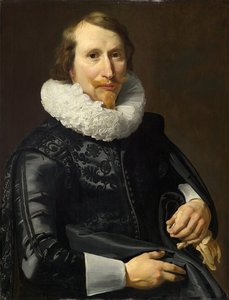
Thomas De Keyser
1596 - 1667 , Países Bajos
Datos clave
- Artistic Movement Or Style: Dutch Golden Age
- Artists Who Influenced This Artist: ['Rembrandt van Rijn']
- Date Of Birth: Amsterdam, Netherlands (1596)
- Date Of Death: 1667
- Full Name: Thomas de Keyser
- Nationality: Dutch
- Notable Artworks: ['Frederick van Velthuysen and his wife']
- Place Of Birth: Amsterdam
Artículos relacionados

Willem van de Velde the Elder: Master of Maritime Painting & Chronicler of the Dutch Golden Age
Discover the captivating maritime paintings of Willem van de Velde the Elder, a master chronicler of the Dutch Golden Age. Explore his unparalleled realism and lasting influence on naval art history.

Golden Light & Dutch Skies: The Timeless Magic of Dutch Golden Age Landscapes
Discover the breathtaking beauty of Dutch Golden Age landscapes. Explore the mastery of light, chiaroscuro, and 17th-century realism through an expert art history lens, celebrating the enduring legacy of the Dutch Masters for discerning collectors and art lovers.
Los 10 Maestros del Siglo de Oro Holandés: Arte, Historia y Decoración Exclusiva
Descubre los 10 imprescindibles del Siglo de Oro Holandés: Rembrandt, Vermeer y más. Explora la historia, técnica y belleza de estos lienzos clásicos. Encuentra reproducciones de arte exclusivas para decorar tu hogar en .

Mastering Light & Shadow: A Journey Through the Dutch Golden Age's Luminous Legacy
Embark on a cultural journey through the Dutch Golden Age. Explore the masterful interplay of light and shadow in 17th-century masterpieces, from Rembrandt to Vermeer, and discover how this era of profound realism continues to inspire fine art collectors today.

Pieter de Hooch: Illuminating Dutch Domestic Life & Golden Age Charm
Explore the captivating world of Pieter de Hooch, a master of Dutch Golden Age painting. Discover his innovative use of light, intimate domestic scenes, and lasting influence on art history. Learn more at AllPaintingsStore.


