


 Ver en contexto
 Enviar
 Compartir
 Detalles
 Guía
Guía

 Descargar
 Similares
 Radiografía
 Presentación de diapositivas
 Estadísticas
Dánae
 Óleo sobre lienzo
- Arte de pared
- Barroco
 1544
1544- Renacimiento
 117.0 x 69.0 cm
 Palacio de Capodimonte
 Ver más
Giclée / Impresión de arte
Impresiones giclée o en lienzo de calidad de museo con producción rápida y opciones de acabado flexibles. ( Comprar pintura hecha a mano Cambiar a imagen digital)




P118B €10

P118H €10

P118W €10

P438Z €10

P508JH €12

P508YH €12

P805H €10

P805Z €10

P919BZ €10

P919G €10

P919XJ €10

P959ZH €10

P968JZ €12

W106C €8

W218G €10

W218JH €8

W218Y €10

W307PJ €10

W316G €10

W316PJ €8

W316Y €10

W398PJ €8

W4111J €10

W500HY €15

W500JH €15

W692G €12

W849H €8

W940BG €15

W953PJ €8




Elija entre nuestros tamaños predefinidos que respetan las proporciones originales de la obra.

Introduzca el ancho y el alto que necesite para adaptarse a su marco o pared. Una impresión solo puede recortarse, nunca hacerse más grande que la imagen original, por lo que un tamaño con una forma distinta perderá parte de la obra. Le enviaremos una maqueta digital para su aprobación antes de realizar cualquier impresión. La imagen que se muestra en esta página no refleja el recorte real; solo la maqueta lo hace.
Envío a todo el mundo () en 2 semanas en lugar de las 4/5 semanas estándar. (26 octubre)

Envío exprés gratuito a todo el mundo

Lienzo de lino de alta calidad

Seguro de envío total

Garantía de reembolso de aranceles aduaneros

Garantía de fidelidad cromática exacta

Política de devolución de 100 días (solo por defectos)

Garantía de devolución del 100% del dinero

Descuento por cantidad
 La opción de vidrio solo está disponible en tamaños inferiores a 110 cm.

Dánae
Giclée / Impresión de arte
Dimensiones de la reproducción
-


Precio total final
€ 56
A Celestial Encounter in Gold and Flesh
In the hallowed halls of the Museo Nazionale di Capodimonte, there exists a moment of profound, shimmering stillness that transcends the boundaries of time. Titian’s Danaë is not merely a painting; it is an immersive experience of light, myth, and the palpable tension between the divine and the mortal. The scene captures the legendary princess of Argos at a pivotal instant of transformation. Locked away in a bronze tower by her father to thwart a dark prophecy, Danaë finds herself visited by the irresistible power of Zeus. As the god descends in the form of a golden shower, the canvas breathes with the weight of an impending destiny. This is a masterpiece that invites the viewer into a private, sacred chamber where the boundaries between heaven and earth dissolve into a luminous, tactile reality.
The composition is a masterclass in Renaissance intimacy. Unlike many mythological works of the era that favor grand, sweeping battles, Titian directs our gaze inward, toward the soft, supine form of Danaë. She reclines upon a bed of sumptuous linens, her skin glowing with an inner warmth that seems to radiate from the canvas itself. Flanking her are celestial witnesses—angels whose presence lends a sense of divine protection and quietude to the scene. The interplay between the small, playful figures and the central, vulnerable figure creates a poignant juxtaposition: the innocence of childhood set against the overwhelming, eroticized power of a god. For the discerning collector or interior designer, this painting offers a focal point of unparalleled grace, capable of anchoring a room with its profound sense of peace and classical elegance.
The Alchemy of Venetian Color and Technique
To behold Danaë is to witness the pinnacle of the Venetian school’s revolutionary approach to oil painting. Titian, often hailed as the greatest colorist in history, utilized the alla prima technique to achieve a level of luminosity that few have ever matched. By applying paint directly onto the canvas without the rigid constraints of heavy underpainting, he allowed colors to blend and breathe, creating soft transitions and a sense of atmospheric depth. The way the light catches the "shower of gold" is nothing short of miraculous; it is as if the pigment itself holds the brilliance of a sunbeam caught in mid-air.
The texture of the work is deeply sensory. One can almost feel the coolness of the white linens, the weight of the golden coins, and the velvet warmth of Danaë’s skin. This tactile quality is achieved through Titian's legendary loose brushwork—a technique that prioritizes the emotional truth of a surface over mere anatomical precision. For those seeking to bring the prestige of the High Renaissance into a modern living space, a high-quality reproduction of this work captures not just the image, but the very soul of Titian’s brushstrokes. It is an investment in atmosphere, bringing a sense of historical depth and sophisticated artistry to any curated collection.
A Legacy of Beauty and Vulnerability
Beyond its technical brilliance, Danaë resonates because it speaks to the universal human experience of vulnerability and grace. The painting navigates the delicate line between the erotic and the divine, a hallmark of Titian’s most celebrated works. While the subject matter touches upon the mythic seduction of a princess, the execution remains profoundly dignified, focusing on the transformative power of a moment that changes a life forever. It is a meditation on how beauty can be both a shield and a target, and how even in isolation, one remains connected to the vast, unfolding tapestry of the cosmos.
For the art lover, this piece serves as a window into the humanist ideals of the 16th century—a period where the observation of nature and the celebration of human emotion were elevated to the highest forms of expression. Whether displayed in a sun-drenched studio or a sophisticated formal dining room, a reproduction of Titian’s Danaë acts as a silent storyteller, evoking themes of mythic destiny, celestial intervention, and the enduring power of classical beauty. It is more than decoration; it is an invitation to contemplate the sublime.
Preguntas y respuestas
¿Qué representa "Dánae" de Tiziano?
Los temas de "Dánae" son mitología, renacimiento, ángel, acostarse, pacífico, religioso, clásico.
¿Qué paleta de colores y qué emoción evocan "Dánae"?
En "Dánae", los colores de Tonos tierra acompañan a un sentimiento Tranquilo.
¿Está "Dánae" disponible como una impresión de bellas artes?
Puede solicitar una impresión de "Dánae" de Tiziano directamente en su página de Impresión de arte de bellas artes: una impresión de bellas artes sobre lienzo de algodón o papel de lienzo de archivo.
Obras relacionadas


Biografía del artista
Tiziano Vecellio: The Venetian Titan
Tiziano Vecellio, universally known as Titian, stands as a monumental figure of the Italian Renaissance—perhaps its most celebrated colorist and a master who redefined the possibilities of oil painting. Born around 1490 in Pieve di Cadore, nestled amidst the dramatic landscapes of the Venetian Alps, his journey from humble beginnings to international acclaim is a testament to prodigious talent and an unwavering dedication to artistic innovation. The exact date of Titian’s birth remains elusive, debated by scholars, but contemporary sources and his early stylistic development converge on estimates between 1488 and 1490.
His father, Gregorio Vecellio, was a military man—a profession that instilled in young Tiziano a disciplined spirit and an appreciation for observation. Lucia, his mother, nurtured him with affection and fostered his artistic inclinations. Recognizing their sons’ potential, the family arranged for Tiziano and Francesco to apprentice with Sebastiano Zuccato, a mosaicist—a decision that would irrevocably alter the course of art history. This formative experience exposed them to the meticulous craftsmanship required for creating intricate decorative panels, shaping their aesthetic sensibilities from an early age.
Titian’s artistic training continued under Giovanni Bellini, who was then Venice’s most prominent painter and a revered teacher. Bellini’s workshop fostered a tradition of Venetian painting characterized by lyrical beauty and subtle tonal harmonies—influences that would permeate Titian’s oeuvre throughout his life. Notably, he collaborated closely with Giorgione—a fellow Venetian artist whose groundbreaking style championed atmospheric perspective and psychological depth.
A Master's Early Style: Giorgione's Influence
The partnership between Titian and Giorgione proved pivotal in shaping Titian’s artistic vision. Their collaboration on the exterior frescoes for the Fondaco dei Tedeschi—a bustling trading post frequented by German merchants—established a stylistic precedent that would endure for decades. The paintings showcased a remarkable sensitivity to light and color, reflecting Giorgione’s pioneering exploration of atmospheric perspective—a technique that aimed to convey the illusion of depth and realism.
Titian’s early works embody this Giorgionesque aesthetic—characterized by hazy landscapes, muted palettes, and an emphasis on capturing mood rather than precise detail. Paintings like *A Man with a Quilted Sleeve* exemplify his burgeoning talent for portraiture, skillfully portraying not only the physical likeness of his subjects but also their inner character—a hallmark of Venetian Renaissance painting.
Expanding Horizons: Bellini's Legacy and Artistic Maturity
Following Giorgione’s untimely death in 1510, Titian continued his artistic development under Giovanni Bellini’s guidance—though Bellini himself was gradually withdrawing from active painting. This period witnessed a gradual shift toward bolder compositions and more assertive color palettes—reflecting Titian’s growing confidence as an independent artist.
His monumental altarpiece for Santa Maria Gloriosa dei Frari—commissioned in 1518—marked a watershed moment in Venetian painting history. The ambitious undertaking demanded mastery of technique, compositional innovation, and chromatic brilliance—qualities that Titian possessed in abundance. This masterpiece cemented his reputation as Venice’s foremost painter and established him as a pioneer of monumental fresco painting.
The Venetian School's Dominance
Titian’s influence extended far beyond his own lifetime, shaping the artistic landscape of Europe for centuries to come. He became a cornerstone of the Venetian school—a movement that championed coloristic realism and psychological depth—inspiring artists across generations. From Rubens and Rembrandt to Delacroix and Monet, Titian’s techniques—particularly his innovative layering of pigments and his masterful manipulation of light—became models for aspiring painters.
His legacy endures not only in the masterpieces he created but also in the enduring fascination with color and emotion that characterizes Venetian art. Tiziano Vecellio—Titian—remains an unparalleled figure in the history of painting, a testament to artistic genius and an embodiment of the Renaissance spirit.
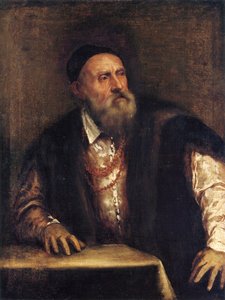
Tiziano
1490 - 1576 , Italia
Datos clave
- Artistic Movement Or Style: Renacimiento Veneciano
- Artists Or Movements Influenced By This Artist:
- Rubens
- Delacroix
- Artists Who Influenced This Artist:
- Giovanni Bellini
- Giorgione
- Date Of Birth: c. 1490
- Date Of Death: 1576
- Full Name: Tiziano Vecellio
- Nationality: Italiano
- Notable Artworks:
- La Schiavona
- Venus de Urbino
- Place Of Birth: Pieve di Cadore, Italia
Artículos relacionados

Oil on Canvas: The Professional Guide to Durable, High-Quality Art Reproductions for Hospitality and Large-Scale Interior Projects
A professional guide for hotel designers and procurement managers on selecting durable, high-quality oil on canvas reproductions. Learn about material longevity, custom multi-panel layouts, and efficient bulk ordering solutions for large-scale hospitality projects.


