Garantía de devolución · 100 días Envío gratuito a todo el mundo
449 564obras de arte 30 613artistas 4 660museos 32Idiomas
Entrada de catálogo

Piedad

Óleo sobre lienzo.

Fig. 1. Tiziano, Piedad. Se muestra como la reproducción que está especificando: , .

§ 1Datos del catálogo

§ 2Abstracto

Descripción del objeto

Explora la conmovedora 'Piedad' de Tiziano, una obra maestra del Renacimiento veneciano. Admira su pincelada audaz y profundidad emocional en esta pintura icónica, testimonio del genio de Tiziano Vecellio.

Biografía del artista

Tiziano Vecellio, conocido como Titian, fue el pintor más destacado de la pintura veneciana del siglo XVI y pionero en el uso del color, dejando un legado artístico eterno.

§ 3Comentario

A Vision of Sorrow and Grace

In the twilight of his illustrious career, Tiziano Vecellio, known eternally as Titian, delivered a profound testament to human suffering and divine compassion through his masterpiece, Pieta. Completed between 1575 and 1576, this monumental work serves as a cornerstone of the Venetian Baroque, capturing a moment of intense theological contemplation. The scene is not merely a depiction of death, but a complex dialogue between grief and grace. As we gaze upon the canvas, we find Mary Magdalene cradling the lifeless body of Christ, her sorrow palpable through the heavy, atmospheric textures that define Titian’s late style. Beside them stands Nicodemus—a figure widely believed to be a poignant self-portrait of the aging master himself—confronting the divine majesty and his own mortality with a quiet, somber dignity.

The composition is a marvel of structural harmony and emotional depth. Titian employs a triangular arrangement involving Mary Magdalene, the torso of Christ, and Nicodemus to provide a sense of stability amidst the surrounding chaos of grief. This geometric balance is subtly disrupted by the presence of Saint Helena, adding layers of familial and spiritual complexity to the narrative. The setting itself feels ancient and weathered, a partially ruined temple or tomb that evokes the passage of time and the decay of earthly glory. Through this architectural backdrop, Titian creates a sense of claustrophobia that draws the viewer into the intimate circle of mourners, making the experience of the painting feel deeply personal and inescapable.

The Mastery of Light and Color

To behold the Pieta is to witness the revolutionary evolution of Venetian technique. Moving away from the crisp, linear precision of the early Renaissance, Titian embraces a revolutionary approach characterized by atmospheric haze and thick, expressive impasto. The surface of the painting is alive with texture; the flesh of Christ and the rugged stone of the shrine are rendered with bold brushstrokes that catch the light, creating an illusion of three-dimensional presence. This technique, known as chiaroscuro, utilizes stark contrasts between deep shadows and luminous highlights to heighten the theatricality of the scene, casting a dramatic spotlight on the central tragedy.

The color palette is a masterclass in emotional resonance. Eschewing bright, distracting hues, Titian relies on a sophisticated arrangement of earthy browns, ochres, and deep reds, punctuated by subtle glints of gold and ethereal pale blues. These muted tones work in unison to evoke a sense of solemnity and mourning. The way the light seems to dissolve the edges of the figures into the surrounding gloom creates an otherworldly, spiritual atmosphere, as if the scene is emerging from a divine mist. For the collector or the interior designer, this painting offers more than just visual beauty; it provides a profound emotional anchor, bringing a sense of historical weight and contemplative stillness to any space.

An Enduring Legacy for the Discerning Collector

The Pieta remains one of the most moving achievements in Western art history. It is a work that speaks to the universal experience of loss while simultaneously pointing toward the hope of resurrection. Because it was one of Titian's final works—left unfinished at his death and completed with great care by Palma Giovane—it carries an inherent intimacy, a sense of a master pouring his final breaths into the canvas. This raw, unshielded emotion makes the piece incredibly captivating for those who appreciate art that transcends mere decoration to become a window into the human soul.

For those seeking to adorn a curated collection or a sophisticated interior with a high-quality reproduction, this work offers unparalleled inspiration. A hand-painted rendition of such a masterpiece allows the dramatic interplay of light and the rich, somber textures to breathe within a modern setting. It serves as a conversation piece that invites reflection, bringing the grandeur of the Venetian Baroque into the contemporary home and ensuring that the profound legacy of Titian continues to inspire awe for generations to come.

Preguntas y respuestas

¿Se puede ver "Piedad" de Tiziano en una presentación de diapositivas?

Puede ver el diaporama de "Piedad" en la página Galería de imágenes de la obra.

¿Qué tono predominante recorre "Piedad" de Tiziano?

Un tono Espectro de verdes a violetas recorre "Piedad" de Tiziano.

¿Se puede descargar la imagen de "Piedad"?

Hay una descarga disponible para "Piedad": la página de Descargar imagen digital de la obra ofrece descarga de una imagen digital en alta resolución.
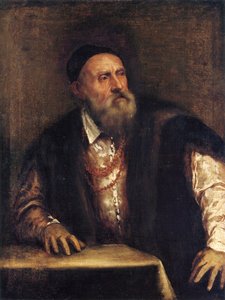
§ 4El artista

Tiziano

Tiziano

1490 - 1576, Italia

Datos rápidos sobre Tiziano

  • Artistic Movement Or Style: Renacimiento Veneciano
  • Artists Or Movements Influenced By This Artist:
    • Rubens
    • Delacroix
  • Artists Who Influenced This Artist:
    • Giovanni Bellini
    • Giorgione
  • Date Of Birth: c. 1490
  • Date Of Death: 1576
  • Full Name: Tiziano Vecellio
  • Nationality: Italiano
  • Notable Artworks:
    • La Schiavona
    • Venus de Urbino
  • Place Of Birth: Pieve di Cadore, Italia

Biografía del artista

Tiziano Vecellio: The Venetian Titan

Tiziano Vecellio, universally known as Titian, stands as a monumental figure of the Italian Renaissance—perhaps its most celebrated colorist and a master who redefined the possibilities of oil painting. Born around 1490 in Pieve di Cadore, nestled amidst the dramatic landscapes of the Venetian Alps, his journey from humble beginnings to international acclaim is a testament to prodigious talent and an unwavering dedication to artistic innovation. The exact date of Titian’s birth remains elusive, debated by scholars, but contemporary sources and his early stylistic development converge on estimates between 1488 and 1490.

His father, Gregorio Vecellio, was a military man—a profession that instilled in young Tiziano a disciplined spirit and an appreciation for observation. Lucia, his mother, nurtured him with affection and fostered his artistic inclinations. Recognizing their sons’ potential, the family arranged for Tiziano and Francesco to apprentice with Sebastiano Zuccato, a mosaicist—a decision that would irrevocably alter the course of art history. This formative experience exposed them to the meticulous craftsmanship required for creating intricate decorative panels, shaping their aesthetic sensibilities from an early age.

Titian’s artistic training continued under Giovanni Bellini, who was then Venice’s most prominent painter and a revered teacher. Bellini’s workshop fostered a tradition of Venetian painting characterized by lyrical beauty and subtle tonal harmonies—influences that would permeate Titian’s oeuvre throughout his life. Notably, he collaborated closely with Giorgione—a fellow Venetian artist whose groundbreaking style championed atmospheric perspective and psychological depth.

A Master's Early Style: Giorgione's Influence

The partnership between Titian and Giorgione proved pivotal in shaping Titian’s artistic vision. Their collaboration on the exterior frescoes for the Fondaco dei Tedeschi—a bustling trading post frequented by German merchants—established a stylistic precedent that would endure for decades. The paintings showcased a remarkable sensitivity to light and color, reflecting Giorgione’s pioneering exploration of atmospheric perspective—a technique that aimed to convey the illusion of depth and realism.

Titian’s early works embody this Giorgionesque aesthetic—characterized by hazy landscapes, muted palettes, and an emphasis on capturing mood rather than precise detail. Paintings like *A Man with a Quilted Sleeve* exemplify his burgeoning talent for portraiture, skillfully portraying not only the physical likeness of his subjects but also their inner character—a hallmark of Venetian Renaissance painting.

Expanding Horizons: Bellini's Legacy and Artistic Maturity

Following Giorgione’s untimely death in 1510, Titian continued his artistic development under Giovanni Bellini’s guidance—though Bellini himself was gradually withdrawing from active painting. This period witnessed a gradual shift toward bolder compositions and more assertive color palettes—reflecting Titian’s growing confidence as an independent artist.

His monumental altarpiece for Santa Maria Gloriosa dei Frari—commissioned in 1518—marked a watershed moment in Venetian painting history. The ambitious undertaking demanded mastery of technique, compositional innovation, and chromatic brilliance—qualities that Titian possessed in abundance. This masterpiece cemented his reputation as Venice’s foremost painter and established him as a pioneer of monumental fresco painting.

The Venetian School's Dominance

Titian’s influence extended far beyond his own lifetime, shaping the artistic landscape of Europe for centuries to come. He became a cornerstone of the Venetian school—a movement that championed coloristic realism and psychological depth—inspiring artists across generations. From Rubens and Rembrandt to Delacroix and Monet, Titian’s techniques—particularly his innovative layering of pigments and his masterful manipulation of light—became models for aspiring painters.

His legacy endures not only in the masterpieces he created but also in the enduring fascination with color and emotion that characterizes Venetian art. Tiziano Vecellio—Titian—remains an unparalleled figure in the history of painting, a testament to artistic genius and an embodiment of the Renaissance spirit.

§ 5Obras relacionadas

§ 6Preguntas

Datos clave

  • Title: Piedad
  • Movement: Barroco
  • Artist: Tiziano Vecellio
  • Location: Gallerie dell'Accademia, Venecia
  • Medium: Óleo sobre lienzo

§ 7Citar esta entrada

AllPaintingsStore.com, “Tiziano, Piedad”, https://allpaintingsstore.com/es/art/titian-piedad-7ykg36-es/ArtistReproduction/ (consultado el 10 octubre 2026).

§ 8La reproducción

Reproducción al óleo hecha a mano

Óleo sobre lienzo pintado a mano en el tamaño y marco de su elección, realizado por encargo por nuestros artistas. ( Cambiar a impresiones Cambiar a imagen digital)

Se especifica en el margen de la hoja de pedido; el estado actual de dicha hoja es el siguiente.

Piedad

Técnica de reproducción

Dimensiones de la reproducción

-

Selección de artistas premium

Mayor nivel de detalle, delicadeza y tiempo de producción adicional

-

Enmarcado de reproducción

-

-

Para obras de arte o reproducciones que midan más de 105 cm (aproximadamente 41 pulgadas) en cualquiera de sus lados, el marco se enviará como un kit desmontado. Este método garantiza una entrega segura y evita daños durante el transporte.

Se requiere montaje profesional: este no es un producto para hacer usted mismo (DIY).
El kit debe ser ensamblado y el lienzo tensado por un enmarcador profesional con experiencia, utilizando cola para madera (no incluida), una tenaza para tensar lienzos y sargentos para mantener los bastidores alineados mientras la cola se seca. Un montaje incorrecto o una tensión desigual del lienzo pueden dañar la obra de arte de forma permanente y no están cubiertos por nuestra garantía.

  • Se incluyen todos los listones de madera maciza, cortados con precisión según las medidas.

  • Se ensambla con los tornillos incluidos, además de cola para madera para las uniones de las esquinas, la cual no se incluye y debe ser proporcionada por su enmarcador.

  • Se requieren herramientas profesionales que no están incluidas: un alicate para tensar lienzos (tensor) y abrazaderas para mantener los bastidores alineados mientras se seca el pegamento.

Importante:
Las uniones de las esquinas requieren cola para madera, los listones deben sujetarse con prensas hasta que la cola esté completamente seca, y para tensar el lienzo en el bastidor ensamblado se requiere una pinza para tensar lienzos. Ninguno de estos elementos está incluido en el kit. Por favor, contacte con un profesional del enmarcado con experiencia antes de realizar un pedido de este tamaño.

Cartela

-

-

Barniz protector

Barniz brillante (realza los colores y protege contra la luz y la humedad)

-

Personalizar mi obra

Ejemplos de lo que se puede personalizar: sustituir el rostro por una foto del cliente; añadir una mascota (por ejemplo, cambiar un gato por un perro); incluir un mensaje oculto en el fondo; cambiar el paisaje o los elementos del fondo.

-

Envío urgente

Envío a todo el mundo () en 3 o 4 semanas, en lugar de las 5 semanas habituales. (7 noviembre). Sin comprometer la calidad.

-

Envío urgente

Envío internacional () en 5 semanas. (14 noviembre).

Incluido

Precio total final

€ 342

Incluido en cada pedido

  • Envío exprés gratuito a todo el mundo
  • Lienzo de lino de alta calidad
  • Seguro de envío total
  • Garantía de reembolso de aranceles aduaneros
  • Garantía de fidelidad cromática exacta
  • Política de devolución de 100 días (solo por defectos)
  • Garantía de devolución del 100% del dinero
  • Descuento por cantidad
Hoja de pedido