


 Vista previa
 Compartir
 Compartir
 Ver detalles
 Guía
Guía

 Descargar
 Ver artículos similares
 Radiografía
 Presentación de diapositivas
 Estadísticas
Sleep


 Leer más
Reproducción al óleo hecha a mano
Óleo sobre lienzo pintado a mano en el tamaño y marco de su elección, realizado por encargo por nuestros artistas. ( Cambiar a formato impreso Ver versión en imagen digital)




P118B €10

P118H €10

P118W €10

P438Z €10

P508JH €12

P508YH €12

P805H €10

P805Z €10

P919BZ €10

P919G €10

P919XJ €10

P959ZH €10

P968JZ €12

W106C €8

W218G €10

W218JH €8

W218Y €10

W307PJ €10

W316G €10

W316PJ €8

W316Y €10

W398PJ €8

W4111J €10

W500HY €15

W500JH €15

W692G €12

W849H €8

W940BG €15

W953PJ €8




Elija entre nuestros tamaños predefinidos que respetan las proporciones originales de la obra.

Puede ingresar sus propias dimensiones para adaptarse a un marco o espacio específico. Si el tamaño seleccionado no coincide con las proporciones de la imagen original, recortaremos la obra o extenderemos la pintura con elementos adicionales pintados a mano. Se le enviará una maqueta digital para su aprobación antes de comenzar la producción.
Tenga en cuenta que la vista previa en pantalla no refleja el recorte o la extensión reales. Solo la maqueta mostrará con precisión la composición final.
Si bien existen tamaños personalizados, recomendamos seleccionar una dimensión de la lista predefinida para preservar las proporciones originales.
Tras realizar el pedido, el equipo de AllPaintingsStore.com enviará un correo electrónico al cliente para solicitar instrucciones y proporcionarle una vista previa del boceto.
Envío a todo el mundo () en 3-4 semanas en lugar de las 5 semanas estándar. (13 octubre). Sin comprometer la calidad.

Envío exprés gratuito a todo el mundo

Lienzo de lino de alta calidad

Seguro de envío completo

Garantía de reembolso de impuestos aduaneros

Garantía de fidelidad cromática exacta

Política de devolución de 100 días (solo por defectos)

Garantía de devolución del 100% del dinero

Oferta por volumen
 La opción de vidrio solo está disponible en tamaños inferiores a 110 cm.

Sleep
Técnica de reproducción
Tamaño de la reproducción
-


Precio total
€ 266
The Weight of Tradition: An Encounter with Walter Ufer’s “Sleep”
Walter Ufer's "Sleep," painted in 1923, isn’t merely a depiction of three Native American women; it’s an immersion into a world steeped in ritual and profound reverence. The painting immediately draws the viewer in with its rich tapestry of color – predominantly warm reds, oranges, and browns that evoke the earth itself, grounded by cooler blues and greens woven through the textiles and pottery. This palette isn't simply decorative; it speaks to the cultural heritage of the subjects, hinting at a deep connection to the land and ancestral traditions. The composition is carefully orchestrated, centering on the kneeling woman as a focal point, yet subtly inviting us into the periphery of the scene, suggesting an active participation in this sacred space.
Ufer’s masterful technique reveals layers of painstaking detail. He employs a layered oil painting approach, building up texture with deliberate brushstrokes that create a palpable sense of roughness on the clothing – perhaps representing the wear and tear of daily life intertwined with ceremonial garb – while simultaneously rendering the pottery with smooth, almost polished surfaces. This juxtaposition speaks to the duality inherent in Native American culture: the balance between practicality and spirituality, the tangible and the intangible. The lighting, soft and diffused, isn’t dramatic; it's deliberately muted, casting subtle shadows that lend a sense of solemnity and depth to the figures and objects, as if illuminating a secret whispered within a sacred space.
A Window into Taos: Contextualizing Ufer’s Vision
To fully appreciate “Sleep,” it's crucial to understand its historical context. Painted in 1923, during his time in Taos Pueblo, New Mexico, the artwork represents a pivotal moment in Walter Ufer’s career and his deep engagement with Native American culture. He was part of the "Taos Ten," a group of artists who sought to document and celebrate the lives and traditions of the region's indigenous communities. This wasn’t simply an act of observation; it was a deliberate attempt at understanding and portraying these cultures with respect and authenticity, a rare undertaking for American art at the time.
Ufer’s background as a German-born artist profoundly shaped his approach. His training in Europe instilled a meticulous attention to detail and a sophisticated understanding of composition – elements he skillfully translated into his depictions of Native American life. However, it was his immersion within the Taos community that truly informed his work, allowing him to capture not just appearances but also the spirit and essence of these traditions. The painting’s realism is tempered by an underlying sense of mystery, inviting viewers to contemplate the deeper meanings embedded within the scene.
Symbolism Woven into the Fabric
The details within “Sleep” are laden with symbolic significance. The intricately patterned rug serves as a visual anchor, framing the central figures and providing a rich backdrop that speaks to the importance of storytelling and communal life within Native American culture. The pottery, often adorned with geometric designs and natural motifs, represents both artistic skill and spiritual connection – a tangible link to ancestors and the earth. The women themselves, engaged in what appears to be a ritualistic activity, are not simply subjects; they embody generations of tradition, wisdom, and connection to the divine.
The act depicted—kneeling in reverence—suggests healing or a profound spiritual ceremony. The quiet dignity of the figures, coupled with the muted colors and soft lighting, evokes a sense of solemnity and timelessness. It’s an image that transcends mere representation, offering a glimpse into a world governed by ancient beliefs and deeply rooted traditions.
A Legacy of Authenticity: Reproductions and Beyond
Walter Ufer's "Sleep" remains a powerful testament to the beauty and complexity of Native American culture. AllPaintingsStore offers high-quality, hand-painted reproductions that faithfully capture the painting’s rich detail and evocative atmosphere. These reproductions are more than just images; they are windows into another world—a world of sacred rituals, profound traditions, and enduring wisdom. Investing in a reproduction is an investment in preserving this important piece of American art history and honoring the legacy of Walter Ufer's insightful portrayal.
Preguntas y respuestas
¿Puedo ver una vista previa de "Sleep" de Walter Ufer antes de realizar el pedido?
Puedes ver una vista previa de "Sleep" de Walter Ufer en la página de Vista previa de la obra.
¿Es "Sleep" representativo de lo que Walter Ufer solía crear?
Entre los temas recurrentes de Walter Ufer —taos ten influence, native american realism, spiritual ceremony focus, cultural preservation theme, westward expansion reflection, ufer's ethnographic interest, documenting indigenous life, key work in artist corpus— "Sleep" aporta su propio enfoque sobre native american culture, ritual ceremony, indigenous art, textile patterns, cultural heritage, portraiture, depth of field, warm color palette.
¿A qué etapa de la evolución de Walter Ufer pertenece "Sleep"?
Dentro de la trayectoria de Walter Ufer, "Sleep" pertenece al Mature Period. Esta etapa permite compararla con otras obras del artista.
¿Los colores de "Sleep" de Walter Ufer son saturados o tenues?
"Sleep" de Walter Ufer está registrado con una saturación de Subtle Color.
¿Dónde puedo encontrar estadísticas sobre "Sleep" de Walter Ufer?
Existe una página de Estadísticas para "Sleep". En ella se registran las visitas mensuales de la obra y de otras obras del artista, con desgloses por país e idioma.
¿Puedo ver "Sleep" de Walter Ufer bajo diferentes luces?
"Sleep" puede examinarse capa por capa en la página Rayos X de la obra, un visor inspirado en una mesa de luz de restauración que ofrece once lecturas ópticas de la imagen.
¿Dónde puedo encontrar una guía de "Sleep"?
Una página de Guía está disponible para "Sleep" de Walter Ufer: una ficha imprimible sobre la obra, diseñada para estudiantes y uso en el aula.
¿Qué comparte "Sleep" con el resto de la obra de Walter Ufer?
Dentro de la obra de Walter Ufer, "Sleep" se inscribe en el estilo Contemporary Realism, junto a los temas de taos ten influence, native american realism, spiritual ceremony focus, cultural preservation theme, westward expansion reflection, ufer's ethnographic interest, documenting indigenous life, key work in artist corpus.
Obras relacionadas


Biografía del artista
El Alma del Suroeste: La Vida y el Legado de Walter Ufer
Walter Ufer se erige como una figura fundamental del impresionismo estadounidense, un pintor cuyas pinceladas hicieron mucho más que simplemente capturar la luz; capturaron el latido mismo de una cultura. Nacido en 1876 en Hückeswagen, Alemania, el viaje de Ufer hacia los altos desiertos de Nuevo México estuvo pavimentado por una rigurosa formación europea y una profunda curiosidad por la condición humana. Sus primeros años fueron moldeados por la diáspora germano-americana en Louisville, Kentucky, donde comenzó a absorber las ricas texturas de su herencia. Este periodo fundacional, marcado por sus estudios en litografía y grabado, le dotó de una precisión técnica que más tarde le permitiría navegar las complejidades de la luz y la sombra con una maestría sin igual.
Su búsqueda de la excelencia artística lo llevó a una odisea transformadora por toda Europa. Como aprendiz itinerante, Ufer se sumergiya en las diversas tradiciones artísticas del continente, refinando su técnica en las prestigiosas academias de Hamburgo y Dresde. Este periodo de intensa expansión intelectual y creativa culminó durante su estancia en Múnich, donde se dedicó a una práctica intensiva de estudio. Cuando finalmente regresó a los Estados Unidos en 1911, traía consigo una sofisticada sensibilidad europea, preparada para un encuentro profundo con los paisajes escarpados y bañados por el sol del oeste americano.
Un Visionario de los "Taos Ten"
El año 1914 marcó un punto de inflexión definitivo en la vida de Ufer y en la trayectoria del arte estadounidense. Al aventurarse en Taos Pueblo, Nuevo México, se encontró formando parte de una extraordinaria revolución artística. Al unirse al influyente grupo conocido como los "Taos Ten", Ufer se convirtió en una figura central de un colectivo que buscaba ir más allá de la mera pintura de paisaje para alcanzar un retrato más auténtico y visceral de la vida nativa americana. A diferencia de muchos de sus contemporáneos, que veían el suroeste a través de un lente romantizado o colonial, Ufer abordó a sus sujetos con un respeto profundo y una mirada atenta a la dignidad de la existencia cotidiana.
Su obra se convirtió en un puente entre las técnicas impresionistas europeas y la energía cruda y espiritual del pueblo Pueblo. No fue simplemente un observador, sino un cronista de rituales, paisajes y los ritmos silenciosos de la vida comunitaria. Un elemento central de esta evolución creativa fue su relación con Jim Mirabal, un indígena de Taos que sirvió tanto de musa como de colaborador para Ufer. A través de este vínculo, el artista obtuvo una comprensión íntima de los matices culturales que definen la región, lo que le permitió infundir sus lienzos con una sensación de verdad vivida que resonó mucho más allá de las fronteras de Nuevo México.
Técnica, Simbolismo y Significado Histórico
La obra de Ufer se caracteriza por un dominio magistral del color y una aplicación audaz y expresiva de la pintura. Su estilo, aunque arraigado en los principios del impresionismo estadounidense, tendía a menudo hacia un enfoque más robusto y texturizado que capturaba el calor del sol del desierto y el peso de la tierra. Utilizaba la luz no solo para iluminar la forma, sino para evocar emociones, creando escenas donde la atmósfera se siente cargada de historia y tradición.
La importancia histórica de Walter Ufer reside en su capacidad para elevar la pintura de género a una profunda declaración social y cultural. Sus logros incluyen:
- Representación Auténtica: Romper con los estereotipos "pintorescos" de la vida nativa americana para presentar un retrato más matizado y humanizado del pueblo de Taos.
- Legado de los Taos Ten: Desempeñar un papel crucial en el establecimiento de Taos como un destino primordial para el modernismo estadounidense y un centro vital para el arte centrado en lo indígena.
Hoy en día, las pinturas de Ufer permanecen como testimonios perdurables de un periodo de intensa intersección cultural. Su capacidad para entrelazar el rigor técnico de su educación europea con la profundidad espiritual de la cultura Pueblo asegura que su obra continúe cautivando, invitando a los espectadores modernos a presenciar el espíritu eterno del Valle de Taos a través de sus ojos evocadores y magistrales.

Walter Ufer
1876 - 1936 , Alemania
Datos clave
- Artistic Movement Or Style: Impresionismo Taos
- Artists Or Movements Influenced By This Artist: ['Taos Sociedad de Artistas']
- Artists Who Influenced This Artist: ['']
- Date Of Birth: 1876
- Date Of Death: 1936
- Full Name: Walter Ufer
- Nationality: Germano-Americano
- Notable Artworks:
- Su hija
- Constructores del Desierto
- Place Of Birth: Hückeswagen, Alemania
Artículos relacionados

The Enduring Legacy of Oil on Canvas: Technique, History & Aesthetic Impact
Explore the rich history & techniques of oil painting – from Renaissance masters to Impressionism. Discover pigments, layering methods, and why this timeless medium endures. Expert insights for artists & art enthusiasts.

Grant Wood & American Regionalism: Identity, Myth & the Rural Landscape
Explore the world of Grant Wood & American Regionalism with AllPaintingsStore. Discover the symbolism behind 'American Gothic', recurring themes, and the movement's lasting impact on art history. High-quality reproductions available.
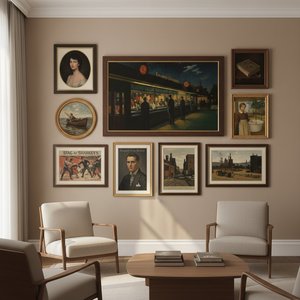
Realismo Estadounidense: 10 Obras Maestras que Cambiaron el Arte y la Decoración
Descubre 10 obras maestras del Realismo Estadounidense: Winslow Homer, Edward Hopper y más. Explora la historia, técnica y emoción de estos icónicos cuadros. Encuentra reproducciones de arte de museo en AllPaintingsStore.com.

American Regionalism: The Soul of the Heartland and the Mastery of Grant Wood
Explore the profound history of American Regionalism. Discover how Grant Wood captured the heart of the Midwest through masterpieces like American Gothic. An expert guide to the movement, its cultural impact, and the enduring beauty of American Realism.

Alfred Jacob Miller: Chronicling the American West Through Artistic Observation & Narrative
Explore the captivating art of Alfred Jacob Miller, chronicler of the American West. Discover his iconic paintings, techniques & lasting legacy – a valuable addition to any serious collection. Learn more at AllPaintingsStore.

