Vista previa
 Compartir
 Compartir
 Ver detalles

 Descargar
 Ver similares
 Radiografía
 Presentación de diapositivas
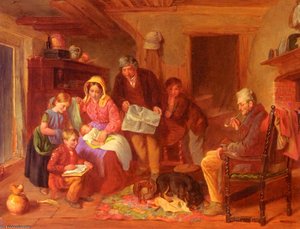
Dinner time
 Leer más
Reproducción al óleo hecha a mano
Óleo sobre lienzo pintado a mano en el tamaño y marco de su elección, realizado por encargo por nuestros artistas. ( Cambiar a impresión Cambiar a imagen)




































Elija entre nuestros tamaños predefinidos que respetan las proporciones originales de la obra.

Puede ingresar sus propias dimensiones para adaptarse a un marco o espacio específico. Si el tamaño seleccionado no coincide con las proporciones de la imagen original, recortaremos la obra o extenderemos la pintura con elementos adicionales pintados a mano. Se le enviará una maqueta digital para su aprobación antes de comenzar la producción.
Tenga en cuenta que la vista previa en pantalla no refleja el recorte o la extensión reales. Solo la maqueta mostrará con precisión la composición final.
Si bien existen tamaños personalizados, recomendamos seleccionar una dimensión de la lista predefinida para preservar las proporciones originales.
Tras realizar el pedido, el equipo de AllPaintingsStore.com enviará un correo electrónico al cliente para solicitar instrucciones y proporcionarle una vista previa del boceto.
Envío a todo el mundo () en 3-4 semanas en lugar de las 5 semanas estándar. (11 agosto). Sin comprometer la calidad.

Envío exprés gratuito a todo el mundo

Lienzo de lino de alta calidad

Seguro de envío completo

Garantía de reembolso de aranceles aduaneros

Garantía de fidelidad cromática exacta

Política de devolución de 60 días (solo por defectos)

Garantía de devolución del 100% del dinero

Oferta por volumen
 La opción de vidrio solo está disponible en tamaños inferiores a 110 cm.

Dinner time
Técnica de reproducción
Tamaño de la reproducción
-


Precio total
$ 258
Obras relacionadas


Biografía del artista
William Henry Knight: Capturing Childhood’s Delight
William Henry Knight (1823 – 1863) occupies a prominent place in Victorian genre painting, celebrated for his tender and perceptive representations of everyday life—particularly the unspoiled innocence of childhood. Born in Newbury, Berkshire, he descended from a family deeply committed to education; his father served as a schoolmaster, an upbringing that profoundly shaped Knight’s artistic sensibilities and propelled him toward a vocation dedicated to visual art. Initially drawn to legal studies, Knight's fervent passion for painting ultimately prevailed, fueled by the momentous acceptance of two of his canvases into the annual exhibition of the Society of British Artists—a pivotal juncture in establishing his artistic career. Moving to London in 1855, Knight adopted a modest lifestyle, sustaining himself through commissions as a crayon portrait artist while diligently pursuing scholarly pursuits at the British Museum and honing his skills within the esteemed Royal Academy schools. His artistic trajectory mirrored that of William Mulready, another revered genre painter who championed realism and imbued his works with palpable emotional resonance. Knight swiftly garnered recognition for his ability to convey warmth and sincerity—a hallmark of his style—capturing fleeting human interactions with remarkable sensitivity and nuance. Knight’s prolific output spanned from 1846 until his untimely demise in 1863, bequeathing a legacy of over eighty paintings—primarily genre scenes—that continue to captivate art historians and collectors worldwide. His artistic evolution was characterized by an unwavering dedication to meticulous observation; he painstakingly scrutinized the subtleties of light and color, striving for accuracy while simultaneously imbuing his canvases with profound emotional depth. The Royal Academy exhibitions served as a cornerstone of Knight’s career, guaranteeing consistent exposure and securing enduring critical acclaim—a testament to his talent and artistic vision. Among Knight's most cherished masterpieces are “A Christmas Party Preparing for Blind Man’s Buff” (1850), an evocative depiction of festive conviviality and familial bonds—a scene imbued with the warmth of hearth and home. Similarly, "Time for Play" (1853) captures the carefree joy of childhood games, portraying boys engaged in spirited activities with remarkable detail. “The Broken Window” (1855), engraved for *The Art Journal*, exemplifies Knight’s artistic precision—a piece lauded by John Ruskin for its exquisite craftsmanship and understated beauty. His depictions of rural life—such as "Hide and Seek" (1860) and “The Game of Marbles”—became emblematic of Victorian artistic ideals, reflecting a desire to portray the simple pleasures of domestic existence. Furthermore, Knight’s influence extended beyond his own paintings; his engravings graced the pages of influential publications like *The Art Journal*, disseminating his vision of tranquility and childhood innocence to a broader readership. His meticulous technique—evident in works such as "Knuckle Down" (1858) and “The Lost Change” (1859)—demonstrated an unwavering commitment to capturing human experience with unparalleled accuracy and emotional truthfulness. Knight’s enduring contribution to Victorian art resides in his masterful portrayal of childhood innocence and domestic harmony—themes that continue to resonate powerfully across generations, securing his place as a significant figure within the artistic landscape of his time.
William Henry Knight
1823 - 1863 , Reino Unido
Datos clave
- Artistic Movement Or Style: Pintura Victoriana
- Artists Who Influenced This Artist: ['William Mulready']
- Date Of Birth: 1823 Newbury, Reino Unido
- Full Name: William Henry Knight
- Nationality: Británico
- Notable Artworks:
- Una fiesta navideña preparando para el juego de niños sordos
- Tiempo para jugar
- Niños haciendo bolas
- La ventana rota
- La escuela rural
- ¡Esconde y busca!
- El juego de dominó
- Una moneda perdida
- Place Of Birth: Newbury, Berkshire