Early Life and Education
Igor Emmanuilovich Grabar (1871 - 1960), a renowned russian post-impressionist painter, publisher, restorer, and historian of art, was born on march 25, 1871, in budapest, hungary. His family, of rusyn descent, had a strong inclination towards the russian culture. Emmanuil Hrabar, his father, was an ethnic rusyn lawyer and politician who maintained ties with the russian embassy. Grabar's early education took place in yegoryevsk, where he attended high school. His interest in drawing was sparked by the stream of magazine publications following the 1881 murder of alexander ii of russia. He later enrolled in mikhail katkov's boarding school in moscow, making contacts with students from the moscow school of painting, sculpture, and architecture.Artistic Career and Notable Works
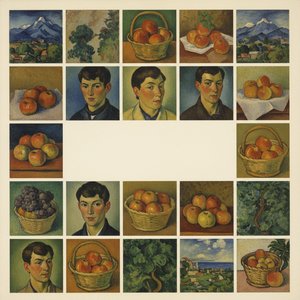
Grabar trained under ilya repin in saint petersburg and anton ažbe in munich. He reached his peak in painting between 1903-1907, notable for a peculiar divisionist technique bordering on pointillism and his rendition of snow. Some of his notable works include:- Landscape with a haystack, showcasing his skill in capturing the beauty of nature.
- The Embroideress, a prime example of the realist style popular in russia during the 19th century.
- Going to work, a painting that reflects the daily life of the russian people.
Museum and Art Restoration
In 1913, Grabar was appointed executive director of the Tretyakov Gallery in moscow. He diversified the collection into modern art and published its first comprehensive catalogue in 1917. As a professor of art restoration at the moscow state university (1921), he played a crucial role in the soviet art establishment. Notable Museums Featuring Grabar's Work:- Novokuznetsk Art Museum, russia, housing an impressive collection of russian and european artworks.
- Tretyakov Gallery, moscow, a world-renowned museum with an extensive collection of russian fine art.
- Museo Kharkov Museum of Art (ukraine), featuring a vast collection of opere d'arte from the 14th century.
Legacy and Later Life
Grabar remained at the top of the soviet art establishment until his death on may 16, 1960. He managed art-restoration workshops (present-day Grabar Centre) during 1918-1930 and from 1944 to 1960. His legacy continues to inspire artists and art enthusiasts alike.- View more of Grabar's work on AllPaintingsStore.
- Learn more about the Tretyakov Gallery on AllPaintingsStore.
- Discover the Novokuznetsk Art Museum’s collection on AllPaintingsStore.
Preguntas y respuestas
¿Dónde se encuentran las obras de Igor Emmanuilovich Grabar organizadas por color?
La página Índice Espectral organiza las obras de Igor Emmanuilovich Grabar por color.
¿De dónde es Igor Emmanuilovich Grabar?
Igor Emmanuilovich Grabar nació en Hungría.
¿Cómo puedo encontrar obras de Igor Emmanuilovich Grabar sobre un tema específico?
Para encontrar obras de Igor Emmanuilovich Grabar sobre un tema específico, utilice la página de Por palabras clave del artista, que agrupa las obras por palabra clave.